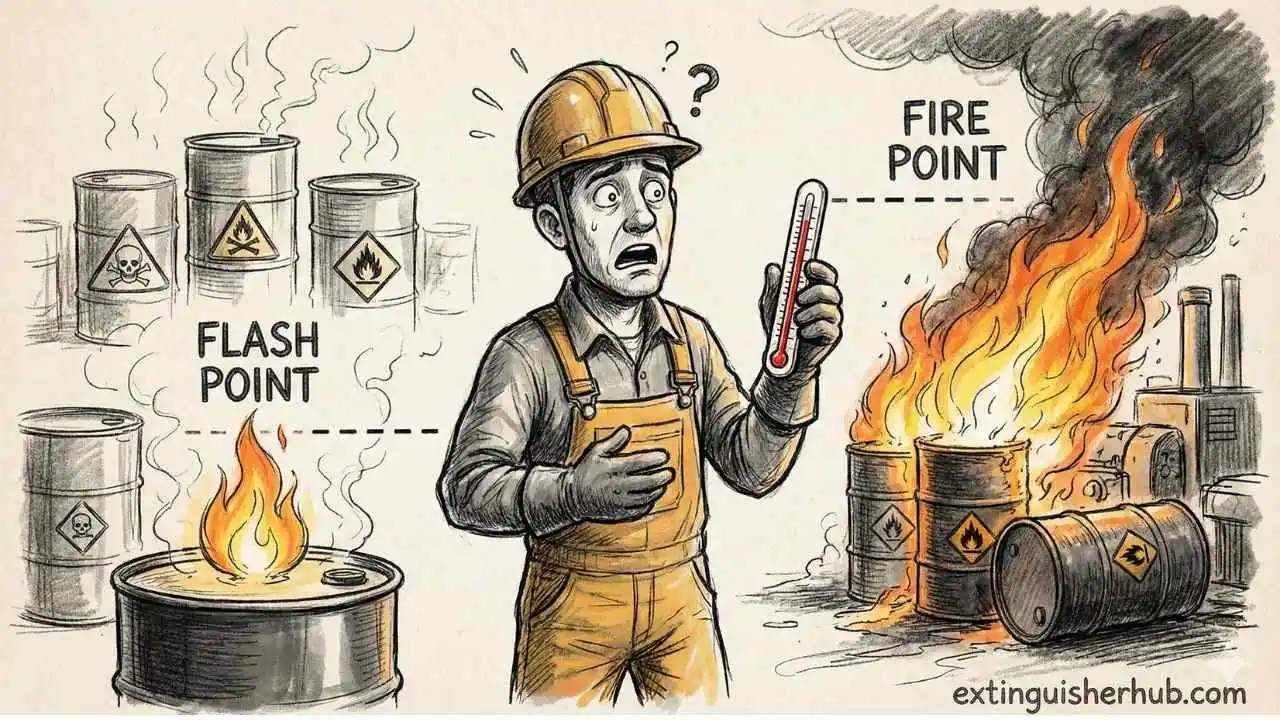
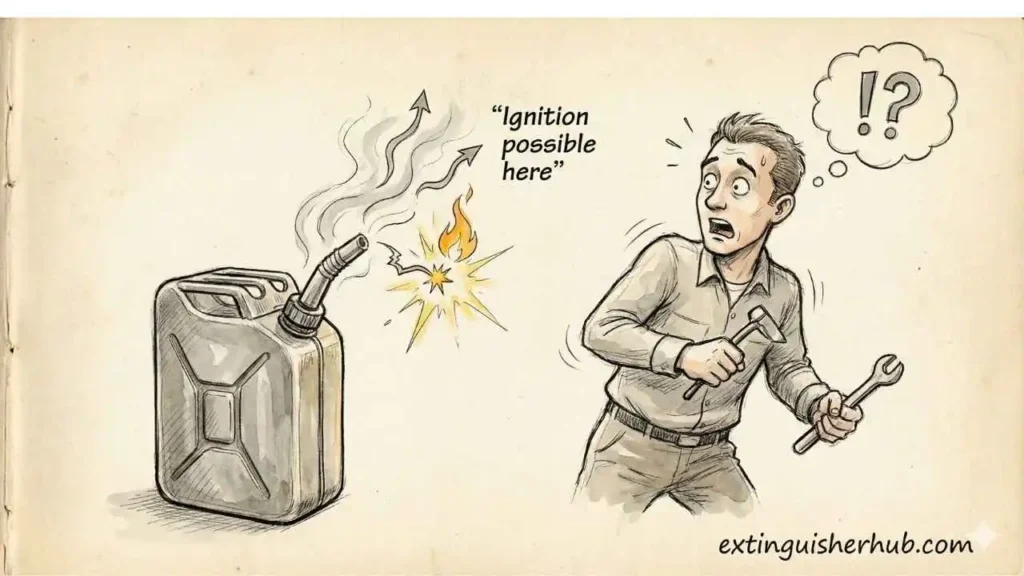
एक बंद जगह। थोड़ा सा fuel। आस-पास heat। और कहीं से आई एक छोटी सी ignition।
आग लगने से पहले अक्सर कोई धमाका नहीं होता — सिर्फ एक गलत समझ होती है।
ज़्यादातर accidents इसलिए नहीं होते क्योंकि fuel खतरनाक था, बल्कि इसलिए होते हैं क्योंकि लोग flash point vs fire point difference को एक ही मान लेते हैं।
यही एक भ्रम कभी-कभी आग को विस्फोट में बदल देता है।
👉 एक लाइन में सच्चाई:
अगर यह फर्क नहीं समझा,
तो risk तय है।
Flash Point vs Fire Point Difference लोग क्यों confuse करते हैं?
Fire safety inspections और incident reviews में एक बात बार-बार सामने आती है — लोग Flash Point और Fire Point को एक ही temperature मान लेते हैं।
यही confusion fuel handling, storage और fire response के समय गलत risk assessment की सबसे बड़ी वजह बनती है।
Temperature एक ही है — यह गलतफहमी कहाँ से आती है
अधिकतर लोग सोचते हैं:
- “Fuel गर्म हुआ और आग लगी — बस वही temperature होगा”
- “Flash point cross हुआ मतलब fire sustain हो जाएगा”
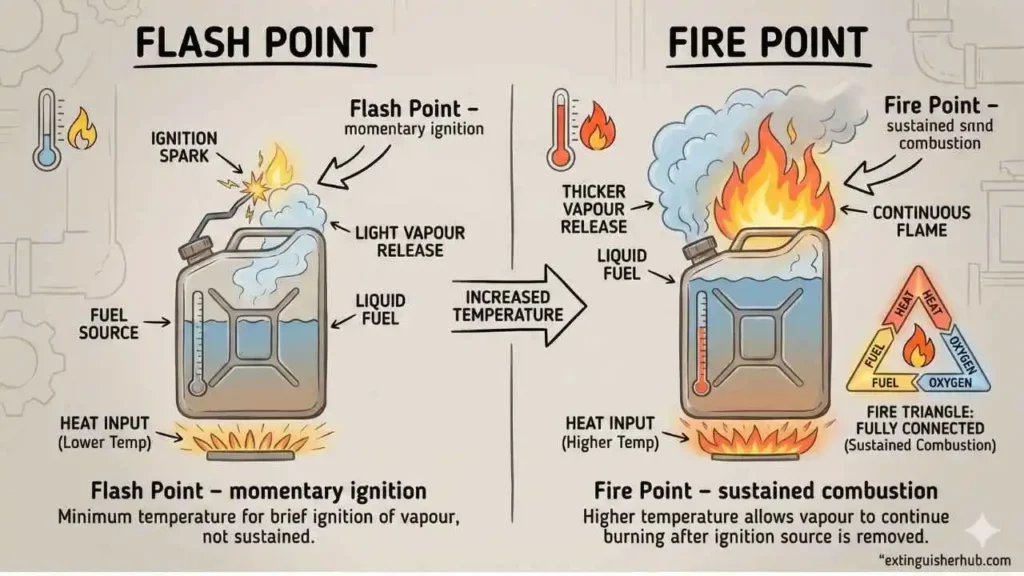
असल में problem यह है कि लोग ignition और sustained combustion के बीच difference समझते ही नहीं।
Flash point vapour ignition की शुरुआत बताता है, जबकि Fire point वह temperature है जहाँ आग खुद-ब-खुद जलती रहती है।
इस फर्क को न समझने पर लोग fuel को “safe” या “dangerous” गलत category में रख देते हैं — और यहीं से incident chain शुरू होती है।
Labels पढ़ते हैं, meaning नहीं समझते
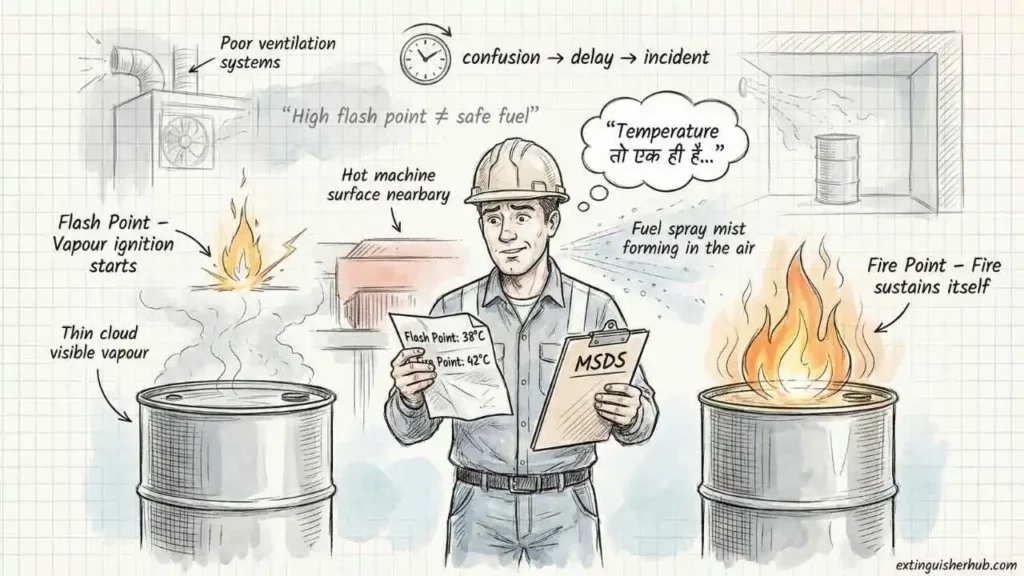
Fuel drums, MSDS sheets और safety labels पर Flash point और Fire point लिखा होता है — लेकिन ground level पर:
- Numbers देखे जाते हैं, interpretation नहीं
- Low flash point = explosion assume कर लिया जाता है
- High flash point = “safe fuel” मान लिया जाता है
जबकि real life में ventilation, mist formation, hot surface और confined space risk को पूरी तरह बदल देते हैं।
इसी वजह से hazardous material handling में sirf temperature value नहीं, उसका मतलब समझना जरूरी होता है — जैसा कि fire safety awareness posts में भी highlight किया गया है: HAZCHEM Code vs UN Number
और यही conceptual clarity international fire safety standards में भी emphasized की जाती है, जैसे flammable liquid classification में flash point और fire point को अलग-अलग hazard indicators माना जाता है (BIS / NFPA guidance)।
ज़्यादातर accidents fuel की वजह से नहीं होते — वे गलत समझे गए temperature limits की वजह से होते हैं।
अगर आपने आज flash point vs fire point difference को clear नहीं किया, तो अगला safety decision assumption पर आधारित होगा — knowledge पर नहीं।
Flash Point क्या होता है? (Identity + Risk Start)
Flash Point वह तापमान होता है जहाँ किसी ज्वलनशील तरल (flammable liquid) से इतनी vapour निकलने लगती है कि पास में चिंगारी या लौ आते ही क्षणिक आग (flash) दिखाई दे।
Flash point का simple definition (easy Hindi)
आसान शब्दों में:
Flash Point = वह सबसे कम तापमान जहाँ fuel जलने की शुरुआत कर सकता है, लेकिन आग खुद से लगातार नहीं जलती।
यानी:
- आग दिखेगी
- लेकिन हटते ही बुझ भी सकती है
- यह sustained fire नहीं होती
यहीं से flash point vs fire point difference समझना शुरू होता है।
Flash point पर actual खतरा क्या होता है
Flash point को लेकर सबसे बड़ी गलतफहमी यह होती है कि:
“आग थोड़ी सी दिखी, मतलब खतरा कम है”
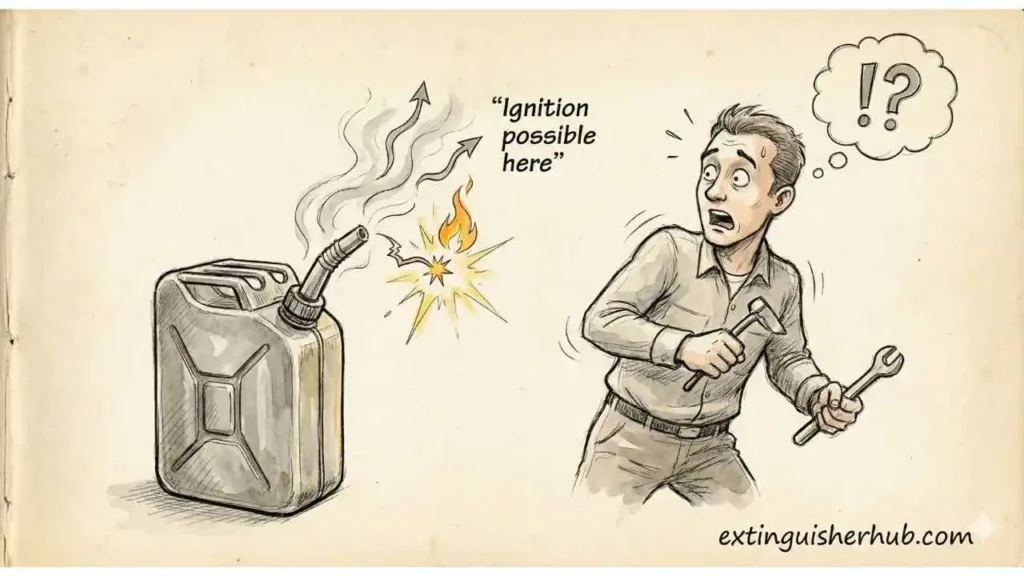
असल खतरा आग नहीं, vapour ignition होता है।
- Fuel vapour हवा में फैल सकती है
- चिंगारी दूर से ignite कर सकती है
- Confined जगह में vapour cloud बन सकता है
इसलिए flash point fire से पहले explosion risk का signal होता है।
High flash point ≠ no fire risk
कई लोग मान लेते हैं:
“High flash point fuel है, तो safe होगा”
यह सोच खतरनाक है।
High flash point fuel में भी:
- High temperature environment
- Hot surface contact
- Spray या mist बनना
- Poor ventilation
इन स्थितियों में vapour generation तेज़ हो जाती है और flash point का खतरा फिर से active हो जाता है।
Flash point कम हो या ज़्यादा — अगर vapour ignite हो गई, तो situation seconds में control से बाहर जा सकती है।
Flash point यह नहीं बताता कि “आग कितनी देर जलेगी”, यह बताता है कि खतरा कहाँ से शुरू होता है।
Fire Point क्या होता है? (Sustained Fire Reality)
Fire Point वह तापमान होता है जहाँ ज्वलनशील तरल (flammable liquid) इतनी vapour पैदा करने लगता है कि आग ignition के बाद खुद-ब-खुद लगातार जलती रहती है।
यही वह stage है जहाँ situation temporary नहीं, uncontrollable बन जाती है।
Fire point का मतलब और behavior
आसान शब्दों में:
Fire Point = वह तापमान जहाँ आग:
- एक बार लगी तो बुझती नहीं
- External spark हटने के बाद भी जलती रहती है
- Fuel + heat का balance खुद maintain करती है
यहीं पर flash point vs fire point difference पूरी तरह clear हो जाता है —
Flash point = आग की शुरुआत
Fire point = आग की स्थिरता
Fire point पर आग क्यों खुद चलती रहती है
Fire point पर पहुँचते ही:
- Fuel vapour लगातार generate होती है
- Heat vapourization को support करती है
- Oxygen supply stable रहती है
यानी fire triangle (fuel + heat + oxygen) खुद-ब-खुद complete हो जाता है।
इस stage पर:
- Fire self-sustained हो जाती है
- Simple ignition removal काम नहीं करता
- Active firefighting की जरूरत पड़ती है
Fire point पार हो जाने के बाद आग “chance” नहीं रहती — वह incident बन जाती है।
Fire safety और hazardous area assessment में Fire Point को “point of no return” माना जाता है — क्योंकि इसके बाद आग खुद नहीं रुकती।
Flash Point vs Fire Point – असली फर्क (Standards के साथ)
| Parameter | Flash Point | Fire Point | Standard Reference (IS 1448) |
|---|---|---|---|
| Basic Meaning | Vapour ignition की शुरुआत | Sustained combustion की शुरुआत | IS 1448 (Petroleum Testing Methods) |
| Temperature Behaviour | Momentary ignition possible | Fire कम से कम कुछ seconds तक बनी रहती है | IS 1448 Part 20 / 21 |
| Vapour Formation | Limited vapour release | Continuous vapour support | IS 1448 Test Procedures |
| Ignition vs Burning | Ignition possible, fire sustain नहीं | Ignition + sustained burning | IS 1448 Definitions |
| Fire vs Explosion Relevance | Explosion / flash fire risk start | Major fire spread risk | Used in fire safety & hazard analysis |
| Audit & Safety Impact | Fuel classification & handling rules | Fire protection design decisions | Referenced during fire audit review |
यह comparison सिर्फ definition नहीं दिखाता, बल्कि यह बताता है कि flash point और fire point difference fuel storage, hazardous area classification और fire protection design में कहाँ-कहाँ decision बदल देता है।
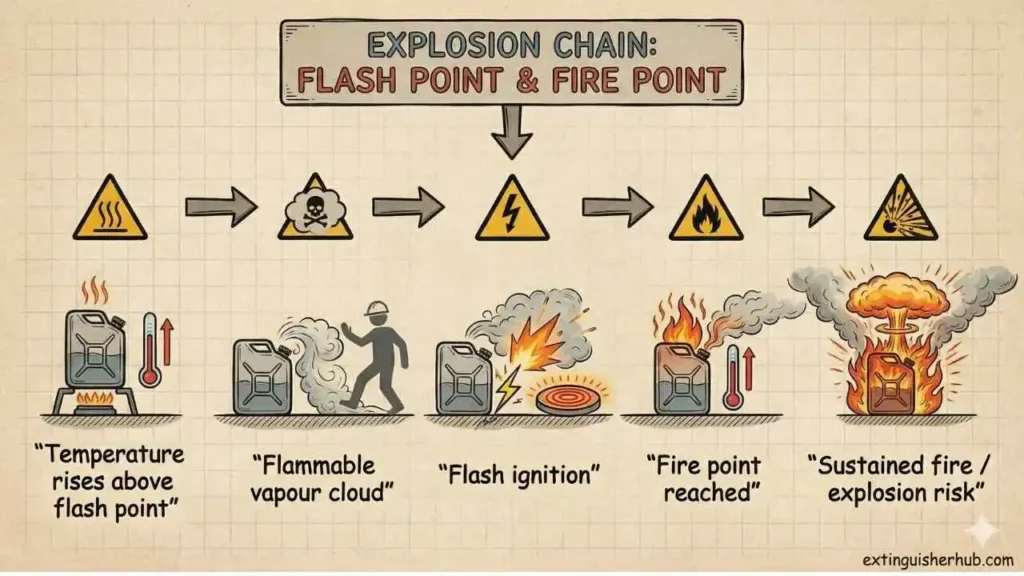
Explosion Risk कहाँ से शुरू होता है?
अधिकतर लोग सोचते हैं कि explosion तभी होता है जब आग बहुत बड़ी हो जाए।
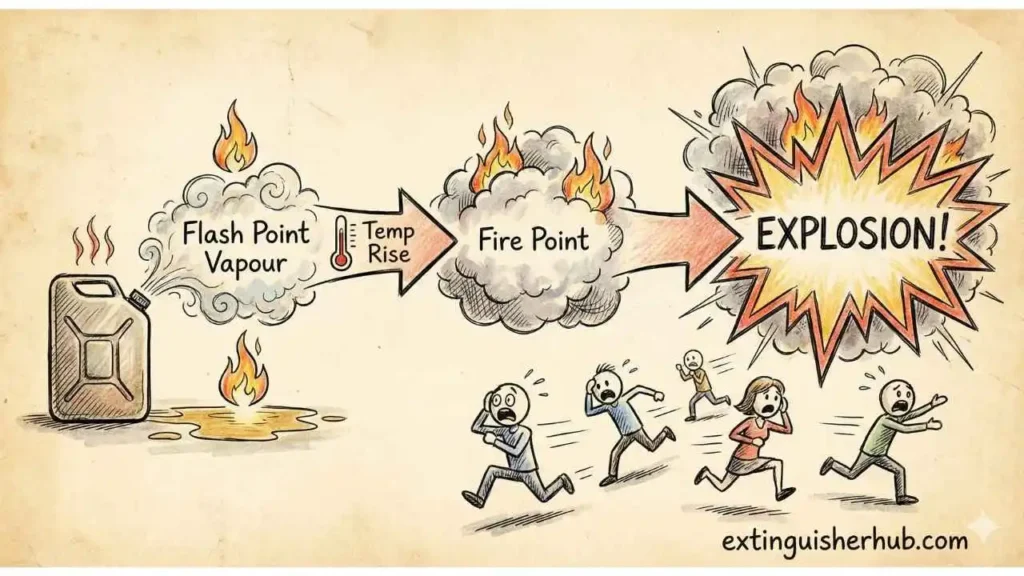
लेकिन reality यह है कि explosion risk आग से पहले ही flash point पर शुरू हो जाता है — यही कारण है कि flash point vs fire point difference समझना public safety के लिए critical है।
Flash point के ऊपर vapour cloud कैसे बनता है
Flash point वह तापमान होता है जहाँ liquid fuel vapour बनाना शुरू करता है।
इस stage पर:
• Liquid दिखने में शांत रहता है
• लेकिन उसके ऊपर
flammable vapour cloud बन चुका होता है
अगर इस vapour cloud को:
• Spark
• Hot surface
• Static electricity
मिल जाए — तो बिना आग फैले भी explosion हो सकता है।
यही वजह है कि high flash point fuel भी गलत condition में explosive risk बन सकता है।
Fire point के बाद explosion क्यों ज्यादा dangerous होता है
Fire point के बाद liquid इतना vapour produce करता है कि आग continuous जलती रहती है।
इस stage पर:
• Vapour generation uncontrolled हो जाती है
• Fire intensity बढ़ती जाती है
• Confined area में pressure build-up होता है
अगर fire point condition में:
• Ventilation poor हो
• Container बंद हो
• Drainage inadequate हो
तो explosion fire से भी ज्यादा destructive बन जाता है।
Explosion कोई sudden accident नहीं होता — यह flash point से शुरू होकर fire point तक develop होता है। इसी chain को न समझना सबसे बड़ी safety mistake है।
अगर आपको किसी fuel या chemical का flash point पता है लेकिन fire point नहीं — तो risk assessment अधूरा है।
Industrial Accidents में Flash Point और Fire Point का फर्क क्यों critical है?
Industrial accidents में सबसे बड़ा खतरा यह नहीं होता कि chemical क्या है — बल्कि यह होता है कि उस temperature पर chemical कैसे behave करेगा।
यहीं पर flash point vs fire point difference life-saving या life-threatening बन जाता है।
Factory / storage tank scenario
Factories और storage tank areas में अक्सर यह मान लिया जाता है कि —
“Flash point high है, तो risk कम है।”
लेकिन accident investigations में यह repeatedly देखा गया है कि:
• Liquid flash point के पास पहुँचते ही vapours बनने लगते हैं
• Ignition source मिलते ही brief flame दिखाई देती है
• Worker सोचता है — “आग बुझ गई”
जबकि reality यह होती है कि temperature अगर fire point के करीब है, तो आग खुद चलती रहती है — और यही moment major industrial fire बन जाता है।
Hot surface, spray और poor ventilation cases
Industrial sites पर explosion और fire अक्सर open flame से नहीं, hot surfaces और vapour build-up से शुरू होते हैं।
Typical high-risk situations:
• Heated pipelines या hot machinery surface
• Liquid spray या mist formation
• Poor ventilation वाले enclosed spaces
इन conditions में:
• Flash point cross होते ही vapour cloud बनता है
• Fire point के पास पहुँचते ही combustion sustain हो जाता है
यही कारण है कि कई accidents में लोग कहते हैं —
“आग अचानक out of control हो गई।”
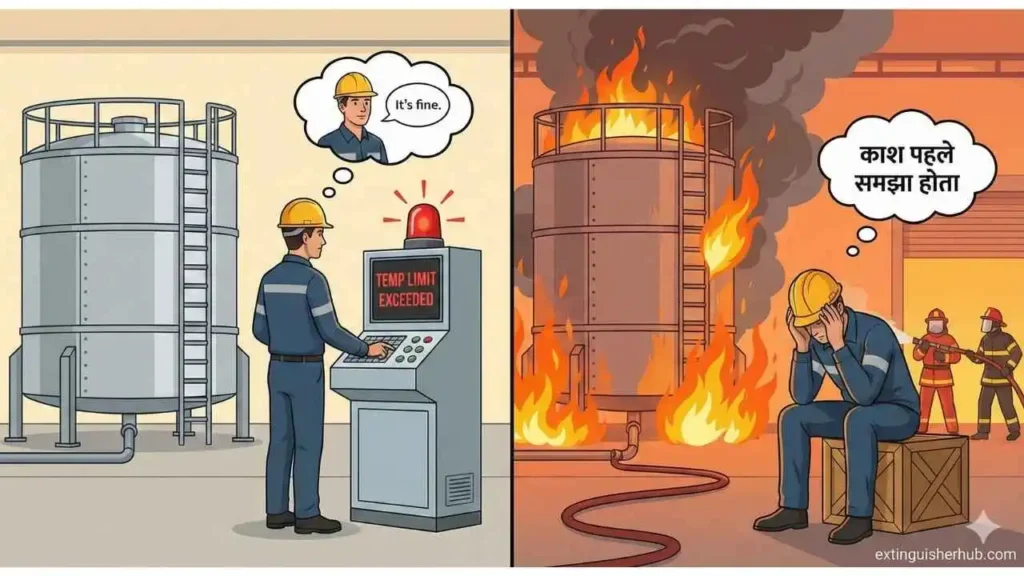
Industrial accidents में problem ignition नहीं होती — problem होती है temperature behaviour को underestimate करना।
अगर site पर flash point और fire point का फर्क clear नहीं है, तो safety plan कागज़ पर safe और ground पर dangerous होता है।
Fire Safety & Hazardous Area Classification में Flash Point और Fire Point का Role
Fire safety planning और hazardous area classification sirf equipment selection का मामला नहीं होता — यह पूरी तरह depend करता है कि flammable liquid किस temperature पर कैसे behave करेगी।
यहीं पर flash point vs fire point difference design decision, zoning और compliance को directly प्रभावित करता है।
Flash point का hazardous zone से connection
Hazardous area classification में सबसे पहला सवाल यही होता है —
“क्या इस temperature पर flammable vapour बन सकता है?”
Flash point इसी सवाल का जवाब देता है।
• Flash point से ऊपर vapour formation शुरू हो जाती है
• Vapour + ignition source = explosion risk
इसी कारण:
• Low flash point liquids को higher risk category में रखा जाता है
• Storage, pumps और transfer areas को hazardous zone declare किया जाता है
Hazardous zoning logic को Indian fire audits में indirectly verify किया जाता है, जैसा कि IS 2190:2024 Fire Audit Checklist में fire risk assessment expectations से समझा जा सकता है।
Fire point fire protection design में क्यों important है
Fire protection design में सिर्फ ignition को रोकना काफी नहीं होता —
आग अगर लग गई तो क्या वह खुद sustain करेगी या नहीं यह ज्यादा critical सवाल होता है।
Fire point इस behaviour को define करता है।
• Fire point पर combustion self-sustaining हो जाती है
• Manual fire fighting ineffective हो सकता है
• Fixed systems (sprinkler, deluge, foam) जरूरी हो जाते हैं
इसीलिए fire protection codes design stage पर यह expect करते हैं कि:
• Suppression system fire point behaviour को handle कर सके
• Cooling + vapour suppression दोनों considered हों
यह approach international fire safety guidance में भी दिखाई देती है, जैसे कि NFPA fire safety standards में flammable liquid fire behaviour को design basis माना जाता है।
Hazardous area गलत classify करना sirf design mistake नहीं होता — यह explosion risk underestimate करने के बराबर है, जिसका असर audit, insurance और life safety तीनों पर पड़ता है।
Fire safety में flash point zoning बताता है “खतरा कहाँ बन सकता है”, और fire point design बताता है “आग लगने पर क्या होगा”। दोनों को समझे बिना safe system design possible नहीं होता।
IS 1448 के अनुसार Flash Point और Fire Point क्यों अलग माने जाते हैं?
भारत में पेट्रोलियम उत्पादों के Flash Point और Fire Point को मापने और classify करने के लिए IS 1448 (Methods of Test for Petroleum and its Products) का उपयोग किया जाता है।
यह Indian Standard साफ़ तौर पर मानता है कि Flash Point और Fire Point दो अलग-अलग temperature characteristics हैं — और दोनों का hazard implication भी अलग होता है।
IS 1448 के विभिन्न parts में:
• Flash point को vapour ignition की शुरुआत के रूप में देखा जाता है
• Fire point को sustained combustion की condition माना जाता है
इसीलिए industrial safety, fuel storage और fire audit में sirf एक temperature value जानना risk assessment के लिए sufficient नहीं माना जाता।
उदाहरण के तौर पर:
• Petrol का flash point लगभग –43°C होता है,
जिसका मतलब यह नहीं कि हर स्थिति में explosion होगा
• Diesel का flash point सामान्यतः 35°C से ऊपर होता है,
फिर भी mist formation, hot surface या confined space में
fire और explosion risk बन सकता है
IS 1448 यह स्पष्ट करता है कि temperature value से ज्यादा महत्वपूर्ण उसका व्यवहार है — यानी vapour कैसे बन रहा है, ignition source क्या है, और fire sustain हो सकता है या नहीं।
Fire Audit में Flash Point vs Fire Point Difference क्यों पूछा जाता है?
Fire audit सिर्फ यह देखने नहीं आता कि site पर equipment लगा है या नहीं —
audit का असली उद्देश्य होता है यह समझना कि risk को सही तरीके से identify और evaluate किया गया है या नहीं।
इसी वजह से flash point vs fire point difference fire audit discussions में एक core सवाल बन जाता है, खासकर flammable liquids, fuel storage और high-temperature process areas में।
Auditor क्या check करता है
Fire officer या auditor यह verify करता है कि:
• Liquid का flash point operating condition से match करता है या नहीं
• Vapour ignition risk realistically assess किया गया है या नहीं
• Explosion और sustained fire risk को अलग-अलग समझा गया है या नहीं
इसके बाद auditor यह देखता है:
• Fire point behaviour के अनुसार suppression system adequate है या नहीं
• Cooling, ventilation और isolation measures sufficient हैं या नहीं
यही audit philosophy detail में समझाई गई है आपकी इस guide में —
IS 2190:2024 Fire Audit Checklist – Practical Audit Expectations Explained
गलत understanding कैसे audit objection बनती है
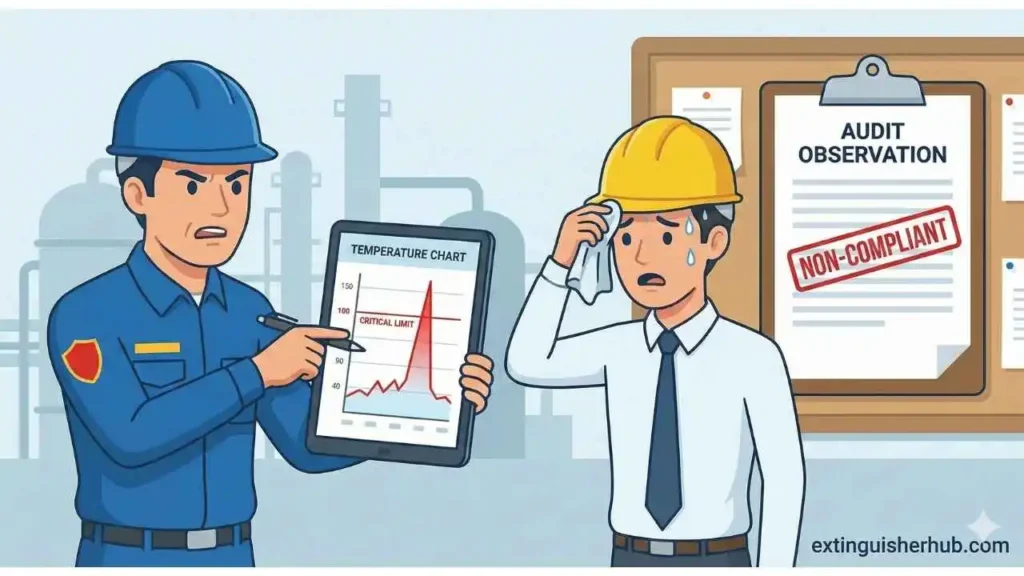
Audit objections ज़्यादातर equipment failure से नहीं, risk misunderstanding से बनते हैं।
Common audit observations में यह सामने आता है:
• Flash point को safe temperature मान लिया गया
• Fire point को consider किए बिना system design किया गया
• Explosion risk और sustained fire risk को mix कर दिया गया
जब auditor को लगता है कि site team को flash point and fire point difference clear नहीं है —
तो वह इसे risk assessment failure मानता है, जो directly audit objection बन सकता है।
Fire audit में equipment की कमी कभी-कभी overlook हो सकती है, लेकिन गलत risk understanding लगभग कभी accept नहीं होती।
जब auditor देखता है कि site team को flash point और fire point का फर्क clear है, तो fire protection design और safety decisions पर trust अपने आप बन जाता है।
Common Dangerous Myths
Flash point और fire point को लेकर सबसे ज़्यादा accidents knowledge की कमी से नहीं, गलत मान्यताओं (myths) से होते हैं।
ये myths इतने common हैं कि अक्सर trained लोग भी उन्हें question नहीं करते — और यही सबसे बड़ा risk बन जाता है।
“Diesel explode नहीं करता”
यह सबसे dangerous myth है।
सच यह है कि:
• Diesel का flash point petrol से high होता है
• लेकिन flash point high होने का मतलब
explosion impossible नहीं होता
High temperature, hot surface, mist formation या poor ventilation में diesel vapour cloud बन सकता है — और ignition मिलने पर explosion risk real हो जाता है।
कई storage tank और generator room incidents इसी गलत सोच से शुरू हुए हैं कि “diesel safe है”।
“High flash point मतलब safe”
यह myth flash point vs fire point difference को न समझने की सीधी निशानी है।
High flash point का मतलब सिर्फ यह होता है कि:
• Normal temperature पर vapour easily नहीं बनेगा
लेकिन इसका यह मतलब कभी नहीं होता कि:
• Fire risk नहीं है
• Sustained burning possible नहीं है
जब liquid fire point तक पहुँच जाता है, तो आग खुद चलती रहती है — और यही stage major fire damage की वजह बनती है।
Most fire accidents गलत equipment से नहीं, गलत assumptions से शुरू होते हैं।
अगर site पर कोई कहता है — “High flash point है, safe है” तो असल में वह fire point को completely ignore कर रहा है।
Real Accident Learnings – Ground Reality
यह section किसी किताब से नहीं, ground level fire audits और incident reviews से निकली हुई सच्चाई है।
Storage Fire Case – “High Flash Point है, Safe होगा” सोच
मेरे एक fire audit के दौरान एक industrial storage area में diesel drums खुले ventilation shed में रखे हुए थे।
Management का clear belief था:
“Diesel का flash point high होता है,
तो explosion का risk नहीं है।”
लेकिन site पर reality यह थी:
• Ambient temperature बहुत ज़्यादा था
• Drum filling के दौरान mist बन रही थी
• Nearby hot surface मौजूद था
Result यह हुआ कि flash point cross होते ही vapour ignition हुआ — और fire फैलने से पहले area खाली कराना पड़ा।
यह incident यह साफ दिखाता है कि flash point और fire point difference ना समझना गलत risk assessment की जड़ बन जाता है।
Process Heating Incident – Temperature assumption की गलती
एक दूसरे case में, process heating unit में fuel oil use हो रहा था।
Operator का assumption था:
“जब तक fire point नहीं पहुँचा,
आग खुद नहीं जलेगी।”
लेकिन heating coil के आसपास:
• Local temperature uneven था
• Vapour accumulation हुआ
• Ventilation insufficient थी
Result:
Flash point के थोड़ा ऊपर ही
ignition हुआ
और आग कुछ seconds तक sustain भी रही।
Investigation में clear हुआ कि
team ने:
ignition (flash point)
और sustained combustion (fire point)
को एक ही चीज़ मान लिया था।
अधिकतर industrial accidents गलत equipment से नहीं, गलत temperature assumption से शुरू होते हैं।
अगर flash point vs fire point difference clear नहीं है, तो fuel handling, storage और heating तीनों high-risk बन जाते हैं — चाहे fuel “safe category” में ही क्यों न हो।
Expert Verdict – Flash Point और Fire Point समझना क्यों Life-Saving है
Flash point vs fire point difference सिर्फ theory या exam question नहीं है — यह real-life safety decision से जुड़ा विषय है।
Fire accident, explosion और major industrial loss अक्सर equipment failure से नहीं, गलत assumption से शुरू होते हैं।
One wrong assumption = irreversible damage
सबसे आम और सबसे खतरनाक सोच होती है:
“Flash point पता है, इतना काफी है।”
लेकिन ground reality यह है:
• Flash point सिर्फ ignition की शुरुआत बताता है
• Fire point आग के uncontrollable होने का संकेत देता है
Fire point को ignore करना उस moment को ignore करना है जहाँ से आग control से बाहर निकल जाती है।
Knowledge ही सबसे बड़ा fire protection है
Fire safety में हर जगह system install करना संभव नहीं होता — लेकिन सही knowledge हर जगह काम करती है।
जब engineer, operator या supervisor flash point और fire point का फर्क समझता है:
• Storage safer design होती है
• Process temperature limits realistic बनते हैं
• Fire audit observations कम होते हैं
• Emergency response सही direction में जाता है
Fire protection हमेशा equipment से शुरू नहीं होती — यह सही समझ से शुरू होती है। और गलत समझ सबसे महंगा risk होती है।
अगर आपको flash point vs fire point difference पूरी तरह clear नहीं है — तो risk भी clear नहीं है।
Frequently Asked Questions
Flash point और fire point में सबसे बड़ा फर्क क्या है?
Flash point वह temperature है जहाँ fuel के vapours पहली बार ignite होते हैं, लेकिन आग टिकती नहीं।Fire point वह temperature है जहाँ आग खुद-ब-खुद sustain होने लगती है।यही फर्क fire और explosion risk को completely बदल देता है।
क्या high flash point वाला fuel safe माना जाता है?
नहीं। High flash point का मतलब सिर्फ यह है कि vapour जल्दी नहीं बनते।लेकिन hot surface, spray, mist, poor ventilation में वही fuel fire या explosion cause कर सकता है।High flash point ≠ no fire risk.
Flash point cross होते ही explosion क्यों नहीं होता?
Flash point पर सिर्फ vapour ignition possible होता है। Explosion तब होता है जब:
vapour cloud बने
confined space हो
ignition source मिले
इसलिए explosion risk flash point के ऊपर gradually बढ़ता है।
Fire point fire safety design में क्यों important है?
Fire point बताता है कि आग कब self-sustaining बन जाती है। Fire protection systems, fire load calculation और suppression designfire point behavior को ध्यान में रखकर किए जाते हैं — सिर्फ flash point नहीं।
Fire audit में flash point और fire point क्यों पूछा जाता है?
Auditors यह check करते हैं कि:Fuel सही category में रखा गया है या नहीं।
Hazardous area classification सही है या नहीं
Risk assessment assumptions सही हैं या नहीं
गलत understanding सीधे audit objection बनती है।
Industrial accidents में यह difference इतना critical क्यों है?
क्योंकि ज़्यादातर accidents equipment failure से नहीं,गलत temperature assumption से होते हैं। एक wrong assumption → wrong decision → delayed response → irreversible damage.