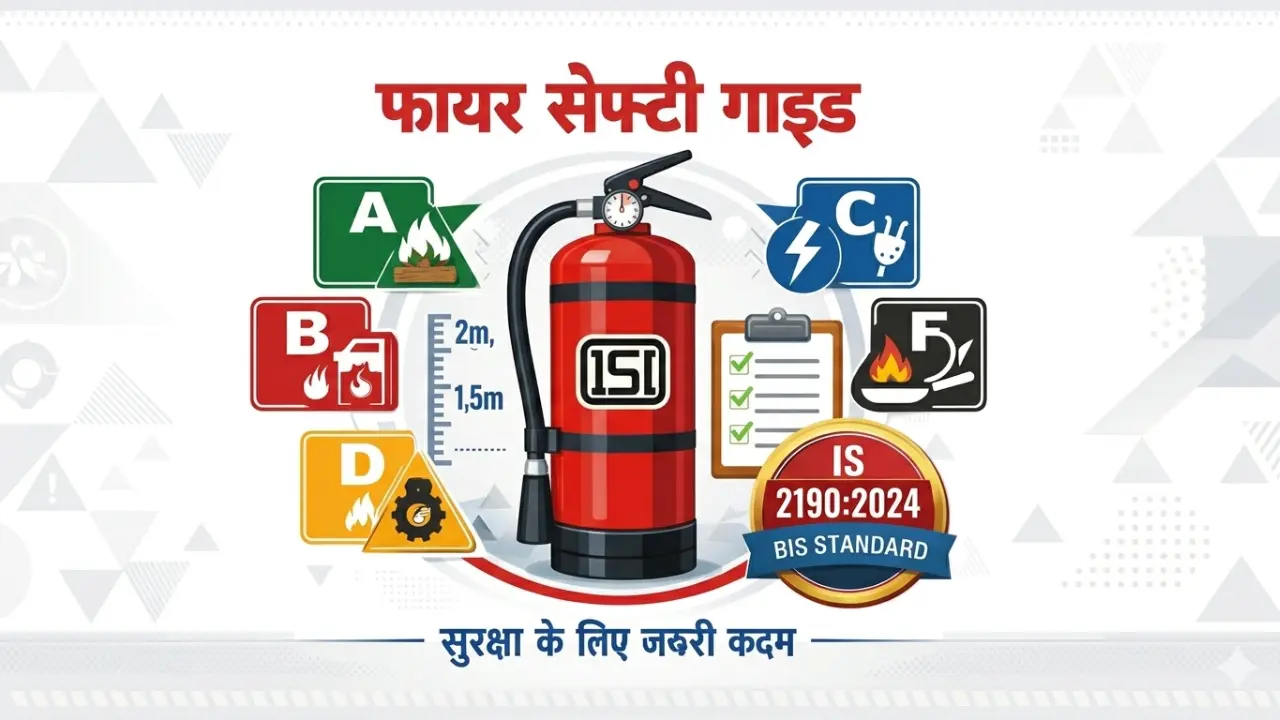
क्या आप जानना चाहते हैं कि IS 2190:2024 क्या है और भारत में fire extinguishers के selection, installation और maintenance के लिए कौन-से नियम दिए गए हैं? IS 2190:2024 Bureau of Indian Standards (BIS) का Selection, Installation and Maintenance of First-Aid Fire Extinguishers — Portable and Mobile — Code of Practice है। यह इसका Fifth Revision है, जिसे अक्टूबर 2024 में प्रकाशित किया गया था।
इस standard में fire extinguisher की installation height, hazard के अनुसार travel distance, extinguisher rating, periodic inspection, maintenance, recharging और hydrostatic pressure testing (HPT) से संबंधित requirements दी गई हैं। उदाहरण के लिए, 17 kg या उससे कम gross mass वाले portable extinguisher का ऊपरी हिस्सा floor से 1.5 m से अधिक ऊँचाई पर नहीं होना चाहिए। Inspection लगभग 90 दिनों के अंतराल पर किया जाना चाहिए; हालांकि, आवश्यक परिस्थितियों में अधिक बार inspection की जरूरत हो सकती है।
इस IS 2190:2024 guide में आप extinguisher selection, installation requirements, hazard-wise travel distance, maintenance schedule और HPT से जुड़े प्रमुख प्रावधान आसान हिंदी में समझेंगे। Practical inspection और servicing intervals के लिए हमारी Fire Extinguisher Maintenance Schedule India guide भी पढ़ें। वास्तविक compliance के लिए लागू State/Local Fire Safety Regulations और संबंधित authority की requirements की पुष्टि करें।
IS 2190:2024 क्या है? (Introduction & Overview)
IS 2190:2024 Bureau of Indian Standards (BIS) का Indian Standard है, जिसका पूरा नाम Selection, Installation and Maintenance of First-Aid Fire Extinguishers — Portable and Mobile — Code of Practice है। यह इसका Fifth Revision है, जिसे अक्टूबर 2024 में प्रकाशित किया गया था।
यह standard portable और mobile (wheeled) fire extinguishers के सही selection, installation, inspection, maintenance और testing के लिए requirements देता है। इसमें extinguisher की installation height, hazard के अनुसार travel distance, fire rating और servicing से जुड़े प्रमुख प्रावधान शामिल हैं।
उदाहरण के लिए, 17 kg या उससे कम gross mass वाले portable fire extinguisher का ऊपरी हिस्सा floor से 1.5 m से अधिक ऊँचाई पर नहीं होना चाहिए। साथ ही, extinguishers की periodic inspection लगभग 90 दिनों के अंतराल पर की जानी चाहिए। विशेष परिस्थितियों में inspection अधिक बार करना आवश्यक हो सकता है।
- ✔ Hazard के अनुसार सही extinguisher selection
- ✔ Proper installation, accessibility और visibility
- ✔ लगभग 90 दिनों के अंतराल पर periodic inspection
- ✔ Maintenance, recharging और hydrostatic pressure testing (HPT)
Inspection intervals और servicing procedures को व्यावहारिक रूप से समझने के लिए हमारी Fire Extinguisher Maintenance Schedule India guide पढ़ें।
IS 2190:2024 का Foreword इस standard में दिए गए selection और installation provisions को ISI-marked fire extinguishers तथा equipment के संदर्भ में रखता है। वास्तविक fire safety compliance के लिए लागू State/Local regulations और संबंधित authority की requirements भी verify करें।
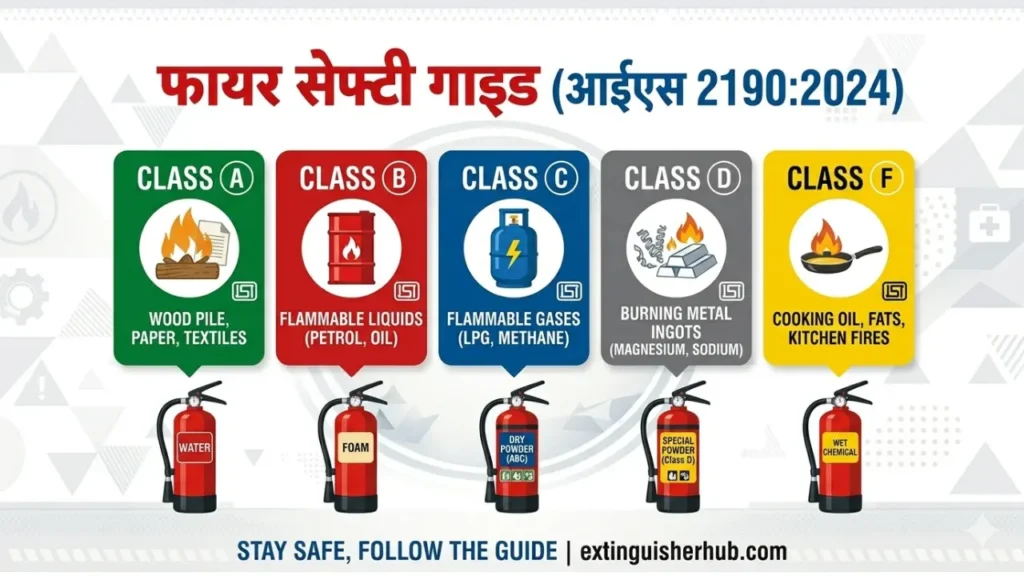
Fire Classes According to BIS IS 2190:2024 (आग के प्रकार)
Fire extinguisher का सही selection करने के लिए आग के प्रकार और संबंधित fire hazard को समझना जरूरी है। BIS के IS 2190:2024 standard में portable और mobile fire extinguishers के selection के लिए Class A, B, C, D और F fire hazards से संबंधित प्रावधान शामिल हैं।
हर प्रकार की आग के लिए उपयुक्त extinguishing agent अलग हो सकता है। गलत extinguisher का इस्तेमाल आग फैलने, दोबारा भड़कने या गंभीर चोट लगने का कारण बन सकता है। नीचे दी गई जानकारी सामान्य मार्गदर्शन के लिए है; वास्तविक चयन fire risk assessment और extinguisher की approved rating के अनुसार करें।
Class A – Solid Combustible Materials
Class A में लकड़ी, कागज, कपड़े और अन्य सामान्य ठोस ज्वलनशील पदार्थों की आग शामिल होती है। इन आगों में पदार्थ के भीतर तक सुलगना संभव है, इसलिए cooling effect महत्वपूर्ण होता है।
- ✔ Examples: Wood, paper, cloth और अन्य सामान्य ठोस ज्वलनशील पदार्थ
- ✔ Suitable extinguishers: Water, Foam या ABC dry powder — जोखिम और extinguisher की rating के अनुसार
👉 Detail guide: Class A Fire Extinguisher
Class B – Flammable Liquids
Class B में पेट्रोल, डीज़ल, पेंट और अन्य ज्वलनशील द्रवों की आग शामिल होती है। उपयुक्त extinguishing agent द्रव के प्रकार और आसपास की परिस्थितियों पर निर्भर करता है।
- ✔ Examples: Petrol, diesel और flammable solvents
- ✔ Suitable extinguishers: Foam, CO₂ या compatible dry chemical powder — fire risk और manufacturer instructions के अनुसार
👉 Detail guide: Class B Fire Safety
Class C – Flammable Gases
Class C में LPG, CNG और अन्य ज्वलनशील गैसों से जुड़ी आग शामिल होती है। ऐसी स्थिति में गैस की supply को सुरक्षित तरीके से बंद करना अत्यंत महत्वपूर्ण है। केवल लौ बुझाने से गैस का रिसाव बंद नहीं होता और दोबारा आग लगने या विस्फोट का खतरा बना रह सकता है।
- ✔ Examples: LPG और CNG
- ✔ Extinguisher: संबंधित gas fire के लिए approved और compatible dry powder extinguisher, प्रशिक्षित व्यक्ति द्वारा तथा सुरक्षित परिस्थितियों में
👉 Detail guide: Gas Fire Safety
Class D – Combustible Metals
Class D में magnesium, sodium, potassium और कुछ combustible metal powders या अन्य ज्वलनशील धातुओं की आग शामिल हो सकती है। ऐसी आग के लिए संबंधित धातु के अनुरूप विशेष Class D extinguishing agent आवश्यक है।
- ✔ Examples: Magnesium, sodium, potassium और combustible metal powders
- ✔ Suitable extinguisher: संबंधित धातु के लिए specifically designed Class D powder
- ✔ Important: सामान्य water, foam या अन्य extinguisher को बिना compatibility की पुष्टि के इस्तेमाल न करें
👉 Detail guide: Metal Fire Extinguisher
Class F – Cooking Oils and Fats
Class F में commercial kitchens और cooking areas में इस्तेमाल होने वाले cooking oils तथा fats की आग शामिल होती है। गर्म तेल पर पानी डालने से जलता हुआ तेल उछल सकता है और आग तेजी से फैल सकती है।
- ✔ Examples: Cooking oil और deep-fat frying में इस्तेमाल होने वाले fats
- ✔ Suitable extinguisher: Cooking oil और fat fires के लिए उपयुक्त Wet Chemical extinguisher
- ✔ Important: जलते हुए तेल पर पानी न डालें। यदि सुरक्षित हो तो heat source बंद करें और emergency procedure का पालन करें
👉 Detail guide: Kitchen Fire Extinguisher
Portable fire extinguishers की performance, construction और संबंधित BIS requirements को समझने के लिए देखें: IS 15683 Fire Extinguisher Standard India.
Hazard Classification (Low, Moderate, High) – IS 2190:2024
IS 2190:2024 के Clause 3.6 के अनुसार occupancies को सामान्यतः तीन hazard categories में classify किया जाता है: Low (Light), Ordinary (Moderate) और High Hazard। यह classification extinguisher selection और placement में मदद करता है। किसी building का नाम अकेले उसकी hazard category तय नहीं करता; combustible materials की मात्रा, flammable substances और वास्तविक fire risk भी महत्वपूर्ण हैं।
1. Low (Light) Hazard
ऐसे areas जहाँ Class A combustible materials, furnishings, decorations और अन्य contents की मात्रा कम होती है तथा आग के तेजी से फैलने की संभावना अपेक्षाकृत कम होती है, Low (Light) Hazard में आ सकते हैं।
- ✔ Examples: कुछ offices, classrooms, churches, assembly halls और hotels के guest-room areas
- ✔ मुख्य विचार: Class A combustible materials की सीमित मात्रा और contents की arrangement
2. Ordinary (Moderate) Hazard
इस category में ऐसे areas आते हैं जहाँ Class A combustibles और Class B flammable materials की मात्रा Low Hazard occupancies की तुलना में अधिक होती है।
- ✔ Examples: Dining areas, mercantile shops, storage areas, light manufacturing operations, research laboratories, auto showrooms, packing garages और workshops
- ✔ Warehouses में रखे सामान की प्रकृति के अनुसार hazard assessment आवश्यक है
3. High Hazard
High Hazard occupancies में Class A combustibles और Class B flammables की मात्रा, storage, production, use या finished products के रूप में, Moderate Hazard में अपेक्षित मात्रा से अधिक होती है।
- ✔ Examples: Woodworking, vehicle repair, aircraft और boat servicing
- ✔ अन्य examples: Cooking areas, product display showrooms, painting, dipping, coating और flammable-liquid handling operations
- ✔ ऐसे areas में hazard के अनुसार अतिरिक्त या अधिक capacity वाले extinguishers की जरूरत हो सकती है
Hazard Selection Criteria – Annex B
IS 2190:2024 के Annex B में Table 6 hazard type चुनने के लिए कुछ specific criteria के उदाहरण देता है। नीचे दिए गए thresholds उसी table से लिए गए हैं। इन्हें अकेले final classification का विकल्प न मानें; standard की definitions और actual site conditions भी देखें।
| Parameter | Low Hazard | Moderate Hazard | High Hazard |
|---|---|---|---|
| Building height | 15 m तक | Not applicable | 15 m से अधिक |
| Number of occupants | 15 से कम | 15 से 250 | 250 से अधिक |
| Building surface area | 300 m² से कम | 300 से 3,000 m² | 3,000 m² से अधिक |
| Flammable gases | 500 litres से कम | 500 से 3,000 litres | 3,000 litres से अधिक |
| Flammable liquids | 250 litres से कम | 250 से 1,000 litres | 1,000 litres से अधिक |
| Combustible liquids | 500 litres से कम | Table में 1,000 से 2,000 litres दिया गया है | 2,000 litres से अधिक |
Note: Annex B की Table 6 में combustible liquids के लिए Moderate Hazard का range 1,000 से 2,000 litres दिया गया है। 500 से 1,000 litres के बीच का range table में स्पष्ट रूप से निर्दिष्ट नहीं है; इसलिए इस gap को अनुमान से न भरें।
👉 Related guide: Fire Extinguisher Types and Uses
Fire Extinguisher Installation Requirements – IS 2190:2024
Fire extinguisher की effectiveness उसके सही selection के साथ-साथ proper installation और immediate accessibility पर भी निर्भर करती है। IS 2190:2024 में portable और wheeled fire extinguishers की installation, location, visibility और mounting से संबंधित requirements दी गई हैं।
Mounting Height & Floor Clearance
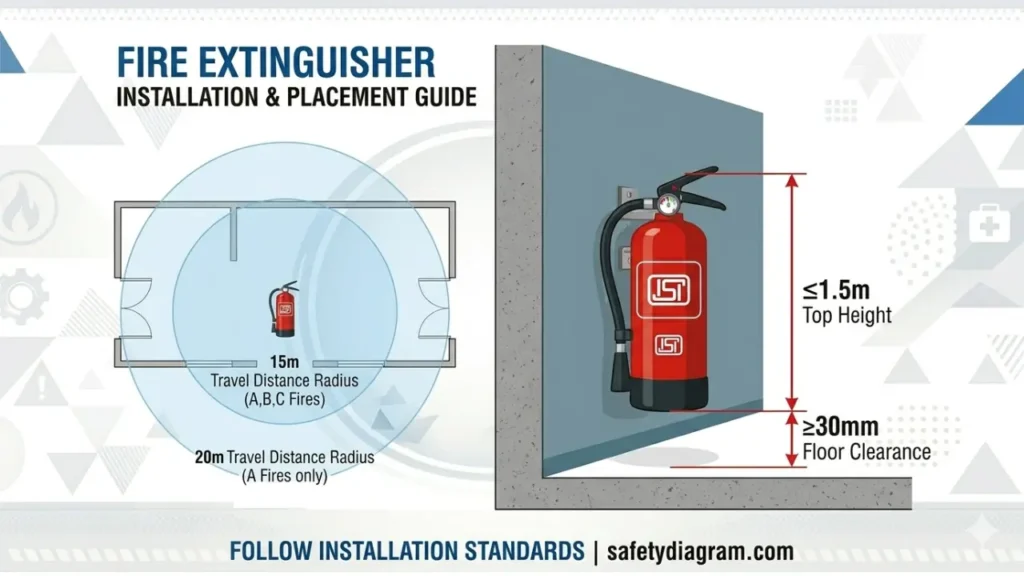
- ✔ Maximum height: 17 kg या उससे कम gross mass वाले portable extinguisher का top floor से 1.5 m से अधिक ऊँचा नहीं होना चाहिए।
- ✔ Minimum clearance: Hanger या bracket पर लगे extinguisher के bottom और floor के बीच कम-से-कम 30 mm clearance होना चाहिए।
- ✔ Extinguisher को उसके intended location पर सुरक्षित तरीके से mount करें और emergency में आसानी से उपलब्ध रखें।
Location, Accessibility & Visibility
- ✔ Extinguisher स्पष्ट रूप से दिखाई देने वाली जगह पर रखें।
- ✔ वह आसानी से accessible और emergency में तुरंत उपलब्ध होना चाहिए।
- ✔ जहाँ संभव हो, उसे सामान्य travel paths और exits के पास रखें।
- ✔ Extinguisher को obstruct या view से obscure न करें।
- ✔ जहाँ visual obstruction पूरी तरह हटाना संभव न हो, वहाँ location sign या अन्य उपयुक्त माध्यम से extinguisher की जगह दर्शाएँ।
Signage & Operating Instructions
IS 2190:2024 के Clause 5.4 के अनुसार extinguisher location दर्शाने वाले signs या अन्य माध्यम extinguisher के पास होने चाहिए और सामान्य travel path से दिखाई देने चाहिए, जहाँ ऐसे संकेत आवश्यक हों।
- ✔ Location marking स्पष्ट और आसानी से दिखाई देने वाली हो।
- ✔ Operating instructions बाहर की ओर या access की सबसे संभावित दिशा की ओर हों।
- ✔ Maintenance label और Hydrostatic Pressure Testing (HPT) label operating instructions को ढकें नहीं।
- ✔ Photoluminescent signage, signage height और language requirements के लिए लागू local regulations तथा project specifications अलग से verify करें।
Cabinet Installation Guidelines
- ✔ सामान्यतः extinguisher cabinet locked नहीं होना चाहिए।
- ✔ यदि vandalism का जोखिम हो, तो locked cabinet इस्तेमाल किया जा सकता है, बशर्ते emergency access की व्यवस्था हो।
- ✔ Outdoor cabinets या elevated temperature के संपर्क में आने वाले cabinets में ventilation openings और bottom पर suitable drain point होना चाहिए। Openings पर insects और reptiles को रोकने के लिए mesh screen भी होनी चाहिए।
Environmental & Physical Protection
- ✔ Extinguisher को उन स्थानों पर install न करें जहाँ ambient temperature उसकी marked operating range से बाहर हो।
- ✔ Heating sources से आने वाली अत्यधिक गर्मी से बचाएँ।
- ✔ जहाँ physical impact का खतरा हो, वहाँ उचित protection दें।
- ✔ जहाँ dislodgement या continuous vibration का खतरा हो, वहाँ specifically designed brackets का इस्तेमाल करें।
Travel Distance & Fire Extinguisher Rating – IS 2190:2024
IS 2190:2024 में extinguisher placement के लिए fire hazard, minimum extinguisher rating, maximum travel distance और maximum protected area को ध्यान में रखा जाता है। सही extinguisher चुनने के साथ यह भी सुनिश्चित करना जरूरी है कि वह निर्धारित दूरी के भीतर accessible हो।
- ✔ Travel distance: किसी स्थान से उपयुक्त fire extinguisher तक पहुँचने के लिए व्यक्ति को जितनी दूरी तय करनी पड़ती है।
- ✔ Fire rating: परीक्षण के आधार पर extinguisher की fire-extinguishing performance दर्शाने वाला rating designation।
- ✔ Maximum area: standard की संबंधित table के अनुसार एक extinguisher से सुरक्षित किए जाने वाले क्षेत्र की अधिकतम सीमा।
Class A Hazard – Table 1
Class A में लकड़ी, कागज, कपड़े, रबर और कई प्रकार के plastics जैसे combustible solids की आग शामिल होती है। IS 2190:2024 की Table 1 में hazard category के अनुसार निम्न minimum ratings और placement limits दी गई हैं।
| Hazard Type | Minimum Rating | Maximum Travel Distance | Maximum Area per Extinguisher |
|---|---|---|---|
| Light (Low) | 2A | 20 m | 300 m² |
| Moderate | 3A | 20 m | 150 m² |
| High | 4A | 15 m | 100 m² |
इन limits का उपयोग करते समय hazard classification और floor-level coverage दोनों की जाँच करें। केवल higher rating वाला extinguisher लगा देना पर्याप्त नहीं है, यदि travel distance या maximum protected area की सीमा पूरी नहीं होती।
Class B & Class C Hazards – Table 2
Class B में flammable liquids या liquefiable solids की आग शामिल होती है, जबकि Class C में pressure के अंतर्गत मौजूद flammable gases की आग शामिल होती है। IS 2190:2024 की Table 2 इन hazards के लिए निम्न placement requirements देती है।
| Hazard Type | Minimum Rating | Maximum Travel Distance | Maximum Area per Extinguisher |
|---|---|---|---|
| Light (Low) | 55B | 15 m | 300 m² |
| Moderate | 144B | 15 m | 150 m² |
| High | 233B | 15 m | 100 m² |
Table 2 के अनुसार travel distance तीनों hazard categories में 15 m है, जबकि minimum rating और maximum protected area hazard category के अनुसार बदलते हैं। Pressurized flammable liquid या gas fires के लिए standard के Clause 6.4 में दिए गए अतिरिक्त selection provisions भी देखें।
Class F – Cooking Oil and Fat Fires
Class F hazards में cooking appliances के अंदर मौजूद vegetable या animal oils और fats की आग शामिल होती है। इनके लिए extinguisher की rating के साथ cooking area coverage भी निर्धारित करना आवश्यक है।
- ✔ Maximum travel distance: 10 m (Clause 7.7.2)
- ✔ Extinguisher selection: उपयुक्त Class F rating वाला extinguisher
- ✔ Cooking area coverage: Table 3 के अनुसार निर्धारित करें
| Minimum Class F Rating | Maximum Cooking Area |
|---|---|
| 5F | 0.03 m² |
| 15F | 0.05 m² |
| 25F | 0.08 m² |
| 75F | 0.25 m² |
ये cooking-area limits IS 2190:2024 की Table 3 से ली गई हैं। वास्तविक selection में cooking equipment और संबंधित fire risk का आकलन भी करें।
Fire Rating Explained: 2A, 55B, 144B और 233B
Fire rating extinguisher की tested extinguishing performance को दर्शाती है। Rating designation को सीधे square feet में बदलना सही नहीं है।
- ✔ 2A, 3A और 4A: Class A fire tests के लिए निर्धारित rating designations।
- ✔ 55B, 144B और 233B: Class B fire tests के लिए निर्धारित rating designations।
- ✔ Class F ratings: Cooking oil और fat fires के लिए संबंधित tested rating और coverage requirements के अनुसार चयन करें।
IS 2190:2024 के Clause 4.2 के अनुसार rating और classification systems, IS 15683 तथा IS 16018 में निर्दिष्ट systems से जुड़े हैं। इसलिए extinguisher की वास्तविक marking और संबंधित product standard की पुष्टि करें।
Official reference: BIS – Know Your Standards
Fire Extinguisher Inspection & Maintenance Schedule – IS 2190:2024
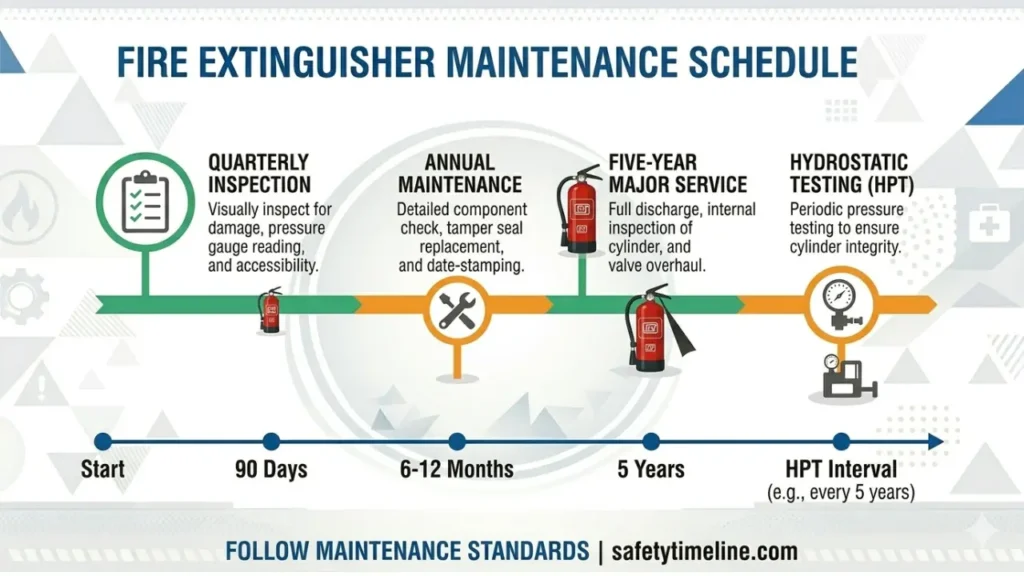
Fire extinguisher install करना ही पर्याप्त नहीं है। Emergency में उसके सही तरीके से काम करने के लिए regular inspection, scheduled maintenance और समय पर recharging तथा hydrostatic pressure testing (HPT) आवश्यक हैं। IS 2190:2024 के Clauses 8 और 11 में इन प्रक्रियाओं से संबंधित requirements दी गई हैं।
1. Periodic Inspection – Approximately Every 90 Days
Clause 8.3.1 के अनुसार extinguisher को पहली बार service में रखने पर और उसके बाद लगभग 90 दिनों के अंतराल पर check करना चाहिए। परिस्थितियों के अनुसार अधिक बार inspection करना आवश्यक हो सकता है।
- ✔ Extinguisher अपनी designated location पर मौजूद है।
- ✔ Extinguisher visible, unobstructed और आसानी से accessible है।
- ✔ Operating instructions स्पष्ट और पढ़ने योग्य हैं।
- ✔ Seal और tamper indicator टूटे या गायब नहीं हैं।
- ✔ Extinguisher भरा हुआ है; आवश्यकता के अनुसार weighing या hefting से जाँच करें।
- ✔ Body में स्पष्ट damage, corrosion या leakage नहीं है और nozzle blocked नहीं है।
- ✔ जहाँ pressure gauge या indicator दिया गया है, उसकी reading निर्धारित operating range में है।
- ✔ Hanger, bracket या cabinet सुरक्षित है और सही तरीके से mounted है।
- ✔ Inspection tag, identification/location number और HPT tag intact हैं।
- ✔ जहाँ लागू हो, hose retention band सुरक्षित है; exterior surface को साफ करके extinguisher वापस उसकी निर्धारित जगह पर रखें।
यदि inspection में extinguisher की location या visibility से संबंधित कमी मिले, तो तुरंत corrective action लें। Rechargeable extinguisher में अन्य निर्धारित deficiencies मिलने पर उचित maintenance procedure लागू करें।
2. Annual Maintenance – Once a Year
Clause 8.4.1 के अनुसार, Annex D में दिए गए exceptions को छोड़कर extinguishers का maintenance साल में एक बार किया जाना चाहिए। दो maintenance के बीच छह महीने से कम अंतर नहीं होना चाहिए। Maintenance hydrostatic testing के समय और inspection में आवश्यकता सामने आने पर भी किया जाना चाहिए।
- ✔ Seal और safety device की जाँच।
- ✔ Extinguisher के प्रकार के अनुसार आवश्यक examination और servicing।
- ✔ निर्धारित maintenance procedure के अनुसार defective parts की जाँच और आवश्यक replacement।
- ✔ Maintenance पूरा होने पर संबंधित label या record को update करना।
Annual maintenance को केवल external visual check न समझें। Extinguisher के प्रकार के अनुसार निर्धारित servicing procedure अपनाएँ। इसे competent person द्वारा manufacturer के service manual और applicable standard के अनुसार किया जाना चाहिए।
3. Additional Maintenance at Intervals Not Exceeding Five Years
IS 2190:2024 के Clause 8.4.2.5 और Table 5 में Categories 1, 2 और 5 के लिए अतिरिक्त maintenance procedures दिए गए हैं, जिन्हें पाँच वर्ष से अधिक के अंतराल पर नहीं किया जाना चाहिए। यह सभी extinguishers पर एक जैसा लागू होने वाला universal procedure नहीं है।
जहाँ संबंधित category और extinguisher type पर लागू हो, procedure में निम्न शामिल हो सकते हैं:
- ✔ Extinguisher को पूरी तरह discharge करना।
- ✔ अंदर की सफाई और internal corrosion या damage की जाँच।
- ✔ Nozzle, hose, strainer और संबंधित components की जाँच तथा आवश्यक सफाई।
- ✔ Sealing washers और अन्य defective components को बदलना।
- ✔ Operating mechanism की जाँच और आवश्यक repair या replacement।
- ✔ निर्धारित procedure के अनुसार reassembly और recharge करना।
किसी extinguisher पर यह procedure लागू है या नहीं, इसकी पुष्टि उसके type, category और IS 2190:2024 के संबंधित clauses से करें।
4. Hydrostatic Pressure Testing (HPT)
HPT, routine inspection और annual maintenance से अलग प्रक्रिया है। IS 2190:2024 के Clause 11 और Annex F में extinguisher type के अनुसार testing intervals और test pressure दिए गए हैं।
- ✔ Water-type और foam-type extinguishers: Annex F के अनुसार 3 वर्ष का test interval।
- ✔ Dry powder-type extinguishers: Annex F के अनुसार 5 वर्ष का test interval।
- ✔ Carbon dioxide extinguishers: Annex F के अनुसार 5 वर्ष का test interval; recharging के समय लागू testing requirements भी देखें।
- ✔ Clean-agent extinguishers: Annex F के अनुसार 5 वर्ष का test interval; recharging के समय लागू requirements verify करें।
HPT केवल निर्धारित pressure, equipment और procedure के अनुसार competent service personnel द्वारा किया जाना चाहिए। Test में leakage या visible distortion होने पर standard के अनुसार extinguisher को replace करना आवश्यक हो सकता है।
5. Refilling and Operational Performance Tests
Annex E में कुछ extinguisher types के लिए तीन-वर्षीय और पाँच-वर्षीय cycles में refilling या operational performance tests का schedule दिया गया है। यह schedule extinguisher type के अनुसार अलग होता है और इसे annual inspection या HPT के साथ एक ही प्रक्रिया नहीं समझना चाहिए।
Extinguisher का उपयोग होने, leakage या gas loss मिलने, या extinguishing medium की स्थिति असंतोषजनक होने पर आवश्यक corrective action और recharging में देरी न करें।
6. Maintenance Responsibility
- ✔ Property owner, designated agent या occupant को inspection, maintenance और recharging की जिम्मेदारी निभानी चाहिए।
- ✔ Servicing केवल competent person द्वारा किया जाना चाहिए।
- ✔ Manufacturer के service manual और लागू Indian Standards का पालन करें।
- ✔ Maintenance, inspection और operational history का record सुरक्षित रखें।
- ✔ Maintenance या recharge के लिए हटाए गए extinguisher के स्थान पर तुरंत उसी type और कम-से-कम समान classification तथा rating वाला spare extinguisher उपलब्ध कराएँ।
Supplementary international reference: National Fire Protection Association (NFPA). भारतीय installations के लिए लागू IS 2190:2024 और स्थानीय requirements को प्राथमिकता दें।
Hydrostatic Testing (HPT) & Recharging Rules – IS 2190:2024
IS 2190:2024 में fire extinguishers की Hydrostatic Pressure Testing (HPT), recharging और maintenance के लिए अलग-अलग requirements दी गई हैं। HPT cylinder की pressure withstand करने की क्षमता जांचता है, जबकि recharging में extinguisher को निर्धारित extinguishing medium और आवश्यक charge के साथ दोबारा service के लिए तैयार किया जाता है।
HPT की प्रक्रिया, test pressure और संबंधित documentation के बारे में अधिक जानकारी के लिए हमारी Complete Hydrostatic Testing Guide पढ़ें।
HPT Schedule as per Annex F
IS 2190:2024 के Annex F के अनुसार fire extinguisher के प्रकार के आधार पर hydrostatic testing का interval, minimum test pressure और pressure बनाए रखने की अवधि नीचे दी गई है।
| Extinguisher Type | Test Interval | Minimum Test Pressure | Holding Time |
|---|---|---|---|
| Water Type | 3 Years | 35 kg/cm² | 150 seconds |
| Foam Type | 3 Years | 35 kg/cm² | 150 seconds |
| Dry Powder Type | 5 Years | 35 kg/cm² | 150 seconds |
| Carbon Dioxide (CO₂) | 5 Years | 225 kg/cm² | 30 seconds |
| Clean Agent | 5 Years | 35 kg/cm² | 150 seconds |
HPT के दौरान leakage या visible distortion नहीं होना चाहिए। Test में fail होने वाले extinguisher को service में वापस नहीं रखना चाहिए; standard के अनुसार उसे replace करना आवश्यक है।
CO₂ और clean-agent type extinguishers के cylinders को recharging के लिए भेजे जाने पर भी Annex F के अनुसार निर्धारित pressure पर pressure testing करनी होती है।
Official reference: BIS Know Your Standards Portal. IS 2190:2024 की लागू requirements और संबंधित extinguisher specification को verify करें।
Recharging Rules – Clause 9
- ✔ Rechargeable fire extinguisher को हर use के बाद recharge करें या जब inspection/maintenance में कमी सामने आए।
- ✔ Recharging के दौरान manufacturer की recommendations और procedures का पालन करें।
- ✔ केवल वही extinguishing medium इस्तेमाल करें जो extinguisher की nameplate पर specified है।
- ✔ Recharge medium की मात्रा weighing या measuring से verify करें। Recharged gross mass/volume manufacturer label पर दिए गए मान के अनुरूप होना चाहिए।
- ✔ Recharging के बाद stored-pressure और self-expelling media extinguishers तथा cartridges का leak test करें।
- ✔ अलग-अलग powder types, जैसे BC, ABC और D powder, को mix या एक-दूसरे से contaminate न होने दें।
- ✔ Extinguisher को एक प्रकार से दूसरे प्रकार में convert न करें और न ही अलग extinguishing medium के लिए modify करें।
Powder Reuse and Clean-Agent Recovery
- ❌ Discharged extinguisher में बचा हुआ powder दोबारा इस्तेमाल न करें।
- ✔ पाँच-वर्षीय maintenance या HPT के दौरान निकाले गए powder को reuse करने की अनुमति केवल निर्धारित शर्तों के अंतर्गत है: closed recovery system, contamination रोकने के लिए sealed container में अलग storage और reuse से पहले thorough checking आवश्यक है।
- ✔ Clean-agent extinguisher से medium निकालने के लिए closed recovery system इस्तेमाल करें। Recovery cylinder में प्राप्त clean agent का reuse तभी करें जब extinguisher cylinder में internal contamination का कोई प्रमाण न हो।
- ✔ Stored-pressure powder और clean-agent extinguishers को pressurize करने के लिए standard में निर्दिष्ट industrial-grade dry nitrogen या अन्य inert gas इस्तेमाल करें। Compressed air का इस्तेमाल न करें।
When Should a Fire Extinguisher Be Recharged?
- ✔ Extinguisher के किसी भी use के बाद।
- ✔ Inspection या maintenance में charge loss या अन्य deficiency मिलने पर।
- ✔ निर्धारित maintenance procedure में discharge और recharge आवश्यक होने पर।
- ✔ जब medium की स्थिति या मात्रा निर्धारित requirements को पूरा न करती हो।
HPT और recharging अलग-अलग प्रक्रियाएँ हैं; एक को दूसरे का विकल्प न समझें। Hydrostatic testing trained personnel द्वारा उपयुक्त testing equipment और safeguards के साथ की जानी चाहिए। HPT में fail होने वाले extinguisher को दोबारा इस्तेमाल न करें। Servicing और testing का रिकॉर्ड भी बनाए रखें।
Fire Extinguisher Service Life & Obsolete Types – IS 2190:2024
IS 2190:2024 के Annex G में fire extinguishers की service life दी गई है। यह अवधि extinguisher की manufacturing date से गिनी जाती है। निर्धारित service life के साथ-साथ inspection, maintenance, hydrostatic pressure testing (HPT) और cylinder की physical condition भी महत्वपूर्ण हैं।
Fire Extinguisher Service Life (Annex G)
| Extinguisher Type | Service Life |
|---|---|
| Water-Based | 10 Years |
| Foam-Based | 10 Years |
| Powder-Based | 10 Years |
| Carbon Dioxide (CO₂) | 15 Years |
| Clean Agent | 10 Years |
These service-life limits are specified in Annex G of IS 2190:2024. The standard also states that an extinguisher that fails hydrostatic pressure testing must be discarded and replaced with one of a similar type and fire rating.
For more details, read our guide: Fire Extinguisher Expiry Date Rules .
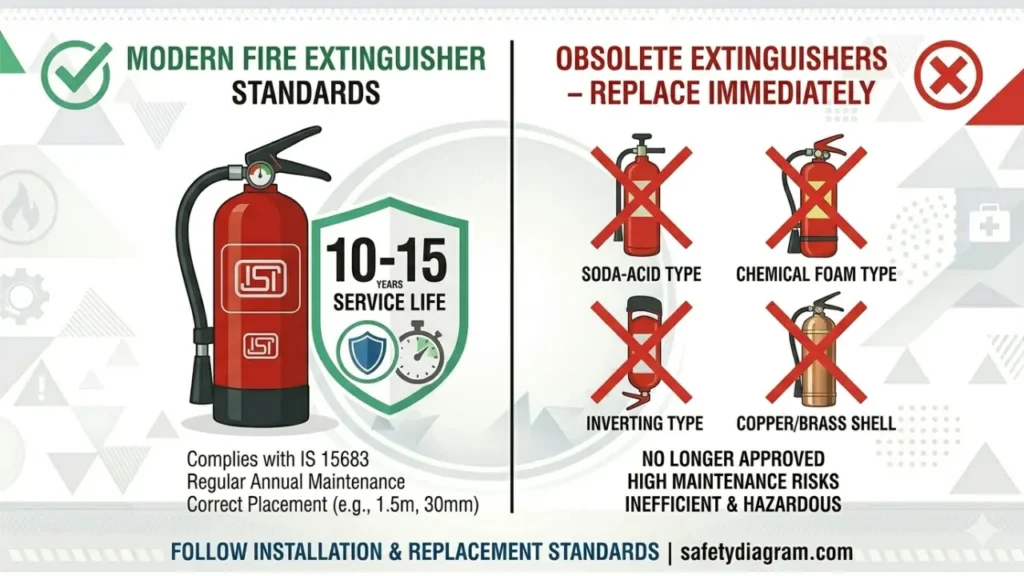
Obsolete Fire Extinguishers (Annex D)
Annex D of IS 2190:2024 identifies the following extinguisher types as obsolete and states that they shall be removed from service:
- ❌ Soda-acid type extinguishers
- ❌ Chemical-foam type extinguishers
- ❌ Chlorobromomethane or carbon-tetrachloride type extinguishers
- ❌ Non-rechargeable extinguishers more than 5 years old
- ❌ Inverting-type extinguishers
- ❌ Copper or brass shell types, excluding pump tanks, joined by soft solder or rivets
- ❌ Steel shell types joined by rivets
These are the categories listed in Annex D. Do not confuse the obsolete-extinguisher list with the service-life table: they address different requirements under IS 2190:2024.
When Should a Fire Extinguisher Be Replaced?
- ✔ When it reaches the service-life limit specified in Annex G.
- ✔ When it fails hydrostatic pressure testing.
- ✔ When the cylinder has severe corrosion, mechanical damage, or another defect that requires rejection under the standard.
- ✔ When it falls into an obsolete category listed in Annex D.
- ✔ When a non-rechargeable extinguisher reaches the applicable five-year limit specified by the standard.
Do not keep obsolete, rejected, or service-life-expired extinguishers in service. A cylinder that fails HPT must be discarded and replaced with an extinguisher of a similar type and fire rating. Follow the applicable requirements of IS 2190:2024 and the manufacturer’s instructions.
Competent Person & Record Keeping – IS 2190:2024 Requirements
IS 2190:2024 में fire extinguisher servicing के लिए competent persons की requirements और inspection, maintenance तथा testing records बनाए रखने के प्रावधान दिए गए हैं। सही servicing और documentation से extinguisher की condition, service history और अगली निर्धारित कार्रवाई को track किया जा सकता है।
Who Is a Competent Person?
Clause 8.2.2 के अनुसार, fire extinguishers की servicing केवल competent persons द्वारा की जानी चाहिए। Annex C competency निर्धारित करने के लिए training और practical experience का आधार देता है।
- ✔ कम-से-कम 3 महीने का on-the-job या practical experience और training course में participation।
- ✔ Training course की recommended duration कम-से-कम 32 घंटे।
- ✔ Course के अंत में examination pass करना आवश्यक है; examination किसी nationally recognized body द्वारा supervised होना चाहिए।
- ✔ कम-से-कम हर 5 वर्ष में 4 घंटे का refresher course attend करना चाहिए।
Annex C में training course को manufacturer या किसी अन्य qualified and recognized body द्वारा संचालित करने का भी उल्लेख है। ये provisions fire extinguisher servicing से संबंधित हैं; इन्हें केवल सामान्य visual inspection के लिए आवश्यक formal qualification के रूप में प्रस्तुत न करें।
Who Is Responsible for Inspection and Maintenance?
Clause 8.2.1 के अनुसार, जिस property में fire extinguishers लगे हैं, उसके owner, owner’s designated agent या occupant पर inspection, maintenance और recharging की जिम्मेदारी होती है। Clause 8.2.2 के अनुसार, extinguisher की servicing competent person द्वारा की जानी चाहिए।
Fire Extinguisher Record Keeping Requirements
Clauses 10 और 12 तथा Annex H के अनुसार, extinguishers की inspection, maintenance, testing और operational history का record निर्धारित register format में maintain किया जाना चाहिए।
| Record Field | What to Record |
|---|---|
| Unique Identification | हर extinguisher का अलग identification number |
| Type and Capacity | Extinguisher type और capacity |
| Manufacturing Details | Year of manufacture और make |
| Location | Premises में extinguisher की installed location |
| Quarterly Inspection | Quarterly inspection की dates |
| Annual Inspection | Annual inspection की dates |
| Pressure Testing | Pressure test की date |
| Discharge and Refill | Discharge date, refill date और next refill due date |
| Service Details | Service performed की details, date, servicing organization और responsible person की पहचान |
| Rejected Extinguishers | Rejection date और disposal method, जहाँ लागू हो |
Clause 10.3 के अनुसार, प्रत्येक extinguisher पर securely attached service tag या label होना चाहिए, जिसमें maintenance, recharging और hydrostatic testing किए जाने का month और year तथा service करने वाले व्यक्ति की पहचान दी गई हो। Clause 10.4 के अनुसार, service label extinguisher के front पर नहीं लगाया जाना चाहिए।
Official reference: BIS Know Your Standards Portal .
Why Is Record Keeping Important?
- ✔ Inspection, maintenance और testing history को track करने में मदद करता है।
- ✔ Next inspection, testing या refilling due date पहचानने में सहायता करता है।
- ✔ Servicing और rejected extinguishers की traceability बेहतर होती है।
- ✔ Internal safety reviews और applicable compliance audits के लिए documentation उपलब्ध रहता है।
IS 2190:2024 के अनुसार maintenance, inspection और testing records निर्धारित register में maintain करें। Extinguisher की servicing competent person से कराएँ और service tag तथा unique identification number को record के साथ consistent रखें।
IS 2190:2024 vs NFPA 10 – Key Differences
IS 2190:2024 is the Indian Standard titled Selection, Installation and Maintenance of First-Aid Fire Extinguishers — Portable and Mobile — Code of Practice. NFPA 10 is the National Fire Protection Association standard covering portable fire extinguishers. Both address extinguisher selection, placement, inspection and maintenance, but their requirements should be compared using the specific edition applicable to each standard.
| Parameter | IS 2190:2024 (India) | NFPA 10 (United States) |
|---|---|---|
| Installation Height | For portable extinguishers with a gross mass of 17 kg or less, the top must not be more than 1.5 m above the floor. | Verify the mounting-height requirement against the applicable NFPA 10 edition and extinguisher weight. |
| Bottom Clearance | At least 30 mm between the floor and the bottom of extinguishers mounted on hangers or brackets. | Verify the applicable NFPA 10 edition before stating a numerical clearance. |
| Inspection Frequency | Check when first placed in service and thereafter at approximately 90-day intervals; check more frequently when circumstances require. | Check the inspection requirements in the applicable NFPA 10 edition before comparing intervals. |
| Class A Travel Distance | Maximum 20 m for light and moderate hazards; maximum 15 m for high hazards, subject to the standard’s rating and area requirements. | Travel-distance requirements depend on the applicable NFPA 10 edition, extinguisher rating and hazard classification. |
| Hydrostatic Pressure Testing (HPT) | Annex F specifies intervals of 3 years for water and foam types, and 5 years for dry powder, CO₂ and clean-agent types. | Verify the applicable NFPA 10 edition and extinguisher type before stating the test interval. |
| Service Life | Annex G specifies 10 years for water-based, foam-based, powder-based and clean-agent extinguishers, and 15 years for CO₂ extinguishers, calculated from the manufacturing date. | Do not assume a universal service-life rule; verify the applicable standard, extinguisher type, condition and manufacturer requirements. |
For the Indian requirements, refer to BIS Know Your Standards. For the NFPA standard and its applicable edition, visit the official NFPA website.
Which Standard Should You Follow in India?
For projects in India, determine the applicable requirements from the relevant Indian Standards, local fire authority, building regulations and other applicable legal requirements. NFPA 10 may be used as a supplementary technical reference where appropriate, but it should not automatically replace requirements applicable to the project in India.
The figures in the IS 2190:2024 column are based on the Indian Standard. The NFPA 10 column deliberately avoids unverified numerical claims. Before publishing a definitive comparison, identify the NFPA edition and verify each corresponding clause or table.
Frequently Asked Questions
।S 2190:2024 का latest version क्या है?
IS 2190:2024 वर्तमान में लागू latest version (Fifth Revision) है, जो अक्टूबर 2024 में जारी किया गया है।
Fire extinguisher inspection कितनी बार करना चाहिए?
इस standard के अनुसार inspection हर 90 दिन (quarterly) में करना जरूरी है, जबकि detailed maintenance साल में एक बार किया जाता है।
क्या annual maintenance में extinguisher discharge करना पड़ता है?
नहीं, annual maintenance में full discharge नहीं किया जाता। Complete discharge केवल 5-year maintenance में किया जाता है।
CO₂ fire extinguisher की life कितनी होती है?
CO₂ type extinguisher की maximum service life 15 साल होती है (manufacturing date से)।
क्या कोई भी व्यक्ति fire extinguisher recharge कर सकता है?
नहीं, recharging केवल trained competent person द्वारा ही की जानी चाहिए।
Minimum कितने fire extinguishers लगाने चाहिए?
हर floor पर कम से कम 2 extinguishers होने चाहिए, लेकिन यदि area 100 m² से कम है, तो 1 भी पर्याप्त हो सकता है।
Conclusion – IS 2190:2024 क्यों जरूरी है?
Fire safety केवल fire extinguishers लगाने तक सीमित नहीं है। सही extinguisher का चयन, उचित installation, नियमित inspection और समय पर maintenance भी उतने ही जरूरी हैं। IS 2190:2024 (Fifth Revision) portable और mobile fire extinguishers के selection, installation और maintenance के लिए महत्वपूर्ण guidelines प्रदान करता है।
इस standard के अनुसार fire extinguisher की व्यवस्था करते समय fire class, hazard level, travel distance, installation location और maintenance requirements को ध्यान में रखना चाहिए। इससे emergency में extinguisher की उपलब्धता और उपयोगिता बेहतर बनाए रखने में मदद मिलती है।
- ✔ Fire class और hazard level के अनुसार सही extinguisher selection
- ✔ निर्धारित installation height, clearance और accessible location
- ✔ लगभग हर 90 दिनों में periodic inspection और आवश्यक maintenance
- ✔ निर्धारित schedule के अनुसार recharging और Hydrostatic Pressure Testing (HPT)
- ✔ Inspection, servicing और testing का उचित record maintenance
ध्यान रखें कि IS 2190:2024 का पालन करते समय लागू State और local fire safety regulations तथा संबंधित authority की requirements भी जांचें। केवल extinguisher install कर देना पर्याप्त नहीं है—उसकी सही स्थिति, servicing और readiness लगातार सुनिश्चित करना आवश्यक है।
IS 2190:2024 को समझना और उसके अनुसार fire extinguishers का चयन, installation तथा maintenance करना बेहतर fire safety management की दिशा में महत्वपूर्ण कदम है। सही planning और नियमित देखभाल emergency के समय लोगों और संपत्ति की सुरक्षा में मदद करती है।

4 thoughts on “IS 2190:2024 क्या है? फायर एक्सटिंग्विशर के नए नियम, इंस्टॉलेशन और मेंटेनेंस पूरी गाइड हिंदी में”