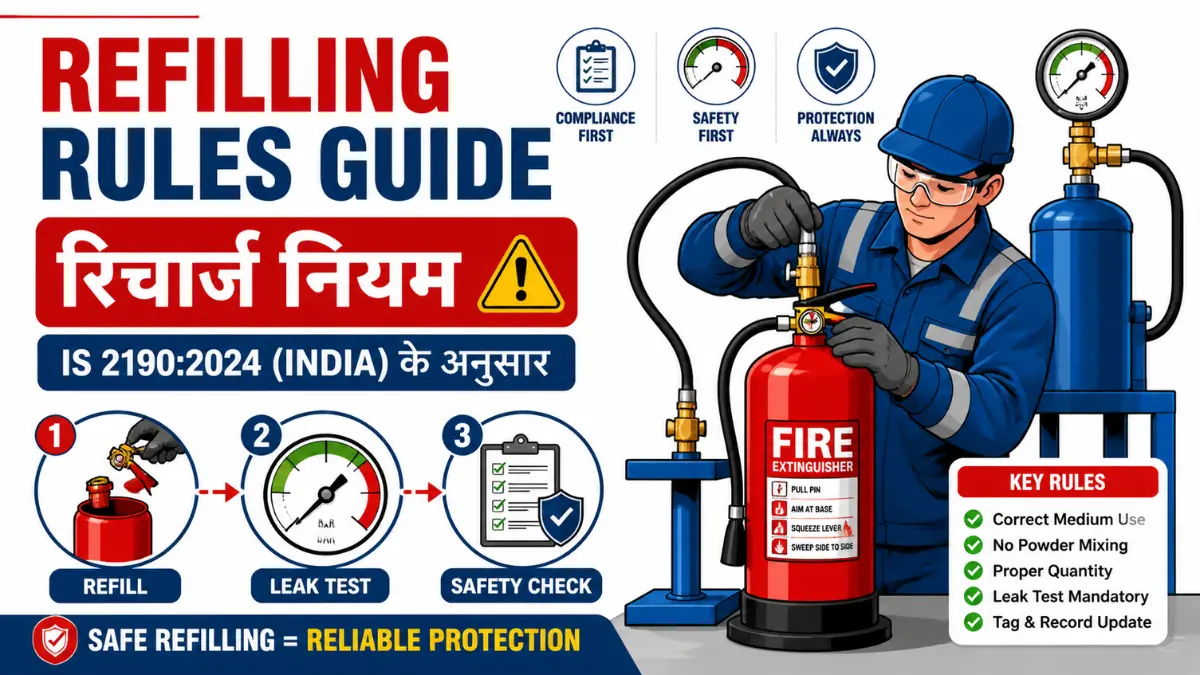
Fire Extinguisher Refilling Rules in India Fire Safety Compliance का एक महत्वपूर्ण हिस्सा है। यदि Fire Extinguisher की समय पर Refilling या Recharge नहीं की जाती, तो Emergency के दौरान यह प्रभावी ढंग से कार्य नहीं कर सकता।
IS 2190:2024 (Clause 9) के अनुसार Refilling एक Controlled एवं Safety-Critical Process है, जिसमें सही Extinguishing Agent, उचित Pressure तथा आवश्यक Inspection एवं Testing के बाद Fire Extinguisher को दोबारा Operational Condition में लाया जाता है।
गलत Refilling—जैसे गलत Extinguishing Agent का उपयोग, अनुचित Pressure या Leak Test को छोड़ देना—Cylinder Failure, Malfunction तथा गंभीर Safety Risk का कारण बन सकता है।
Refilling या Recharge के बाद Fire Extinguisher की condition verify करने के लिए Fire Extinguisher Inspection Checklist देखें। यह checklist inspection के दौरान location, accessibility, safety components, physical condition और अन्य applicable points को systematically check करने में मदद करती है।
👉 Standard एवं Compliance Requirements की विस्तृत जानकारी के लिए पढ़ें: IS 2190:2024 Complete Guide
Fire Extinguisher की Refilling केवल प्रशिक्षित एवं Competent Person द्वारा ही की जानी चाहिए। बिना उचित प्रशिक्षण के स्वयं Refilling करने का प्रयास न करें, क्योंकि इससे गंभीर दुर्घटना या जान का खतरा हो सकता है।
Quick Answer – Fire Extinguisher Refilling Rules at a Glance
Fire Extinguisher Refilling Rules in India के अनुसार IS 2190:2024 (Clause 9) में Fire Extinguisher की Refilling, Recharge, Inspection एवं Testing के लिए निम्नलिखित मुख्य नियम दिए गए हैं:
- ✔ Recharge कब करें: Fire Extinguisher के किसी भी उपयोग के बाद तुरंत Recharge करें। (Clause 9.1)
- ✔ Inspection Failure: यदि Pressure Loss, Leakage, Corrosion, Damage या किसी अन्य Defect का पता चले तो Recharge अनिवार्य है।
- ✔ सही Extinguishing Agent: Fire Extinguisher की Nameplate पर दिए गए Agent के अनुसार ही Refilling करें। (Clause 9.6)
- ✔ Powder Mixing: BC Powder, ABC Powder तथा Class D Powder को आपस में मिलाना पूरी तरह प्रतिबंधित है। (Clause 9.7)
- ✔ Leak Test: Stored Pressure Fire Extinguishers में Recharge के बाद Leak Test करना अनिवार्य है। (Clause 9.4)
- ✔ CO₂ Special Rule: Recharge से पहले Hydrostatic Pressure Test (HPT) अनिवार्य है। (Clause 10.8)
गलत Refilling Process, गलत Extinguishing Agent, अनुचित Pressure या Leak Test को छोड़ देना Fire Extinguisher को असुरक्षित बना सकता है। इसलिए हमेशा IS 2190:2024 के अनुसार ही Refilling, Recharge, Inspection एवं Testing करानी चाहिए।
What is Fire Extinguisher Refilling?
Fire Extinguisher Refilling Rules in India के अनुसार Fire Extinguisher Refilling एक नियंत्रित (Controlled) Maintenance Process है, जिसमें Discharged Fire Extinguisher या Inspection के दौरान Defect पाए जाने पर उसे दोबारा सुरक्षित एवं पूर्ण Operational Condition में लाया जाता है।
IS 2190:2024 (Clause 9) के अनुसार Refilling के दौरान सही Extinguishing Agent, निर्धारित Pressure, आवश्यक Inspection तथा Leak Test सुनिश्चित किया जाता है ताकि Fire Extinguisher Emergency के समय प्रभावी ढंग से कार्य कर सके।
👉 Fire Extinguisher के Selection, Installation, Inspection, Maintenance तथा Refilling Requirements की विस्तृत जानकारी के लिए पढ़ें: IS 2190:2024 Complete Guide
Refilling vs Recharging vs Maintenance
- ✔ Refilling: Fire Extinguishing Agent (Powder, Foam, Water, Clean Agent या CO₂) को निर्धारित मात्रा में बदलना या दोबारा भरना।
- ✔ Recharging: Stored Pressure Fire Extinguishers में आवश्यक Operating Pressure को पुनः स्थापित करना।
- ✔ Maintenance: Fire Extinguisher का Inspection, Servicing, Testing तथा सभी Components की कार्यक्षमता की जांच करना।
इन तीनों प्रक्रियाओं का उद्देश्य अलग-अलग होता है। Fire Safety Compliance बनाए रखने के लिए इनके बीच का अंतर समझना आवश्यक है।
Fire Extinguisher Refilling केवल Extinguishing Agent भरने तक सीमित नहीं है। इसमें सही Agent, सही Quantity, निर्धारित Pressure, Leak Test तथा सभी आवश्यक Safety Checks शामिल होते हैं। इसलिए Refilling हमेशा प्रशिक्षित एवं Competent Person द्वारा ही की जानी चाहिए।
When to Recharge a Fire Extinguisher? (IS 2190:2024 Clause 9.1)
Fire Extinguisher Refilling Rules in India के अनुसार Fire Extinguisher को सही समय पर Recharge या Refill करना Fire Safety Compliance तथा Emergency Readiness दोनों के लिए आवश्यक है। IS 2190:2024 (Clause 9.1) उन परिस्थितियों को स्पष्ट करता है जिनमें Fire Extinguisher का Recharge तुरंत किया जाना चाहिए।
Mandatory Recharging Situations
- ✔ After Any Use: Fire Extinguisher आंशिक (Partially) या पूर्ण (Fully) Discharge होने पर तुरंत Recharge करें।
- ✔ Inspection Deficiency: यदि Inspection के दौरान Pressure Loss, Leakage, Corrosion, Damage या अन्य Defect मिले तो Recharge अनिवार्य है।
- ✔ Maintenance Finding: Servicing या Maintenance के दौरान किसी भी Fault का पता चलने पर Fire Extinguisher को Recharge करें।
- ✔ After Major Service: निर्धारित Major Maintenance या Overhaul के बाद Fire Extinguisher को Recharge करना आवश्यक है।
👉 Fire Extinguisher के Inspection, Testing एवं Maintenance Schedule की विस्तृत जानकारी के लिए पढ़ें: Fire Extinguisher Maintenance Schedule Guide
Why Immediate Recharge is Important?
- ✔ आंशिक रूप से उपयोग किया गया Fire Extinguisher Emergency के दौरान पर्याप्त Fire Fighting क्षमता प्रदान नहीं कर सकता।
- ✔ Pressure Loss या Improper Recharge से Discharge Performance प्रभावित हो सकती है।
- ✔ समय पर Recharge न करने पर Fire Safety Inspection या Compliance Audit में Deficiency दर्ज हो सकती है।
Fire Extinguisher का एक बार भी उपयोग होने के बाद उसे बिना Recharge किए दोबारा Service में नहीं लगाना चाहिए। बाहर से वह Installed दिखाई दे सकता है, लेकिन Emergency के समय उसका प्रभावी ढंग से कार्य करना सुनिश्चित नहीं होता।
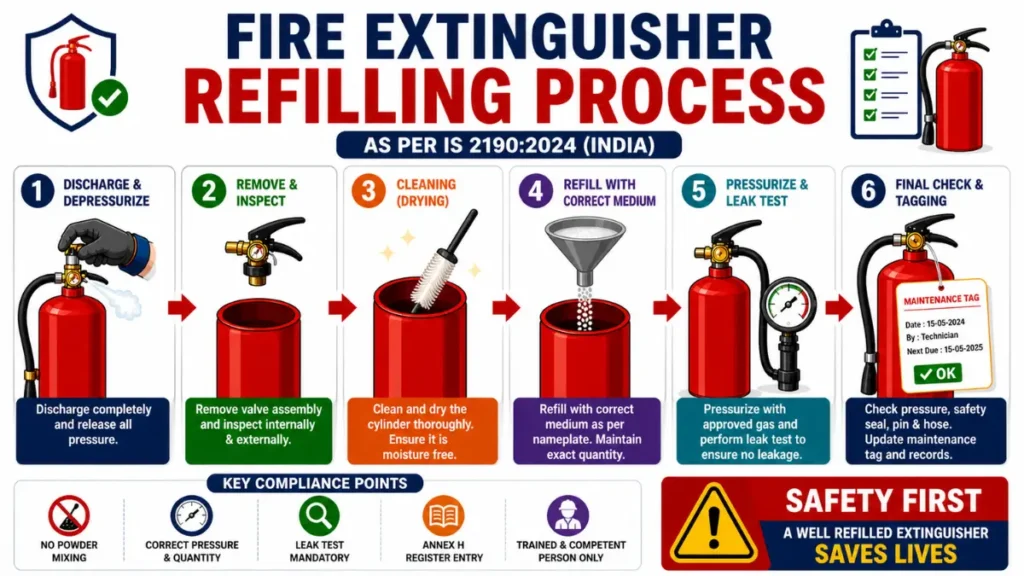
Fire Extinguisher Refilling Process – Step-by-Step (IS 2190:2024 Clause 9.2–9.19)
Fire Extinguisher Refilling Rules in India के अनुसार Fire Extinguisher की Refilling एक नियंत्रित (Controlled) एवं Safety-Critical Process है। इसमें सही Extinguishing Agent, निर्धारित Pressure, आवश्यक Inspection तथा Leak Test के माध्यम से Fire Extinguisher को दोबारा सुरक्षित एवं Operational Condition में लाया जाता है।
Step 1: Pre-Check (Refilling से पहले जांच)
- ✔ Fire Extinguisher का Type एवं Capacity Verify करें।
- ✔ Nameplate के अनुसार सही Extinguishing Agent की पुष्टि करें।
- ✔ Cylinder, Valve तथा बाहरी भाग में Damage, Corrosion या Leakage की जांच करें।
- ✔ जहाँ लागू हो, Internal Inspection करें।
Step 2: Cylinder Preparation
- ✔ Fire Extinguisher को पूरी तरह Discharge/Empty करें।
- ✔ Valve एवं अन्य Internal Components को सावधानीपूर्वक Remove करें।
- ✔ Cylinder के अंदर Rust, Moisture या Contamination की जांच कर अच्छी तरह साफ करें।
Step 3: Refilling (Extinguishing Agent भरना)
- ✔ केवल Manufacturer द्वारा निर्दिष्ट Extinguishing Agent का ही उपयोग करें।
- ✔ निर्धारित Weight या Volume के अनुसार सही मात्रा में Agent भरें।
- ✔ ABC, BC एवं Class D Dry Powder को कभी भी आपस में Mix न करें।
Step 4: Pressurizing (Pressure Restore करना)
- ✔ Stored Pressure Type Fire Extinguishers में Dry Nitrogen या अन्य Approved Inert Gas का उपयोग करें।
- ✔ निर्धारित Operating Pressure बनाए रखें और Over-Pressurization से बचें।
- ✔ Pressure Gauge को Normal Operating Range में Verify करें।
Step 5: Leak Test (अनिवार्य जांच)
- ✔ Recharge के बाद पूरे Fire Extinguisher की Leakage जांच करें।
- ✔ Valve, Hose, Nozzle, Joints एवं Seals का सावधानीपूर्वक निरीक्षण करें।
- ✔ Stored Pressure Fire Extinguishers में Leak Test अनिवार्य है।
Step 6: Final Assembly & Tagging
- ✔ Safety Pin एवं Tamper Seal सही तरीके से लगाएँ।
- ✔ Maintenance Tag पर Refilling Date, Technician Details तथा अगली Service Due Date दर्ज करें।
- ✔ Fire Extinguisher को Ready-to-Use Condition में वापस स्थापित करें।
👉 CO₂ Fire Extinguishers के लिए Recharge या Refilling से पहले Hydrostatic Pressure Testing (HPT) अनिवार्य हो सकता है। संबंधित Requirements अवश्य जांचें।
Fire Extinguisher की Refilling केवल Extinguishing Agent भरने तक सीमित नहीं है। इसमें सही Agent, निर्धारित Quantity, Operating Pressure, Leak Test, Safety Checks तथा Maintenance Tagging शामिल होती है। इसलिए Refilling हमेशा प्रशिक्षित एवं Competent Person द्वारा ही की जानी चाहिए।
Critical “DO NOT” Rules (IS 2190:2024 Clause 9.7–9.18)
Fire Extinguisher Refilling Rules in India के अनुसार Refilling के दौरान कुछ कार्य पूरी तरह प्रतिबंधित (Prohibited) हैं। इन नियमों का उल्लंघन करने से Fire Extinguisher की कार्यक्षमता प्रभावित हो सकती है तथा Leakage, Malfunction, Cylinder Failure या गंभीर दुर्घटना का खतरा बढ़ सकता है।
- ❌ Powder Mixing न करें: BC Powder, ABC Powder तथा Class D Dry Powder को कभी भी आपस में Mix न करें। (Clause 9.7)
- ❌ Used Powder का पुनः उपयोग न करें: Discharge हो चुके Powder या Contaminated Extinguishing Agent का दोबारा उपयोग न करें। (Clause 9.9)
- ❌ गलत Extinguishing Agent का उपयोग न करें: Fire Extinguisher की Nameplate पर दिए गए Agent के अलावा कोई अन्य Agent न भरें। (Clause 9.6)
- ❌ Fire Extinguisher का Type न बदलें: Water, Foam, ABC, BC, CO₂ या अन्य किसी Type को दूसरे Type में Convert न करें। (Clause 9.8)
- ❌ Unregulated Pressure का उपयोग न करें: बिना Approved Pressure Regulator के किसी भी Gas Source से Pressurize करना खतरनाक है। (Clause 9.17)
- ❌ Moist Air का उपयोग न करें: Stored Pressure Fire Extinguishers में केवल Dry Nitrogen या अन्य Approved Inert Gas का ही उपयोग करें। (Clause 9.18)
- ❌ Leak Test कभी न छोड़ें: Recharge या Refilling के बाद Leak Test करना अनिवार्य है, विशेष रूप से Stored Pressure Fire Extinguishers में। (Clause 9.4)
इनमें से किसी भी नियम का उल्लंघन Fire Extinguisher को असुरक्षित बना सकता है। गलत Refilling या Pressurizing के कारण Leakage, Pressure Failure, Cylinder Burst या Emergency के समय Fire Extinguisher के काम न करने का जोखिम बढ़ जाता है। इसलिए Refilling हमेशा प्रशिक्षित एवं Competent Person द्वारा ही कराई जानी चाहिए।
Fire Extinguisher Refilling Schedule – IS 2190:2024 Annex E Explained
Fire Extinguisher Refilling Rules in India के अनुसार IS 2190:2024 Annex E विभिन्न प्रकार के Fire Extinguishers के लिए अनुशंसित (Recommended) Refilling Interval बताता है। यदि Fire Extinguisher का उपयोग हो जाए, उसमें Leakage, Pressure Loss या कोई Defect पाया जाए, तो निर्धारित Interval का इंतजार किए बिना तुरंत Recharge या Refilling करनी चाहिए।
Refilling Interval – Every 3 Years
| Fire Extinguisher Type | Category |
|---|---|
| Water (Gas Cartridge Type) | Portable |
| Mechanical Foam (Gas Cartridge Type) | Portable |
| Dry Powder (Gas Cartridge Type) | Portable |
| Water / Foam (Stored Pressure Type) | Portable |
| Mechanical Foam (Wheeled – IS 16018) | Wheeled |
Refilling Interval – Every 5 Years
| Fire Extinguisher Type | Category |
|---|---|
| CO₂ Fire Extinguisher | Portable & Wheeled |
| Dry Powder (Stored Pressure Type) | Portable & Wheeled |
| Clean Agent Fire Extinguisher | Portable |
Chemical Plants, Coastal Areas, Offshore Installations तथा अन्य Corrosive Environment में Fire Extinguishers की Inspection, Maintenance एवं Refilling सामान्य Schedule से अधिक बार करनी पड़ सकती है। हमेशा Manufacturer की Recommendations तथा लागू BIS Requirements का पालन करें।
👉 Fire Extinguisher के Inspection, Testing एवं Maintenance Schedule की विस्तृत जानकारी के लिए पढ़ें: Fire Extinguisher Maintenance Schedule Guide
Special Cases & Exceptions
Fire Extinguisher Refilling Rules in India के अनुसार कुछ विशेष परिस्थितियों (Special Cases) में सामान्य Refilling Rules के अतिरिक्त अतिरिक्त सावधानियाँ (Extra Precautions) अपनाना आवश्यक होता है। इन नियमों का पालन करने से Fire Extinguisher की Safety, Reliability तथा BIS Compliance सुनिश्चित होती है।
Non-Rechargeable Fire Extinguishers
- ❌ Non-Rechargeable Fire Extinguishers को Refill या Recharge नहीं किया जा सकता।
- ❌ Service Life पूरी होने पर इन्हें सुरक्षित तरीके से Dispose करना चाहिए।
- ✔ Clean Agent Units को Approved Recovery एवं Recycling System के माध्यम से Handle करना चाहिए।
CO₂ Fire Extinguishers – Special Requirement
- ✔ Refilling या Recharge से पहले आवश्यक होने पर Hydrostatic Pressure Testing (HPT) कराना चाहिए।
- ✔ High Pressure Cylinder होने के कारण अतिरिक्त Safety Checks आवश्यक हैं।
- ✔ Refilling केवल Competent एवं Approved Agency द्वारा करानी चाहिए।
👉 CO₂ Fire Extinguisher के Hydrostatic Pressure Testing (HPT) की विस्तृत जानकारी के लिए पढ़ें: Hydrostatic Pressure Testing (HPT) Guide
Water Type Fire Extinguishers – Overfilling Risk
- ❌ अधिक मात्रा (Overfilling) में Extinguishing Agent भरने से Discharge Performance प्रभावित हो सकती है।
- ✔ Manufacturer द्वारा निर्धारित Quantity का पालन करें।
- ✔ Filling हमेशा Weight या Fill Mark के अनुसार करें।
Clean Agent Fire Extinguishers
- ✔ Clean Agent को सावधानीपूर्वक Handle करें ताकि पर्यावरणीय प्रभाव कम रहे।
- ✔ Recovery एवं Recycling के लिए Closed Recovery System का उपयोग करें।
- ✔ Contaminated या Recovered Agent का पुनः उपयोग न करें, जब तक वह लागू Standards के अनुसार Approved न हो।
Special Cases को अनदेखा करने से Fire Safety Compliance, Equipment Reliability तथा Personnel Safety तीनों प्रभावित हो सकते हैं। इसलिए ऐसी परिस्थितियों में हमेशा BIS Standards, Manufacturer Guidelines तथा Competent Person की सलाह का पालन करें।
Fire Extinguisher Refilling vs Hydrostatic Testing (HPT) vs Maintenance
Fire Extinguisher Refilling Rules in India को सही तरीके से समझने के लिए यह जानना आवश्यक है कि Refilling, Hydrostatic Pressure Testing (HPT) तथा Maintenance तीन अलग-अलग प्रक्रियाएँ हैं। प्रत्येक प्रक्रिया का उद्देश्य, समय और Safety में योगदान अलग होता है।
| Parameter | Refilling | Hydrostatic Testing (HPT) | Maintenance |
|---|---|---|---|
| Purpose | Extinguishing Agent को निर्धारित मात्रा में दोबारा भरना | Cylinder की Strength एवं Pressure Holding Capacity की जांच | Fire Extinguisher का Inspection, Servicing एवं Functional Check |
| When Required | Use, Pressure Loss, Leakage या Defect मिलने पर | निर्धारित Testing Interval या लागू Standard के अनुसार | Monthly, Quarterly एवं Annual Maintenance Schedule के अनुसार |
| Standard Reference | IS 2190:2024 Clause 9 | IS 2190:2024 Clause 10 एवं संबंधित Requirements | IS 2190:2024 Clause 8 |
| Main Focus | सही Extinguishing Agent एवं Leak Test | Cylinder की Structural Integrity | Overall Condition, Components एवं Readiness |
| Safety Benefit | Emergency में Fire Extinguisher की कार्यक्षमता सुनिश्चित करना | High Pressure Cylinder की सुरक्षित स्थिति सुनिश्चित करना | पूरे Fire Extinguisher की Reliability एवं Compliance बनाए रखना |
👉 Fire Extinguisher की Hydrostatic Pressure Testing (HPT) प्रक्रिया विस्तार से जानने के लिए पढ़ें: Hydrostatic Pressure Testing (HPT) Guide
👉 Fire Extinguisher के Inspection एवं Maintenance Schedule की पूरी जानकारी के लिए पढ़ें: Fire Extinguisher Maintenance Schedule Guide
Fire Extinguisher की Refilling, Hydrostatic Pressure Testing (HPT) तथा Maintenance तीनों एक-दूसरे के पूरक (Complementary) हैं। इनमें से किसी भी प्रक्रिया की अनदेखी करने से Fire Extinguisher की Reliability, BIS Compliance तथा Emergency Performance प्रभावित हो सकती है।
Post-Recharge Checks & Record Keeping
Fire Extinguisher Refilling Rules in India के अनुसार Fire Extinguisher की Recharge या Refilling के बाद Verification, Functional Checks तथा उचित Record Keeping करना उतना ही महत्वपूर्ण है जितना स्वयं Refilling Process। सही Documentation भविष्य की Inspection, Maintenance एवं Compliance Audit में सहायक होती है।
Mandatory Post-Recharge Checks
- ✔ Stored Pressure Fire Extinguishers में Leak Test अवश्य करें।
- ✔ Pressure Gauge Normal Operating Range में होना चाहिए।
- ✔ Extinguishing Agent की सही Weight या Volume Verify करें।
- ✔ Safety Pin एवं Tamper Seal सही तरीके से लगे होने चाहिए।
- ✔ Operating Instructions स्पष्ट, पढ़ने योग्य तथा बाहर की ओर दिखाई देने चाहिए।
Recommended Record Keeping Details
| Record Field | Description |
|---|---|
| Refilling / Recharge Date | कार्य पूरा होने की तिथि |
| Next Due Date | अगली Inspection, Maintenance या Refilling की निर्धारित तिथि |
| Extinguishing Agent | ABC Powder, BC Powder, CO₂, Water, Foam, Wet Chemical या Clean Agent |
| Quantity | निर्धारित Weight या Volume |
| Service Agency / Technician | Authorized Agency अथवा Competent Person का नाम |
| Remarks | Leak Test, Pressure Check एवं अन्य निरीक्षण का परिणाम |
👉 Fire Safety Inspection एवं Compliance Documentation के बारे में अधिक जानकारी के लिए पढ़ें: Fire Safety Compliance Checklist Guide
Refilling एवं Maintenance के सभी Records व्यवस्थित रूप से सुरक्षित रखें। उचित Documentation से Inspection, Internal Audit, Fire Safety Compliance तथा भविष्य की Maintenance Planning आसान हो जाती है।
Common Refilling Mistakes to Avoid
Fire extinguisher refilling rules India को follow करते समय कुछ common गलतियाँ बार-बार देखी जाती हैं, जो safety risk को बढ़ाती हैं।
| गलती | खतरा | सही तरीका |
|---|---|---|
| Powder mixing (ABC + BC) | Chemical reaction → pressure build-up | केवल same type powder use करें |
| Used powder reuse करना | Contamination → poor performance | हमेशा fresh manufacturer powder use करें |
| Leak test skip करना | Hidden leakage → failure in emergency | हर recharge के बाद leak test करें |
| Overfilling | Improper discharge | Exact weight/volume maintain करें |
| Wrong pressure gas | Gauge damage / internal issue | Dry nitrogen या inert gas use करें |
| CO₂ refill बिना HPT | Cylinder burst risk | Refill से पहले HPT mandatory |
इन छोटी-छोटी गलतियों के कारण extinguisher emergency में काम नहीं करता— और यही सबसे बड़ा risk होता है।
Compliance Checklist (Quick Audit Ready)
Fire extinguisher refilling rules India के अनुसार audit के दौरान इन points को verify किया जाता है। नीचे दी गई checklist को follow करके आप आसानी से compliance सुनिश्चित कर सकते हैं।
- ✔ सही medium (nameplate के अनुसार) use किया गया है
- ✔ Powder mixing नहीं किया गया
- ✔ Correct quantity (weight/volume) maintain की गई है
- ✔ Leak test successfully किया गया है
- ✔ Pressure gauge operable range में है
- ✔ Safety seal और pin intact हैं
- ✔ Maintenance tag updated है (date + person details)
- ✔ Annex H register में entry की गई है
👉 Audit में installation height और accessibility भी check की जाती है: Fire Extinguisher Installation Height Guide
अगर ऊपर दिए गए सभी points सही हैं, तो आपका extinguisher audit-ready माना जा सकता है।
IS 2190:2024 vs NFPA 10 – Fire Extinguisher Refilling Comparison
Fire Extinguisher Refilling Rules in India के लिए मुख्य भारतीय मानक IS 2190:2024 है, जबकि कई देशों में NFPA 10 का उपयोग Fire Extinguisher की Installation, Inspection, Maintenance तथा Recharge के लिए किया जाता है। दोनों Standards का उद्देश्य Fire Extinguishers को सुरक्षित एवं कार्यशील (Operational) बनाए रखना है।
| Parameter | IS 2190:2024 (India) | NFPA 10 |
|---|---|---|
| Recharge After Use | Immediate Recharge Required | Immediate Recharge Required |
| Powder Mixing | Not Permitted | Not Permitted |
| Pressurizing Gas | Approved Dry Nitrogen / Inert Gas | Approved Gas as per Manufacturer & Standard |
| Clean Agent Handling | Applicable Safety & Environmental Requirements Follow करें | Manufacturer & Environmental Requirements Follow करें |
| Maintenance Records | Service Records & Documentation Maintain करें | Inspection Tags & Maintenance Records Maintain करें |
👉 NFPA 10 Standard के बारे में अधिक जानकारी के लिए देखें: NFPA Official Website
भारत में Fire Extinguisher की Installation, Inspection, Maintenance एवं Refilling करते समय लागू भारतीय Standards, स्थानीय Fire Safety Regulations तथा संबंधित प्राधिकरण (Authority Having Jurisdiction) की आवश्यकताओं का पालन करें। NFPA 10 एक उपयोगी अंतरराष्ट्रीय संदर्भ (Reference Standard) हो सकता है, लेकिन भारत में लागू नियमों का स्थान नहीं लेता।
Frequently Asked Questions (FAQ)
फायर एक्सटिंग्विशर को कब रिचार्ज करना चाहिए?
IS 2190:2024 (Clause 9.1) के अनुसार Fire Extinguisher का किसी भी उपयोग (पूर्ण या आंशिक Discharge) के बाद तुरंत Recharge करना चाहिए। यदि Inspection या Maintenance के दौरान Pressure Loss, Leakage, Damage या अन्य Defect मिले, तब भी Recharge या Refilling आवश्यक है।
क्या मैं खुद Fire Extinguisher Refill कर सकता हूँ?
नहीं। Fire Extinguisher की Refilling केवल प्रशिक्षित (Trained) एवं Competent Person या Authorized Service Agency द्वारा ही की जानी चाहिए। गलत Refilling से Equipment Failure, Leakage या गंभीर Safety Risk उत्पन्न हो सकता है।
क्या ABC, BC और Class D Powder को आपस में मिलाया जा सकता है?
नहीं। IS 2190:2024 (Clause 9.7) के अनुसार अलग-अलग प्रकार के Dry Chemical Powder को आपस में मिलाना प्रतिबंधित है। इससे Fire Extinguisher की कार्यक्षमता प्रभावित हो सकती है।
CO₂ Fire Extinguisher की Refilling से पहले क्या करना चाहिए?
CO₂ Fire Extinguisher की Refilling से पहले लागू Standards एवं Manufacturer Requirements के अनुसार आवश्यक Inspection और जहाँ लागू हो Hydrostatic Pressure Testing (HPT) कराना चाहिए, ताकि Cylinder सुरक्षित एवं उपयोग योग्य स्थिति में हो।
Refilling और Maintenance में क्या अंतर है?
Refilling में Fire Extinguishing Agent को निर्धारित मात्रा में दोबारा भरा जाता है, जबकि Maintenance में Fire Extinguisher का Inspection, Servicing, Functional Check तथा सभी Components की जांच की जाती है।
Recharge के बाद Leak Test क्यों जरूरी है?
Leak Test यह सुनिश्चित करता है कि Fire Extinguisher से कहीं भी Gas या Extinguishing Agent का रिसाव नहीं हो रहा है। विशेष रूप से Stored Pressure Fire Extinguishers में यह सुरक्षा की दृष्टि से अत्यंत महत्वपूर्ण है।
Fire Extinguisher Refilling Rules in India का पालन क्यों जरूरी है?
इन नियमों का पालन करने से Fire Extinguisher सुरक्षित, विश्वसनीय तथा Emergency के समय उपयोग के लिए तैयार रहता है। साथ ही Fire Safety Compliance बनाए रखने और Equipment Failure के जोखिम को कम करने में भी सहायता मिलती है।
Conclusion – Fire Extinguisher Refilling = Safety + Compliance
Fire Extinguisher Refilling Rules in India केवल एक नियमित Maintenance Activity नहीं है, बल्कि Fire Safety System की विश्वसनीयता (Reliability), कार्यक्षमता (Performance) तथा कानूनी अनुपालन (Compliance) सुनिश्चित करने का महत्वपूर्ण हिस्सा है।
IS 2190:2024 के अनुसार सही समय पर Recharge या Refilling, उपयुक्त Extinguishing Agent का उपयोग, निर्धारित Pressure बनाए रखना तथा आवश्यक Inspection एवं Leak Test जैसे Safety Checks करना Fire Extinguisher को Emergency के समय प्रभावी ढंग से कार्य करने के लिए आवश्यक है।
यदि Fire Extinguisher की Refilling या Maintenance निर्धारित Standards के अनुसार नहीं की जाती, तो आवश्यकता पड़ने पर वह सही तरीके से कार्य नहीं कर सकता। इससे Fire Safety Risk बढ़ सकता है तथा Inspection या Compliance Requirements भी प्रभावित हो सकती हैं।
👉 Fire Extinguisher के Inspection, Testing एवं Maintenance Schedule की विस्तृत जानकारी के लिए पढ़ें: Fire Extinguisher Maintenance Schedule Guide
सही समय पर Refilling, नियमित Inspection, उचित Maintenance तथा लागू BIS Standards का पालन करने से Fire Extinguisher हमेशा Emergency के लिए तैयार रहता है। यही सुरक्षित, विश्वसनीय और प्रभावी Fire Protection System की पहचान है.