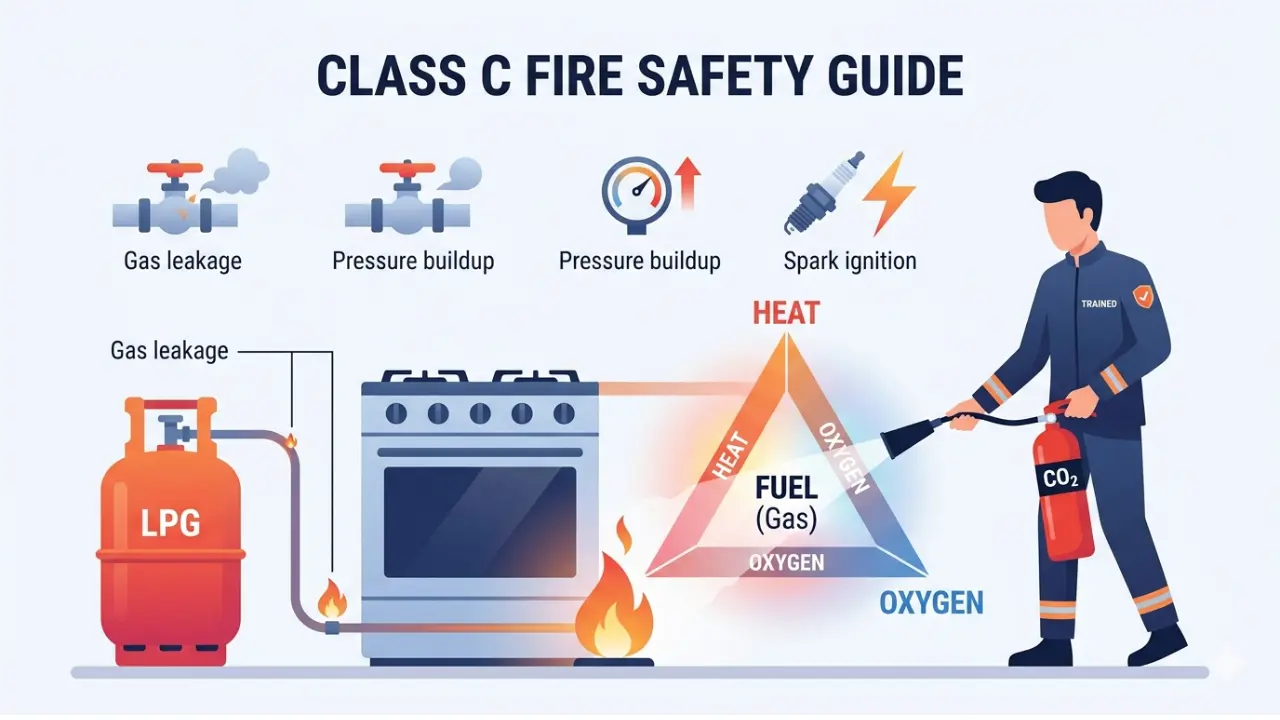
Class C Fire वह आग होती है जो ज्वलनशील गैसों (Flammable Gases) जैसे LPG, CNG, Acetylene, Hydrogen और Propane से लगती है। भारत में BIS IS 15683 के अनुसार इस प्रकार की आग को Class C Fire कहा जाता है। गैस का रिसाव होने पर यह आग बहुत तेजी से फैल सकती है और विस्फोट (Explosion) का खतरा भी बढ़ जाता है, इसलिए इसे अत्यंत खतरनाक Fire Class माना जाता है।
इस लेख में आप जानेंगे कि Class C Fire क्या है, इसके सामान्य उदाहरण, इसे बुझाने के लिए कौन-सा Fire Extinguisher सबसे उपयुक्त है, CO₂ Fire Extinguisher और ABC Dry Powder Fire Extinguisher का उपयोग कब करना चाहिए तथा गैस से लगी आग के दौरान कौन-सी महत्वपूर्ण सुरक्षा सावधानियाँ अपनानी चाहिए।
यदि आपने अभी तक आग कितने प्रकार की होती है? नहीं पढ़ा है, तो उसे भी अवश्य देखें। इससे आपको सभी Fire Classes और उनके लिए सही Fire Extinguisher चुनने की बेहतर समझ मिलेगी।
⚡ Quick Answer
Class C Fire वह आग होती है जो ज्वलनशील गैसों (Flammable Gases) जैसे LPG, CNG, PNG, Hydrogen, Propane और Acetylene के कारण लगती है। भारत में BIS IS 15683 के अनुसार इसे Class C Fire कहा जाता है। इस प्रकार की आग में गैस का रिसाव और विस्फोट (Explosion) का खतरा अधिक होता है, इसलिए इसे अत्यंत खतरनाक Fire Class माना जाता है।
- 🔥 मुख्य कारण: LPG, CNG, PNG, Hydrogen, Propane एवं अन्य Flammable Gases
- 🧯 उपयुक्त Fire Extinguisher: CO₂ Fire Extinguisher और ABC Dry Powder Fire Extinguisher
- 🚫 क्या उपयोग न करें: Gas Supply बंद किए बिना आग पर सीधे पानी का प्रयोग न करें।
- ⚠️ मुख्य खतरा: Gas Leakage के कारण Explosion और Flash Fire का जोखिम।
यदि संभव हो तो सबसे पहले गैस की मुख्य सप्लाई बंद करें, क्षेत्र को खाली कराएँ और उसके बाद ही उपयुक्त Fire Extinguisher का उपयोग करें। यदि आग तेजी से फैल रही हो, तो तुरंत अग्निशमन सेवा को सूचना दें।
What is Class C Fire?
Class C Fire वह आग होती है जो ज्वलनशील गैसों (Flammable Gases) जैसे LPG, CNG, PNG, Hydrogen, Propane और Acetylene के कारण लगती है। भारत में BIS IS 15683 के अनुसार इस प्रकार की आग को Class C Fire कहा जाता है। गैस के रिसाव के कारण यह आग तेजी से फैल सकती है और विस्फोट (Explosion) का खतरा भी उत्पन्न हो सकता है।
Class C Fire को बुझाने के लिए सामान्यतः CO₂ Fire Extinguisher तथा ABC Type Fire Extinguisher का उपयोग किया जाता है। CO₂ ऑक्सीजन की मात्रा कम करके आग को नियंत्रित करता है, जबकि ABC Dry Powder दहन की रासायनिक श्रृंखला (Chain Reaction) को रोककर आग बुझाने में सहायता करता है।
Class C Fire की मुख्य जानकारी
| विषय | जानकारी |
|---|---|
| 🔥 Fire Class | Class C (Flammable Gas Fire) |
| ⛽ सामान्य गैसें | LPG, CNG, PNG, Hydrogen, Propane, Acetylene |
| 🧯 उपयुक्त Fire Extinguishers | CO₂ Fire Extinguisher, ABC Type Fire Extinguisher |
| 🚫 उपयोग न करें | Water Type Fire Extinguisher एवं Foam Type Fire Extinguisher |
| 📘 भारतीय मानक | BIS IS 15683 एवं IS 2190 |
यदि आप सभी Fire Classes के बारे में विस्तार से जानना चाहते हैं, तो हमारा लेख आग कितने प्रकार की होती है? भी अवश्य पढ़ें। Fire Classification और Fire Extinguisher का सही चयन किसी भी दुर्घटना के दौरान आपकी सुरक्षा के लिए अत्यंत महत्वपूर्ण है।
Fire Safety से संबंधित भारतीय मानकों की आधिकारिक जानकारी के लिए Bureau of Indian Standards (BIS) की वेबसाइट देख सकते हैं।
💡 विशेषज्ञ सुझाव
यदि गैस रिसाव के दौरान आग लग जाए और ऐसा करना सुरक्षित हो, तो सबसे पहले गैस की मुख्य सप्लाई बंद करें। यदि आग तेजी से फैल रही हो या गैस सिलेंडर प्रभावित हो, तो स्वयं आग बुझाने का प्रयास करने के बजाय तुरंत क्षेत्र खाली करें और अग्निशमन सेवा को सूचना दें।
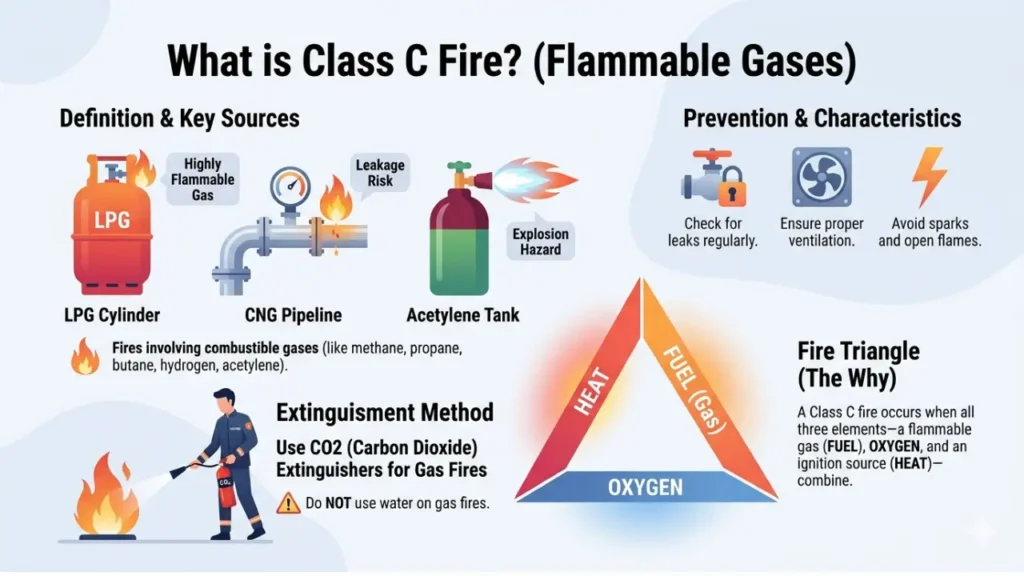
Class C Fire Examples and Common Causes
Class C Fire ऐसी आग होती है जो ज्वलनशील गैसों (Flammable Gases) जैसे LPG, CNG, PNG, Hydrogen, Propane, Acetylene और अन्य दहनशील गैसों के कारण लगती है। गैस का रिसाव (Gas Leakage) होने पर हवा में ज्वलनशील मिश्रण बन जाता है, जो किसी छोटी-सी चिंगारी (Spark), खुली लौ (Open Flame) या गर्म सतह (Hot Surface) के संपर्क में आते ही आग या विस्फोट का कारण बन सकता है।
घरों, होटलों, रेस्टोरेंट, गैस गोदामों, CNG स्टेशनों, वेल्डिंग वर्कशॉप और औद्योगिक संयंत्रों में Class C Fire का खतरा अधिक रहता है। इसलिए गैस सिलेंडर, पाइपलाइन, रेगुलेटर और वाल्व की नियमित जांच करना Fire Safety का महत्वपूर्ण हिस्सा है।
| स्थान / उदाहरण | गैस का स्रोत | आग लगने का सामान्य कारण |
|---|---|---|
| 🏠 घरेलू LPG सिलेंडर | LPG Cylinder | रेगुलेटर या पाइप से गैस रिसाव |
| 🚗 CNG वाहन | CNG Tank | वाल्व या पाइपलाइन में लीकेज |
| 🏭 औद्योगिक गैस पाइपलाइन | Hydrogen / Acetylene | Corrosion, Joint Failure या Crack |
| 🔥 Welding Workshop | Acetylene Cylinder | गलत Handling या Regulator Failure |
| ⛽ LPG Storage Tank | Bulk LPG Storage | Over Pressure या Safety Valve Failure |
| 🌱 Biogas Plant | Methane Gas | Gas Leakage या Poor Sealing |
Class C Fire का सबसे बड़ा खतरा यह है कि गैस का रिसाव अक्सर दिखाई नहीं देता, लेकिन हवा में गैस जमा होने के बाद एक छोटी-सी चिंगारी (Spark) या खुली लौ (Open Flame) भी विस्फोट का कारण बन सकती है। इसलिए गैस पाइपलाइन, रेगुलेटर और वाल्व की नियमित जांच करना तथा रिसाव का संदेह होने पर तुरंत मुख्य गैस सप्लाई बंद करना आवश्यक है।
💡 विशेषज्ञ सुझाव
यदि LPG या CNG गैस की गंध आए, तो किसी भी बिजली के स्विच को ON/OFF न करें और न ही माचिस या लाइटर जलाएँ। सबसे पहले मुख्य गैस वाल्व बंद करें, सभी दरवाजे और खिड़कियाँ खोलकर वेंटिलेशन करें तथा सुरक्षित होने पर ही CO₂ Fire Extinguisher या ABC Type Fire Extinguisher का उपयोग करें।
यदि आप ज्वलनशील गैसों और उनके खतरों के बारे में विस्तार से जानना चाहते हैं, तो हमारा Flammable Gas गाइड भी पढ़ें। अगले सेक्शन में हम जानेंगे कि Class C Fire को बुझाने के लिए कौन-से Fire Extinguishers सबसे प्रभावी हैं और उनका सही उपयोग कैसे किया जाता है।
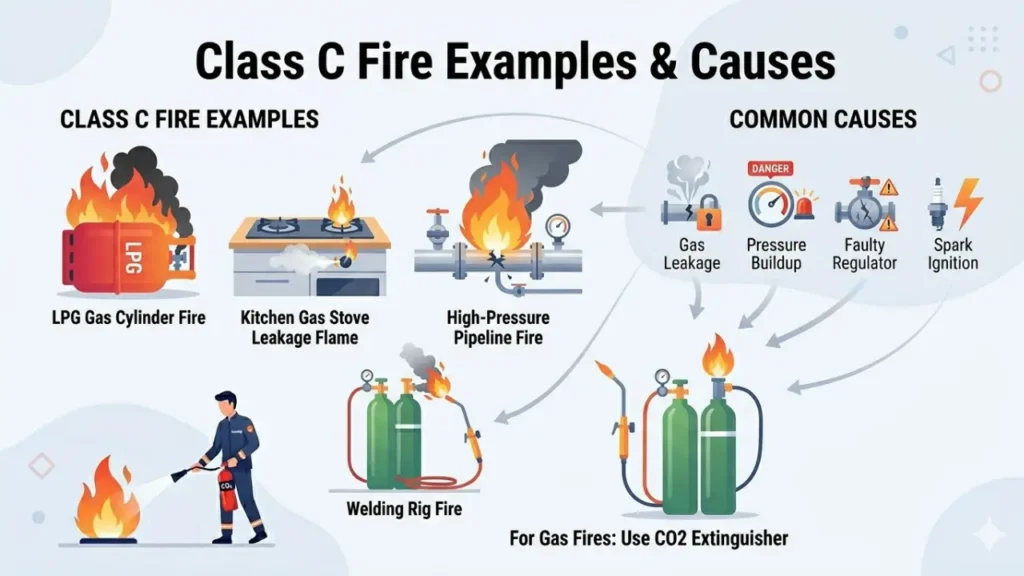
Difference Between Class C and Other Fire Classes
भारत में Class C Fire ज्वलनशील गैसों (Flammable Gases) से संबंधित होती है, जबकि अन्य Fire Classes अलग-अलग प्रकार के ईंधन (Fuel) पर आधारित होती हैं। सही Fire Class की पहचान करने से उचित Fire Extinguisher का चयन करना आसान हो जाता है और दुर्घटना के समय जोखिम कम होता है।
| Fire Class | मुख्य ईंधन (Fuel) | सामान्य उदाहरण | उपयुक्त Fire Extinguisher |
|---|---|---|---|
| Class A | ठोस ज्वलनशील पदार्थ | लकड़ी, कागज़, कपड़ा, फर्नीचर | Water, Foam, ABC Type |
| Class B | ज्वलनशील तरल पदार्थ | Petrol, Diesel, Paint, Oil | Foam, CO₂, ABC Type |
| Class C | ज्वलनशील गैसें | LPG, CNG, PNG, Hydrogen, Acetylene | CO₂, ABC Dry Powder |
| Class D | दहनशील धातुएँ | Magnesium, Sodium, Aluminium | Special Class D Powder |
| Class F | खाद्य तेल एवं वसा | Deep Fryer, Cooking Oil | Wet Chemical Fire Extinguisher |
यदि गैस रिसाव के साथ अन्य ज्वलनशील पदार्थ भी आग की चपेट में आ जाएँ, तो ABC Type Fire Extinguisher एक बहुउद्देशीय विकल्प हो सकता है। वहीं केवल गैस से लगी आग में CO₂ Fire Extinguisher का उपयोग भी प्रभावी माना जाता है।
💡 विशेषज्ञ सुझाव
Fire Class की सही पहचान करना उतना ही महत्वपूर्ण है जितना सही Fire Extinguisher का चयन करना। यदि आपको सभी Fire Classes के बारे में जानकारी चाहिए, तो आग कितने प्रकार की होती है? गाइड अवश्य पढ़ें।
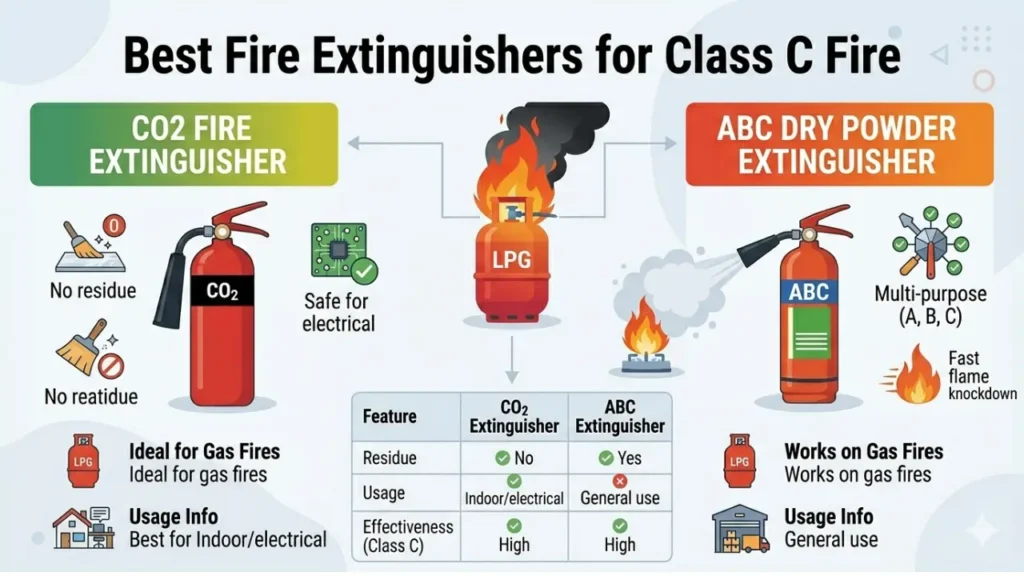
Best Fire Extinguishers for Class C Fire
Class C Fire को बुझाने के लिए ऐसे Fire Extinguishers का उपयोग किया जाता है जो ज्वलनशील गैसों (Flammable Gases) से लगी आग को सुरक्षित रूप से नियंत्रित कर सकें। भारत में BIS Standards के अनुसार गैस से लगी आग के लिए सामान्यतः CO₂ Fire Extinguisher, ABC Dry Powder Fire Extinguisher तथा आवश्यकता अनुसार Clean Agent Fire Extinguisher का उपयोग किया जाता है।
नीचे दी गई तालिका में Class C Fire के लिए सबसे उपयुक्त Fire Extinguishers की तुलना दी गई है, जिससे सही परिस्थिति में सही अग्निशामक यंत्र चुनना आसान हो जाता है।
| Fire Extinguisher | मुख्य एजेंट | उपयुक्त उपयोग | मुख्य लाभ |
|---|---|---|---|
| ⚫ CO₂ Fire Extinguisher | Carbon Dioxide (CO₂) | LPG, CNG एवं गैस रिसाव वाले क्षेत्र | कोई अवशेष नहीं छोड़ता, Electrical Equipment के लिए भी उपयुक्त |
| 🔵 ABC Dry Powder Fire Extinguisher | Mono Ammonium Phosphate | Class A, B और C Fire | Multi-Purpose, दहन की Chain Reaction को रोकता है |
| 🟢 Clean Agent Fire Extinguisher | Clean Agent Gas | Control Room, Server Room एवं Sensitive Equipment | Residue-Free, Electronics के लिए सुरक्षित |
यदि गैस रिसाव के साथ अन्य ज्वलनशील पदार्थ भी आग की चपेट में आ जाएँ, तो ABC Dry Powder Fire Extinguisher सबसे उपयोगी विकल्प माना जाता है। वहीं केवल गैस से लगी आग या Electrical Equipment के आसपास CO₂ Fire Extinguisher अधिक प्रभावी साबित होता है क्योंकि यह आग की ऑक्सीजन उपलब्धता कम करके दहन प्रक्रिया को नियंत्रित करता है।
💡 विशेषज्ञ सुझाव
यदि आपके घर, होटल, फैक्ट्री या औद्योगिक परिसर में LPG, CNG या अन्य ज्वलनशील गैसों का उपयोग होता है, तो कम से कम एक CO₂ Fire Extinguisher और एक ABC Dry Powder Fire Extinguisher अवश्य रखें। साथ ही सभी Fire Extinguishers का नियमित निरीक्षण और समय-समय पर सर्विसिंग कराना भी आवश्यक है।
How to Control and Prevent Class C Fire
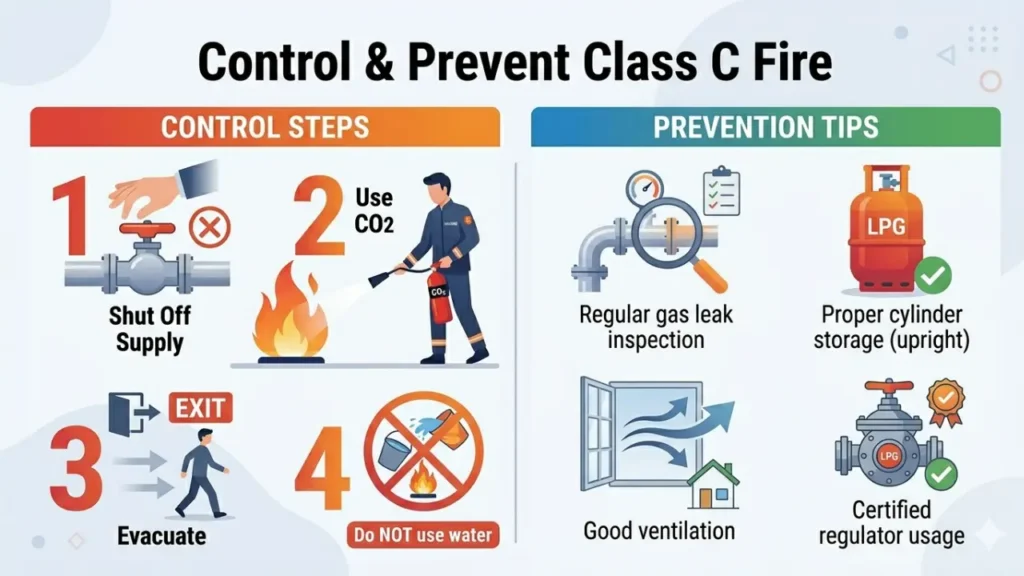
Class C Fire को नियंत्रित करने का सबसे प्रभावी तरीका गैस रिसाव को रोकना, नियमित निरीक्षण करना और सही Fire Extinguisher उपलब्ध रखना है। यदि समय रहते गैस सप्लाई बंद कर दी जाए और उचित सुरक्षा उपाय अपनाए जाएँ, तो बड़ी दुर्घटनाओं से बचा जा सकता है।
Preventive Measures
- BIS प्रमाणित रेगुलेटर, होज़ पाइप और वाल्व का ही उपयोग करें।
- साबुन के घोल (Soap Solution) से समय-समय पर गैस रिसाव की जांच करें।
- LPG एवं CNG सिलेंडरों को सीधी धूप और गर्म स्थानों से दूर रखें।
- रसोई, गैस स्टोरेज और औद्योगिक क्षेत्रों में पर्याप्त वेंटिलेशन बनाए रखें।
Regular Inspection and Maintenance
- गैस पाइपलाइन, सिलेंडर और रेगुलेटर का नियमित निरीक्षण करें।
- पुराने या क्षतिग्रस्त पाइप एवं रेगुलेटर समय पर बदलें।
- सभी Fire Extinguishers का समय-समय पर Maintenance Inspection कराएँ।
- केवल अधिकृत (Authorized) तकनीशियन से ही गैस फिटिंग और सर्विसिंग करवाएँ।
Emergency Response
- यदि सुरक्षित हो, तो सबसे पहले मुख्य गैस सप्लाई बंद करें।
- CO₂ Fire Extinguisher या ABC Dry Powder Fire Extinguisher का उपयोग करें।
- यदि आग नियंत्रण से बाहर हो, तो तुरंत सभी लोगों को सुरक्षित स्थान पर भेजें और अग्निशमन सेवा को सूचना दें।
- गैस रिसाव के दौरान बिजली के स्विच, माचिस या लाइटर का उपयोग बिल्कुल न करें।
Do’s and Don’ts
| ✅ क्या करें | ❌ क्या न करें |
|---|---|
| गैस का मुख्य वाल्व तुरंत बंद करें। | गैस रिसाव के दौरान माचिस या लाइटर न जलाएँ। |
| CO₂ या ABC Fire Extinguisher पास रखें। | गैस सप्लाई बंद किए बिना आग बुझाने का प्रयास न करें। |
| Fire Safety Training और Mock Drill करवाएँ। | खराब रेगुलेटर या पाइप का उपयोग न करें। |
| Fire Extinguishers की नियमित सर्विसिंग कराएँ। | गैस की गंध को कभी नजरअंदाज न करें। |
यदि हाई-प्रेशर गैस सिलेंडर, गैस पाइपलाइन या बड़े गैस टैंक में आग लगी हो, तो स्वयं उसे बुझाने का प्रयास न करें। तुरंत क्षेत्र खाली करें और अग्निशमन सेवा को सूचना दें।
जहाँ LPG, CNG या अन्य ज्वलनशील गैसों का उपयोग होता है, वहाँ हमेशा CO₂ Fire Extinguisher और ABC Dry Powder Fire Extinguisher उपलब्ध रखें तथा उनकी समय-समय पर जाँच और सर्विसिंग अवश्य कराएँ।
Frequently Asked Questions
Conclusion – Final Thoughts on Class C Fire
Class C Fire ज्वलनशील गैसों (Flammable Gases) जैसे LPG, CNG, PNG, Hydrogen, Propane और Acetylene से लगने वाली आग होती है। इस प्रकार की आग तेजी से फैल सकती है और गैस रिसाव के कारण विस्फोट (Explosion) का खतरा भी बढ़ जाता है। इसलिए सही Fire Safety Practices अपनाना और उपयुक्त Fire Extinguisher उपलब्ध रखना अत्यंत आवश्यक है।
ऐसी स्थिति में CO₂ Fire Extinguisher तथा ABC Type Fire Extinguisher सबसे अधिक उपयोग किए जाने वाले अग्निशामक यंत्र हैं। यदि ऐसा करना सुरक्षित हो, तो आग बुझाने से पहले गैस की मुख्य सप्लाई बंद करना और क्षेत्र को खाली कराना प्राथमिकता होनी चाहिए।
यदि आप सभी Fire Classes, उनके Fire Extinguishers और सही उपयोग के बारे में विस्तार से जानना चाहते हैं, तो हमारे आग कितने प्रकार की होती है? तथा Fire Extinguisher Colour Codes गाइड भी अवश्य पढ़ें।
💡 अंतिम सुरक्षा सलाह
गैस रिसाव की गंध आने पर बिजली के स्विच, माचिस या लाइटर का उपयोग न करें। तुरंत मुख्य गैस वाल्व बंद करें, पर्याप्त वेंटिलेशन सुनिश्चित करें और आवश्यकता पड़ने पर तुरंत अग्निशमन सेवा से संपर्क करें। सही जानकारी और समय पर कार्रवाई ही Class C Fire से होने वाले बड़े नुकसान को रोक सकती है।
Class C Fire क्या होती है?
Class C Fire वह आग है जो ज्वलनशील गैसों (LPG, CNG, Acetylene, Hydrogen) से लगती है।
Class C Fire का मुख्य कारण क्या होता है?
इसके प्रमुख कारण गैस का रिसाव, faulty regulator, damaged pipeline और high‑pressure leakage हैं।
Class C Fire पर कौन सा extinguisher इस्तेमाल किया जाता है?
CO₂ Fire Extinguisher और ABC Dry Powder Extinguisher का उपयोग किया जाता है क्योंकि ये non‑conductive agents हैं और गैस आग को सुरक्षित रूप से बुझाते हैं।
क्या ABC Fire Extinguisher Class C Fire के लिए सही है?
हाँ ✅, ABC Dry Powder Extinguisher Class C Fire के लिए उपयुक्त है, खासकर जब आग गैस के साथ अन्य materials (जैसे कपड़ा या प्लास्टिक) में फैल रही हो।
Class C Fire के लिए कौन सा colour code होता है?
BIS Standard के अनुसार Class C Fire का Blue Colour Band होता है और extinguisher पर “C” symbol वाला blue circle बना होता है।
कौन‑कौन से उपकरण Class C Fire के अंतर्गत आते हैं?
Class A Fire ठोस पदार्थों (लकड़ी, कपड़ा, कागज) में लगती है, जबकि Class C Fire ज्वलनशील गैसों से लगती है।
Article Information
| 📄 Article Name | Class C Fire in Hindi – गैस से लगने वाली आग क्या है? कारण, उदाहरण, Fire Extinguisher और Safety Tips |
|---|---|
| 📂 Category | Fire Safety • Fire Classes • Fire Extinguishers |
| 🎯 Focus Keyword | Class C Fire |
| 📅 Last Updated | August 2026 |
| ✍️ Author | Nitesh Shankar Khandare |
| 🎓 Qualification | Fire Safety Professional | IFE (UK) Level 3 | Fire Engineering |
| ✅ Reviewed By | ExtinguisherHub Editorial Team |
| 📚 Reference Standards | BIS IS 15683, IS 2190 & NBC 2016 Part 4 |
| 👨🚒 Best For | Fire Safety Professionals, Industrial Workers, Students, Factory Employees & Homeowners |
| ⏱️ Reading Time | 8–10 Minutes |
| 🌐 Language | Hindi |

5 thoughts on “Class C Fire in Hindi – 5 Facts, Extinguishers & Gas Safety Guide”