
Note: LPG और CNG commercial fuel mixtures हैं, single pure gases नहीं। LPG में mainly Propane और Butane होते हैं, जबकि CNG में predominantly Methane होता है। इनकी exact composition अलग-अलग हो सकती है।
Flammable Gas Kya Hoti Hai?
Flammable Gas ऐसी gas होती है जो air के साथ एक specific concentration range में mix होने पर flammable mixture बनाती है। जब इस mixture को spark, flame, hot surface या किसी अन्य suitable ignition source के संपर्क में लाया जाता है, तो यह ignite होकर आग पैदा कर सकता है।
हालांकि, हर flammable gas leak के कारण तुरंत fire या explosion नहीं होता। इसके लिए gas की concentration का उसके Lower Explosive Limit (LEL) और Upper Explosive Limit (UEL) के बीच होना, तथा पर्याप्त oxidizer और ignition conditions का मौजूद होना जरूरी है। अगर confined या poorly ventilated area में flammable gas जमा हो जाए, तो fire और explosion का खतरा काफी बढ़ सकता है।
Common examples of flammable gases में LPG, Methane, Hydrogen, Propane और Acetylene शामिल हैं। इनका उपयोग cooking, heating, welding, metal cutting, power generation और विभिन्न industrial processes में किया जाता है।
Fire safety और industrial fire protection में flammable gases का अध्ययन महत्वपूर्ण है, क्योंकि इनसे जुड़े hazards में gas leakage, flash fire, jet fire और explosion शामिल हो सकते हैं। Gas fire hazards को समझने के लिए हमारी Class C Fire Guide भी पढ़ सकते हैं।
Flammable Gas: Indian Regulatory Definition
भारत में Gas Cylinders Rules, 2016 के Rule 2(xxvi) के अनुसार, Flammable Gas की पहचान air के साथ उसकी flammability characteristics के आधार पर की जाती है। इस definition के अनुसार:
- ऐसी gas जो air के साथ volume के अनुसार 13% या उससे कम concentration पर flammable mixture बनाती है; या
- ऐसी gas जिसकी air के साथ flammability range 12 percentage points से अधिक होती है, lower limit चाहे कुछ भी हो।
इस Rule में flammability range का अर्थ gas-air mixture में उस minimum और maximum gas concentration के बीच का अंतर है, जिसके भीतर mixture flammable होता है। यह definition संबंधित Indian Gas Cylinders Rules के regulatory purpose के लिए है।
Official reference: PESO – Gas Cylinders Rules, 2016.
Flammable gas का air के साथ mix होना अपने आप ignition नहीं करता। Fire के लिए suitable ignition source और आवश्यक combustion conditions भी जरूरी हैं। फिर भी gas leakage को कभी ignore नहीं करना चाहिए, क्योंकि gas जमा होकर dangerous flammable atmosphere बना सकती है। Gas cylinders, storage tanks, pipelines और process equipment को approved design, suitable materials और applicable safety requirements के अनुसार maintain करना जरूरी है।

Flammable Gas Ke Prakar (Types of Flammable Gas)
सभी Flammable Gases की chemical properties और fire hazards एक जैसे नहीं होते। कुछ gases Hydrocarbons होती हैं, जबकि कुछ में Carbon या Hydrogen के अलावा अन्य elements भी मौजूद होते हैं। कुछ gases flammable होने के साथ-साथ toxic या pyrophoric भी हो सकती हैं।
Chemical composition और safety characteristics के आधार पर common flammable gases को नीचे दी गई categories में समझा जा सकता है। ध्यान दें कि ये categories पूरी तरह अलग-अलग नहीं हैं। एक gas एक से अधिक hazard categories में आ सकती है।
1. Hydrocarbon-Based Flammable Gases
Hydrocarbon gases वे gases हैं जिनमें मुख्य रूप से Carbon और Hydrogen atoms होते हैं। इनमें से कई gases fuel के रूप में उपयोग की जाती हैं और air के साथ suitable concentration में मिलने पर flammable mixture बना सकती हैं।
- Methane (CH₄): Natural Gas, CNG और PNG का मुख्य component।
- Ethane (C₂H₆): Petrochemical industry में feedstock के रूप में उपयोग।
- Propane (C₃H₈): LPG, heating और industrial fuel में उपयोग।
- Butane (C₄H₁₀): LPG और अन्य fuel applications में उपयोग।
- Ethylene (C₂H₄): Chemical और petrochemical manufacturing में उपयोग।
LPG में mainly Propane और Butane होते हैं, जबकि CNG में predominantly Methane होता है। इन commercial fuels की exact composition अलग-अलग हो सकती है।
2. Non-Hydrocarbon Flammable Gases
कुछ flammable gases में Carbon नहीं होता, फिर भी वे air के साथ flammable mixtures बना सकती हैं। इनका उपयोग industrial processes, welding और energy applications में किया जाता है।
- Hydrogen (H₂): बहुत हल्की और highly flammable gas, जिसका उपयोग industrial processes, fuel cells और कुछ specialized welding applications में होता है।
- Acetylene (C₂H₂): Oxy-acetylene welding और metal cutting में उपयोग होने वाली highly flammable gas। इसकी flammability range काफी wide होती है।
3. Toxic and Flammable Gases
कुछ gases में fire hazard के साथ-साथ serious health hazards भी होते हैं। ऐसी gases के leakage से fire या explosion के अलावा inhalation द्वारा poisoning का खतरा भी हो सकता है।
- Carbon Monoxide (CO): Highly toxic और flammable gas। यह incomplete combustion के कारण भी उत्पन्न हो सकती है।
- Hydrogen Sulfide (H₂S): Highly toxic और flammable gas, जिसकी पहचान rotten egg जैसी smell से हो सकती है। हालांकि high concentration में smell पर भरोसा करना खतरनाक है, क्योंकि यह sense of smell को प्रभावित कर सकती है।
- Vinyl Chloride (C₂H₃Cl): Flammable और toxic gas, जिसका उपयोग मुख्य रूप से PVC manufacturing में किया जाता है।
4. Pyrophoric and Speciality Flammable Gases
कुछ specialty gases सामान्य flammable gases की तुलना में अधिक गंभीर handling hazards पैदा कर सकती हैं। Pyrophoric gases air के संपर्क में आने पर बिना किसी external ignition source के भी spontaneously ignite हो सकती हैं।
- Silane (SiH₄): Pyrophoric gas, जो air के संपर्क में स्वतः ignite हो सकती है।
- Phosphine (PH₃): Highly toxic gas, जो कुछ conditions में flammable या pyrophoric behaviour दिखा सकती है। इसकी handling के लिए specialized safety controls जरूरी हैं।
ऐसी specialty gases का उपयोग semiconductor manufacturing, chemical processing और research laboratories में किया जाता है। इनके storage और handling के लिए gas-specific safety procedures आवश्यक हैं।
Flammable gas का ignition behaviour केवल उसके LEL पर निर्भर नहीं करता। LEL (Lower Explosive Limit) और UEL (Upper Explosive Limit) यह बताते हैं कि air में किस concentration range के भीतर gas-air mixture flame propagate कर सकता है। Low LEL का मतलब है कि कम gas concentration पर भी flammable mixture बन सकता है। इसका मतलब यह नहीं है कि gas तेजी से ignite होगी।
Flammable gases की पहचान, storage और workplace safety के लिए official guidance देखें: OSHA – Occupational Safety and Health Administration.

Examples of Flammable & Non-Flammable Gases (Quick Table)
कई लोगों को यह समझने में confusion होता है कि कौन-सी gases flammable होती हैं और कौन-सी non-flammable। कुछ gases air के साथ suitable concentration में मिलने पर आग पकड़ सकती हैं, जबकि कुछ gases सामान्य combustion conditions में खुद नहीं जलतीं।
नीचे common flammable और non-flammable gases के examples, उनके Chemical Formulas और industrial applications दिए गए हैं।
| Gas Name | Chemical Formula | Classification | Common Use |
|---|---|---|---|
| Methane | CH₄ | Flammable | Natural Gas, CNG, Power Generation |
| Propane | C₃H₈ | Flammable | LPG, Cooking, Heating |
| Butane | C₄H₁₀ | Flammable | Lighters, LPG, Fuel Applications |
| Hydrogen | H₂ | Flammable | Industrial Processes, Fuel Cells |
| Acetylene | C₂H₂ | Flammable | Oxy-Acetylene Welding, Metal Cutting |
| Nitrogen | N₂ | Non-Flammable | Industrial Inerting, Purging |
| Carbon Dioxide | CO₂ | Non-Flammable | Fire Suppression, Beverage Industry |
| Argon | Ar | Non-Flammable | Welding Shielding, Industrial Processes |
| Helium | He | Non-Flammable | Leak Detection, Cryogenics, Balloons |
| Oxygen | O₂ | Non-Flammable (Oxidizer) | Medical Oxygen, Industrial Cutting |
| Water Vapour (Steam) | H₂O | Non-Flammable | Power Generation, Industrial Heating |
Flammable gases air के साथ अपनी specific flammable range में mix होने पर ignition source मिलने से ignite हो सकती हैं। इस range को Lower Explosive Limit (LEL) और Upper Explosive Limit (UEL) के बीच define किया जाता है।
Non-flammable gases का मतलब यह नहीं है कि वे पूरी तरह harmless हैं। Nitrogen, Argon, Helium और Carbon Dioxide confined spaces में oxygen displacement या अन्य कारणों से asphyxiation का खतरा पैदा कर सकती हैं। Oxygen स्वयं नहीं जलती, लेकिन combustion को तेजी से support करती है। इसलिए इसे ordinary inert gas नहीं समझना चाहिए।

Flammable Gas Classification (By Explosion Limits)
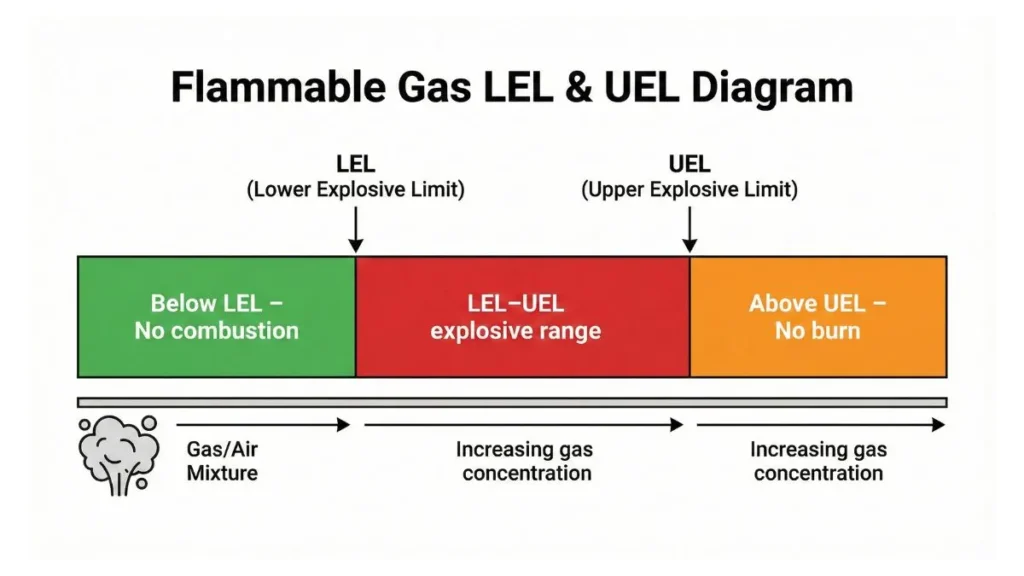
किसी भी Flammable Gas को ignite होने के लिए केवल हवा और ignition source की जरूरत नहीं होती, बल्कि हवा में gas की concentration भी एक specific range में होनी चाहिए। इस range को Flammable Range कहते हैं। इसे समझने के लिए दो important terms जानना जरूरी है: LEL और UEL।
1. What is LEL (Lower Explosive Limit)?
LEL (Lower Explosive Limit) हवा में किसी flammable gas की वह minimum concentration है, जहाँ से gas-air mixture में flame propagate कर सकती है, यदि suitable ignition source मौजूद हो।
अगर gas की concentration LEL से कम है, तो mixture में fuel की मात्रा सामान्यतः बहुत कम होती है। इसे Lean Mixture कहते हैं। ऐसी condition में mixture सामान्यतः flame propagate नहीं कर पाता।
2. What is UEL (Upper Explosive Limit)?
UEL (Upper Explosive Limit) हवा में किसी flammable gas की वह maximum concentration है, जहाँ तक gas-air mixture में flame propagate कर सकती है, यदि suitable ignition source मौजूद हो।
अगर gas की concentration UEL से अधिक हो जाती है, तो mixture में fuel की मात्रा अधिक और oxygen की उपलब्धता अपर्याप्त हो सकती है। इसे Rich Mixture कहते हैं। ऐसी condition में mixture सामान्यतः flame propagate नहीं कर पाता।
Methane का सामान्य LEL लगभग 5% और UEL लगभग 15% by volume in air होता है।
- Below 5%: Mixture too lean होता है।
- Between 5% and 15%: Mixture flammable range में होता है।
- Above 15%: Mixture too rich होता है।
इसका अर्थ है कि methane की concentration लगभग 5% से 15% के बीच होने पर suitable ignition conditions में आग फैल सकती है। हालांकि flammable range के भीतर होने का अर्थ यह नहीं है कि हर स्थिति में explosion होगा।
3. Difference Between LEL and UEL
| Parameter | LEL | UEL |
|---|---|---|
| Full Form | Lower Explosive Limit | Upper Explosive Limit |
| Meaning | Minimum flammable concentration | Maximum flammable concentration |
| Below / Above Limit | Mixture is too lean | Mixture is too rich |
| Fuel Concentration | Relatively low | Relatively high |
4. LEL and UEL Values of Common Flammable Gases
अलग-अलग flammable gases की LEL और UEL values अलग होती हैं। नीचे कुछ commonly used gases की approximate flammability limits दी गई हैं। सभी values air में gas के volume percentage (% v/v) के रूप में हैं।
| Flammable Gas | Chemical Formula | LEL (%) | UEL (%) |
|---|---|---|---|
| Hydrogen | H₂ | 4.0 | 75.0 |
| Methane | CH₄ | 5.0 | 15.0 |
| Propane | C₃H₈ | 2.1 | 9.5 |
| n-Butane | C₄H₁₀ | 1.8 | 8.4 |
| Acetylene | C₂H₂ | 2.5 | 100* |
*Acetylene की upper flammability limit को कुछ references में 100% तक बताया जाता है। इसकी विशेष decomposition hazard के कारण इसे केवल सामान्य gas-air flammability limits से assess नहीं करना चाहिए।
LEL और UEL values temperature, pressure, test method और reference source के अनुसार बदल सकती हैं। LPG एक mixture है, इसलिए उसका एक universal LEL और UEL नहीं होता। उसकी composition के अनुसार flammability limits अलग हो सकती हैं। ऊपर दिए गए values approximate reference values हैं, इन्हें safety design या detector calibration के लिए बिना applicable standard और gas-specific data verify किए उपयोग न करें।
5. Why Are LEL and UEL Important in Fire Safety?
Industrial fire safety में LEL और UEL की जानकारी gas leakage detection, hazardous area assessment और fire prevention के लिए महत्वपूर्ण है। Gas detectors अक्सर gas concentration को %LEL में display करते हैं, जिससे hazardous atmosphere बनने से पहले warning और corrective action लेने में मदद मिल सकती है।
उदाहरण के लिए, यदि किसी gas detector पर 10% LEL reading दिखाई देती है, तो इसका मतलब है कि measured gas concentration उस gas की LEL value का 10% है। इसका अर्थ air में 10% gas होना नहीं है।
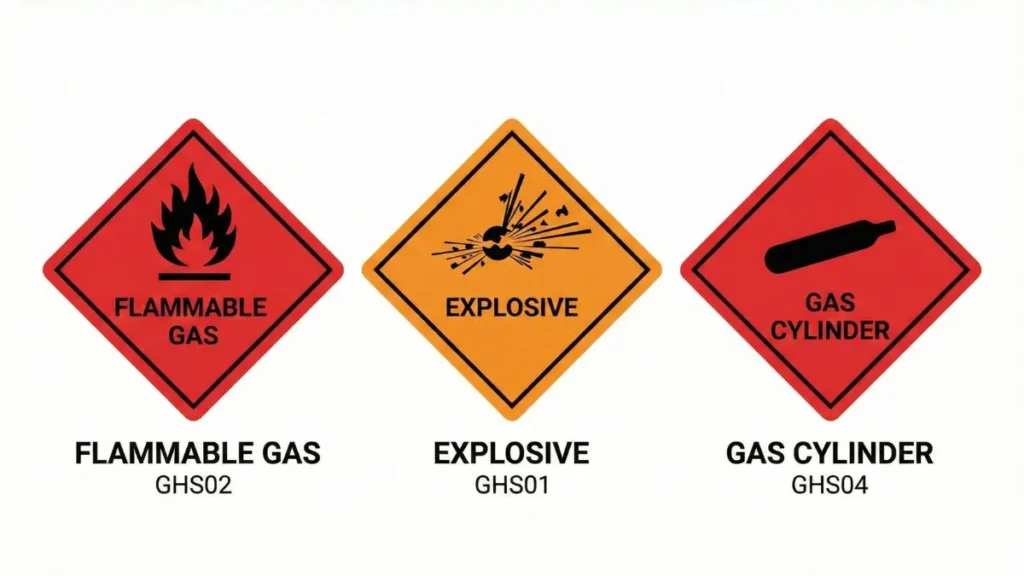
Common Risks of Flammable Gas
Flammable gas से जुड़े hazards गंभीर हो सकते हैं। जब कोई flammable gas हवा में अपनी Lower Explosive Limit (LEL) और Upper Explosive Limit (UEL) के बीच concentration में मौजूद होती है, तो suitable ignition source मिलने पर आग लग सकती है। परिस्थितियों के अनुसार इसका परिणाम Flash Fire, Jet Fire या Explosion हो सकता है। Industries, घरों और laboratories में इन risks को समझना और proper safety measures अपनाना जरूरी है।
| Risk Type | Explanation |
|---|---|
| Explosion / Blast | जब flammable gas हवा के साथ LEL–UEL range में मिल जाती है और उसे ignition source मिल जाता है, तो combustion हो सकता है। यदि gas-air mixture किसी confined या partially confined area में मौजूद हो, तो pressure rise के कारण damaging explosion हो सकता है। केवल LEL–UEL range में होना अपने आप explosion नहीं करता। |
| Flash Fire | जब leaked flammable gas या vapour हवा में फैलकर flammable cloud बनाती है और उसमें ignition होता है, तो flame तेजी से उस cloud के through travel कर सकती है। इसे Flash Fire कहते हैं। इसमें flame exposure और गंभीर burn injuries का खतरा रहता है। |
| Jet Fire | Pressurized pipeline, valve या cylinder connection से flammable gas leak होकर तुरंत ignite हो जाए, तो तेज और लगातार जलने वाली flame बन सकती है। इसे Jet Fire कहते हैं। इसकी intense heat आसपास के equipment और structures को नुकसान पहुंचा सकती है। |
| Gas Leakage | Gas leakage faulty valves, damaged pipelines, loose connections, corrosion या equipment failure के कारण हो सकती है। कुछ gases naturally odourless होती हैं, जबकि LPG जैसी कुछ commercial fuel gases में leakage पहचानने के लिए odorant मिलाया जाता है। इसलिए केवल smell पर निर्भर रहना सुरक्षित नहीं है। |
| Asphyxiation (घुटन) | कुछ gases confined space में oxygen को displace करके oxygen deficiency पैदा कर सकती हैं। इससे dizziness, unconsciousness और suffocation का खतरा हो सकता है। इसके अलावा Carbon Monoxide (CO) जैसी toxic gases शरीर की oxygen transport क्षमता को प्रभावित करती हैं। |
| Cylinder Rupture / Failure | Gas cylinder को excessive heat, fire exposure, corrosion, physical damage या improper handling से नुकसान पहुंच सकता है। आग के संपर्क में आने पर cylinder के अंदर pressure बढ़ सकता है और गंभीर परिस्थितियों में rupture या catastrophic failure हो सकता है। ऐसे cylinders के पास जाना या उन्हें handle करना trained emergency personnel का काम है। |
Key Flammability Parameters of Gases (LEL, UEL & Autoignition Temperature)
किसी flammable gas के fire और explosion hazards को समझने के लिए कुछ important technical parameters का उपयोग किया जाता है। इनमें Lower Explosive Limit (LEL), Upper Explosive Limit (UEL) और Autoignition Temperature (AIT) प्रमुख हैं। ये parameters बताते हैं कि gas-air mixture किस concentration range में flame propagate कर सकता है और बिना external flame या spark के किस temperature पर ignition शुरू हो सकता है।
1. LEL (Lower Explosive Limit)
LEL flammable gas की वह minimum concentration है, जो हवा में मौजूद होने पर suitable ignition source मिलने से flame propagation कर सकती है। LEL से कम concentration पर mixture सामान्यतः बहुत lean होता है और flame propagate नहीं कर पाती।
2. UEL (Upper Explosive Limit)
UEL flammable gas की वह maximum concentration है, जिसके ऊपर gas-air mixture सामान्य test conditions में flame propagate नहीं कर पाता। UEL से ऊपर mixture बहुत rich होता है, क्योंकि उपलब्ध oxygen की मात्रा combustion के लिए पर्याप्त नहीं होती।
3. Autoignition Temperature (AIT)
Autoignition Temperature वह minimum temperature है, जिस पर gas-air mixture suitable test conditions में बिना external spark या flame के स्वयं ignite हो सकता है। यह parameter hot surfaces, overheated equipment और industrial process safety के लिए महत्वपूर्ण है।
4. Flash Point – Is It Applicable to Gases?
Flash Point मुख्य रूप से flammable liquids के लिए इस्तेमाल किया जाने वाला parameter है। यह वह minimum temperature है, जिस पर liquid की vapour इतनी मात्रा में बनती है कि suitable ignition source मिलने पर momentary flash हो सकता है। सामान्य ambient conditions में gaseous fuels के लिए Flash Point की जगह LEL, UEL और Autoignition Temperature अधिक relevant parameters हैं।
| Parameter | What It Indicates | Fire Safety Importance |
|---|---|---|
| LEL | Gas-air mixture की minimum flammable concentration | Low gas concentration पर flammable atmosphere बनने की संभावना समझने में मदद करता है। |
| UEL | Gas-air mixture की maximum flammable concentration | Gas की अधिक concentration पर flame propagation की सीमा समझने में मदद करता है। |
| Autoignition Temperature (AIT) | बिना external ignition source के ignition शुरू होने का temperature | Hot surfaces और high-temperature equipment से ignition hazards assess करने में उपयोगी है। |
| Flash Point | मुख्यतः liquid की vapour के momentary ignition की minimum temperature | Flammable liquids की storage और handling safety के लिए उपयोगी है। |
Industrial Uses of Flammable Gas
ज्वलनशील गैसों (Flammable Gases) का उपयोग कई industrial sectors में fuel, heating, metal processing और chemical manufacturing के लिए किया जाता है। Natural Gas, LPG, Propane, Acetylene और Hydrogen इसके कुछ प्रमुख examples हैं। अलग-अलग industrial applications में gas का selection उसकी chemical properties, heating value, combustion characteristics और process requirements के आधार पर किया जाता है।
हालांकि, इन gases की leakage या improper handling से fire, flash fire और explosion का खतरा हो सकता है। इसलिए industrial gas systems में proper engineering design, gas detection और emergency safety arrangements आवश्यक हैं।
Common Industries Using Flammable Gases
- Welding & Metal Cutting Industry: Acetylene का उपयोग oxy-acetylene welding, brazing और metal cutting में किया जाता है। Hydrogen का उपयोग कुछ specialized oxy-hydrogen welding और high-temperature industrial applications में भी होता है।
- Petrochemical & Chemical Industry: Methane, Propane, Butane और Hydrogen का उपयोग fuel तथा विभिन्न chemical manufacturing processes में किया जाता है। Methane और अन्य hydrocarbons कई chemical products के production में feedstock भी होते हैं।
- Manufacturing Units: Natural Gas और LPG का उपयोग industrial boilers, furnaces, ovens और dryers में process heating के लिए किया जाता है।
- Food Processing Industry: LPG और Natural Gas का उपयोग commercial ovens, dryers, boilers और food-processing equipment में cooking तथा controlled heating के लिए किया जाता है।
- Research & Laboratory Applications: Methane और Hydrogen का उपयोग selected laboratory experiments, gas analysis, calibration और research applications में किया जाता है। इनका उपयोग संबंधित equipment और laboratory safety procedures के अनुसार होना चाहिए।
- Power Generation Plants: Natural Gas, जिसका मुख्य combustible component Methane होता है, का उपयोग gas turbines और combined-cycle power plants में electricity generation के लिए किया जाता है।
- Hydrogen-Based Industrial Processes: Hydrogen का उपयोग petroleum refining, ammonia production और कुछ metal-processing applications में किया जाता है। इसका उपयोग specialized industrial fuel और reducing agent के रूप में भी होता है।
Industrial Flammable Gas Applications
| Gas Type | Industrial Applications | Purpose / Reason for Use |
|---|---|---|
| Acetylene (C₂H₂) | Oxy-Acetylene Welding, Metal Cutting | High-temperature flame और metal processing applications के लिए। |
| Propane (C₃H₈) | Industrial Heating, Furnaces, Food Processing | Portable और stationary heating applications में fuel के रूप में। |
| Methane (CH₄) | Power Generation, Boilers, Chemical Industry | Industrial fuel और chemical manufacturing feedstock के रूप में। |
| Butane (C₄H₁₀) | Petrochemical Industry, LPG Applications | Fuel applications और कुछ chemical manufacturing processes में। |
| Hydrogen (H₂) | Petroleum Refining, Ammonia Production, Metal Processing | Chemical feedstock, reducing agent और selected industrial fuel applications के लिए। |
| Natural Gas | Gas Turbines, Industrial Boilers, Furnaces | Continuous process heating और electricity generation के लिए। |
Flammable Gas Storage Rules (Safe Handling & Placement)
Flammable gases की सुरक्षित storage industrial plants, workshops, laboratories और commercial premises में बहुत महत्वपूर्ण है। Improper storage, damaged cylinders, gas leakage और ignition sources के संपर्क में आने से fire, flash fire या explosion हो सकता है। इसलिए gas cylinders, storage tanks और gas supply systems को उनकी gas-specific requirements और applicable safety regulations के अनुसार store करना चाहिए।
Essential Safety Rules for Flammable Gas Storage
| Storage Safety Rule | Explanation |
|---|---|
| 1. Heat और Direct Sunlight से Protection | Gas cylinders को excessive heat, direct flame और अन्य heat sources से दूर रखें। Storage area में temperature संबंधित gas और cylinder की permissible limits के भीतर होना चाहिए। Cylinders को कभी भी आग या अत्यधिक गर्म सतह के संपर्क में न आने दें। |
| 2. Adequate Ventilation | Gas storage area में suitable natural या mechanical ventilation की व्यवस्था होनी चाहिए, ताकि leakage होने पर flammable gas जमा न हो। Ventilation arrangement gas की density और storage area के layout के अनुसार design किया जाना चाहिए। |
| 3. Keep Away from Ignition Sources | Storage area में smoking, open flames, sparks और अन्य ignition sources प्रतिबंधित होने चाहिए। Electrical equipment और fittings hazardous-area classification तथा applicable electrical safety requirements के अनुसार suitable होने चाहिए। |
| 4. Proper Cylinder Position and Securing | Cylinders को manufacturer और supplier की instructions के अनुसार position में रखें। LPG cylinders को सामान्यतः upright position में store किया जाता है। जहां upright storage आवश्यक हो, वहां cylinders को suitable chains, racks या supports से secure करें, ताकि वे गिर न सकें। |
| 5. Valve Protection and Leak Prevention | जब cylinder उपयोग में न हो, तो उसका valve बंद रखें और जहां applicable हो, valve protection cap लगाएं। Valves, regulators और connections को damage से बचाएं। Unauthorized repair या valve modification न करें। |
| 6. Periodic Inspection and Test Validity | Cylinder की identification, approved markings और periodic examination या test validity check करें। Corroded, dented, damaged या overdue cylinders को उपयोग में न लें। ऐसे cylinders को supplier या authorized agency के माध्यम से जांच और आवश्यक कार्रवाई के लिए भेजें। |
| 7. Segregation of Incompatible Gases | Flammable gas cylinders को oxygen और अन्य oxidizing gases से applicable regulations के अनुसार segregate करें। अलग-अलग gas categories की storage arrangement, required separation distance और fire protection provisions relevant safety rules के अनुसार तय करें। |
| 8. Warning Signs and Restricted Access | Storage area पर “FLAMMABLE GAS”, “NO SMOKING” और “NO UNAUTHORIZED ENTRY” जैसे suitable warning signs लगाएं। Storage area को unauthorized persons से सुरक्षित रखें और emergency access उपलब्ध रखें। |
| 9. Protection from Physical Damage | Cylinders को vehicle movement, falling objects, impact और mechanical damage से सुरक्षित रखें। Cylinders को उठाने, ले जाने और handling के लिए approved equipment और safe handling procedures का उपयोग करें। |
Gas Storage Area – Additional Safety Precautions
- Storage area को साफ-सुथरा और अनावश्यक combustible materials से मुक्त रखें।
- Gas cylinders को suitable racks या designated storage locations में व्यवस्थित रखें।
- Full और empty cylinders को clearly identify करके अलग-अलग रखें।
- Gas leakage detection system का चयन stored gas के प्रकार, संभावित leak locations और risk assessment के अनुसार करें।
- Emergency isolation arrangements और suitable firefighting provisions उपलब्ध रखें।
- Gas storage area में routine inspection और emergency response procedures लागू करें।
Flammable Gas Transportation Guidelines
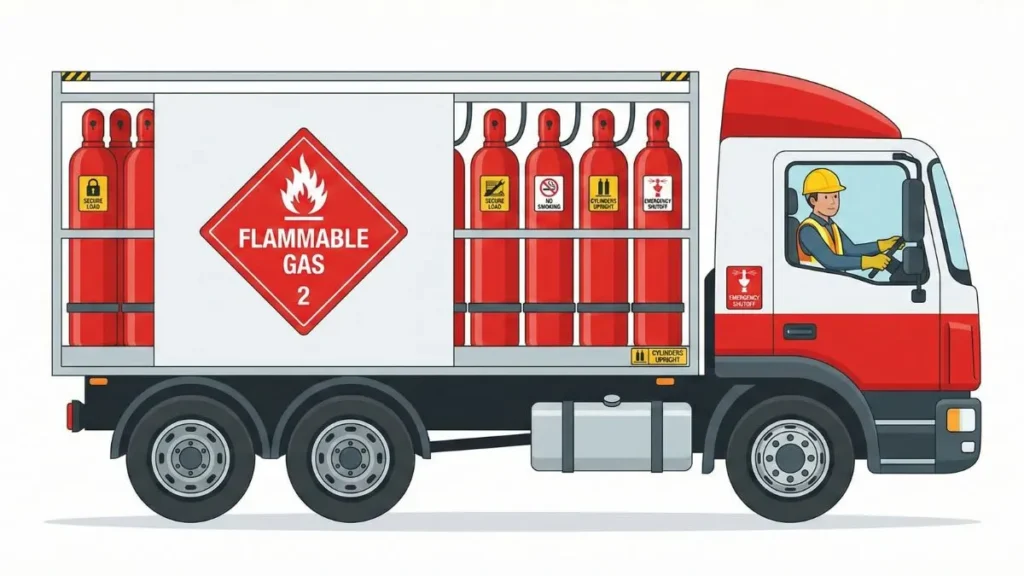
Flammable gases का transportation एक safety-critical operation है। Gas cylinders या pressure receptacles की गलत handling, inadequate securing, damaged valves और leakage से fire, flash fire या explosion का खतरा हो सकता है। इसलिए transportation के दौरान suitable vehicle, correct hazard identification, proper cylinder securing और trained handling personnel की व्यवस्था जरूरी है।
Approved Transport Vehicle Requirements
- Suitable Transport Vehicle: Gas cylinders को applicable dangerous goods transportation requirements के अनुरूप suitable vehicle में transport करें। Vehicle की body और loading arrangement transported gas तथा cylinder type के अनुकूल होने चाहिए।
- Adequate Ventilation: Vehicle या cargo compartment में suitable ventilation की व्यवस्था होनी चाहिए, जहां applicable हो। इसका उद्देश्य accidental leakage की स्थिति में gas accumulation को रोकना है।
- Hazard Identification and Signage: Transported gas की classification के अनुसार applicable UN number, Class 2.1 Flammable Gas hazard label और अन्य required markings या placards प्रदर्शित करें। केवल red colour में सामान्य warning लिखना पर्याप्त नहीं है।
- Trained Driver and Handling Staff: Driver और संबंधित personnel को dangerous goods transportation, cylinder handling, emergency precautions और applicable transport requirements की जानकारी होनी चाहिए।
- Emergency Equipment: Vehicle में applicable transport regulations के अनुसार suitable fire extinguishers, emergency equipment और required safety documentation उपलब्ध होना चाहिए।
Safe Cylinder Loading and Unloading Rules
- Correct Cylinder Position: Cylinders को gas type, cylinder design और supplier instructions के अनुसार transport करें। LPG cylinders को सामान्यतः upright position में रखा जाता है। अन्य cylinders के लिए संबंधित handling requirements का पालन करें।
- Secure Cylinder Arrangement: Cylinders को suitable racks, restraints या securing arrangements से मजबूती से बांधें, ताकि transportation के दौरान वे गिरें, लुढ़कें या आपस में टकराएं नहीं।
- Valve Protection: Transportation से पहले cylinder valve बंद करें और जहां applicable हो, valve protection cap या guard सही तरीके से लगाएं। Damaged या leaking cylinders को सामान्य transportation के लिए load न करें।
- Prevent Physical Damage: Cylinders को गिराने, घसीटने या एक-दूसरे से टकराने से बचाएं। Loading और unloading के लिए suitable handling equipment का उपयोग करें।
- Segregation of Incompatible Gases: Flammable gases को oxygen, oxidizing substances और अन्य incompatible dangerous goods से applicable segregation requirements के अनुसार अलग रखें।
- Load Inspection: Journey शुरू करने से पहले cylinder identification, valve protection, securing arrangements और vehicle condition की जांच करें।
Transportation Safety Requirements (Quick Table)
| Parameter | Safety Requirement |
|---|---|
| Vehicle Suitability | Applicable dangerous goods transport requirements के अनुसार suitable vehicle और cargo arrangement। |
| Vehicle Ventilation | जहां आवश्यक हो, leakage के कारण gas accumulation रोकने के लिए adequate ventilation। |
| Cylinder Position | Gas type, cylinder design और manufacturer instructions के अनुसार correct orientation। |
| Cylinder Securing | Suitable restraints या racks से cylinders को movement और impact से सुरक्षित रखें। |
| Hazard Marking | Applicable UN number, Class 2.1 hazard label और required transport placards। |
| Fire Protection | Applicable vehicle और dangerous goods transport requirements के अनुसार suitable fire extinguishers और emergency equipment। |
| Handling Personnel | Trained driver और personnel, suitable PPE तथा emergency response awareness। |
| Transport Documents | Applicable dangerous goods transport rules के अनुसार required documents और emergency information। |
Emergency Precautions During Transportation
- Gas leakage, fire या cylinder damage होने पर vehicle को सुरक्षित स्थान पर रोकें, यदि ऐसा करना सुरक्षित हो।
- लोगों को प्रभावित क्षेत्र से दूर रखें और ignition sources से बचाव करें।
- Emergency services और संबंधित gas supplier या authorized response team को सूचित करें।
- Leaking या fire-exposed cylinder को untrained personnel द्वारा handle या repair नहीं किया जाना चाहिए।
- Gas fire को extinguish करने से पहले fuel supply isolation और unburned gas accumulation के खतरे का assessment जरूरी है।
Flammable Gas Detection Systems
Industrial plants, laboratories, gas storage areas और process facilities में flammable gas leakage एक serious fire और explosion hazard पैदा कर सकती है। ऐसी situations में Flammable Gas Detection Systems का उपयोग हवा में combustible gas की concentration monitor करने और hazardous conditions का समय रहते पता लगाने के लिए किया जाता है।
एक typical fixed gas detection system में Gas Detectors, Gas Detection Control Panel, Audible and Visual Alarms तथा आवश्यकता के अनुसार Emergency Shutdown (ESD) या Automatic Isolation System शामिल हो सकते हैं। Detector सामान्यतः gas concentration को %LEL (Percentage of Lower Explosive Limit) में indicate करता है और configured alarm setpoints पर warning या control action initiate करता है।
Types of Flammable Gas Detectors
| Detector Type | Working Principle / Features | Typical Applications |
|---|---|---|
| Catalytic Bead Sensor | Gas catalytic element पर oxidize होती है और heat generation के कारण electrical resistance में change आता है। यह combustible gases detect कर सकता है, लेकिन proper operation के लिए sufficient oxygen आवश्यक है। | Boiler Rooms, Industrial Plants, Gas Handling Areas |
| Infrared (IR) Gas Detector | Gas द्वारा infrared radiation के absorption के आधार पर detection करता है। कई hydrocarbon IR detectors oxygen-independent operation प्रदान करते हैं। सामान्य hydrocarbon IR detectors Hydrogen detect नहीं करते। | Oil & Gas Plants, LPG Installations, Hydrocarbon Processing Areas |
| Semiconductor (MOS) Sensor | Gas के संपर्क में आने पर semiconductor material की electrical resistance बदलती है। यह विभिन्न gases के प्रति sensitive हो सकता है, लेकिन cross-sensitivity और environmental effects के कारण proper application-specific evaluation जरूरी है। | Selected Domestic Gas Alarms, Portable Instruments, Monitoring Applications |
| Thermal Conductivity Sensor | Gas mixture की thermal conductivity में बदलाव के आधार पर concentration detect करता है। इसका उपयोग Hydrogen जैसी gases के लिए suitable instrument design में किया जा सकता है। | Hydrogen Systems, Industrial Gas Monitoring |
| Portable Gas Detector | यह portable monitoring instrument होता है, जिसमें application के अनुसार catalytic, infrared या अन्य sensing technologies हो सकती हैं। इसका उपयोग personal monitoring और gas testing के लिए किया जाता है। | Confined Space Entry, Tank Inspection, Maintenance Operations |
Gas Detection Alarm Threshold Levels
Flammable gas detectors सामान्यतः gas concentration को %LEL में display करते हैं। Fixed detection systems में Low Alarm और High Alarm setpoints निर्धारित किए जा सकते हैं। इन setpoints का selection applicable standards, process conditions, site risk assessment और emergency response philosophy के अनुसार किया जाता है।
| Alarm Level | Illustrative Setting | Recommended Response |
|---|---|---|
| Low Alarm | 10% LEL | Warning activate करें। Site procedure के अनुसार trained personnel द्वारा स्थिति का assessment और आवश्यक emergency precautions शुरू करें। |
| High Alarm | 20–25% LEL | Emergency response procedure activate करें। आवश्यकता के अनुसार evacuation, remote gas isolation और engineered emergency shutdown actions लागू करें। |
Note: ऊपर दिए गए alarm values illustrative examples हैं, universal mandatory settings नहीं। Actual alarm thresholds को gas type, detector technology, applicable requirements और site-specific risk assessment के आधार पर निर्धारित करना चाहिए।
Recommended Gas Detector Installation Locations
Gas detectors की installation location gas की relative density, संभावित leakage points, ventilation pattern, equipment arrangement और gas dispersion characteristics के अनुसार तय की जाती है।
- Gas Cylinder Storage Areas: Flammable gas cylinders और manifold connections के आसपास संभावित leakage locations।
- Gas Pipeline and Valve Stations: Flanges, regulators, valves और pipeline joints के पास suitable detection points।
- Boiler and Furnace Rooms: Fuel gas supply lines, burners और associated equipment के आसपास।
- LPG Installations: LPG storage vessels, vaporizer installations और gas supply equipment के आसपास suitable locations।
- Hydrogen Storage and Battery Charging Areas: Hydrogen accumulation की संभावना वाले high-level locations पर suitable Hydrogen detectors।
- Confined and Enclosed Spaces: Gas accumulation की संभावना और ventilation conditions के आधार पर suitable detector locations।
Gas Detector Selection, Testing and Maintenance
- Detector का selection specific gas और sensing technology की compatibility के आधार पर करें।
- Detector की measuring range और alarm settings application के अनुसार निर्धारित करें।
- Manufacturer recommendations के अनुसार नियमित calibration और functional testing करें।
- Alarm, control panel communication और shutdown interfaces की periodic testing करें।
- Detector की installation location में बदलाव होने पर gas dispersion और coverage का पुनः assessment करें।
- Detector failure, fault indication और power supply failure के लिए suitable monitoring arrangements रखें।
Flammable Gas Symbols & GHS Hazard Labels
Flammable gas की पहचान के लिए GHS (Globally Harmonized System) hazard pictograms, hazard statements और precautionary statements का उपयोग किया जाता है। वहीं, dangerous goods के transportation में UN hazard labels का उपयोग होता है। इन symbols और labels को समझना industrial storage areas, gas cylinder handling और transportation safety के लिए महत्वपूर्ण है।
Common Symbols Used for Flammable Gas
| Symbol / Label | Meaning | Where Used |
|---|---|---|
| 🔥 Flame Symbol | Flammability या ignition hazard को दर्शाता है। GHS में flame pictogram का उपयोग संबंधित flammable substances के लिए किया जाता है। | Chemical labels, gas containers and safety information |
| GHS02 – Flame | यह GHS hazard pictogram flammable gases सहित विभिन्न flammable substances की पहचान करता है। | GHS chemical labels and Safety Data Sheets (SDS) |
| UN 2.1 – Red Diamond | Class 2.1 Flammable Gas को दर्शाता है। यह transport hazard label है, केवल high-pressure gas का संकेत नहीं। | Dangerous goods transport vehicles and packages, as applicable |
| ⚠️ Warning Sign | General warning या site-specific hazard की सूचना देता है। यह अपने आप में GHS02 का विकल्प नहीं है। | Industrial plants, gas storage areas and restricted zones |
GHS Hazard Codes for Flammable Gas
| Code | Meaning | Code Type |
|---|---|---|
| GHS02 | Flame pictogram used for applicable flammable hazards. | Hazard pictogram |
| H220 | Extremely flammable gas. | Hazard statement |
| H221 | Flammable gas. | Hazard statement |
| P210 | Keep away from heat, hot surfaces, sparks, open flames and other ignition sources. No smoking. | Precautionary statement |
H220 और H221 gas की flammability classification से संबंधित hazard statements हैं। GHS classification में applicable category के आधार पर pictogram और signal word निर्धारित किए जाते हैं। इसलिए हर flammable gas के label पर एक जैसी wording या classification होना जरूरी नहीं है।
GHS Label vs UN Transport Label
GHS label और UN transport label का उद्देश्य अलग-अलग है। GHS workplace और chemical hazard communication के लिए उपयोग होता है, जबकि UN Class 2.1 label dangerous goods transportation के दौरान flammable gas hazard की पहचान करता है। दोनों labels को एक-दूसरे का विकल्प नहीं समझना चाहिए।
Reference: OSHA – Hazard Communication Standard
What To Do During a Gas Leak? (Emergency Response)
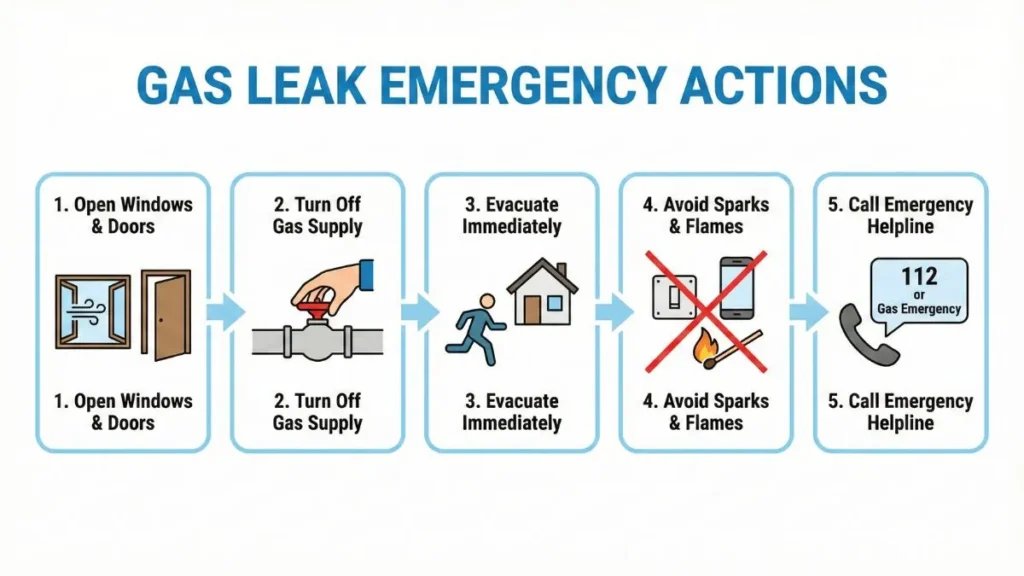
Flammable gas leakage एक serious emergency हो सकती है। हवा में गैस की concentration flammable range तक पहुँचने पर spark, flame या hot surface से आग या explosion हो सकता है। इसलिए gas leak का संदेह होते ही लोगों की safety, evacuation और ignition sources से दूरी को प्राथमिकता दें।
Immediate Actions During a Gas Leak
- Evacuate the affected area: सभी लोगों को leak area से बाहर निकालें और सुरक्षित दूरी पर ले जाएँ। जरूरत पड़ने पर आसपास के लोगों को भी चेतावनी दें।
- Avoid electrical switches: Leak area में lights, switches, appliances, plugs या electrical equipment को ON/OFF न करें।
- Avoid ignition sources: Smoking, open flames, welding, grinding और अन्य spark-producing activities तुरंत रोकें।
- Do not operate powered ventilation: Leak area में electric fans, exhaust fans या अन्य electrical equipment चालू न करें।
- Do not approach the leak: यदि leakage तेज है, cylinder damaged है या gas का concentration अधिक हो सकता है, तो valve बंद करने की कोशिश न करें।
- Raise the alarm: Industrial premises में site emergency procedure activate करें और control room / emergency response team को सूचित करें।
What to Do During a Domestic LPG Leak
घर में LPG leakage का संदेह होने पर नीचे दिए गए steps अपनाएँ। ये steps तभी करें जब ऐसा करना सुरक्षित हो और leak के पास जाने की आवश्यकता न पड़े।
- यदि सुरक्षित रूप से पहुँच सकते हैं, तो LPG regulator बंद करें।
- Electrical switches, appliances, doorbells और plugs operate न करें।
- दरवाजे और खिड़कियाँ manually खोलें, लेकिन केवल तभी जब ऐसा करना सुरक्षित हो।
- लोगों को बाहर निकालें और सुरक्षित स्थान पर पहुँचने के बाद emergency service को call करें।
- Leakage जारी रहने पर वापस अंदर न जाएँ और स्वयं repair करने की कोशिश न करें।
What to Do During an Industrial Gas Leak
Industrial gas leakage में gas type, release pressure, ventilation और आसपास की process conditions के अनुसार खतरे का स्तर बदल सकता है। इसलिए केवल trained और authorized emergency personnel को ही site emergency plan के अनुसार response करना चाहिए।
- Site Emergency Response Plan activate करें और control room को तुरंत सूचना दें।
- Hazardous area को evacuate और isolate करें तथा unauthorized entry रोकें।
- Emergency shutdown या gas supply isolation केवल trained personnel द्वारा approved safe procedure के अनुसार किया जाना चाहिए।
- Gas detection system और उपलब्ध process information के आधार पर emergency team को स्थिति का आकलन करने दें।
- यदि gas fire लगी हो, तो बिना fuel supply isolate किए flame बुझाने की कोशिश न करें। Unburned gas जमा होकर explosive atmosphere बना सकती है।
- जरूरत के अनुसार Fire Brigade, site emergency services और संबंधित gas supplier को सूचित करें।
What NOT To Do During a Gas Leak
- Leak area में mobile phone या अन्य electrical/electronic equipment operate न करें। Emergency call सुरक्षित स्थान पर पहुँचकर करें।
- Electric fan, exhaust fan या ventilation equipment चालू न करें।
- Vehicle या अन्य engine को leak area में start न करें।
- Leakage check करने के लिए matchstick, lighter या किसी भी open flame का उपयोग न करें।
- Untrained व्यक्ति cylinder valve, pipeline या damaged equipment को repair या operate न करे।
- Gas leak के दौरान बिना proper assessment के fire extinguisher से flame बुझाने की कोशिश न करें, खासकर जब gas supply जारी हो।
Emergency Contact Numbers in India
Gas leakage की स्थिति में संबंधित emergency service को सुरक्षित स्थान से contact करें।
| Emergency Contact | Purpose |
|---|---|
| 1906 | 24×7 LPG leakage emergency helpline in India. |
| 101 | Fire Brigade / Fire Emergency assistance. |
| 112 | India’s integrated emergency response number. |
| Gas Supplier / Site Emergency Control Room | Gas supply-related assistance, industrial emergency reporting and technical response. |
Recommended Safety Resources
Gas-based fire suppression systems और उनके applications को समझने के लिए हमारी यह guide पढ़ें: Aag Bujhane Wali Gas – Complete Guide
Frequently Asked Questions About Flammable Gas
1. Flammable Gas क्या होती है?
Flammable gas ऐसी गैस होती है जो हवा के साथ एक निर्धारित concentration range में मिलकर suitable ignition source मिलने पर जल सकती है। उदाहरण के लिए Hydrogen, Methane, Propane और Acetylene। कुछ परिस्थितियों में इसका uncontrolled combustion आग या explosion का कारण बन सकता है।
2. Flammable Gas के Common Examples कौन-से हैं?
Common flammable gases में Hydrogen, Methane, Ethane, Propane, Butane और Acetylene शामिल हैं। LPG मुख्य रूप से Propane और Butane का mixture होता है, जबकि CNG में मुख्य रूप से Methane होती है।
3. Flammable Gas कैसे Ignite होती है?
जब flammable gas और हवा का mixture उसकी LEL और UEL limits के बीच होता है, तब suitable ignition source मिलने पर आग लग सकती है। Ignition sources में open flame, electrical spark, static discharge और पर्याप्त गर्म hot surfaces शामिल हो सकते हैं।
4. Flammable Gas और Explosive Gas में क्या अंतर है?
Flammable gas वह गैस है जो suitable conditions में जल सकती है। Explosion तब हो सकता है जब combustion से तेजी से heat और pressure उत्पन्न हो, विशेषकर confined या partially confined area में। इसलिए हर flammable gas leak explosion नहीं करती और explosion के लिए केवल gas की flammability पर्याप्त नहीं होती।
5. Flammable Gas का Test कैसे किया जाता है?
Flammable gas leakage और concentration detect करने के लिए suitable gas detectors का उपयोग किया जाता है। इनमें catalytic bead, infrared और अन्य gas-specific sensor technologies शामिल हैं। Portable gas detectors और fixed gas detection systems का चयन संबंधित gas, operating conditions और safety requirements के अनुसार किया जाता है।
6. LEL और UEL का मतलब क्या है?
LEL (Lower Explosive Limit) हवा में गैस की वह न्यूनतम concentration है जिस पर suitable ignition source मिलने पर flame propagate कर सकती है। UEL (Upper Explosive Limit) वह अधिकतम concentration है जिसके ऊपर mixture सामान्यतः बहुत rich होता है और oxygen की कमी के कारण flame propagate नहीं करती। इन limits के बीच flammable range होती है।
7. Flammable Gas को Store करने का Safest तरीका क्या है?
Flammable gas cylinders को अच्छी ventilation वाली designated storage area में, heat और ignition sources से दूर तथा physical damage से सुरक्षित रखना चाहिए। Cylinders को गिरने से रोकने के लिए secure करें और full तथा empty cylinders की पहचान रखें। Cylinder की position संबंधित gas, cylinder design और manufacturer instructions के अनुसार होनी चाहिए। Flammable gases को oxygen और अन्य oxidizers से applicable safety requirements के अनुसार अलग रखें।
8. Flammable Gas Leak कैसे पहचानें?
Gas leakage की पहचान characteristic smell (यदि gas में odorant मिलाया गया हो), hissing sound, gas detector alarm या pressure loss जैसे संकेतों से हो सकती है। कुछ pressurized gas releases में cylinder या pipe पर frost भी दिखाई दे सकता है। हालांकि, सभी gases में smell या frost नहीं होता, इसलिए केवल मानवीय senses पर निर्भर नहीं रहना चाहिए।
9. Gas Leak होने पर क्या करें?
Gas leak का संदेह होते ही प्रभावित क्षेत्र से लोगों को सुरक्षित स्थान पर evacuate करें। Electrical switches, appliances और open flames operate न करें। Leak के पास जाकर valve बंद करने की कोशिश न करें, जब तक ऐसा करना सुरक्षित और अधिकृत न हो। सुरक्षित स्थान पर पहुँचकर emergency services या gas supplier को सूचना दें। भारत में LPG leakage के लिए 1906 और सामान्य emergency assistance के लिए 112 पर संपर्क किया जा सकता है।
Conclusion
संक्षेप में, flammable gas घरों, industries और laboratories में कई महत्वपूर्ण applications के लिए उपयोग की जाती है। लेकिन इसकी improper handling, leakage या ignition source के संपर्क में आने से fire और explosion जैसे गंभीर हादसे हो सकते हैं। इसलिए सही storage, gas leakage detection, suitable safety equipment और emergency response procedures का पालन करना बेहद जरूरी है।
LEL और UEL limits की जानकारी, gas-specific handling instructions, approved cylinders और proper ventilation arrangements flammable gas safety के महत्वपूर्ण हिस्से हैं। Industrial facilities में नियमित inspection, trained personnel और effective emergency preparedness भी सुनिश्चित करनी चाहिए।
याद रखें, flammable gas के hazards को उचित engineering controls और safe operating practices के माध्यम से कम किया जा सकता है, लेकिन जोखिम को पूरी तरह समाप्त मानना सही नहीं है। इसलिए हमेशा applicable safety standards और manufacturer instructions का पालन करें।
Fire Extinguisher Types & Uses – Complete Guide

3 thoughts on “Flammable Gas : List, Examples, Types, Uses & Safety Guide (2026)”