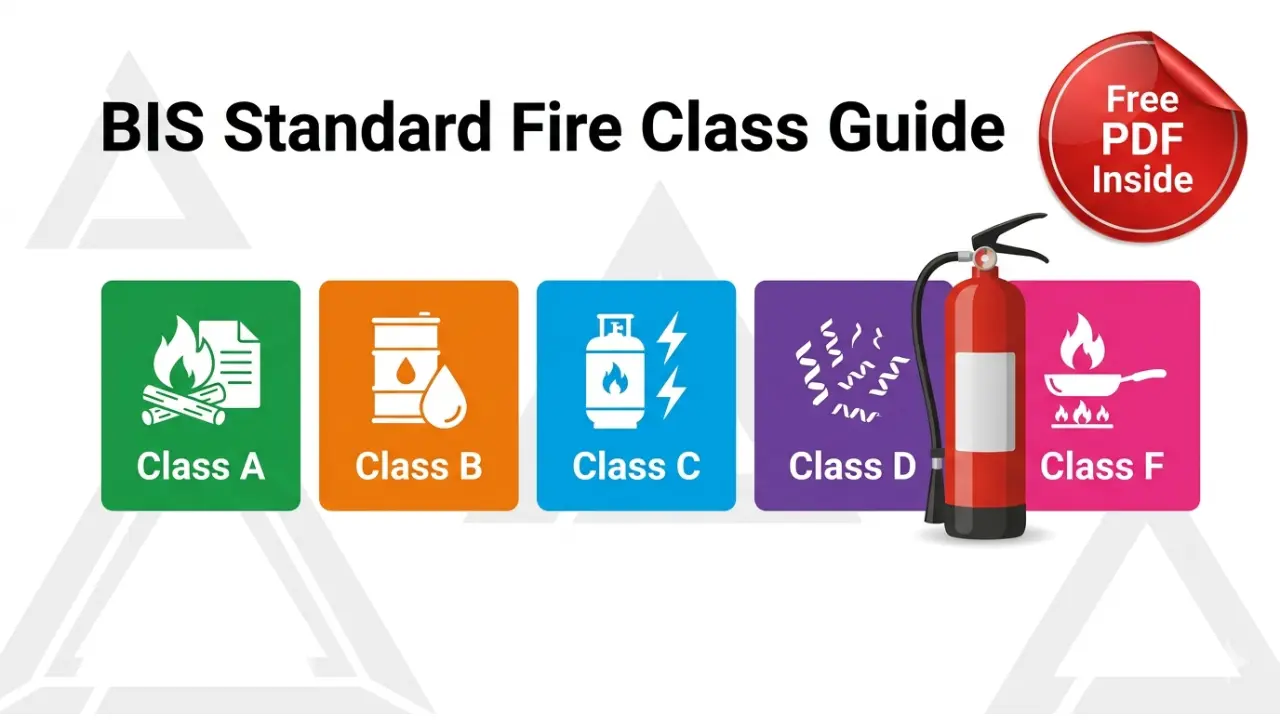
यदि आप जानना चाहते हैं कि aag kitne prakar ki hoti hai, तो यह गाइड आपके लिए है। इसमें BIS आधारित Fire Classification System के अनुसार Class A, B, C, D और F Fire की पहचान, वास्तविक उदाहरण, प्रत्येक Fire Class के लिए उपयुक्त Fire Extinguisher तथा आवश्यक सुरक्षा उपाय आसान भाषा में समझाए गए हैं। यह जानकारी घर, कार्यालय, फैक्ट्री, गोदाम और औद्योगिक क्षेत्रों में आग के जोखिम को समझने तथा सही अग्निशामक यंत्र चुनने में उपयोगी होगी।
⚡ Quick Answer
aag kitne prakar ki hoti hai? भारत में BIS आधारित Fire Classification System के अनुसार आग को 5 मुख्य Fire Classes में वर्गीकृत किया जाता है—Class A, Class B, Class C, Class D और Class F। प्रत्येक Fire Class अलग प्रकार के ज्वलनशील पदार्थ पर आधारित होती है, इसलिए हर प्रकार की आग के लिए उपयुक्त Fire Extinguisher भी अलग होता है।
- 🔥 Class A: लकड़ी, कागज, कपड़ा, रबर और प्लास्टिक जैसी ठोस वस्तुओं की आग
- 🛢️ Class B: पेट्रोल, डीजल, केरोसीन, पेंट और अन्य ज्वलनशील तरल पदार्थों की आग
- 🔥 Class C: LPG, CNG, Propane और अन्य ज्वलनशील गैसों की आग
- ⚙️ Class D: मैग्नीशियम, सोडियम, पोटैशियम और अन्य ज्वलनशील धातुओं की आग
- 🍳 Class F: Cooking Oil, Vegetable Oil, Ghee और Deep Fat Fryer में लगने वाली आग
आग बुझाने से पहले उसकी Fire Class की सही पहचान करें। गलत Fire Extinguisher का उपयोग आग को और अधिक खतरनाक बना सकता है तथा जान-माल का नुकसान बढ़ा सकता है।
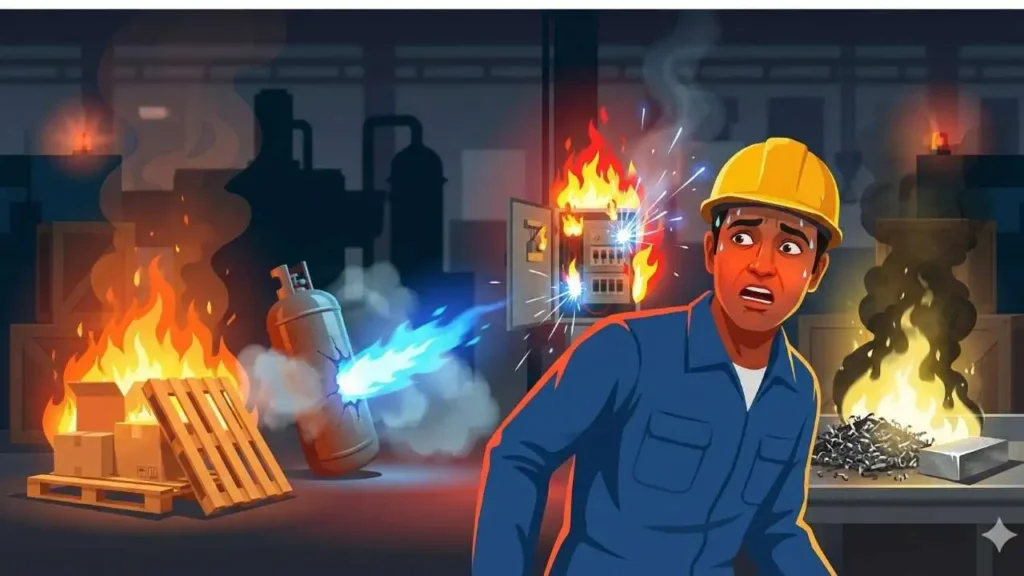
आग क्या है? (What is Fire?)
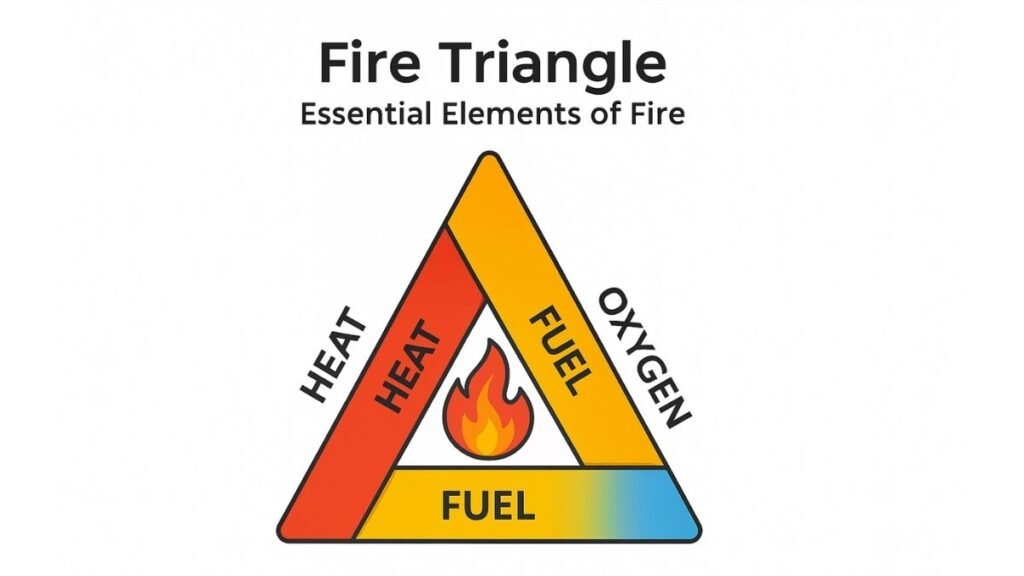
आग (Fire) एक रासायनिक प्रक्रिया (Chemical Reaction) है, जो ईंधन (Fuel), ऑक्सीजन (Oxygen) और ऊष्मा (Heat) के आपस में मिलने पर शुरू होती है। इस प्रक्रिया को दहन (Combustion) कहा जाता है। दहन के दौरान ऊष्मा, प्रकाश, धुआँ तथा विभिन्न गैसें उत्पन्न होती हैं।
किसी भी आग की Fire Class इस बात पर निर्भर करती है कि कौन-सा पदार्थ जल रहा है। उदाहरण के लिए लकड़ी, कागज और कपड़े में लगने वाली आग की प्रकृति पेट्रोल, LPG, धातु या Cooking Oil में लगने वाली आग से अलग होती है। इसी कारण BIS Fire Classification System के अनुसार प्रत्येक Fire Class के लिए अलग प्रकार का Fire Extinguisher निर्धारित किया जाता है।
💡 जानिए
यदि आग के तीन आवश्यक तत्व—ईंधन (Fuel), ऑक्सीजन (Oxygen) और ऊष्मा (Heat)—में से किसी एक को हटा दिया जाए, तो आग बुझ सकती है। यही सिद्धांत अधिकांश Fire Extinguishers के कार्य करने का आधार है।
आग के 5 प्रकार (Fire Classes)
भारत में BIS Fire Classification System के अनुसार आग को जलने वाले पदार्थ (Fuel) के आधार पर 5 मुख्य Fire Classes में विभाजित किया जाता है। प्रत्येक Fire Class का कारण, जोखिम और उसे बुझाने के लिए उपयोग किया जाने वाला Fire Extinguisher अलग होता है। नीचे दी गई तालिका से आप सभी Fire Classes की तुलना एक नज़र में समझ सकते हैं।
| Fire Class | जलने वाला पदार्थ | सामान्य उदाहरण | उपयुक्त Fire Extinguisher | क्या पानी डाल सकते हैं? |
|---|---|---|---|---|
| Class A | लकड़ी, कागज, कपड़ा, रबर, प्लास्टिक | घर, स्कूल, ऑफिस | Water, ABC Powder | ✅ हाँ |
| Class B | पेट्रोल, डीजल, पेंट, सॉल्वेंट | पेट्रोल पंप, गैरेज | Foam, CO₂, ABC Powder | ❌ नहीं |
| Class C | LPG, CNG, Propane | Gas Leak | CO₂, Dry Powder | ❌ नहीं |
| Class D | मैग्नीशियम, सोडियम, टाइटेनियम | Metal Industry | Special Dry Powder | ❌ नहीं |
| Class F | Cooking Oil, Ghee | Kitchen, Hotel | Wet Chemical | ❌ नहीं |
आग बुझाने से पहले उसकी Fire Class की पहचान करना सबसे महत्वपूर्ण कदम है। सही Fire Extinguisher का चयन करने से आग पर तेजी से नियंत्रण पाया जा सकता है, जबकि गलत अग्निशामक यंत्र आग को और अधिक खतरनाक बना सकता है।
Class A Fire (ठोस पदार्थों की आग)
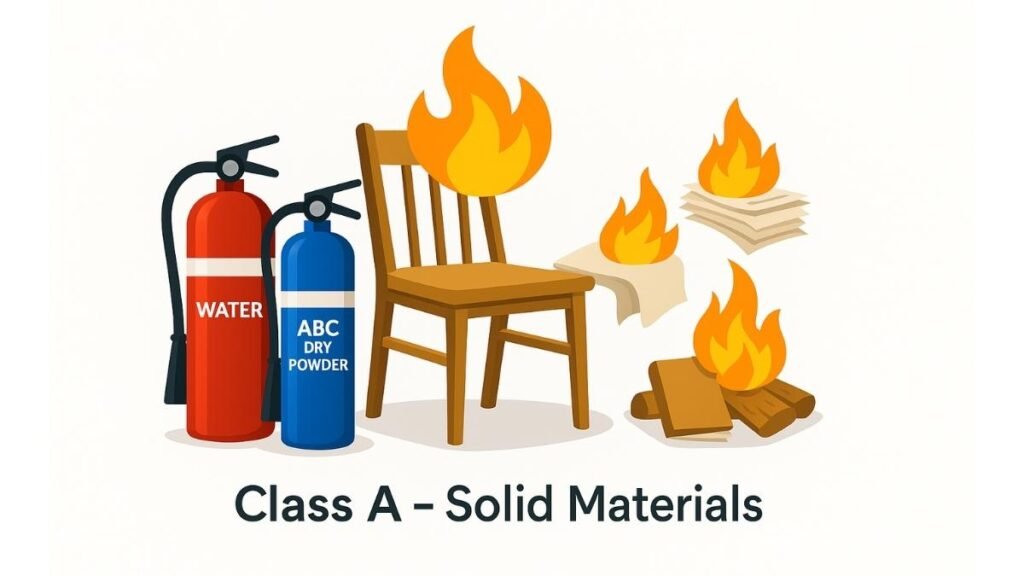
Class A Fire उन आग को कहा जाता है जो सामान्य ठोस ज्वलनशील पदार्थों (Ordinary Combustible Materials) में लगती हैं। इनमें मुख्य रूप से लकड़ी, कागज, कपड़ा, रबर, प्लास्टिक, गत्ता, फर्नीचर तथा सूखी घास जैसे पदार्थ शामिल होते हैं। यह भारत में सबसे अधिक देखी जाने वाली Fire Class है और घरों, कार्यालयों, स्कूलों, गोदामों, दुकानों तथा औद्योगिक प्रतिष्ठानों में अक्सर इसी प्रकार की आग लगती है।
Class A Fire के सामान्य उदाहरण
- 🔥 घर या कार्यालय में लकड़ी के फर्नीचर में आग लगना
- 📄 कागज, फाइलों या किताबों में आग लगना
- 👕 कपड़ों, परदों या गद्दों में आग लगना
- 📦 गत्ते के बॉक्स एवं पैकेजिंग सामग्री में आग लगना
- 🌿 सूखी घास, पत्तियों या कचरे में आग लगना
Class A Fire बुझाने के लिए कौन-सा Fire Extinguisher उपयोग करें?
Class A Fire के लिए सामान्यतः Water Type Fire Extinguisher तथा ABC Dry Powder Fire Extinguisher सबसे उपयुक्त माने जाते हैं। पानी आग का तापमान कम करके उसे नियंत्रित करता है, जबकि ABC Dry Powder Fire Extinguisher दहन (Combustion) की रासायनिक श्रृंखला (Chain Reaction) को रोककर आग बुझाने में सहायता करता है।
✅ विशेषज्ञ सलाह
यदि Class A Fire प्रारंभिक अवस्था में हो, तो उपयुक्त Fire Extinguisher का उपयोग करके इसे आसानी से नियंत्रित किया जा सकता है। लेकिन यदि आग तेजी से फैल रही हो या धुआँ अधिक हो, तो तुरंत सुरक्षित स्थान पर जाएँ, क्षेत्र खाली करें और अग्निशमन सेवा को सूचना दें।
विस्तृत जानकारी: Class A Fire के कारण, रोकथाम के उपाय और उपयुक्त अग्निशामक यंत्र के बारे में अधिक जानने के लिए हमारा लेख Class A Fire पढ़ें।
📥 Free Download: Fire Types Chart (PDF)
BIS Standard 2026 | Hindi + English | Printable Chart
📥 Download PDF Now (Free)✅ BIS 2026 Updated • ✅ Mobile Friendly • ✅ Print Ready
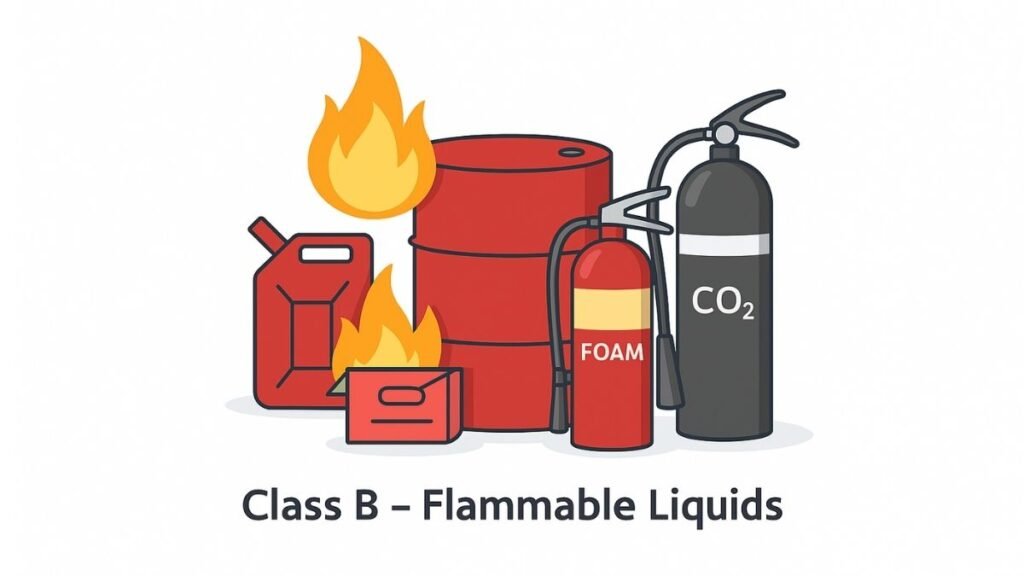
Class B Fire (ज्वलनशील तरल पदार्थों की आग)
Class B Fire उन आग को कहा जाता है जो ज्वलनशील तरल पदार्थों (Flammable Liquids) में लगती हैं। इनमें मुख्य रूप से पेट्रोल, डीजल, केरोसीन, पेंट, थिनर, अल्कोहल, वार्निश तथा विभिन्न सॉल्वेंट शामिल होते हैं। यह आग तेजी से फैल सकती है, इसलिए इसे नियंत्रित करने के लिए सही Fire Extinguisher का उपयोग करना अत्यंत आवश्यक है।
Class B Fire के सामान्य उदाहरण
- ⛽ पेट्रोल पंप पर ईंधन में आग लगना
- 🛢️ डीजल या केरोसीन के भंडारण टैंक में आग लगना
- 🎨 पेंट, थिनर या सॉल्वेंट में आग लगना
- 🚗 वाहन की Fuel Line या Fuel Tank में आग लगना
- 🏭 रासायनिक उद्योगों में ज्वलनशील तरल पदार्थों में आग लगना
Class B Fire बुझाने के लिए कौन-सा Fire Extinguisher उपयोग करें?
Class B Fire के लिए सामान्यतः Foam Fire Extinguisher, CO₂ Fire Extinguisher तथा ABC Dry Powder Fire Extinguisher सबसे उपयुक्त माने जाते हैं। ये अग्निशामक यंत्र आग को ऑक्सीजन से अलग करके या दहन प्रक्रिया को रोककर प्रभावी ढंग से नियंत्रित करते हैं।
⚠️ महत्वपूर्ण
Class B Fire पर कभी भी सीधे पानी का उपयोग नहीं करना चाहिए। अधिकांश ज्वलनशील तरल पदार्थ पानी से हल्के होते हैं, इसलिए पानी डालने पर आग फैल सकती है और दुर्घटना अधिक गंभीर हो सकती है।
विस्तृत जानकारी: Class B Fire के कारण, जोखिम, रोकथाम और सही अग्निशामक यंत्र के बारे में विस्तार से जानने के लिए हमारा लेख Class B Fire पढ़ें।
Class C Fire (ज्वलनशील गैसों की आग)
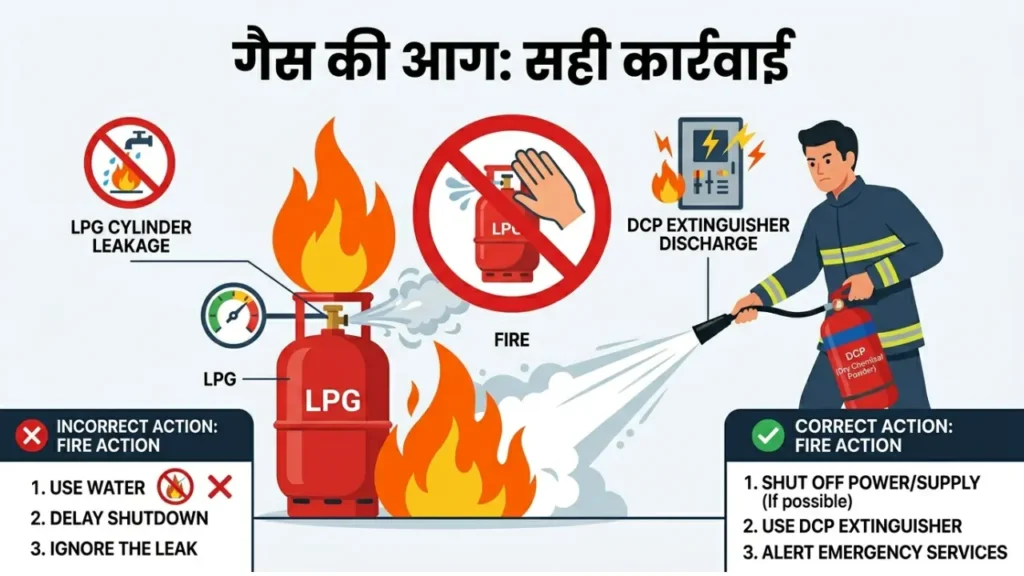
Class C Fire उन आग को कहा जाता है जो ज्वलनशील गैसों (Flammable Gases) में लगती हैं। इनमें मुख्य रूप से LPG, CNG, PNG, Propane, Butane, Acetylene तथा Hydrogen जैसी गैसें शामिल होती हैं। इस प्रकार की आग अत्यधिक खतरनाक होती है क्योंकि गैस का रिसाव (Gas Leakage) होने पर आग तेजी से फैल सकती है और विस्फोट (Explosion) का खतरा भी बढ़ जाता है।
Class C Fire के सामान्य उदाहरण
- 🔥 LPG गैस सिलेंडर में आग लगना
- 🍳 रसोई में गैस रिसाव के कारण आग लगना
- 🚗 CNG वाहन में गैस लीकेज के कारण आग लगना
- 🏭 औद्योगिक गैस पाइपलाइन में आग लगना
- ⚙️ गैस स्टोरेज या गैस प्लांट में आग लगना
Class C Fire बुझाने के लिए कौन-सा Fire Extinguisher उपयोग करें?
Class C Fire के लिए सामान्यतः CO₂ Fire Extinguisher, ABC Dry Powder Fire Extinguisher तथा आवश्यकता अनुसार Clean Agent Fire Extinguisher का उपयोग किया जाता है। आग बुझाने से पहले यदि सुरक्षित हो, तो गैस की सप्लाई बंद करना सबसे महत्वपूर्ण कदम होता है।
🚫 चेतावनी
यदि गैस का रिसाव लगातार हो रहा है, तो केवल आग बुझाना पर्याप्त नहीं है। सबसे पहले गैस की सप्लाई बंद करें, क्षेत्र को खाली कराएँ और तुरंत अग्निशमन सेवा को सूचित करें। गैस रिसाव के दौरान किसी भी प्रकार का विद्युत स्विच ऑन या ऑफ करने से बचें, क्योंकि इससे विस्फोट का खतरा बढ़ सकता है।
विस्तृत जानकारी: Class C Fire के कारण, गैस रिसाव से बचाव और सुरक्षा उपायों के बारे में विस्तार से जानने के लिए हमारा लेख Class C Fire तथा आग बुझाने वाली गैस पढ़ें।
Class D Fire (ज्वलनशील धातुओं की आग)
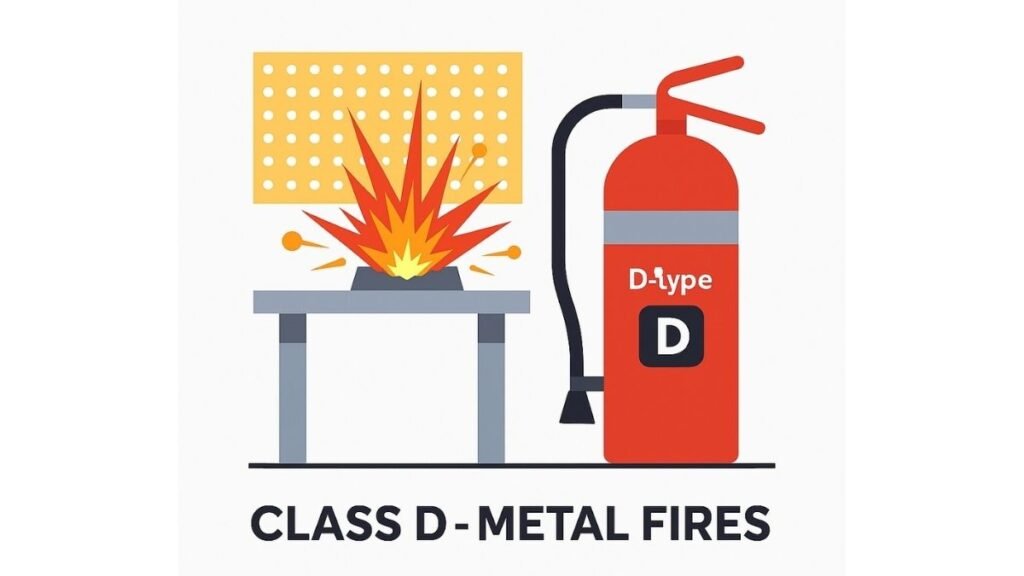
Class D Fire उन आग को कहा जाता है जो ज्वलनशील धातुओं (Combustible Metals) में लगती हैं। इनमें मुख्य रूप से मैग्नीशियम (Magnesium), सोडियम (Sodium), पोटैशियम (Potassium), टाइटेनियम (Titanium), लिथियम (Lithium) तथा एल्युमिनियम पाउडर जैसी धातुएँ शामिल होती हैं। यह आग अत्यधिक तापमान पर जलती है और सामान्य Fire Extinguisher या पानी से इसे बुझाना खतरनाक हो सकता है।
Class D Fire के सामान्य उदाहरण
- 🏭 धातु निर्माण (Metal Fabrication) उद्योगों में आग लगना
- ⚙️ मशीनिंग के दौरान Magnesium या Titanium के बुरादे में आग लगना
- 🔋 Lithium Metal Storage में आग लगना
- 🧪 रासायनिक प्रयोगशालाओं में ज्वलनशील धातुओं में आग लगना
- 🏗️ Metal Powder Processing Unit में आग लगना
Class D Fire बुझाने के लिए कौन-सा Fire Extinguisher उपयोग करें?
Class D Fire के लिए केवल Class D Dry Powder Fire Extinguisher (Metal Fire Powder) का उपयोग करना चाहिए। यह विशेष प्रकार का पाउडर धातु की आग को ऑक्सीजन से अलग करके नियंत्रित करता है। पानी, फोम या CO₂ Fire Extinguisher का उपयोग नहीं करना चाहिए, क्योंकि इससे आग और अधिक भड़क सकती है या विस्फोट जैसी स्थिति उत्पन्न हो सकती है।
🚫 चेतावनी
ज्वलनशील धातुओं पर कभी भी पानी न डालें। कुछ धातुएँ पानी के संपर्क में आकर हाइड्रोजन गैस उत्पन्न कर सकती हैं, जिससे आग और अधिक गंभीर हो सकती है।
विस्तृत जानकारी: Class D Fire के कारण, जोखिम, रोकथाम और सही अग्निशामक यंत्र के बारे में विस्तार से जानने के लिए हमारा लेख Class D Fire पढ़ें।
आधिकारिक संदर्भ: Bureau of Indian Standards (BIS) पर प्रकाशित अग्निशमन मानकों का पालन करें।
Class F Fire (रसोई में Cooking Oil और Ghee से लगने वाली आग)
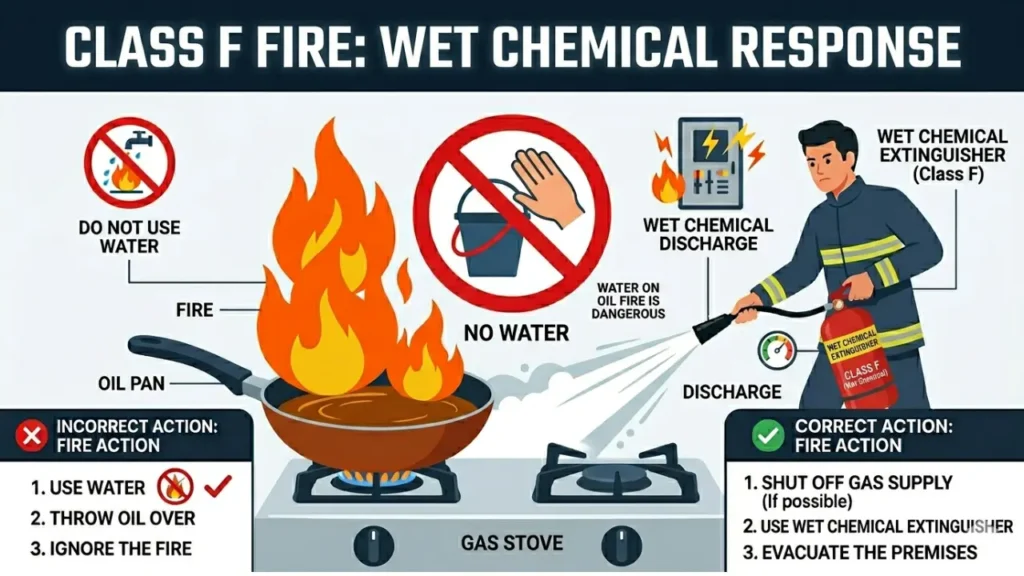
Class F Fire उन आग को कहा जाता है जो Cooking Oil, Vegetable Oil, Ghee तथा Deep Fat Fryer में लगती हैं। यह आग मुख्य रूप से घरों की रसोई, होटल, रेस्टोरेंट, कैंटीन और Commercial Kitchens में होती है। अधिक तापमान पर तेल या घी का Flash Point पार होने पर यह तेजी से आग पकड़ सकता है, जिससे आग कुछ ही सेकंड में फैल सकती है।
Class F Fire के सामान्य उदाहरण
- 🍳 कढ़ाई में गर्म तेल में आग लगना
- 🔥 Deep Fat Fryer में Cooking Oil का जलना
- 🏨 होटल या रेस्टोरेंट की रसोई में तेल से आग लगना
- 🥘 घी या Vegetable Oil के अधिक गर्म होने से आग लगना
- 👨🍳 Commercial Kitchen में Cooking Oil Fire होना
Class F Fire बुझाने के लिए कौन-सा Fire Extinguisher उपयोग करें?
Class F Fire के लिए Wet Chemical Fire Extinguisher सबसे उपयुक्त माना जाता है। यह गर्म तेल की सतह पर एक सुरक्षात्मक परत (Soap Layer) बनाकर आग को ऑक्सीजन से अलग करता है और दोबारा आग भड़कने की संभावना को कम करता है।
🚫 चेतावनी
Cooking Oil या Ghee में लगी आग पर कभी भी पानी न डालें। पानी डालने से उबलता हुआ तेल चारों ओर फैल सकता है, जिससे आग तेजी से बढ़ सकती है और गंभीर रूप से जलने का खतरा होता है।
✅ विशेषज्ञ सलाह
यदि आग छोटी हो और सुरक्षित रूप से नियंत्रित की जा सके, तो गैस की सप्लाई बंद करें तथा Wet Chemical Fire Extinguisher का उपयोग करें। यदि आग तेजी से फैल रही हो, तो तुरंत रसोई खाली करें और अग्निशमन सेवा को सूचना दें।
विस्तृत जानकारी: Kitchen Fire के कारण, रोकथाम और सुरक्षा उपायों के बारे में अधिक जानने के लिए हमारा लेख Kitchen Fire (Class F Fire) पढ़ें।
आधिकारिक संदर्भ: रसोई एवं Commercial Kitchen की अग्नि सुरक्षा संबंधी आवश्यकताओं के लिए Bureau of Indian Standards (BIS) द्वारा प्रकाशित संबंधित मानकों का पालन करें।
निष्कर्ष (Conclusion)
अब आप समझ चुके हैं कि aag kitne prakar ki hoti hai। BIS Fire Classification System के अनुसार आग को Class A, Class B, Class C, Class D और Class F में वर्गीकृत किया जाता है। प्रत्येक Fire Class अलग प्रकार के ज्वलनशील पदार्थ पर आधारित होती है, इसलिए हर प्रकार की आग के लिए सही Fire Extinguisher का चयन करना आवश्यक है।
यदि Fire Class की सही पहचान कर ली जाए और उपयुक्त अग्निशामक यंत्र का उपयोग किया जाए, तो कई दुर्घटनाओं को शुरुआती चरण में ही नियंत्रित किया जा सकता है। वहीं गलत Fire Extinguisher का उपयोग आग को और अधिक खतरनाक बना सकता है तथा जान-माल का नुकसान बढ़ा सकता है।
✅ आगे क्या पढ़ें?
आधिकारिक संदर्भ: Fire Safety Standards और अग्निशामक यंत्रों से संबंधित नवीनतम दिशा-निर्देशों के लिए Bureau of Indian Standards (BIS) तथा National Disaster Management Authority (NDMA) की आधिकारिक वेबसाइट देखें।
अक्सर पूछे जाने वाले प्रश्न (FAQs)
1. आग कितने प्रकार की होती है?
भारत में BIS Fire Classification System के अनुसार आग को 5 मुख्य प्रकार—Class A, Class B, Class C, Class D और Class F—में वर्गीकृत किया जाता है। प्रत्येक Fire Class अलग प्रकार के ज्वलनशील पदार्थ पर आधारित होती है।
2. Fire Class क्या होती है?
Fire Class आग का वह वर्गीकरण है जो यह बताता है कि आग किस प्रकार के पदार्थ में लगी है। इसी के आधार पर सही Fire Extinguisher का चयन किया जाता है।
3. क्या सभी प्रकार की आग पर पानी डाल सकते हैं?
नहीं। पानी केवल कुछ स्थितियों में Class A Fire के लिए उपयुक्त होता है। Class B, Class C, Class D और Class F Fire पर पानी डालना खतरनाक हो सकता है।
4. Class A Fire किसे कहते हैं?
लकड़ी, कागज, कपड़ा, रबर और प्लास्टिक जैसे ठोस ज्वलनशील पदार्थों में लगने वाली आग को Class A Fire कहा जाता है।
5. Class B Fire में कौन-कौन से पदार्थ शामिल होते हैं?
पेट्रोल, डीजल, केरोसीन, पेंट, थिनर, अल्कोहल और अन्य ज्वलनशील तरल पदार्थ Class B Fire के अंतर्गत आते हैं।
6. Class C Fire सबसे खतरनाक क्यों मानी जाती है?
क्योंकि इसमें LPG, CNG या अन्य ज्वलनशील गैसें शामिल होती हैं। गैस रिसाव होने पर आग तेजी से फैल सकती है और विस्फोट का खतरा भी बढ़ जाता है।
7. Kitchen Fire किस Fire Class में आती है?
Cooking Oil, Vegetable Oil और Ghee में लगने वाली आग Class F Fire कहलाती है। इसे बुझाने के लिए Wet Chemical Fire Extinguisher सबसे उपयुक्त माना जाता है।
8. Class D Fire पर पानी क्यों नहीं डालना चाहिए?
Class D Fire ज्वलनशील धातुओं में लगती है। कुछ धातुएँ पानी के संपर्क में आकर हाइड्रोजन गैस उत्पन्न कर सकती हैं, जिससे आग और अधिक भड़क सकती है।
9. Fire Class की पहचान क्यों जरूरी है?
Fire Class की सही पहचान करने से सही Fire Extinguisher का चयन किया जा सकता है। इससे आग को सुरक्षित और प्रभावी तरीके से नियंत्रित करने में मदद मिलती है।
10. भारत में Fire Classification किस मानक पर आधारित है?
भारत में Fire Classification और Fire Extinguishers से संबंधित दिशा-निर्देश Bureau of Indian Standards (BIS) द्वारा प्रकाशित मानकों के आधार पर अपनाए जाते हैं।
संबंधित लेख (Related Articles)
यदि आप Fire Safety, Fire Classes और Fire Extinguishers के बारे में अधिक जानकारी प्राप्त करना चाहते हैं, तो नीचे दिए गए उपयोगी लेख भी पढ़ें।
📚 Recommended Reading
- 🔥 Class A Fire क्या है? पूरी जानकारी
- ⛽ Class B Fire क्या है? पूरी जानकारी
- 🔥 Class C Fire क्या है? पूरी जानकारी
- ⚙️ Class D Fire क्या है? पूरी जानकारी
- 🍳 Kitchen Fire (Class F Fire) क्या है?
- 🧯 ABC Type Fire Extinguisher की पूरी जानकारी
- 💨 CO₂ Fire Extinguisher का उपयोग कब करें?
- 🧯 Fire Extinguisher Types and Uses
लेख की जानकारी (Article Information)
| विषय | आग के प्रकार (Fire Classes) एवं Fire Safety |
|---|---|
| मुख्य विषय | Class A, Class B, Class C, Class D और Class F Fire |
| आधिकारिक संदर्भ | Bureau of Indian Standards (BIS), National Building Code (NBC) |
| उपयुक्त पाठक | विद्यार्थी, Fire Safety Professionals, उद्योग, कार्यालय, संस्थान एवं सामान्य नागरिक |
| लेख श्रेणी | Fire Safety Guide |
| लेखक | Shubhangi Khandare |
| तथ्य सत्यापन | BIS Standards एवं विश्वसनीय Fire Safety References के आधार पर |
| अंतिम अपडेट | अगस्त 2026 |
| अगली समीक्षा | अगस्त 2027 या BIS Standards में संशोधन होने पर |

11 thoughts on “आग के 5 प्रकार (Fire Classes): Class A, B, C, D और F की पूरी जानकारी”