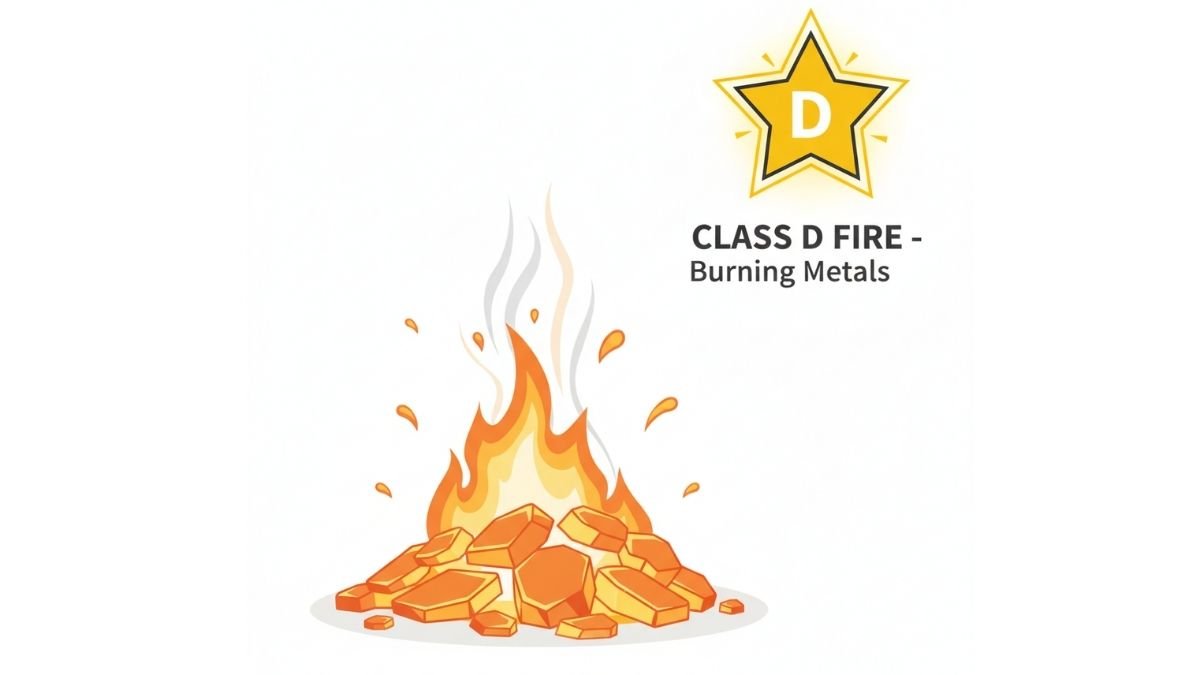
Class D Fire वह आग होती है जो ज्वलनशील धातुओं (Combustible Metals) जैसे Magnesium, Sodium, Potassium, Titanium और Lithium Metal में लगती है। यह अत्यधिक तापमान पर जलती है और सामान्य आग की तुलना में अधिक खतरनाक मानी जाती है।
इस लेख में आप Class D Fire के कारण, उदाहरण, सही Fire Extinguisher Types and Uses, Safety Tips तथा BIS Standards के अनुसार Metal Fire को सुरक्षित तरीके से नियंत्रित करने की पूरी जानकारी जानेंगे।
Quick Answer
Class D Fire वह आग होती है जो ज्वलनशील धातुओं (Combustible Metals) जैसे Magnesium, Sodium, Potassium, Lithium और Titanium में लगती है। इस आग को बुझाने के लिए Class D Metal Fire Extinguisher (Special Dry Powder) का उपयोग किया जाता है। Water, Foam, CO₂ और सामान्य ABC Fire Extinguishers का उपयोग Class D Fire पर नहीं करना चाहिए, क्योंकि इससे आग और अधिक भड़क सकती है तथा विस्फोट या रासायनिक प्रतिक्रिया का खतरा बढ़ सकता है।
What is Class D Fire?
Class D Fire वह आग होती है जो ज्वलनशील धातुओं (Combustible Metals) जैसे Magnesium, Sodium, Potassium, Titanium, Zirconium और Lithium Metal में लगती है। यह आग अत्यधिक तापमान पर जलती है और सामान्य आग की तुलना में अधिक खतरनाक होती है। यदि गलत Fire Extinguisher का उपयोग किया जाए, तो आग और अधिक भड़क सकती है या रासायनिक प्रतिक्रिया हो सकती है।
Class D Fire सामान्यतः धातु निर्माण उद्योग (Metal Manufacturing), Foundries, Machine Shops, Chemical Laboratories, Aerospace Industries तथा उन स्थानों पर देखने को मिलती है जहाँ Metal Powder, Metal Chips या Metal Dust का उपयोग किया जाता है। ऐसी जगहों पर छोटी-सी चिंगारी (Spark), घर्षण (Friction) या अत्यधिक गर्मी (Heat) भी आग लगने का कारण बन सकती है।
Key Characteristics of Class D Fire
- 🔥 यह आग ज्वलनशील धातुओं (Combustible Metals) में लगती है।
- 🔥 इसका तापमान बहुत अधिक होता है और तेज़ चमकदार लौ उत्पन्न हो सकती है।
- 🔥 कई धातुएँ पानी या नमी के संपर्क में आकर तीव्र रासायनिक प्रतिक्रिया करती हैं।
- 🚫 Water, Foam और CO₂ Fire Extinguishers का उपयोग खतरनाक हो सकता है।
- 🧯 केवल Class D Metal Fire Extinguisher (Special Dry Powder) का उपयोग करना चाहिए।
Common Metals That Cause Class D Fire
| Combustible Metal | Common Applications | Fire Hazard | Recommended Extinguishing Agent |
|---|---|---|---|
| Magnesium | Automobile & Aerospace Parts | Extremely high-temperature fire | Class D Dry Powder |
| Sodium | Chemical Industries | Violent reaction with water | Metal Fire Powder |
| Potassium | Research Laboratories | Reacts rapidly with moisture | Special Dry Powder |
| Titanium | Aerospace & Medical Industry | Produces intense heat and sparks | Class D Extinguisher |
| Lithium Metal | Metal Processing & Laboratories | Highly reactive metal fire | Lithium-specific Dry Powder |
भारत में Fire Safety के लिए Bureau of Indian Standards (BIS) द्वारा जारी मानकों का पालन किया जाता है, जबकि अंतरराष्ट्रीय स्तर पर NFPA 10 में Metal Fires के लिए विशेष Fire Extinguishers और Fire Protection Guidelines दी गई हैं।
अब जब आपने समझ लिया कि Class D Fire क्या होती है और यह किन धातुओं में लगती है, तो अगले सेक्शन में हम जानेंगे कि Class D Fire के लिए सबसे उपयुक्त Fire Extinguishers कौन-से हैं और वे कैसे काम करते हैं।
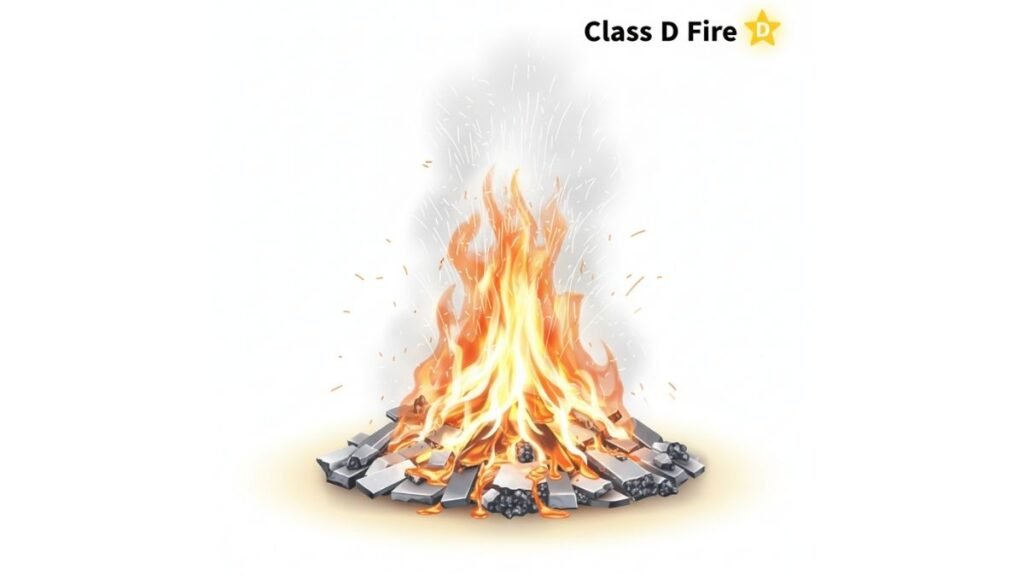
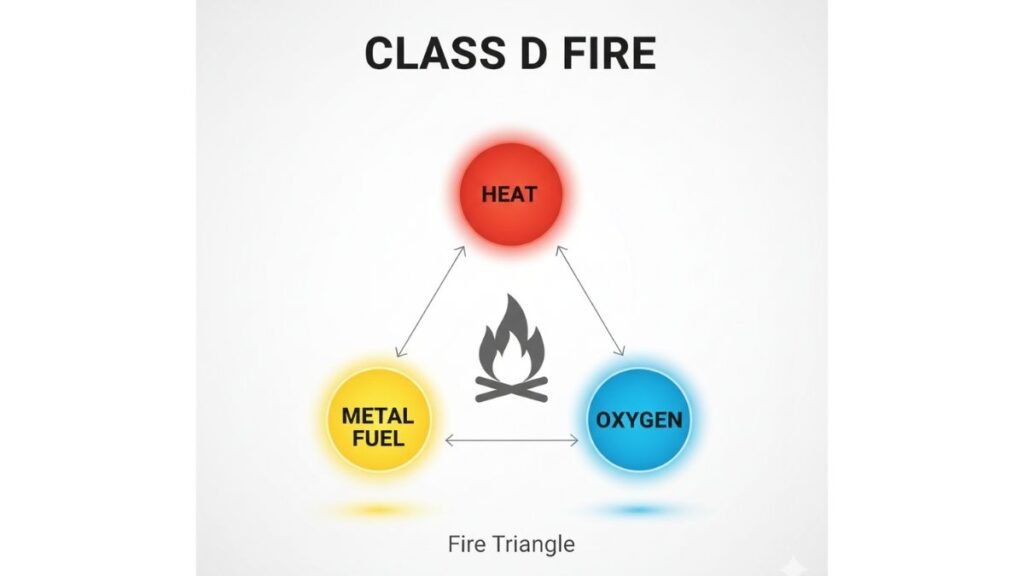
Class D Fire Examples and Common Causes
Class D Fire मुख्य रूप से उन स्थानों पर लगती है जहाँ ज्वलनशील धातुएँ (Combustible Metals) जैसे Magnesium, Sodium, Potassium, Titanium, Zirconium और Lithium Metal का उपयोग या प्रसंस्करण किया जाता है। ऐसी आग प्रायः Metal Manufacturing Industries, Foundries, Machine Shops, Chemical Laboratories तथा Aerospace Industries में देखने को मिलती है।
Common Examples of Class D Fire
| Example | Location | Common Cause | Prevention |
|---|---|---|---|
| Magnesium Dust Fire | Metal Fabrication Workshop | Grinding या Cutting से निकली Sparks | Dust Collection System और Proper Ventilation |
| Sodium Metal Fire | Chemical Laboratory | Water या Moisture के संपर्क में आना | Dry Storage और Mineral Oil में सुरक्षित रखना |
| Titanium Fire | Aerospace Industry | High-speed Machining या Friction | Spark Control और Metal Fire Extinguisher |
| Zirconium Metal Fire | Nuclear & Industrial Plants | High Temperature या Fine Metal Dust | Regular Housekeeping और Fire Safety Procedures |
अधिकांश Class D Fire घटनाएँ Metal Dust, Metal Chips, Grinding Sparks, Friction, High Temperature या गलत Storage Practices के कारण होती हैं। इसलिए ऐसे क्षेत्रों में नियमित निरीक्षण, उचित Housekeeping तथा सही Fire Extinguisher Types and Uses की जानकारी होना आवश्यक है।
Best Fire Extinguishers for Class D Fire
Class D Fire को बुझाने के लिए केवल Metal Fire Extinguishers या Special Dry Powder Extinguishers का उपयोग किया जाता है। ये विशेष रूप से Magnesium, Sodium, Potassium, Titanium, Zirconium और Lithium Metal जैसी ज्वलनशील धातुओं के लिए बनाए जाते हैं। सामान्य Water, Foam, CO₂ या अधिकांश ABC Fire Extinguishers इस प्रकार की आग के लिए उपयुक्त नहीं होते।
भारत में Metal Fire Extinguishers का चयन BIS Standards तथा उद्योग की आवश्यकता के अनुसार किया जाता है। इनके बारे में अधिक जानकारी के लिए Fire Extinguisher Types and Uses गाइड भी पढ़ सकते हैं।
| Extinguisher Type | Main Agent | Suitable Metals | Main Advantage |
|---|---|---|---|
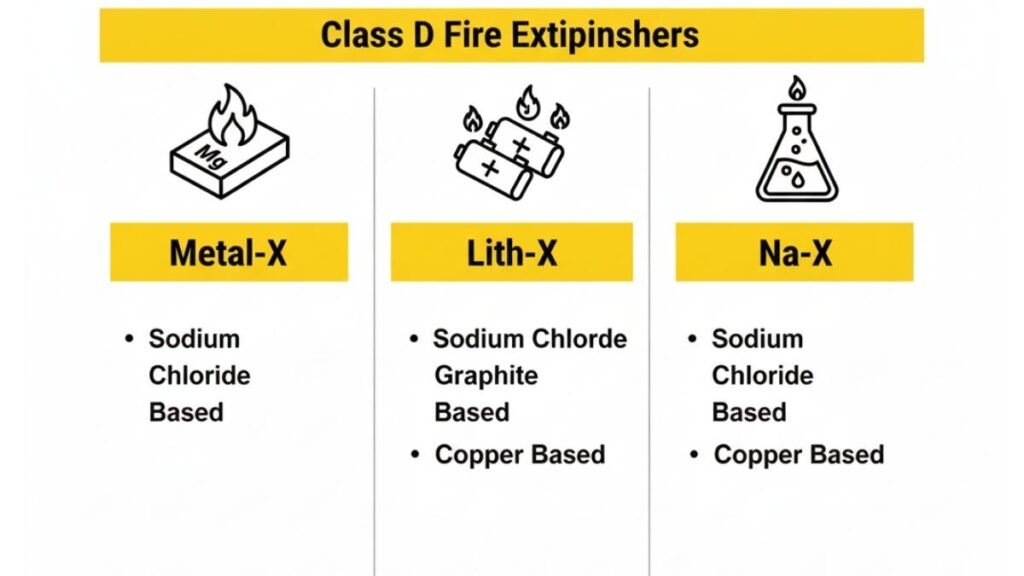
| Sodium Chloride Powder | Sodium Chloride Based Dry Powder | Magnesium, Sodium, Potassium | Burning metal पर protective crust बनाता है और heat कम करता है। |
| Graphite Powder | Graphite Based Agent | Lithium Metal, Magnesium | Heat absorb करता है और re-ignition का जोखिम कम करता है। |
| Copper Powder | Copper Powder Agent | Lithium Metal Fires | उच्च तापमान पर प्रभावी और तेजी से heat absorb करता है। |
| Metal-Specific Dry Powder | Special Industrial Agent | Special Reactive Metals | विशिष्ट धातुओं के लिए तैयार किया गया extinguishing agent। |
Class D Fire Extinguishers को हमेशा उनके Label और Metal Compatibility देखकर ही चुनें। प्रत्येक Dry Powder सभी धातुओं के लिए उपयुक्त नहीं होता, इसलिए संबंधित Metal के अनुसार सही extinguisher का चयन करना आवश्यक है।
Class D Fire का खतरा मुख्यतः Foundries, Metal Processing Industries, Aerospace Manufacturing, Chemical Laboratories और Machine Shops में होता है। ऐसी जगहों पर Metal Fire Extinguishers आसानी से उपलब्ध होने चाहिए तथा कर्मचारियों को इनके सही उपयोग का प्रशिक्षण दिया जाना चाहिए।
How to Identify Class D Fire
Class D Fire की पहचान इस बात से होती है कि इसमें ज्वलनशील धातुएँ (Combustible Metals) जैसे Magnesium, Lithium, Sodium, Potassium, Titanium आदि जल रहे होते हैं। यह आग सामान्य आग की तुलना में अधिक तापमान पर जलती है और अक्सर तेज़ सफेद चमक (Bright White Flame), धातु की चिंगारियाँ तथा अत्यधिक गर्मी उत्पन्न करती है।
Class D Fire अधिकतर Metal Processing Industries, Foundries, Aerospace Plants, Chemical Laboratories, Battery Manufacturing Units और Machine Shops में देखने को मिलती है। यदि धातु का बुरादा (Metal Dust) या Reactive Metal जल रहा हो, तो इसे Class D Fire माना जाता है।
How to Identify a Class D Fire Extinguisher
| Identification | Description |
|---|---|
| Extinguisher Label | स्पष्ट रूप से “Class D” या “Metal Fire” लिखा होता है। |
| Extinguishing Agent | Sodium Chloride, Graphite, Copper Powder या अन्य Metal-specific Dry Powder लिखा होता है। |
| Suitable Metals | Magnesium, Lithium, Sodium, Potassium, Titanium आदि का उल्लेख होता है। |
| Application Area | Metal Industries, Laboratories, Foundries, Battery Plants एवं Aerospace Units। |
Safety Identification
Class D Fire की सबसे महत्वपूर्ण पहचान यह है कि इसमें सामान्य Fire Extinguishers का उपयोग नहीं किया जा सकता। हमेशा Extinguisher के Label पर दिए गए Metal Compatibility और Manufacturer Instructions को पढ़ें। BIS एवं NFPA भी Metal Fire के लिए Metal-specific Dry Powder Agent के उपयोग की अनुशंसा करते हैं।
Class D Fire पर Water, Foam, CO₂ या अधिकांश ABC Fire Extinguishers का उपयोग न करें। केवल उसी Metal Fire Extinguisher का उपयोग करें जो संबंधित धातु (Metal) के लिए उपयुक्त हो।
Difference Between Class D and Other Fire Classes
Class D Fire अन्य Fire Classes से पूरी तरह अलग होती है क्योंकि यह ज्वलनशील धातुओं (Combustible Metals) जैसे Magnesium, Sodium, Potassium, Lithium और Titanium से संबंधित होती है। BIS के अनुसार प्रत्येक Fire Class का Fuel Source और उपयुक्त Fire Extinguisher अलग होता है।
Comparison Chart (BIS Based)
| Fire Class | Fuel Type | Common Examples | Suitable Fire Extinguisher |
|---|---|---|---|
| Class A | ठोस ज्वलनशील पदार्थ | लकड़ी, कागज़, कपड़ा | Water, Foam, ABC Powder |
| Class B | ज्वलनशील तरल पदार्थ | Petrol, Diesel, Paint, Solvents | Foam, CO₂, ABC Powder |
| Class C | ज्वलनशील गैसें | LPG, CNG, Hydrogen, Acetylene | ABC Dry Powder, CO₂ |
| Class D | ज्वलनशील धातुएँ | Magnesium, Lithium, Sodium, Titanium | Class D Metal Fire Extinguisher (Special Dry Powder) |
| Class F | खाद्य तेल एवं वसा | Deep Fat Fryer, Commercial Kitchen Oil | Wet Chemical Fire Extinguisher |
BIS के अनुसार Class D Fire सबसे अधिक Metal Processing Industries, Foundries, Chemical Laboratories, Aerospace Units तथा Battery Manufacturing Plants में देखने को मिलती है। इस प्रकार की आग पर केवल Metal Fire Extinguisher (Special Dry Powder) का ही उपयोग करना चाहिए।
Class D Fire पर कभी भी Water, Foam, CO₂ या अधिकांश ABC Fire Extinguishers का उपयोग न करें। हमेशा संबंधित धातु (Metal) के लिए उपयुक्त Class D Metal Fire Extinguisher का ही प्रयोग करें और BIS मानकों के अनुसार उसका नियमित निरीक्षण कराते रहें।
Best Fire Extinguishers for Class D Fire
Class D Fire को बुझाने के लिए केवल Special Dry Powder (Metal Fire Extinguisher) का उपयोग किया जाता है। यह विशेष प्रकार का extinguishing agent ज्वलनशील धातुओं (Combustible Metals) जैसे Magnesium, Sodium, Potassium, Lithium तथा Titanium की आग को सुरक्षित रूप से नियंत्रित करने के लिए बनाया जाता है। सामान्य Water, Foam, CO₂ या अधिकांश ABC Fire Extinguishers इस प्रकार की आग के लिए उपयुक्त नहीं होते।
भारत में Class D Fire के लिए Metal Fire Extinguisher का चयन संबंधित धातु (Metal) और कार्यस्थल के जोखिम (Risk Assessment) के आधार पर किया जाता है। Fire Extinguishers के विभिन्न प्रकारों के बारे में अधिक जानकारी के लिए Fire Extinguisher Types and Uses गाइड भी पढ़ सकते हैं।
Common Dry Powder Agents for Class D Fire
| Dry Powder Agent | Suitable Metals | Main Action | Common Applications |
|---|---|---|---|
| Sodium Chloride Based Powder | Magnesium, Sodium, Potassium | Protective layer बनाकर आग को नियंत्रित करता है। | Metal Processing Industries |
| Graphite Based Powder | Lithium Metal | Heat absorb करके re-ignition का खतरा कम करता है। | Battery एवं Chemical Industries |
| Copper Powder Agent | Lithium एवं अन्य Reactive Metals | उच्च तापमान को तेजी से कम करता है। | Special Industrial Applications |
| Metal-specific Dry Powder | Manufacturer Recommendation के अनुसार | विशिष्ट धातुओं के लिए विशेष रूप से तैयार किया गया Agent। | Foundries, Aerospace, Laboratories |
Where are Class D Fire Extinguishers Used?
- ✔ Metal Processing Industries
- ✔ Foundries and Machine Shops
- ✔ Chemical Laboratories
- ✔ Aerospace Manufacturing Units
- ✔ Battery Manufacturing Plants
- ✔ Research and Development Laboratories
Class D Fire Extinguisher का चयन हमेशा जलने वाली धातु (Metal) के प्रकार के अनुसार करें। सभी Dry Powder Agents प्रत्येक धातु के लिए उपयुक्त नहीं होते। उपयोग से पहले Extinguisher पर दिए गए Manufacturer Instructions और Metal Compatibility अवश्य जांचें।
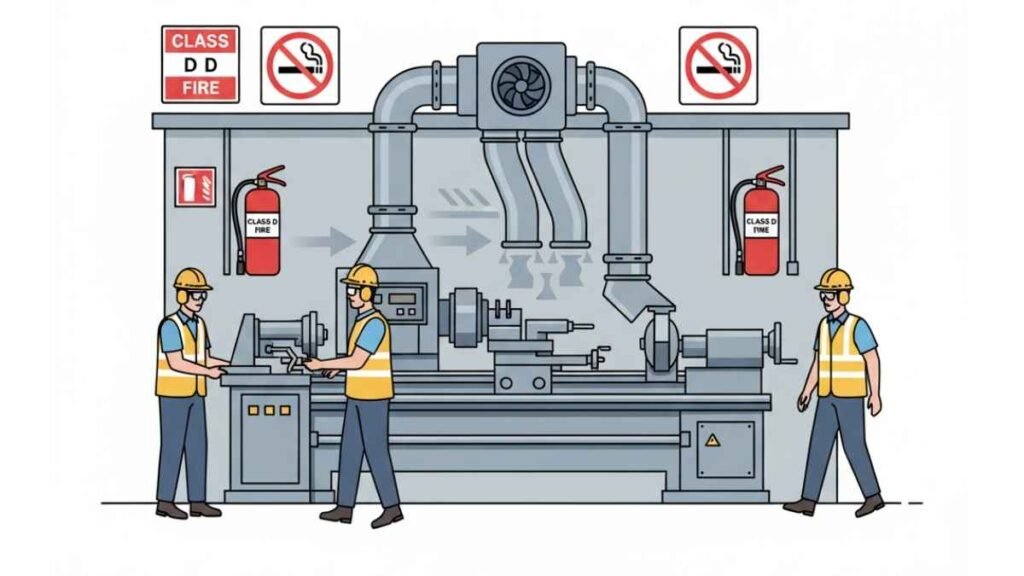
Class D Fire अत्यधिक तापमान पर जलती है और गलत Fire Extinguisher का उपयोग गंभीर दुर्घटना का कारण बन सकता है। इसलिए Metal Fire वाले क्षेत्रों में केवल उपयुक्त Special Dry Powder Extinguishers उपलब्ध रखें तथा कर्मचारियों को इनके सही उपयोग का नियमित प्रशिक्षण दें।
Conclusion – Final Thoughts on Class D Fire
Class D Fire सबसे खतरनाक प्रकार की आगों में से एक होती है क्योंकि इसमें ज्वलनशील धातुएँ (Combustible Metals) शामिल होती हैं — जैसे Magnesium, Titanium, Lithium, और Sodium। इन धातुओं की आग बहुत तीव्र तापमान पर जलती है, और पारंपरिक Water या CO₂ Extinguisher से इसे बुझाना खतरनाक साबित हो सकता है।
इसलिए ऐसे स्थानों पर जहाँ metal fabrication, welding, machining, या chemical research होता है, वहाँ हमेशा Class D Fire Extinguisher (Dry Powder Type) उपलब्ध होना चाहिए। यह extinguisher धातु के तापमान को कम करता है और ऑक्सीजन की आपूर्ति रोककर आग को नियंत्रित करता है।
इस पोस्ट में बताए गए fire safety tips, preventive measures, और maintenance checklist का पालन करके आप अपने workplace या laboratory को सुरक्षित रख सकते हैं। साथ ही, अपनी टीम को समय-समय पर Fire Extinguisher Types and Uses की पूरी जानकारी देना भी ज़रूरी है।
याद रखें — Prevention is the Best Protection. धातु की आग से बचाव के लिए जागरूकता, सही उपकरण, और नियमित निरीक्षण ही आपकी सबसे मजबूत सुरक्षा ढाल हैं। 🔥
👉 अधिक जानकारी के लिए देखें: Class C Fire Safety Guide और Fire Extinguisher Colour Codes.
Frequently Asked Questions
What is Class D Fire?
Class D Fire वह आग होती है जो ज्वलनशील धातुओं जैसे Magnesium, Titanium, Lithium या Sodium से लगती है। इसे “Metal Fire” भी कहा जाता है।
Which materials cause Class D Fire?
यह आग ऐसे धातुओं में लगती है जो ऑक्सीजन के संपर्क में आकर तीव्रता से जलती हैं, जैसे Magnesium, Potassium, Aluminum powder आदि।
Which extinguisher is used for Class D Fire?
Class D Fire को बुझाने के लिए केवल Dry Powder Type Fire Extinguisher का उपयोग किया जाता है, जो धातु की गर्मी को कम करके ऑक्सीजन की आपूर्ति रोकता है।
Can we use Water or CO₂ Extinguisher on Class D Fire?
नहीं, Class D Fire पर पानी या CO₂ Extinguisher का उपयोग खतरनाक होता है क्योंकि यह धातु के साथ प्रतिक्रिया कर सकता है और विस्फोट कर सकता है।
What colour code represents Class D Fire Extinguisher?
Class D Fire Extinguisher का रंग कोड Yellow Band होता है। यह पहचान बताता है कि यह केवल Metal Fire के लिए उपयुक्त है।
Where are Class D Fires most likely to occur?
यह आग metal workshops, manufacturing plants, aircraft industries, chemical labs, और battery factories में अधिक होती है।
How can we prevent Class D Fire in industries?
नियमित सफाई, metal dust को हटाना, proper ventilation, और Dry Powder Extinguisher को standby रखना जरूरी है। साथ ही spark control systems लगाना भी उपयोगी है।
What should you do first during a Class D Fire?
तुरंत क्षेत्र खाली करें, बिजली का स्रोत बंद करें, और trained personnel को Class D Extinguisher का प्रयोग करने दें। कभी भी पानी का प्रयोग न करें।
Is Class D Fire dangerous?
हाँ, यह अत्यंत खतरनाक होती है क्योंकि इसमें धातु पिघलकर तेज़ गर्मी और विस्फोट उत्पन्न कर सकती है। यह contact burns और toxic fumes का कारण बनती है।
What standards apply to Class D Fire Extinguishers in India?
भारत में Class D Fire Extinguishers को BIS IS 15683 और IS 2190 standards के अनुसार certify किया जाता है।अंतरराष्ट्रीय स्तर पर NFPA 10 मानक लागू होता है।
Article Information
Article Name: Class D Fire in Hindi – Metal Fire Examples, Extinguisher & Safety Guide
Category: Fire Safety • Fire Classes • Industrial Fire Protection
Focus Keyword: Class D Fire
Written By: Nitesh Shankar Khandare
Qualification: Fire Safety Professional | IFE (UK) Level 3 | Fire Engineering
Based On: BIS Standards (IS 15683 & IS 2190), Industrial Fire Safety Best Practices
Last Updated: July 2026

3 thoughts on “Class D Fire in Hindi – धातुओं में लगने वाली आग, कारण, Extinguishers & Safety Tips”