Fire Alarm System एक automatic safety system होता है जो smoke, heat या fire को detect करके alarm sound और visual signals के जरिए building में मौजूद लोगों को तुरंत alert करता है, ताकि समय रहते safe evacuation और fire response किया जा सके।
सोचिए — अगर आग लगने के पहले warning signal ही न मिले, तो evacuation, firefighting और life safety कितनी risky हो सकती है। इसी risk को eliminate करने के लिए Fire Alarm System बनाया गया है।
लेकिन reality यह है कि कई buildings में alarm तो लगा होता है, पर wrong type selection, faulty wiring, testing की कमी या IS Code non-compliance की वजह से emergency में system काम ही नहीं करता।
इस guide में आप सीखेंगे कि Fire Alarm System कैसे काम करता है, कौन-सा type कहाँ जरूरी है, installation में क्या गलतियाँ avoid करनी चाहिए और Indian standards के अनुसार testing & compliance कैसे ensure करें — ताकि system सिर्फ installed ही नहीं, बल्कि actually life-saving बने।
What is Fire Alarm System? (Simple Meaning in Hindi)
Fire Alarm System एक automatic warning system होता है जो building के अंदर fire, smoke या abnormal heat को detect करके तुरंत alarm sound, hooter, siren या visual signal के माध्यम से लोगों को alert करता है।
इस system का मुख्य उद्देश्य आग को बुझाना नहीं, बल्कि आग लगने की शुरुआत में ही सूचना देना होता है ताकि लोग समय रहते safe evacuation कर सकें और fire fighting action जल्दी शुरू हो सके।
Fire Alarm System = Fire की early warning (ना कि fire बुझाने का system)
Fire alarm activation के बाद fire control कैसे किया जाता है, यह समझने के लिए यह practical guide पढ़ें:
Fire Extinguisher Types & Uses – Complete Safety Guide
Fire Alarm System का Basic Concept
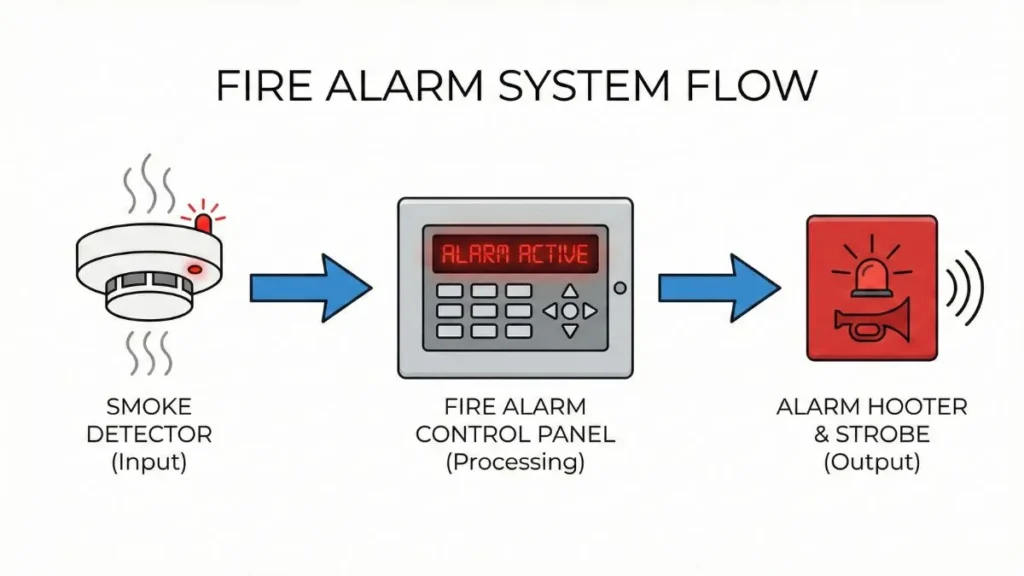
Fire Alarm System का concept बहुत simple है — Detect → Alert → Evacuate
- Detect: Smoke detector, heat detector या manual call point fire detect करता है
- Alert: Control panel signal receive करके alarm activate करता है
- Evacuate: Alarm सुनकर लोग building safely खाली करते हैं
यह पूरा process automatic होता है और manual human dependency को minimum करता है, जिससे response time बहुत कम हो जाता है।
Fire Detection vs Fire Suppression (Clear Difference)
अक्सर लोग Fire Alarm System और Fire Fighting System को एक ही समझ लेते हैं, जबकि दोनों का काम पूरी तरह अलग होता है।
-
Fire Detection:
Fire alarm system का काम है आग को detect करना और alert देना (जैसे smoke detector, heat detector, hooter) -
Fire Suppression:
Fire fighting system का काम है आग को control या extinguish करना (जैसे fire extinguisher, sprinkler system, hydrant system)
इसलिए एक safe building में dono systems साथ में होते हैं — Alarm system लोगों को warn करता है और suppression system आग पर control करता है।
Fire Alarm System alarm बजाता है → Fire Extinguisher / Sprinkler आग बुझाने का काम करता है
Fire Alarm System की design, installation और testing requirements Indian Standards में यहाँ define की गई हैं:
BIS – National Building Code (Fire & Life Safety)
Why Fire Alarm System is Important for Life Safety
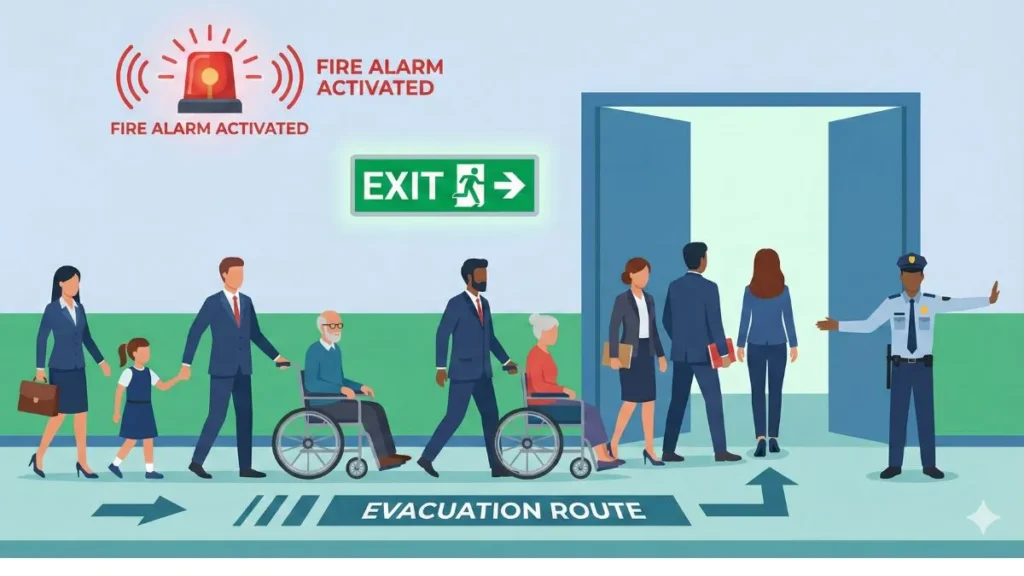
Fire Alarm System किसी भी building का first life-saving layer होता है। आग लगने की स्थिति में यह system लोगों को समय रहते alert करके panic, confusion और delay को रोकता है — यही कारण है कि इसे Life Safety System कहा जाता है।
आग से सबसे बड़ा खतरा flame नहीं बल्कि smoke inhalation, toxic gases और delayed evacuation होती है। Fire alarm system इन्हीं risks को minimum करने में सबसे अहम भूमिका निभाता है।
Early Warning & Evacuation Time Advantage
Fire alarm system का सबसे बड़ा फायदा है — Early Warning, जिससे evacuation के लिए extra समय मिलता है।
- आग के शुरुआती stage में ही alarm activate हो जाता है
- लोगों को safe exit routes की ओर move करने का समय मिलता है
- Lift usage से पहले alert मिल जाता है
- Fire brigade और internal response team जल्दी activate हो जाती है
Studies के अनुसार, अगर alarm 2–3 मिनट पहले activate हो जाए, तो casualty risk 60–70% तक कम हो सकता है।
Fire में लोग ज़्यादातर flame से नहीं, late warning और smoke inhalation से मरते हैं।
Fire Alarm Failure के Real Consequences
अगर fire alarm system काम न करे या disabled हो, तो उसके consequences सिर्फ property damage तक सीमित नहीं रहते।
- लोगों को आग का पता देर से चलता है
- Panic evacuation से stampede risk बढ़ता है
- Smoke फैलने से visibility zero हो जाती है
- Emergency response team को late information मिलती है
India में कई fire incident investigations में पाया गया है कि alarm working नहीं था या bypass किया गया था — जिससे evacuation delay हुआ और casualties बढ़ीं।
Fire alarm system failure = Warning failure → Evacuation failure → Life loss risk
Fire Safety Audit और Compliance में Role
Fire Alarm System केवल safety device नहीं, बल्कि legal compliance requirement भी है।
- Fire Safety Audit में alarm panel, detector और hooter testing check होती है
- Manual call points और zone indication verify की जाती है
- Fault history और logbook review किया जाता है
- Disabled / bypass alarms major non-compliance माने जाते हैं
अगर fire alarm system operational नहीं है, तो building का Fire Safety Audit score गिर जाता है और compliance approval पर असर पड़ता है।
Fire alarm system audit में कैसे evaluate होता है और कौन-कौन से points critical होते हैं — detail यहाँ पढ़ें:
Fire Safety Audit – Inspection, Scoring & Compliance Guide
Types of Fire Alarm System (Based on Technology)
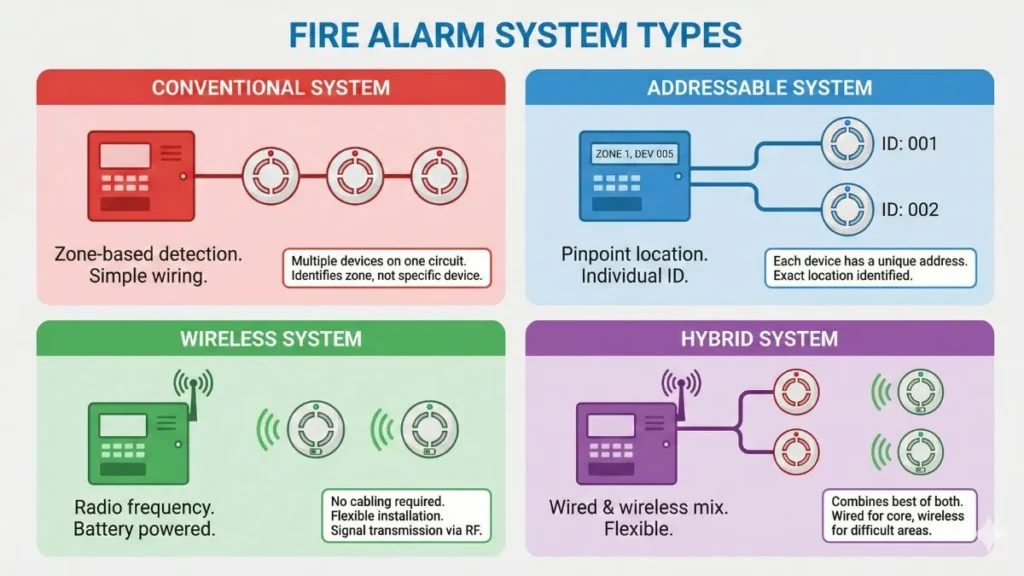
Fire Alarm System को उसकी technology और signal handling capability के आधार पर कई प्रकारों में classify किया जाता है। हर type का उपयोग building size, risk level और compliance requirement के अनुसार किया जाता है।
Conventional Fire Alarm System
Conventional Fire Alarm System में पूरी building को zones में divide किया जाता है। Alarm आने पर system यह बताता है कि किस zone में fire detected हुई है, लेकिन exact detector location identify नहीं करता।
- छोटी buildings के लिए suitable
- Low installation cost
- Basic fire safety compliance के लिए उपयोगी
Addressable Fire Alarm System
Addressable Fire Alarm System में हर detector और device को unique address दिया जाता है। इससे control panel को exact location पता चल जाती है।
- Large & complex buildings के लिए best
- Fast response और accurate fault detection
- Fire safety audit में high compliance score
Conventional बनाम Addressable – तुलना तालिका
| तुलना का बिंदु | Conventional System | Addressable System |
|---|---|---|
| Detection Method | Zone आधारित | Individual device आधारित |
| Location Accuracy | केवल zone का पता | Exact detector location |
| Suitable For | छोटी buildings | Hospitals, malls, high-rise |
| Fault Identification | Time-consuming | Immediate & accurate |
| Installation Cost | कम | थोड़ी अधिक |
| Audit & Compliance | Basic compliance | High compliance friendly |
Wireless Fire Alarm System
Wireless Fire Alarm System में detectors और panel radio signal के माध्यम से communicate करते हैं। Wiring की जरूरत नहीं होती।
- Heritage buildings के लिए ideal
- Fast installation
- Battery monitoring जरूरी
Hybrid Fire Alarm System
Hybrid System में wired और wireless technologies का combination होता है। यह system flexibility और scalability दोनों provide करता है।
- Expansion-friendly system
- Complex layouts के लिए suitable
- Future upgrades आसान
Main Components of Fire Alarm System
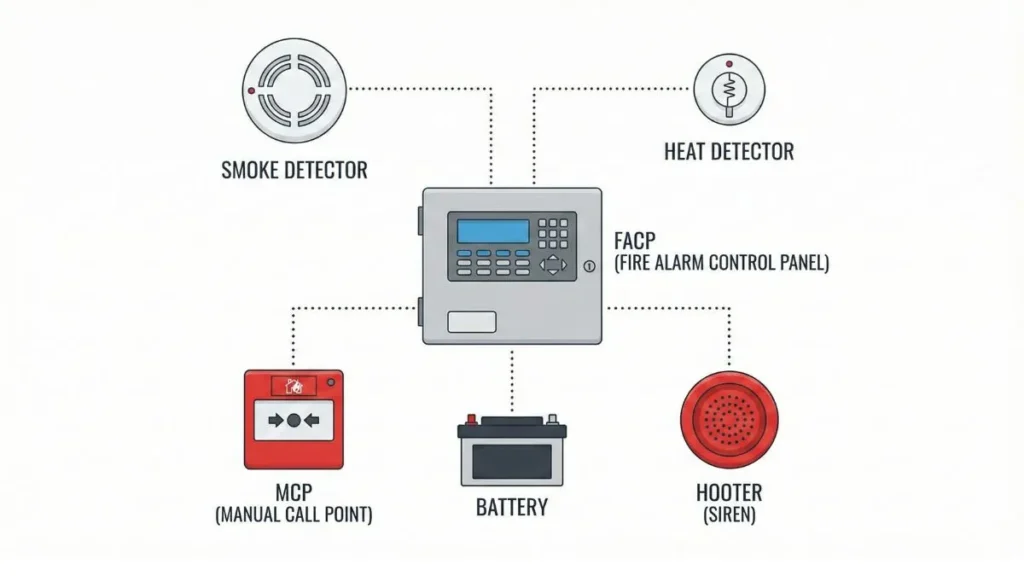
Fire Alarm System कई महत्वपूर्ण components से मिलकर बना होता है, जो मिलकर fire detection, alerting और evacuation का काम करते हैं। हर component की सही working building की life safety के लिए बेहद जरूरी होती है।
Fire Alarm Control Panel (FACP)
Fire Alarm Control Panel पूरे system का brain माना जाता है। सभी detectors और devices से signal इसी panel में आता है और यही panel alarm activate करने का decision लेता है।
- Detectors से signal receive करता है
- Fire, fault और supervisory condition display करता है
- Hooter, sounder और flashers को activate करता है
- Addressable system में exact location show करता है
Fire safety audit के दौरान सबसे पहले control panel की status, log history और fault indication check की जाती है।
Smoke Detector, Heat Detector & Manual Call Point
ये devices fire detection elements कहलाते हैं, जो fire की शुरुआत को detect करके control panel तक signal भेजते हैं।
- Smoke Detector: धुएं की presence detect करता है
- Heat Detector: abnormal temperature rise sense करता है
- Manual Call Point (MCP): manually alarm trigger करने की सुविधा देता है
Detectors की सही location और spacing fire detection response time को सीधे affect करती है।
Hooters, Sounders & Flashers
ये devices notification appliances कहलाते हैं, जिनका काम लोगों को audible और visual alert देना होता है।
- Hooters / Sounders: तेज आवाज में alarm देते हैं
- Flashers: Light signal देकर noisy area में alert करते हैं
- Specially abled persons के लिए visual alert जरूरी
Alarm sound level इतना होना चाहिए कि background noise में भी clearly सुना जा सके।
Power Supply, Battery & Cabling
Fire Alarm System को continuous power supply की आवश्यकता होती है, इसलिए इसमें primary और backup दोनों power sources होते हैं।
- Main Power Supply: Normal electrical source
- Battery Backup: Power failure में system को active रखता है
- Fire-resistant Cabling: Signal continuity ensure करती है
Standards के अनुसार fire alarm system को minimum 24 hours standby + alarm duration तक power support मिलना चाहिए।
How Fire Alarm System Works (Step-by-Step Flow)
Fire Alarm System एक logical step-by-step process पर काम करता है, जिसका उद्देश्य आग की शुरुआत में ही early warning देना और लोगों को सुरक्षित evacuation के लिए alert करना होता है।
Detection → Signal Processing → Alarm Activation → Safety Response
Fire Detection Stage
इस stage में fire alarm system आग के शुरुआती संकेत detect करता है। यह detection automatic या manual दोनों तरह से हो सकता है:
- Smoke Detector: धुएँ की presence detect करता है
- Heat Detector: abnormal temperature rise sense करता है
- Manual Call Point (MCP): व्यक्ति द्वारा manually alarm trigger किया जाता है
Detection जितनी जल्दी होगी, उतना ही evacuation और fire response effective रहेगा।
Signal Processing at Control Panel
Detector से signal Fire Alarm Control Panel (FACP) तक पहुंचता है। यह panel system का brain होता है।
- Signal genuine fire है या fault — यह verify करता है
- Zone / address identify करता है
- False alarm और real alarm में difference करता है
Addressable systems में panel exact location तक identify कर सकता है, जबकि conventional systems zone-based information देते हैं।
Alarm Activation & Notification
Fire confirm होते ही control panel तुरंत alarm devices activate करता है:
- Hooter / Siren: loud sound से लोगों को alert करना
- Flasher: hearing-impaired persons के लिए visual alert
- Repeater Panel: security / fire control room में indication
इस stage का main goal है — लोगों को बिना panic के जल्दी safe exit की ओर guide करना।
Integration with Fire Pump / Sprinkler (If Applicable)
Advanced buildings में fire alarm system दूसरे fire protection systems के साथ integrated होता है:
- Fire alarm trigger → Fire pump auto-start signal
- Sprinkler system monitoring & valve supervision
- Lift grounding, HVAC shutdown, fire door release
यह integration ensure करता है कि:
- Alarm के साथ-साथ fire fighting action भी शुरू हो
- Smoke spread कम हो
- Evacuation routes safe रहें
Fire Alarm System खुद आग नहीं बुझाता — यह warning + system coordination का काम करता है, ताकि fire suppression systems सही समय पर activate हो सकें।
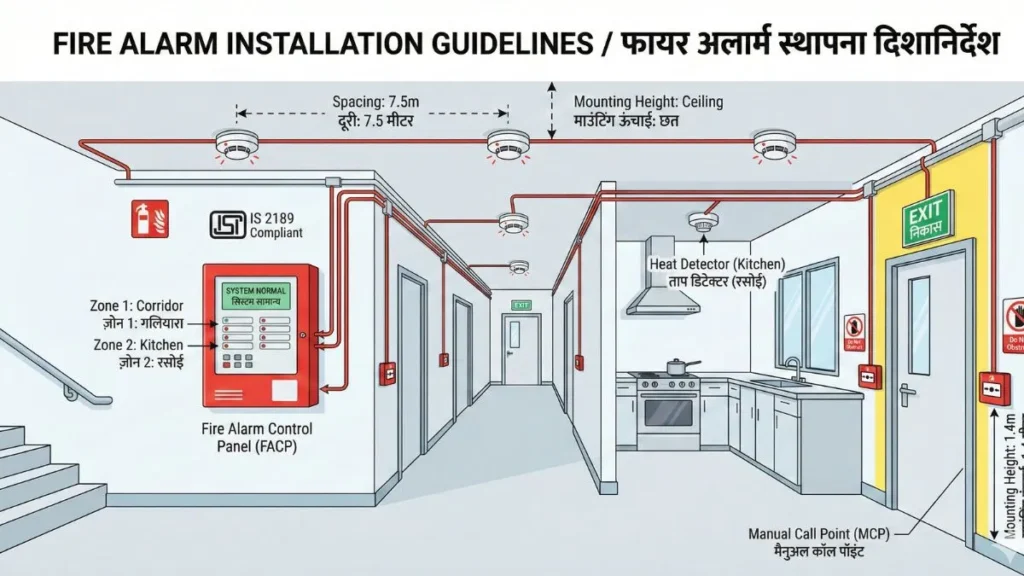
Fire Alarm Installation Guidelines (India Focus)
Fire Alarm System की performance सिर्फ brand या panel पर depend नहीं करती, बल्कि installation quality पर सबसे ज्यादा depend करती है। भारत में fire audit failure का एक बड़ा कारण गलत detector placement, zoning error और cable routing mistakes होते हैं।
नीचे दिए गए guidelines Indian site conditions, high-rise buildings, commercial complexes और industrial premises को ध्यान में रखकर समझाए गए हैं।
Detector Spacing & Mounting Height
Detector सही जगह पर install न होने पर fire alarm system या तो late alarm देता है या false alarm generate करता है।
- Smoke detector सामान्यतः ceiling से 300 mm नीचे mount किया जाता है
- Heat detector ceiling के centre zone में लगाया जाता है
- Wall-mounted detector को ceiling से 150–300 mm नीचे रखना चाहिए
- AC duct, exhaust fan या window से detector दूर लगाना चाहिए
- Beam या false ceiling obstruction के नीचे detector avoid करें
AC airflow के ठीक नीचे लगाया गया smoke detector अक्सर false alarm या delayed detection का कारण बनता है।
Zoning Logic & Loop Design
Fire alarm zoning का उद्देश्य है fire location को quickly identify करना। गलत zoning होने पर alarm तो बजता है, लेकिन fire location trace करना मुश्किल हो जाता है।
- एक zone में बहुत बड़ा area cover न करें
- Each floor को अलग zone में रखना best practice है
- Staircase, lift lobby और electrical room को separate zone दें
- Addressable system में loop length manufacturer limit के अंदर रखें
- Loop में devices evenly distribute करें
Correct zoning fire brigade response time को काफी हद तक reduce कर देती है।
Cable Type, Routing & Protection
Fire alarm cabling अक्सर site पर सबसे ज्यादा ignore किया जाने वाला हिस्सा होता है, जबकि यही system reliability की backbone है।
- Fire resistant / FRLS cable का उपयोग करें
- Alarm cable को power cable के साथ mix न करें
- Cable tray या GI conduit में routing करें
- Sharp bends और loose joints avoid करें
- Outdoor routing में UV और moisture protection जरूरी है
Loose cable joints और open junction box fire audit में major non-compliance माने जाते हैं।
Common Installation Mistakes to Avoid
Fire alarm system fail होने के पीछे अक्सर design नहीं बल्कि installation mistakes जिम्मेदार होती हैं।
- Detector spacing standards follow न करना
- One zone covering multiple floors
- Wrong polarity या loose termination
- Detector testing बिना cleaning के करना
- Battery backup connection भूल जाना
- As-built drawings और zone chart display न करना
अगर installation stage पर ये errors avoid कर लिए जाएँ, तो future में false alarm, audit objection और system failure की probability काफी कम हो जाती है।
Fire Alarm Testing & Commissioning Procedure
Fire Alarm System install हो जाने के बाद भी तब तक reliable नहीं माना जाता जब तक उसका proper testing और commissioning न किया जाए। Testing यह confirm करती है कि हर detector, MCP, hooter और panel real fire condition में सही response देगा।
Commissioning का मतलब है — पूरा system as-designed condition में verify करना और site को fire safety ready declare करना।
Detector Testing Methods
Detector testing का उद्देश्य यह verify करना होता है कि smoke, heat या flame detection सही समय पर हो रहा है।
- Smoke detector को test smoke spray से activate किया जाता है
- Heat detector को heat gun / thermal tester से check किया जाता है
- Detector activate होते ही panel पर correct zone / address दिखना चाहिए
- Alarm sounder और hooter automatically activate होना चाहिए
Testing के समय detector cover या dust cap हटाना अक्सर भूल जाता है — जिससे false failure observation आती है।
Manual Call Point (MCP) Testing
Manual Call Point testing यह ensure करती है कि manual fire alert mechanism emergency में reliable है।
- MCP key या break-glass method से activate करें
- Panel पर correct zone / location display होना चाहिए
- Hooter / siren immediately sound होना चाहिए
- Reset करने के बाद MCP normal condition में आना चाहिए
MCP wiring polarity गलत होने पर alarm panel signal receive नहीं करता — यह audit में serious observation मानी जाती है।
Battery Backup & Power Failure Simulation
Fire Alarm System को power failure में भी operate करना चाहिए। इसलिए battery backup testing commissioning का critical हिस्सा है।
- Main power supply OFF करके battery mode check करें
- Panel बिना reset हुए battery पर shift होना चाहिए
- Alarm, detector और MCP battery mode में work करने चाहिए
- Low battery fault indication verify करें
Battery backup failure का मतलब है — real emergency में complete system blackout risk।
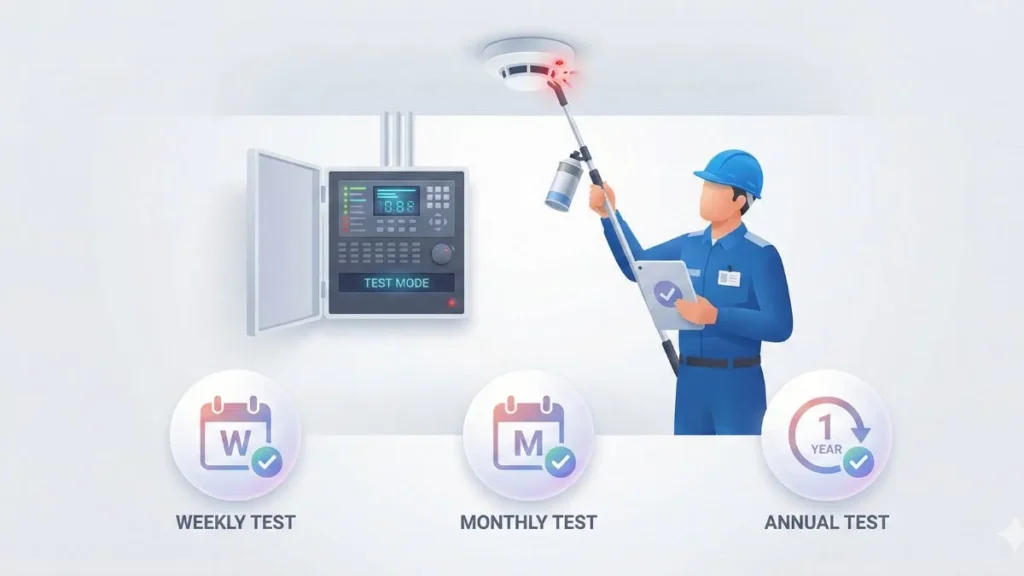
Testing Frequency (Weekly / Monthly / Annual)
Fire Alarm System की testing एक बार का process नहीं है। Continuous reliability के लिए periodic testing जरूरी होती है।
- Weekly: Panel status check, power & fault indication verify
- Monthly: MCP testing, selected detectors functional test
- Quarterly: Alarm sounder, hooter audibility check
- Annual: 100% detector testing, battery load test, documentation
Fire audit में logbook entry और testing records physical inspection जितने ही important माने जाते हैं।
Proper testing और commissioning यह सुनिश्चित करता है कि Fire Alarm System सिर्फ installed ही नहीं बल्कि fully functional और emergency-ready है।
Fire Alarm Maintenance Checklist
Fire Alarm System की reliability केवल installation से नहीं, बल्कि regular maintenance से सुनिश्चित होती है। अगर maintenance checklist follow नहीं की गई, तो emergency के समय alarm system fail हो सकता है — जो life safety के लिए बड़ा risk है।
Daily & Weekly Inspection Points
Daily और weekly inspection basic visual और functional checks होते हैं, जिनसे early-stage faults detect किए जा सकते हैं:
- Fire Alarm Control Panel पर कोई fault / trouble indication नहीं
- Main power supply और charger status normal हो
- Battery terminals clean और corrosion-free हों
- Smoke / heat detector physically damaged न हों
- Hooter, sounder और flasher obstructed न हों
यह checks onsite staff भी कर सकते हैं — engineer की dependency यहाँ minimum रहती है।
Monthly Preventive Maintenance
Monthly maintenance में system की actual functionality verify की जाती है:
- Random smoke detector testing (test spray / test key से)
- Manual Call Point (MCP) operate करके alarm verify करना
- Hooter / sounder audibility check (all zones)
- Battery voltage और charger current record करना
- Cable joints, glands और panel terminals tightness check
यह preventive maintenance future failures को काफी हद तक रोक देती है।
Annual Performance Testing
Annual testing comprehensive होती है और audit / compliance के लिए सबसे critical मानी जाती है:
- सभी detectors (smoke / heat) का functional test
- Alarm response time verify करना
- Panel logic, zoning और annunciation check
- Battery backup test (power failure simulation)
- Integration test (fire pump / sprinkler interface अगर applicable हो)
Annual test के बिना fire safety audit में system को non-compliant माना जा सकता है।
Logbook & AMC Documentation Importance
Maintenance केवल physical activity नहीं है — documentation भी उतनी ही जरूरी है।
- Daily / monthly test entries logbook में दर्ज हों
- Fault history और rectification date clearly mentioned हो
- AMC (Annual Maintenance Contract) valid और updated हो
- Annual test certificate available हो
Audit, insurance survey और Fire NOC inspection में सबसे पहले यही documents verify किए जाते हैं। Proper records = faster approval + better safety score.
Fire Alarm System IS Code & Legal Requirements (India)
भारत में Fire Alarm System केवल safety best practice नहीं है, बल्कि कानूनी (legal) और statutory requirement भी है। Industrial buildings, commercial complexes, hospitals, malls और high-rise structures में alarm system का installation और maintenance mandatory माना जाता है।
IS 2189 – Fire Detection & Alarm System
IS 2189 भारत का primary standard है जो fire detection और alarm system के design, installation, testing और maintenance को define करता है।
- Detector spacing और mounting height guidelines
- Conventional vs Addressable zoning rules
- Cabling, power supply और battery backup norms
- Periodic testing और record keeping requirements
IS 2189 और related fire safety standards देखने के लिए BIS portal देखें:
Bureau of Indian Standards (BIS) – Fire Safety Codes
NBC Part-4 – Fire & Life Safety Provisions
National Building Code (NBC) Part-4 fire alarm system को building life safety का core component मानता है।
- High-rise और public buildings में alarm system mandatory
- Alarm + evacuation strategy linkage
- Fire fighting systems (sprinkler, hydrant) के साथ integration
NBC fire safety provisions यहाँ देखें:
National Building Code – Fire & Life Safety (Part-4)
Factory Act & State Fire Department Rules
Factories, warehouses और hazardous occupancies के लिए Factory Act और local State Fire Department fire alarm installation को compulsory मानते हैं।
- Fire detection & warning system mandatory
- Periodic inspection और mock drill requirement
- Non-compliance पर notice, penalty या shutdown
Fire NOC Approval & Renewal Role
Fire Alarm System की compliance directly Fire NOC approval और renewal से जुड़ी होती है।
- Functional alarm system = faster approval
- Faulty / non-working alarm = objection raised
- Testing records और logbook verification
Fire Alarm System का Fire NOC approval में practical role step-by-step समझने के लिए यह guide पढ़ें:
Fire NOC Online Apply – Requirements & Approval Process
इसलिए Fire Alarm System को सिर्फ install करना ही नहीं, maintain, test और document करना भी उतना ही जरूरी है ताकि legal compliance और life safety दोनों ensure हो सकें।
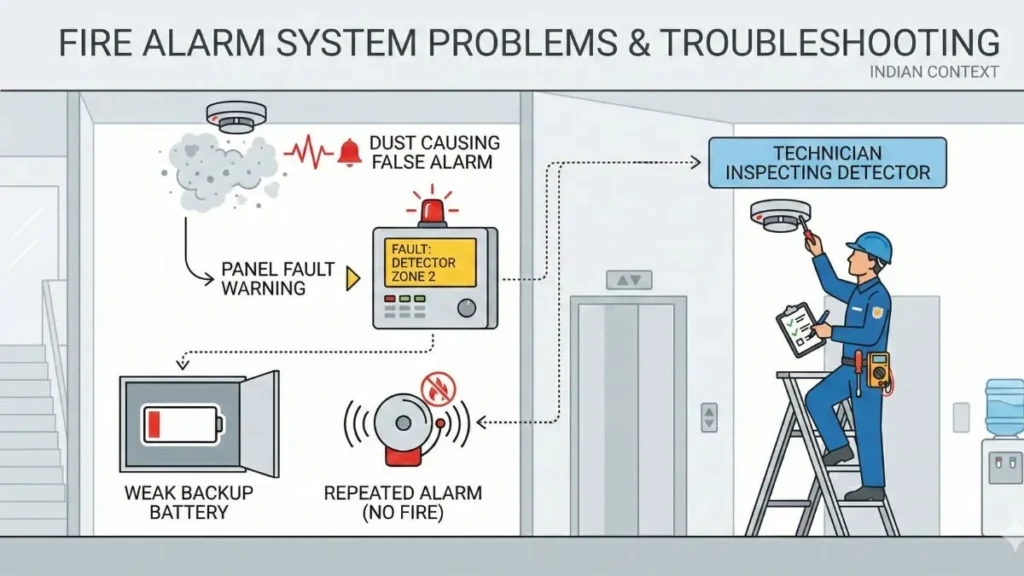
Common Fire Alarm Problems & Troubleshooting
Fire Alarm System सही तरीके से काम न करे तो false alarm, delayed evacuation या complete system failure जैसी serious life safety issues हो सकती हैं। नीचे सबसे common problems और उनके practical कारण समझाए गए हैं।
False Alarm Causes
False alarm सबसे ज्यादा report होने वाली problem है, जिससे occupants alarm को seriously लेना बंद कर देते हैं।
- Smoke detector में dust या insect entry
- Kitchen fumes या steam detector zone में पहुँचना
- Detector sensitivity गलत set होना
- Cable joint में moisture या loose connection
Impact: बार-बार false alarm होने से actual fire emergency में response time बढ़ जाता है।
Detector Not Responding
अगर smoke या heat होने के बावजूद alarm activate नहीं होता, तो यह serious safety risk है।
- Detector power supply disconnected
- Battery backup weak या dead
- Detector head faulty या expired
- Address / zone configuration error
ऐसी स्थिति में detector testing और replacement तुरंत जरूरी होता है।
Panel Fault & Battery Issue
Fire Alarm Control Panel system का brain होता है। Panel fault होने पर पूरा alarm network unreliable हो जाता है।
- Low battery fault indicator ON रहना
- AC supply failure alarm
- Earth fault या loop fault message
- Panel keypad या display malfunction
Battery backup कमजोर होने पर power failure के दौरान alarm system बिल्कुल काम नहीं करता।
Repeated Alarm Activation Problem
अगर बिना किसी fire के alarm बार-बार activate हो रहा है, तो इसका मतलब system unstable condition में है।
- Detector placement गलत location पर
- Zoning logic improper design
- Cable insulation damage
- Panel programming error
Repeated alarms को ignore करना dangerous होता है क्योंकि real fire के समय confusion create होता है।
Fire alarm problems अक्सर testing और maintenance gaps की वजह से होते हैं। अगर आप जानना चाहते हैं कि inspection और fault identification professional audit में कैसे किया जाता है, तो यह guide उपयोगी है:
Fire Safety Audit – Inspection, Faults & Compliance Guide
Regular testing, proper logbook maintenance और trained technician inspection इन सभी problems को early stage में prevent कर सकता है।
Fire Alarm System Cost in India
भारत में Fire Alarm System cost fixed नहीं होती — यह system type, building size, detectors की संख्या और installation complexity पर depend करती है।
Cost Based on System Type
Fire alarm system मुख्यतः technology के आधार पर अलग-अलग cost range में आते हैं:
| System Type | Typical Cost Range (India) | Suitable For |
|---|---|---|
| Conventional Fire Alarm System | ₹60 – ₹120 प्रति detector | Small offices, shops, low-rise buildings |
| Addressable Fire Alarm System | ₹2,000 – ₹4,000 प्रति device | Hospitals, malls, IT parks, high-rise buildings |
| Wireless Fire Alarm System | ₹3,500 – ₹6,000 प्रति device | Heritage buildings, retrofit projects |
Cost per Detector / Zone / Loop
Fire alarm costing अक्सर detector count, zones और loops के आधार पर calculate की जाती है:
- Smoke Detector: ₹600 – ₹3,000 (type पर निर्भर)
- Heat Detector: ₹500 – ₹2,500
- Manual Call Point: ₹700 – ₹2,000
- One Zone (Conventional): ₹3,000 – ₹8,000
- One Loop (Addressable): ₹40,000 – ₹1,20,000
Large buildings में total cost detector quantity और loop length बढ़ने के साथ significantly बढ़ जाती है।
Installation + AMC Cost Factors
System purchase के अलावा installation और AMC cost भी consider करना जरूरी है:
- Cable routing complexity (concealed / surface)
- Detector mounting height और accessibility
- Integration with fire pump / sprinkler system
- Panel programming और commissioning
- Annual Maintenance Contract (AMC)
Fire Alarm System AMC आमतौर पर ₹5,000 – ₹25,000 प्रति वर्ष होती है (building size और system type पर depend करता है)।
Low-cost system लगाने से short-term saving हो सकती है, लेकिन long-term reliability और compliance risk बढ़ जाता है। इसलिए system selection हमेशा life safety requirement के अनुसार होना चाहिए।
Frequently Asked Questions
Fire Alarm System क्या होता है?
Fire Alarm System एक automatic warning system होता है जो smoke, heat या fire detect करके alarm के जरिए लोगों को alert करता है, ताकि समय रहते safe evacuation और fire fighting action शुरू हो सके।
Fire Alarm System और Fire Fighting System में क्या फर्क है?
Fire Alarm System आग को detect और alert करता है, जबकि Fire Fighting System (जैसे extinguisher, sprinkler, hydrant) आग को control या extinguish करता है। दोनों systems life safety के लिए साथ-साथ जरूरी होते हैं।
कौन-कौन सी buildings में Fire Alarm System mandatory है?
High-rise buildings, hospitals, schools, malls, industries, hotels, warehouses और public buildings में Fire Alarm System IS Code और Fire NOC norms के अनुसार mandatory होता है।
Conventional और Addressable Fire Alarm System में क्या difference है?
Conventional system zone-based alarm देता है, जबकि Addressable Fire Alarm System exact device/location बताता है। Large buildings के लिए addressable system ज्यादा reliable माना जाता है।
Fire Alarm System कैसे काम करता है?
Fire Alarm System smoke/heat detect करता है → signal control panel तक जाता है → alarm/hooter activate होता है → occupants alert होकर evacuation करते हैं → fire response शुरू होता है।
Fire Alarm System false alarm क्यों देता है?
False alarm के common कारण dust, humidity, insects, wrong detector placement, loose wiring या poor maintenance होते हैं। Regular testing और cleaning से false alarms avoid किए जा सकते हैं।
Fire Alarm System की testing कितनी बार करनी चाहिए?
Weekly: Panel & power check
Monthly: Detector & MCP testing
Annual: Complete system performance testयह frequency IS 2189 और Fire Safety Audit norms के अनुसार recommended है।
Fire Alarm System में battery backup कितनी देर का होना चाहिए?
Normally Fire Alarm System में 24 hours standby + 30 minutes alarm condition का battery backup mandatory माना जाता है (IS 2189 guideline के अनुसार)।
Fire Alarm System खराब होने पर Fire NOC पर क्या असर पड़ता है?
Non-functional या poorly maintained Fire Alarm System के कारण Fire Safety Audit fail हो सकता है और Fire NOC approval या renewal reject भी हो सकता है।
Fire Alarm System की maintenance क्यों जरूरी है?
Maintenance से system reliable रहता है, false alarms कम होते हैं, detector sensitivity correct रहती है और emergency के समय alarm fail होने का risk नहीं रहता। AMC documentation compliance के लिए भी जरूरी होती है।
Conclusion – Fire Alarm System क्यों अनिवार्य है?
Fire Alarm System किसी भी building की life safety protection का सबसे पहला और सबसे भरोसेमंद safety layer होता है। यह system आग को बुझाने का काम नहीं करता, बल्कि आग की शुरुआती अवस्था में चेतावनी देकर लोगों को सुरक्षित evacuation का समय देता है और fire response को तेज बनाता है।
सही प्रकार का fire alarm system चुनना, IS codes के अनुसार proper installation करना, और नियमित testing व maintenance करना — ये सभी steps मिलकर building को fire-ready, audit-safe और compliant बनाते हैं।
Residential buildings, commercial complexes, hospitals, schools या industrial premises — हर जगह properly working fire alarm system के बिना Fire Safety Audit clearance, insurance approval और Fire NOC compliance संभव नहीं होती।
इसलिए Fire Alarm System को केवल एक statutory requirement न मानकर एक life-saving warning system की तरह समझना और maintain करना चाहिए — क्योंकि real emergency में यही system सबसे पहले लोगों को सचेत करता है।