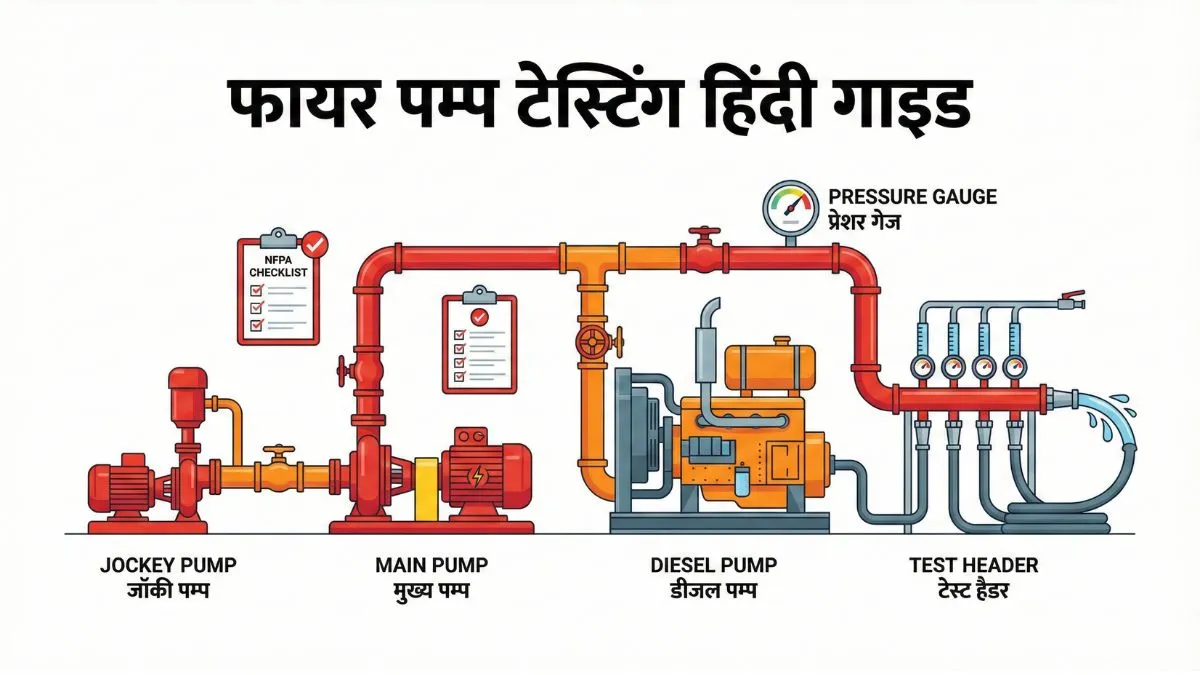
क्या आपकी building में fire pump installed है—लेकिन आपको नहीं पता कि उसका testing कैसे और कितनी बार करना जरूरी है? यह short guide आपको Auto Start Test, Pressure Test और Flow Test step-by-step आसान भाषा में समझाएगी।
Fire Pump Failure का सबसे common कारण है—testing न करना।
इसीलिए Fire Safety Audit में pump performance सबसे पहले verify होती है।
अगर आपने Fire Safety Audit Guide नहीं पढ़ा है, तो पहले इसे देखें:
Fire Safety Audit – Compliance & Inspection Guide
अब आगे हम सीखेंगे कि fire pump test कैसे किया जाता है और readings को audit report में कैसे document किया जाता है—ताकि आपकी building real emergency में भी ready रहे।
Why Fire Pump Testing Matters? (Life Safety & Real Risk Impact)
Fire Pump building के life safety system का हृदय माना जाता है — अगर emergency में यह auto-start नहीं हुआ या pressure नहीं दे पाया, तो hydrant, hose reel और sprinkler systems effective नहीं होते। इसीलिए testing सिर्फ paperwork नहीं बल्कि life-saving readiness verification है।
Fire Incident Examples & Failure Cases
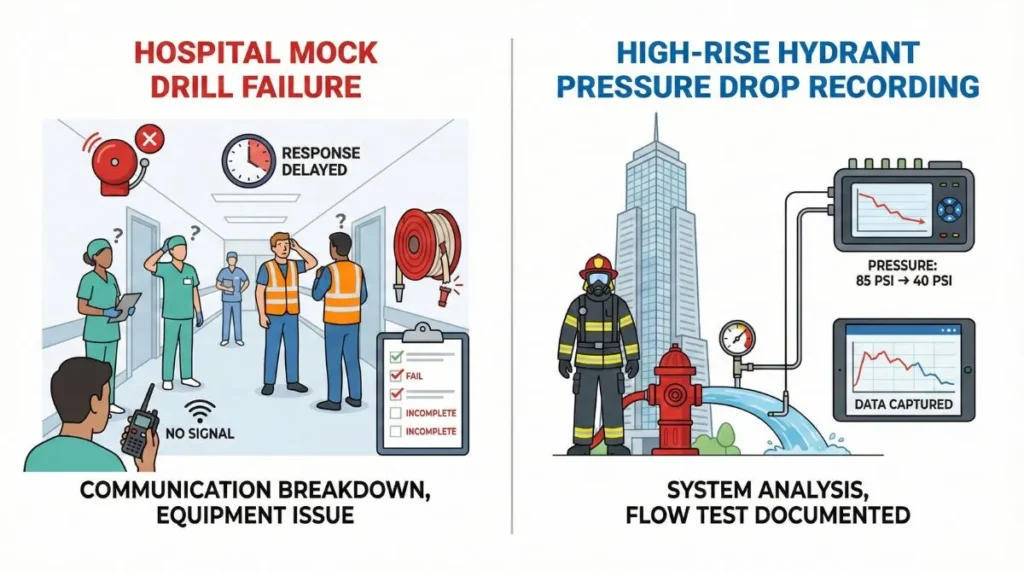
भारत में कई fire incidents ऐसे हुए जहां pump नहीं चला या pressure drop हुआ, जिसके कारण fire spread control कमजोर पड़ा और evacuation समय बढ़ गया। Real audit cases में आम findings यह होती हैं:
- mock drill में diesel pump auto-start नहीं हुआ
- high-rise building में hydrant pressure insufficient मिला
- controller wiring loose होने से pump failure
- maintenance records missing होने से readiness unknown
Fire Pump failure अक्सर ignored maintenance से linked होता है — जैसे weak battery, suction blockage, pressure switch fault या controller wiring loose होना।
How Testing Prevents System Failures
Regular testing यह confirm करता है कि system emergency के समय ready है — क्योंकि testing:
- auto-start function की reliability verify करती है,
- rated pressure & flow उपलब्ध होने की पुष्टि करती है,
- controller faults, alarm signals पहले ही detect हो जाते हैं,
- diesel level, battery health और wiring readiness ensure करती है।
इसीलिए NFPA 25 और BIS Standards weekly / monthly / annual testing mandatory मानते हैं — ताकि incident के समय system response guaranteed हो।
अगर आप समझना चाहते हैं कि Fire Pump testing clearance और approval को कैसे प्रभावित करती है, तो यह practical procedural guide पढ़ें:
Fire NOC Online Apply – Requirements & Approval Workflow
Fire Pump testing और inspection की international requirements के लिए यह official source पढ़ा जा सकता है:
NFPA – Codes & Fire Protection Standards (Official Source)
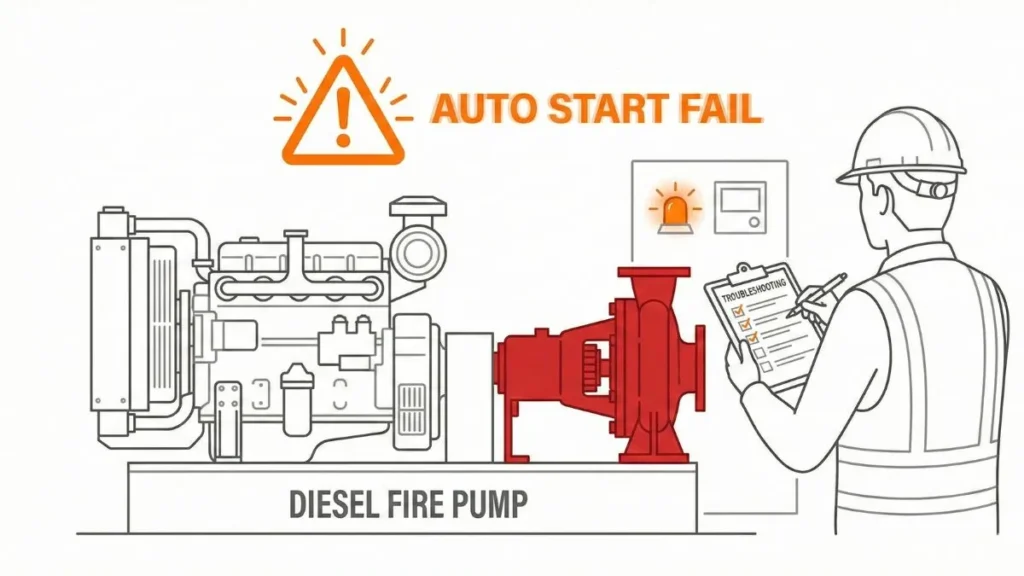
What is Fire Pump Testing? (Simple Meaning)
Fire Pump Testing का मतलब है building के fire pump system की working condition, auto-start response और required pressure delivery को verify करना। यह test ensure करता है कि emergency में hydrant, sprinkler और hose reel system को काफी water pressure मिल पाए ताकि आग नियंत्रित की जा सके।
सीधे शब्दों में — Fire Pump Testing building की life safety readiness का health check-up है, जहां system को automatic और practically दोनों तरह से verify किया जाता है।
अगर fire pump सही समय पर start नहीं हुआ या पर्याप्त pressure produce नहीं कर पाया — तो पूरा fire fighting network non-functional हो सकता है।
Purpose of Fire Pump Performance Test
इस testing का मुख्य उद्देश्य building के life safety system को ready रखना है — जैसे:
- Auto-start mechanism reliable रहना
- Rated pressure & water flow सुनिश्चित होना
- controller, valves और sensors fault-free होना
- diesel pump fuel level, battery charge और cranking condition ready रहना
यह test industry, hospital, commercial building और high-rise premises में regulatory compliance, safety audit और insurance validation का हिस्सा भी है।
अगर आप देखना चाहते हैं कि यह performance testing approval process और compliance score को कैसे support करती है, तो यह guide helpful है:
Fire NOC Online Apply – Approval & Requirements Guide
Types of Fire Pump Tests – Weekly, Monthly, Annual
Fire Pump Testing एक बार का काम नहीं — यह periodic safety schedule का हिस्सा है:
- Weekly Test: Auto-start readiness and alarm supervision verify करना
- Monthly Test: suction line, controller health और motor response check करना
- Annual Pressure & Flow Test: hydrant discharge, flow rate और NFPA guideline performance validation confirm करना
इन testing cycles से building की continuous reliability maintain रहती है — जो audit और fire emergency दोनों में prove होती है।
Fire Pump का output सबसे पहले hydrant network को support करता है — अगर आप hydrant valve के working और inspection basics समझना चाहते हैं, तो यह reference guide पढ़ें:
Fire Hydrant Valve – Types, Working & Installation Basics
Fire Pump testing की international expectations समझने के लिए आप यह recognised code reference देख सकते हैं:
NFPA – Fire Protection Codes & Standards (Official Source)
Fire Pump Components Overview
Fire Pump System कई interconnected components से मिलकर बना होता है जो emergency में hydrant, sprinkler और hose reel network को water supply और pressure deliver करते हैं। Testing के दौरान इन सभी elements की working health, response और readiness verify की जाती है।
Jockey Pump, Main Pump & Diesel Pump
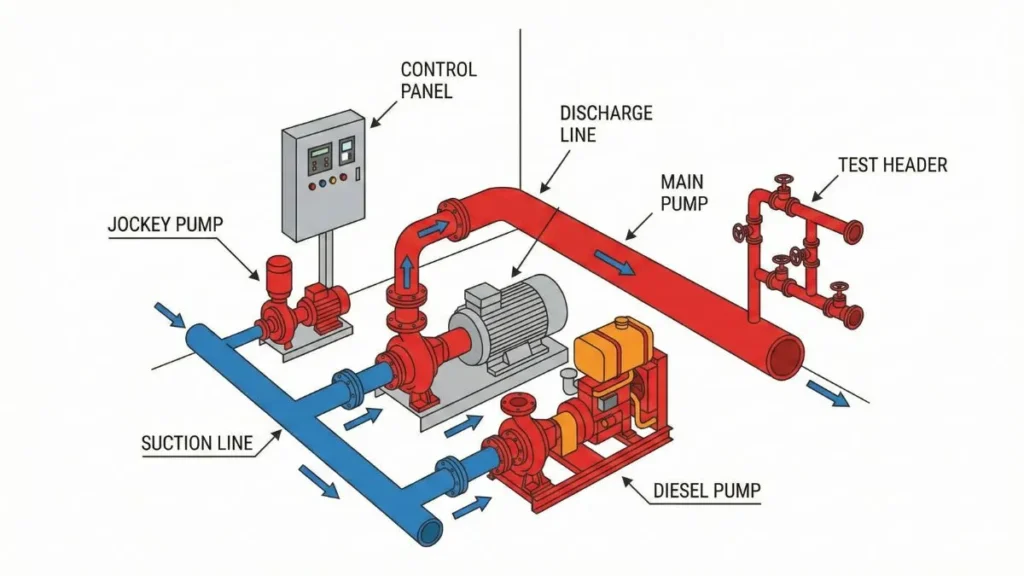
Fire Pump setup में तीन core machines होती हैं — जिनका role safety के लिए बेहद critical है:
- Jockey Pump: pressure drop compensate करता है और leakage detect करता है
- Main Pump: actual fire condition में required pressure & flow deliver करता है
- Diesel Pump: बिजली failure में backup auto-start water supply सुनिश्चित करता है
Fire Pump Testing में इन तीनों units के auto-start sequence, control panel response और pressure output verification की inspection की जाती है।
Suction, Discharge & Test Header
Fire Pump में piping भी उतनी ही महत्वपूर्ण होती है — जिसमें key components शामिल हैं:
- Suction Line: tank से पानी pump तक लाने का intake मार्ग
- Discharge Line: water को hydrant / sprinkler तक deliver करना
- Test Header: pump pressure और flow verify करने के लिए testing outlet
अगर आप hydrant valves और fire supply distribution system को detail में समझना चाहते हैं, तो यह guide पढ़ें:
Fire Hydrant Valve – Types, Working & Installation Basics
Instruments Used – Pressure Gauge, Flow Meter
Fire Pump Testing के दौरान कुछ essential instruments का इस्तेमाल होता है, जैसे:
- Pressure Gauge: discharge pressure verify करने के लिए
- Flow Meter / Pitot Gauge: rated flow achieve हो रहा है या नहीं — यह measure करने के लिए
ये readings annual audit reporting, NFPA testing validation और performance matrix preparation के लिए सबसे اہم data होती हैं।
Tools Required for Onsite Testing (Portable Kit List)
Practical testing करने वाले engineers field में यह portable kit carry करते हैं:
- Pressure gauge calibration set
- Portable flow meter / pitot tube
- Multimeter & battery tester
- Spanners & basic tool kit
- Test header nozzles
- PPE — helmet, gloves, safety shoes
इस toolkit का purpose यह ensure करना होता है कि readings accurate हों और fire pump की readiness practically validated की जा सके।
Fire Pump system documentation और test records Fire NOC approvals और annual audit में कैसे role निभाते हैं — यह जानने के लिए यह compliance guide पढ़ें:
Fire NOC – Application Process & Compliance Checklist
Fire Pump components, instrumentation और testing standards समझने के लिए आप यह recognised safety standard पढ़ सकते हैं:
NFPA Fire Protection Standards – Pump & Testing Norms
Fire Pump Testing Standards & Compliance Requirements
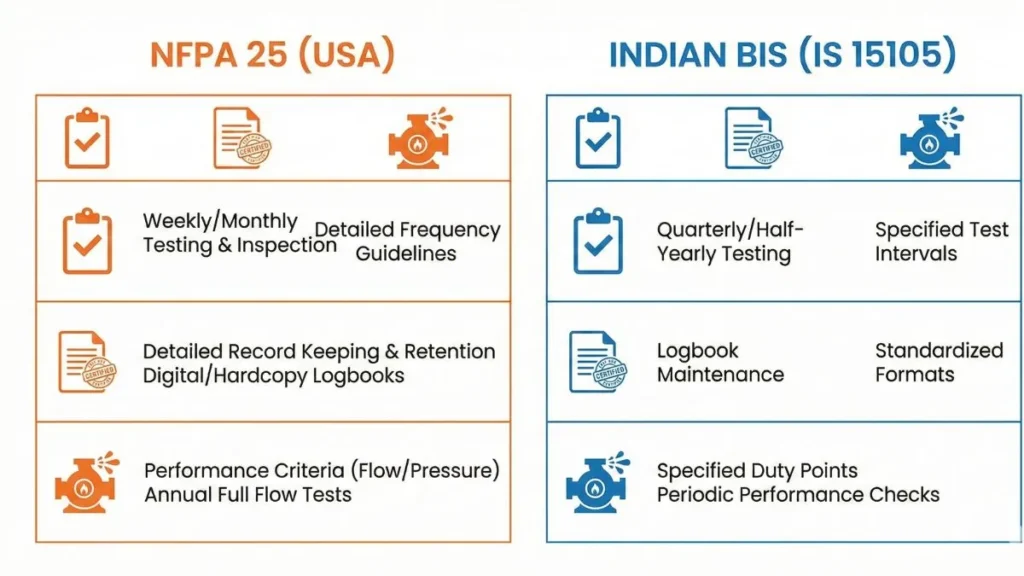
Fire Pump Testing सिर्फ building maintenance नहीं — compliance requirement भी है। Emergency में hydrant, sprinkler और fire hose reels को pressurized water मिले, इसके लिए international और Indian standards दोनों testing norms define करते हैं।
NFPA 25 Basic Testing Requirements
NFPA 25 international level पर सबसे widely-used reference है। यह pump की inspection frequency और performance acceptance criteria define करता है:
- Weekly Auto-start Test – controller readiness verify करने के लिए
- Monthly Functional Test – mechanical + electrical health check
- Annual Flow Test – rated flow & pressure performance validate करने हेतु
Fire pump testing की detailed international expectations देखने के लिए आप यह official NFPA standard reference पढ़ सकते हैं:
NFPA – Fire Protection Codes & Standards
BIS / IS & Indian Audit Guidelines
India में BIS (IS Codes), Factory Act norms और state fire departments fire pump testing को mandatory मानते हैं। आम Indian requirements में शामिल हैं:
- IS 15301 & IS 12469 – fire pump performance testing references
- Annual hydrant, pump & pressure performance testing certification
- AMC record, logbook entry और periodic test evidence inspection
- Fire NOC renewal के लिए fire pump performance proof की आवश्यकता
अगर आप जानना चाहते हैं कि fire pump testing Fire NOC approval और renewal में कैसे evidence role निभाती है, तो यह detailed guide पढ़ें:
Fire NOC – Application Process & Compliance Checklist
Quick Comparison – Global vs India Standards Table
Fire Pump Testing frequency globally और India में similar है, लेकिन compliance और documentation में कुछ differences हैं:
| NFPA (Global) | BIS / India Guidelines |
| Weekly Auto-start Testing Mandatory | Weekly OR fortnightly practically required |
| Annual Flow Test Mandatory | Annual Test Mandatory (audit report आधारित) |
| Documentation proof required | Fire NOC renewal में documents inspect होते हैं |
| Insurance audit highlighted | Factory Act + Local Fire compliance highlighted |
Conclusion — standards लगभग aligned हैं, पर India में compliance submission (zonal fire departments और insurance surveyors के लिए) अधिक critical है।
Safety & Preparation Before Testing
Fire Pump Testing शुरू करने से पहले site readiness, safety condition और documentation verify करना आवश्यक है — क्योंकि गलत test setup से pressure loss, flooding या system damage का risk बढ़ सकता है।
Documentation & Previous Records Review
Testing से पहले auditor या maintenance engineer previous test reports, logbook entries और AMC/service certificates review करता है ताकि:
- last performance readings compare हो सकें
- previous gaps या failures reopen किए जा सकें
- maintenance dates validate हो सकें
अगर आप समझना चाहते हैं कि documentation Fire Safety Audit score और approval को कैसे प्रभावित करता है — तो यह detailed inspection guide पढ़ें:
Fire Safety Audit Guide – Checklist, Process & Compliance Flow
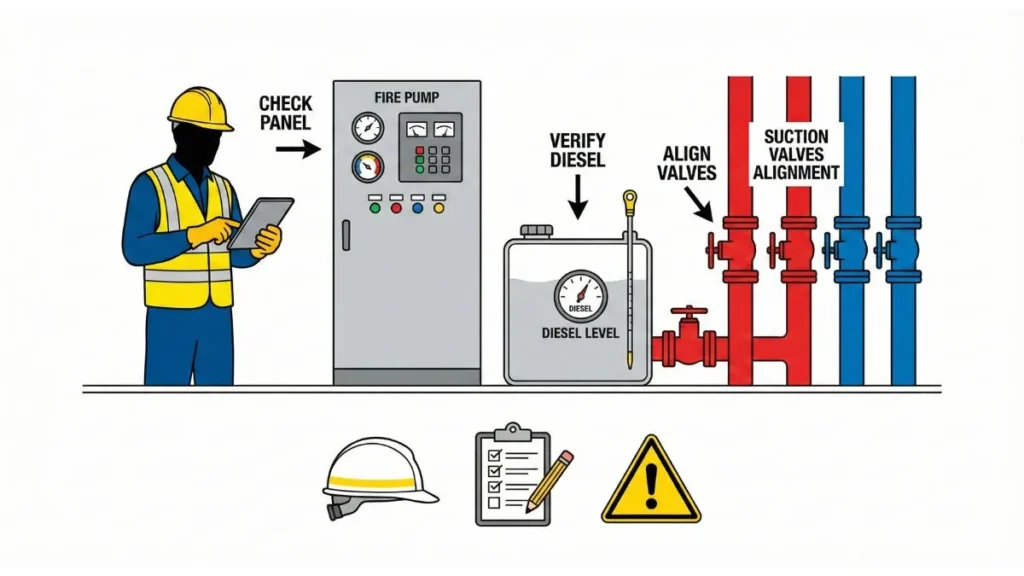
Valve Line-up, Diesel Level & Power Readiness
Testing से पहले system ready होना जरूरी है। इसमें शामिल हैं:
- Suction और discharge valves सही alignment में हों
- diesel pump के लिए fuel level और battery health check हो
- electric pump के लिए power supply available हो
- jockey pump का auto-start logic test किया जाए
यह preparation ensure करता है कि testing के दौरान system accurately auto-start और pressure build-up perform करे।
PPE and Drainage Arrangements
Fire Pump Test practical होता है — इसलिए onsite safety overlooked नहीं होनी चाहिए:
- engineers को PPE – gloves, helmet, safety shoes पहनना चाहिए
- flow test water discharge के लिए drainage path clear होना चाहिए
- electrical rooms में shock-free working conditions verify हों
Safety guidelines और testing precautions की international guidance आप NFPA workplace norms से देख सकते हैं:
NFPA – Fire Protection & Workplace Safety Standards
Auto Start Test Procedure (Step-by-Step Workflow)
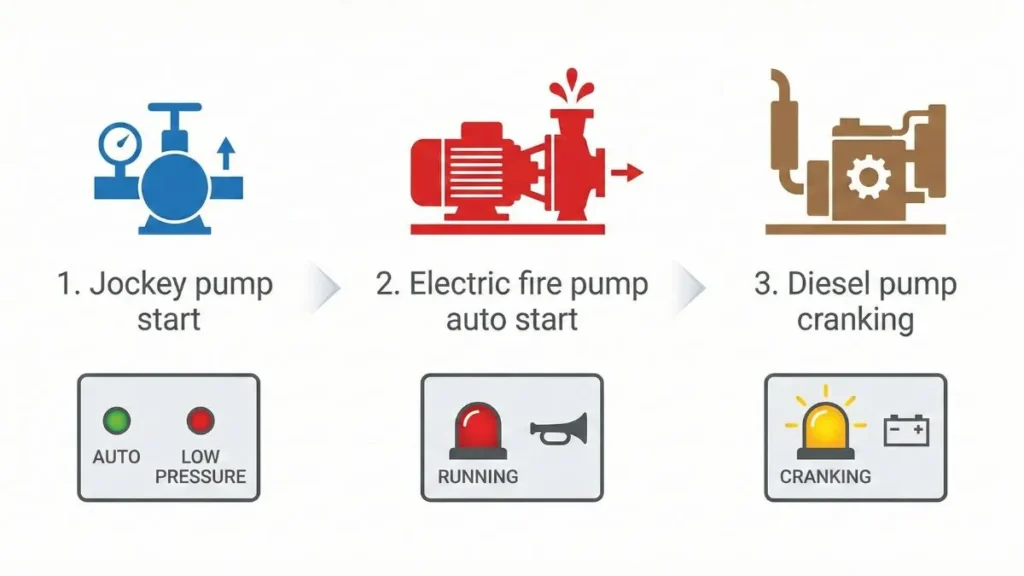
Fire Pump auto-start test verify करता है कि emergency pressure drop के दौरान pump system स्वतः start होकर required pressure & flow deliver कर सके। यह test building की real fire readiness evaluation का सबसे critical हिस्सा है।
Jockey Pump Start-Stop Verification
Test की शुरुआत हमेशा Jockey Pump से होती है क्योंकि यह system pressure को maintain करने और leakage detect करने के लिए responsible होता है।
- System pressure drop simulate करें
- देखें कि Jockey Pump auto-start होता है या नहीं
- Target pressure reach होने पर auto-stop verify करें
अगर Jockey Pump बार-बार run हो रहा है — तो यह system leakage या pressure loss का संकेत है, जिसे audit में major observation माना जाता है।
Electric Fire Pump Auto Start Test
अब system pressure को artificially drop किया जाता है ताकि verify हो सके कि electric fire pump स्वतः start हो रहा है या नहीं।
- Pressure switch response monitoring
- Auto-start timing verification
- Panel fault status clear होना चाहिए
- Discharge pressure reading record करें
यह step confirm करता है कि building में reliable fire water delivery available है।
Diesel Pump Auto Start Testing Checklist
Electric failure पर backup supply Diesel Pump provide करता है — इसलिए इसका auto-start test mandatory माना जाता है।
- Battery charging & voltage check
- Fuel level inspection
- Starter motor cranking verification
- RPM stabilisation & heat observation
अच्छा test वही माना जाता है जहां diesel pump start-up time & pressure build-up NFPA performance criteria के within रहे।
Auto-start findings अक्सर Fire Safety Audit observations में major scoring item होते हैं। Clearance कैसे improve करें — यह समझने के लिए यह audit reference guide पढ़ें:
Fire Safety Audit Guide – Inspection, Scoring & Compliance Workflow
Fire Pump auto-start test methodology और acceptance limits internationally यहां define हैं:
NFPA 25 – Fire Pump Testing & Maintenance Standard (Official Source)
j
Fire Pump Flow & Pressure Testing Procedure
Fire Pump Flow & Pressure Test यह verify करता है कि pump design pressure और required flow practically deliver कर रहा है या नहीं। इसी से पता चलता है कि hydrant, sprinkler और hose reel network real आग की स्थिति में कितना reliable रहेगा।
No-Flow (Churn) Test Values
सबसे पहले no-flow या churn test किया जाता है, जिसमें discharge valves बंद रहते हैं और pump सिर्फ circulation में चलता है। इस स्थिति में:
- pump का discharge pressure gauge पर note किया जाता है
- motor current / ampere reading observe की जाती है
- कोई abnormal vibration या unusual sound check किया जाता है
Hydrant network पर इस churn pressure का direct effect पड़ता है। अगर आप hydrant outlet behaviour समझना चाहते हैं, तो यह guide पढ़ें:
Fire Hydrant Valve – Types, Working & Installation Basics
Rated Flow Test
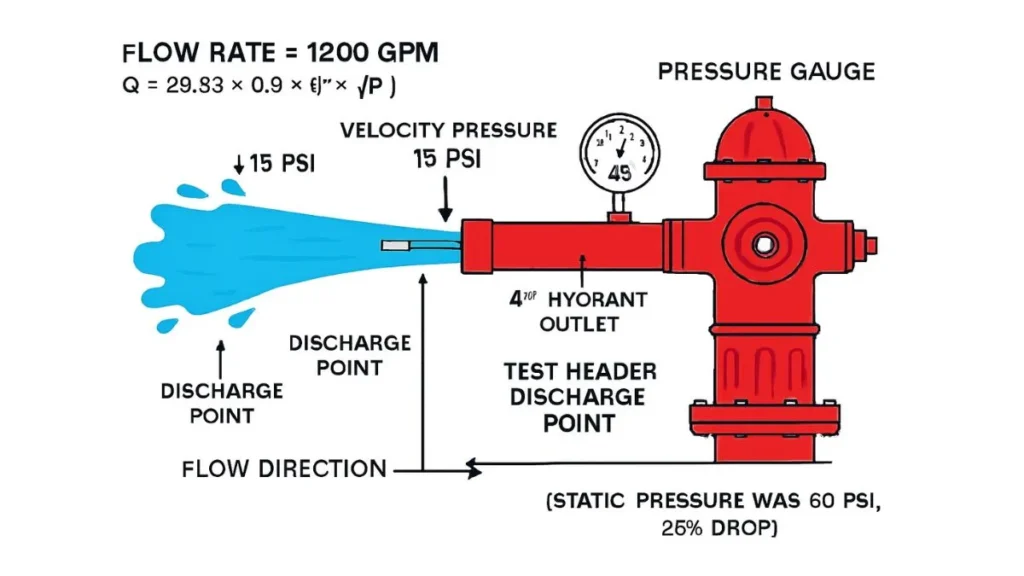
इसके बाद pump को उसके rated flow पर test किया जाता है — यानी design के अनुसार जितना पानी deliver करना है, उतना practically discharge कराया जाता है (test header / hose line से)।
- specified संख्या में outlets खोलकर flow create किया जाता है
- pressure gauge से residual pressure note किया जाता है
- flow meter / pitot gauge से actual flow reading record की जाती है
Rated flow readings future में Fire NOC approval, renewal और design compliance proof के रूप में काम आती हैं। प्रैक्टिकल approval workflow समझने के लिए यह guide देखें:
Fire NOC Online Apply – Step-by-Step Approval Guide
150% Overload Flow Test
कई standards (जैसे NFPA 25) recommend करते हैं कि pump को 150% of rated flow पर भी test किया जाए, ताकि overload condition में उसका behaviour समझा जा सके:
- और अधिक outlets खोलकर high-flow condition create की जाती है
- देखा जाता है कि pressure acceptably drop होते हुए भी minimum required limit के भीतर है या नहीं
- motor / engine load, heating और vibration closely observe किए जाते हैं
High-flow condition में network पर लगे extinguishers और अन्य equipment कैसे perform करते हैं, यह समझने के लिए यह practical guide use कर सकते हैं:
Fire Extinguisher Types & Uses – Practical Safety Guide
Recording Results for Audit Report
Flow & pressure testing केवल现场 reading तक सीमित नहीं — proper documentation भी जरूरी है, ताकि future Fire Safety Audit और insurance survey में proof available हो:
- no-flow, rated flow और 150% flow के लिए pressure, flow और ampere readings अलग-अलग record करें
- test date, time, उपस्थित staff और observations note करें
- किसी भी abnormal condition को remarks में clearly लिखें
अगर आप यह समझना चाहते हैं कि ये readings Fire Safety Audit report, risk rating और corrective actions में कैसे use होती हैं, तो यह detailed audit guide पढ़ें:
Fire Safety Audit – Checklist, Process & Reporting Guide
Fire pump flow & pressure tests के acceptance limits और frequency internationally यहां define किए गए हैं:
NFPA 25 – Inspection, Testing & Maintenance of Water-Based Systems
How to Read Fire Pump Pressure / Flow Test Chart
Fire Pump Testing का सबसे important output होता है flow बनाम pressure chart, जिससे पता चलता है कि pump design के अनुसार perform कर रहा है या underperform कर रहा है। यह chart audit report, risk rating और Fire NOC approval में एक critical compliance evidence माना जाता है।
Plotting Flow vs Pressure Curve
Test दौरान तीन अलग-अलग readings लिए जाते हैं — No-flow (Churn), Rated Flow और 150% Flow. इन readings को एक curve पर plot किया जाता है:
- No-flow पर highest pressure दिखना चाहिए
- Rated flow पर moderate pressure expected होता है
- 150% flow पर acceptable pressure drop होना normal है
अगर आप understand करना चाहते हैं कि यह readings final audit clearance को कैसे प्रभावित करती हैं, तो यह guide पढ़ें:
Fire Safety Audit – Inspection, Scoring & Reporting Process
Acceptable Tolerance Limits (Comparison Table)
नीचे simplified table में दिखाया गया है कि NFPA acceptance limits और practical readings कैसे interpret होती हैं:
| Test Condition | Expected Reading (Design Intent) | Acceptable Tolerance |
|---|---|---|
| No-Flow (Churn) | Highest Discharge Pressure | ±5% variation acceptable |
| Rated Flow | Design Pressure maintained | ±10% drop acceptable |
| 150% Flow | Pressure lower than rated | ±5 PSI range normal (within limits) |
अगर readings इन tolerances से बाहर जाएं — तो यह system deterioration या pump inefficiency का संकेत होता है।
Acceptable performance criteria और tolerance norms आप यहां से reference कर सकते हैं:
NFPA 25 – Fire Pump Testing & Performance Criteria
When Results Indicate Failure
Chart analysis करते समय failure indication तब माना जाता है जब:
- No-flow pressure unusually low हो
- Rated flow पर pressure acceptable limit से नीचे जाए
- 150% test पर severe pressure drop या unstable behaviour आए
- Motor current, vibration या heating abnormal मिले
ऐसी स्थिति में:
- pump servicing required होती है
- controller tuning / calibration किया जाता है
- bearing / impeller inspection किया जाता है
अगर आप समझना चाहते हैं कि fire systems में pressure failure का emergency response पर क्या असर होता है, तो यह resource पढ़ें:
Fire Extinguisher Types & Uses – Practical Reliability Guide
Fire Pump Testing Checklist (Inspection-Based)
Fire Pump Testing checklist auditor या engineer को यह verify करने में मदद करती है कि Mechanical, Electrical और Diesel back-up readiness तीनों compliance में हैं या नहीं। Testing के दौरान इन parameters को record और document किया जाता है।
Mechanical Inspection Checklist
- Impeller rotation smooth है या noise/vibration दिखाई दे रहा है
- Coupling alignment सही है
- Mechanical seal leakage नहीं हो रही है
- Pipe supports और flange joints leak-free हैं
- Pressure gauge physically intact और readable mode में है
अगर आप जानना चाहते हैं कि pump performance faults क्यों आते हैं तो यह incident-based safety analysis पढ़ें:
Fire Safety Audit – Observation & Failure Insight
Electrical Inspection Checklist
- Power supply availability & breaker health verified है
- Controller panel में fault/alarm free स्थिति
- Motor insulation, contactors और wiring सुरक्षित स्थिति में हैं
- Auto-start logic और pressure switch functionality test किया गया
- Earthing continuity check records maintained हैं
Diesel Pump Inspection Checklist
- Battery health, charger और cranking readiness verify किया गया
- Diesel level sufficient और leakage-free है
- Engine oil / coolant condition acceptable है
- Auto-start trigger response confirm है
- भारी vibration, smoke या overheating behaviour नहीं मिला
अगर आप समझना चाहते हैं कि diesel pump auto-start failure audit remark क्यों होता है — तो यह practical guide पढ़ें:
Fire NOC Online Apply – Approval Conditions Guide
Downloadable PDF & Excel Checklist
Fire Pump Testing को uniform तरीके से record करने के लिए auditors अक्सर printed checklist या Excel log sheet का उपयोग करते हैं। आप भी below template file use कर सकते हैं:
- 📌 Standard Inspection Log Sheet (PDF)
- 📌 Editable Fire Pump Testing Register (Excel)
Testing checklist के regulatory expectations और documentation norms आप यहां से reference कर सकते हैं:
NFPA 25 – Fire Pump Maintenance & Inspection Standards (Official Link)
Fire Pump Commissioning vs Routine Testing
Building में installed fire pump के लिए commissioning और routine testing दोनों अलग processes होते हैं — एक construction/installation के समय होता है और दूसरा operational phase में periodic reliability verify करने के लिए।
Initial Commissioning Scope
Commissioning वह stage है जब fire pump system पहली बार officially verified किया जाता है। इसमें following checks शामिल होते हैं:
- Rated pressure & flow achieve होना
- Auto-start logic की working confirmation
- Controller wiring, earthing और alarms verification
- Suction–discharge water path की stability check
- Documentation — valves schedule, drawings और approvals
अगर आप commissioning के बाद Fire NOC approval workflow समझना चाहते हैं, तो यह procedural guide पढ़ें:
Fire NOC Online Apply – Requirements & Approval Procedure
Routine Inspection Expectations (Periodic Testing)
Routine testing का focus system की ongoing health और readiness verify करना होता है। इसमें weekly, monthly और annual testing शामिल होती है, जैसे:
- Auto-start performance tracking (weekly)
- Controller & fault diagnostics health check (monthly)
- Pressure & flow validation (annual)
- Battery, diesel level और cranking reliability
- Logbook update और audit reporting expectations
अगर आप जानना चाहते हैं कि routine test compliance audit score पर कैसे impact करता है, तो यह learning reference पढ़ें:
Fire Safety Audit – Observation & Compliance Guide
Hindi Mini Summary Table – Difference at a Glance
| Parameter | Commissioning | Routine Testing |
|---|---|---|
| जब होता है? | Installation के बाद पहली बार | Operation phase में periodic schedule |
| Focus | System capability verify करना | Readiness stability & performance maintain करना |
| Testing Scope | Design rating, automation & approvals | Auto-start, pressure flow & health check |
| Documentation | Commissioning certificates, approvals | Log sheets, service records, audit evidences |
| Responsible Team | Installer, engineer & certifying authority | Fire safety team, AMC provider या auditor |
Commissioning और routine testing method differences को NFPA Standard context में समझने के लिए यह source देख सकते हैं:
NFPA Code & Standards – Fire Pump Performance Requirements
Common Problems During Fire Pump Testing (Troubleshooting)
Fire Pump Testing अक्सर readiness reveal करता है — लेकिन कई बार operational faults और maintenance gaps सामने आते हैं। नीचे fire audit एवं mock drills में commonly observed real-world failure points list किए गए हैं।
Pump Fails to Auto-Start
Auto-start failure fire incident के समय सबसे critical risk होता है। Reasons commonly include:
- Jockey pump leak compensation logic inactive
- Pressure switch malfunction
- Controller wiring loose
- Diesel pump cranking failure (weak battery)
Low Pressure / Low Flow
Testing के दौरान अगर output pressure या flow drop मिलता है — तो इसका मतलब supply या equipment में weakness है।
- Suction blockage या incomplete priming
- Flow meter pitot placement error
- Pump wear या impeller efficiency loss
- Air lock in system
Overheating & Vibration
Fire Pump running के दौरान यदि unusual heat या vibration observe हो — तो mechanical condition compromised हो सकती है:
- Shaft alignment issue
- Bearings lubrication failure
- Cavitation या suction loss
Controller / Battery Issues & Fixes
Control panel और battery failure कई sites पर pump start failure का सबसे common कारण रहता है।
- Loose terminals या burnt relays
- Battery sulphation / low charge
- Fault alarms ignored
अगर आप जानना चाहते हैं कि ऐसे failures audit report में कैसे impact create करते हैं — तो यह compliance guide पढ़ें:
Fire Safety Audit – Checklist + Compliance Framework
NFPA Fire Pump Troubleshooting principles यहां describe हैं — जो inspection reliability को improve करने के लिए widely use होते हैं:
NFPA Pump Inspection & Testing Standards (Official Source)
Maintenance & Follow-Up After Testing
Fire Pump Testing के बाद सबसे महत्वपूर्ण कदम system reset, documentation closure और सुधारात्मक action follow-up है — यही audit compliance score और reliability improve करता है।
Flushing & Valve Normalization
Testing के बाद system को वापस normal operating mode में लाना जरूरी है। इसमें flushing, pressure stabilization और valves को सही स्थिति में लाना शामिल है।
AMC Records & Test Certificates
Testing data और servicing work को AMC records, logbooks एवं certificates में दर्ज करना Fire Safety Audit और insurance validation के लिए ज़रूरी होता है।
Re-Test / Closure Planning
यदि testing में faults मिले हों — तो closure action योजना बनाना, corrective steps verify करना और आवश्यकता पड़ने पर re-test schedule किया जाना जरूरी है।
| फॉलो-अप कार्य | क्या सुनिश्चित करना है? | जिम्मेदारी |
|---|---|---|
| Flushing एवं सिस्टम रीसेट | दबाव स्थिर हो एवं discharge लाइनों की सफाई हो | Maintenance / Safety टीम |
| Valve Normalization | सभी valves operational स्थिति में हों | Fire / Facility Operator |
| Logbook अपडेट | Test readings, defects एवं corrective work दर्ज किया जाए | Safety Officer |
| AMC रिकॉर्ड एंट्री | Service रिपोर्ट एवं आवश्यक हस्ताक्षर अपडेट हों | Service Provider |
| सुधारात्मक कार्यवाही एवं closure | Faults ठीक हों एवं proof maintain किया जाए | Engineering / Maintenance टीम |
| Re-Test / Verification | दोबारा से performance की पुष्टि एवं certification | Auditor / Supervisor |
अगर आप समझना चाहते हैं कि maintenance records Fire Safety Audit approval score को कैसे improve करते हैं — तो यह compliance guide पढ़ें:
Fire Safety Audit – Checklist Based Compliance Guide
NFPA एवं BIS norms maintenance documentation को high priority category में रखते हैं — reference यहां देखें:
NFPA – Pump Testing & Maintenance Standards
Electric vs Diesel Fire Pump Testing – Key Differences
Fire Pump Testing में Electric pump और Diesel pump दोनों की अलग testing requirements और maintenance priorities होती हैं — क्योंकि emergency में दोनों की role critical लेकिन behaviour अलग होता है।
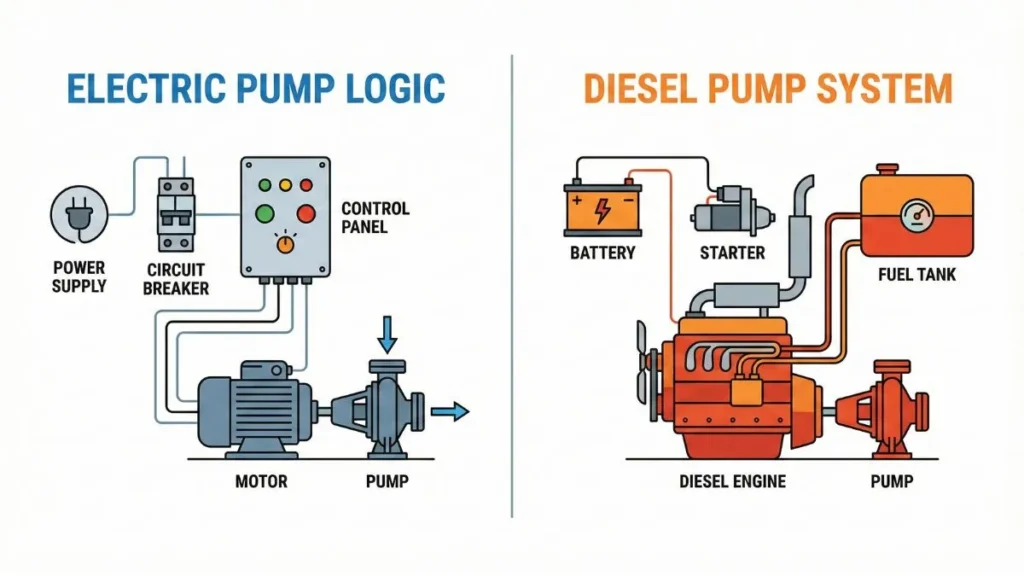
Auto-Start Logic Difference
Electric pump pressure drop + controller signal से auto-start होता है, जबकि Diesel pump में battery readiness, fuel level, cranking और engine ignition verify करना पड़ता है।
Maintenance Differences
Electric pump में electrical power health focus होती है — जबकि Diesel pump में engine, fuel system, और battery condition सबसे critical होती है।
Cost-Benefit Comparison for India
भारत में high-rise, hospitals, industrial plants और malls में Diesel pump electricity failure की risk के कारण mandatory backup capability माना जाता है — लेकिन maintenance और operational cost electric pump की तुलना में ज़्यादा होती है।
| Feature / पैरामीटर | Electric Fire Pump | Diesel Fire Pump |
|---|---|---|
| Auto-Start Logic | Pressure drop signal से तुरंत start | Battery power + engine cranking से auto-start |
| Testing Requirements | Pressure switch & controller test | Battery, fuel level, smoke, cranking & controller checks |
| Maintenance Focus | Electrical health & panel reliability | Fuel system, engine health, battery charge |
| Operational Cost (India) | कम खर्च / low AMC dependency | ज्यादा खर्च – fuel + periodic servicing जरूरी |
| Reliability in Power Failure | Power supply पर निर्भर | बिना बिजली भी start करने में सक्षम (backup role) |
अगर आप समझना चाहते हैं कि Fire Pump testing readiness Fire Safety Audit clearance को कैसे प्रभावित करती है — तो यह compliance article पढ़ें:
Fire Safety Audit – Inspection & Approval Guide
Electric और Diesel fire pump testing norms detail में NFPA standard में मिलते हैं — reference यहां देखें:
NFPA Fire Pump Testing & Maintenance Standards
Training & Competency for Fire Pump Testing
Fire Pump Testing कोई सिर्फ checklist-based task नहीं है — यह एक technical competency है जिसके लिए trained personnel की जरूरत होती है ताकि readings सही हों और system readiness genuinely verify हो सके।
Skills Required
एक competent tester को निम्नलिखित technical और practical skills की जरूरत होती है:
- Fire Pump operation और auto-start logic understanding
- pressure gauge और flow meter reading accuracy
- controller alarms और faults diagnose करने की ability
- diesel engine basics (fuel, battery health, cranking behavior)
- AMC records और logbook updation की समझ
- PPE usage और现场 safety practices
इन skills के बिना testing inaccurate हो सकती है — जो Fire Safety Audit और incident response दोनों को प्रभावित करती है।
अगर आप देखना चाहते हैं कि Fire Pump readiness Fire Safety Audit report को कैसे प्रभावित करती है, तो यह detailed compliance post पढ़ें:
Fire Safety Audit – Checklist & Certification Guide
NFPA Certified / Indian Safety Courses
Globally, Fire Pump Testing को NFPA 20 / NFPA 25 competency criteria से align किया जाता है। India में कई institutes Fire & Safety Engineering, Industrial Safety, और Pump Maintenance पर specialised training provide करते हैं।
- NFPA–based competency programs
- Diploma / PG Diploma in Fire & Industrial Safety
- State Fire Academy training modules
- Fire pump operation workshops by OEM companies
यह training ensure करती है कि testing करने वाला व्यक्ति system behavior समझता है, readings interpret करता है और corrective actions recommend कर पाता है।
Fire Pump qualification और competency norms detail में यहां उपलब्ध हैं:
NFPA Fire Pump Standards – Training & Qualification Framework
Real-Life Case Studies (India)
Fire Pump Testing का सबसे बड़ा महत्व तब समझ आता है जब failure real incidents में सामने आता है। नीचे भारत के दो typical case examples दिए गए हैं — जो दिखाते हैं कि testing की कमी building safety को कैसे प्रभावित करती है।
Case Study 1 – Hospital Drill में Pump Auto-Start Failed
एक multi-speciality hospital में mock drill के दौरान fire pump auto-start नहीं हुआ — reason बाद में पाया गया कि diesel pump की battery weak थी और controller में fault registered था लेकिन records timely update नहीं किए गए थे।
अगर weekly testing और battery health verification होता तो pump failure समय पर detect हो जाता — जो hospital जैसी critical premises में life risk factor बन सकता है।
Case Study 2 – High-Rise Building में Hydrant Pressure Drop
एक high-rise residential tower में fire incident के समय hydrant pressure insufficient मिला। post-incident inspection में पाया गया:
- suction strainer clogged था
- pump का annual flow test perform नहीं हुआ था
- pressure gauge के readings inaccurate थे
Fire Pump Testing सिर्फ routine compliance नहीं — system reliability assurance है। अगर annual performance test होता, तो pressure loss पहले ही पता चल जाता।
अगर आप जानना चाहते हैं कि ऐसी findings कैसे Fire Safety Audit में documented होती हैं,
तो यह detailed compliance guide पढ़ें:
Fire Safety Audit – How Systems Are Scored & Verified
Fire Pump failure reporting और performance testing norms internationally NFPA 25 में explain किए गए हैं:
NFPA Pump Testing Standards – System Reliability Insights
Legal & Compliance Significance in India
भारत में Fire Pump testing सिर्फ maintenance activity नहीं है — यह statutory compliance का हिस्सा है, जहाँ building approvals, insurance validity और safety certification testing practices पर depend करते हैं।
Factory Act and Fire NOC Requirement
कई राज्यों में Factory Act और Building By-Laws के तहत Fire Pump performance testing और record keeping mandatory माना जाता है। Fire NOC apply या renew करते समय audit officer pump readiness और testing records verify करता है — खासकर:
- Auto-start logs
- Annual performance test रिपोर्ट
- Corrective action close-out records
अगर Fire Pump unreliable पाए जाते हैं, तो Fire NOC issue या renewal process hold / reject भी किया जा सकता है।
Fire Pump testing audit clearance को कैसे influence करती है — यह detail आप यहाँ समझ सकते हैं:
Fire Safety Audit – Compliance & Inspection Insight
Insurance Requirement Linkage
Commercial premises, hospitals, industries और high-rise buildings में insurance policy claim settlement Fire Pump testing status पर निर्भर कर सकता है। Insurer यह verify करता है कि:
- Fire Pump testing records maintained हैं
- Auto-start system functional है
- Annual pressure-flow validation किया गया है
अगर incident के समय pump fail हो जाए और testing proof ना हो — insurance claim partial या full reject
Fire Pump testing और performance expectations internationally NFPA standards में defined हैं — जिन्हें compliance benchmark माना जाता है:
NFPA Fire Pump Testing Standards (Official Source)
Infographics & Flow Diagrams
Fire Pump Testing को visual तरीके से समझने के लिए infographics, layout diagrams और flow charts बहुत मदद करते हैं। नीचे दिए गए तीन visuals को आप training, toolbox talk या Fire Safety Audit presentation में use कर सकते हैं।
Fire Pump Test Header Layout
इस infographic में आप Fire Pump test header का simplified layout दिखा सकते हैं — जहाँ suction line, discharge line, test header, pressure gauges और flow measurement points clearly mark हों। Ideal visual में आमतौर पर यह elements दिखाए जाते हैं:
- Fire tank → suction line → Fire Pump → discharge line
- Test header branches और individual outlets
- Pressure gauge location और flow measurement point
ऐसा layout diagram Fire Pump Testing के दौरान hose connection, gauge reading और flow point selection समझाने के लिए बेहद useful होता है।
Flow vs Pressure Curve Sample
दूसरा infographic एक simple Flow vs Pressure curve दिखा सकता है — जहाँ X–axis पर flow (LPM या gpm) और Y–axis पर pressure (bar / psi) हो, और design curve + actual test curve दोनों compare किए जाएँ।
- Churn (no-flow), rated flow और 150% flow points mark करें
- Design curve और actual reading curve अलग रंग से show करें
- “Acceptable range” band भी highlight किया जा सकता है
यह visual engineers और safety teams को समझाने के लिए useful है कि Fire Pump performance किस level तक acceptable है और कहाँ pressure / flow loss दिख रहा है।
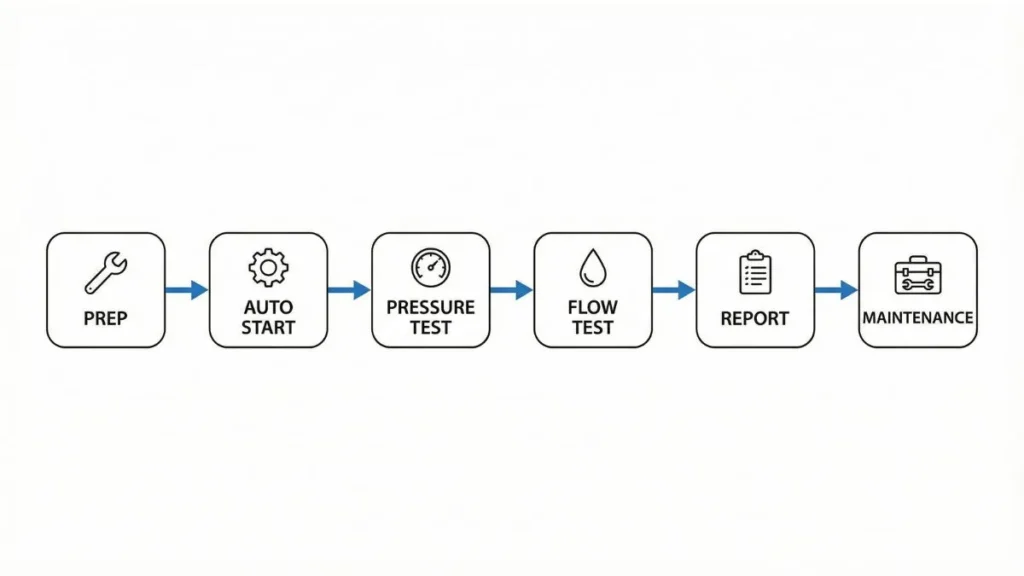
Click-Map Flowchart – Testing Sequence Visual
तीसरा graphic एक step-by-step flowchart testing sequence
- Pre-checks → auto-start test → churn test → rated flow test → 150% flow test
- Readings record → system reset → documentation update
अगर आप चाहें तो इस flowchart को “click-map” style में design कर सकते हैं ताकि हर step पर एक छोटा explanation bubble या icon दिखाई दे — जिसका उपयोग training slides या internal SOP में किया जा सकता है।
Fire Safety systems के लिए पहले से बने illustration ideas देखना चाहते हैं तो यह visual-rich guide पढ़ें:
Fire Safety Poster – Complete Guide
Flow test curves और performance documentation के लिए NFPA standards reference के रूप में use किए जा सकते हैं:
NFPA – Fire Pump Testing & Performance Documentation Standards
Frequently Asked Questions
Fire Pump Testing कितने समय में करना अनिवार्य है?
Fire Pump का weekly auto-start test, monthly functional check और annual flow & pressure test NFPA 25 और Indian audit norms के अनुसार mandatory माना जाता है। High-risk buildings (hospital, high-rise, industrial units) में इसे strictly follow करना जरूरी है।
Fire Pump Auto-Start Test में सबसे common failure क्या मिलता है?
सबसे common कारण हैं:
• weak battery (diesel pump)
• loose controller wiring
• pressure switch malfunction
• suction blockage
• jockey pump continuously running इन failures के कारण emergency में pump start नहीं होता।
Fire Pump का No-Flow (Churn) Test क्यों किया जाता है?
Churn Test इसलिए किया जाता है ताकि pump के maximum discharge pressure और motor current draw को verify किया जा सके।अगर churn pressure बहुत ज्यादा या बहुत कम हो—तो यह pump या impeller health issue का संकेत होता है।
Fire Pump Flow Test में pitot gauge और flow meter का क्या अंतर है?
• Pitot Gauge hydrant outlet velocity से flow calculate करता है (basic method)।
• Flow Meter directly flow measure करता है (more accurate, audit grade).
Audit और insurance survey के लिए flow meter reading अधिक reliable मानी जाती है।
Diesel Fire Pump शुरू क्यों नहीं होता? (Top 5 Reasons)
सबसे सामान्य कारण हैं:
1. Weak or discharged battery
2. Fuel line choking
3. Low fuel level
4. Faulty starter motor
5. Controller-to-engine wiring fault
इनकी preventive checking monthly test में करनी चाहिए।
Fire Pump Testing के दौरान कौनसे safety precautions जरूरी हैं?
• PPE पहनना (gloves, helmet, safety shoes)
• Drainage path clear रखना
• Electrical panel dry और safe condition में रखना
• High-pressure discharge area से safe distance पर रहना
• Test header nozzles tight होना
ये precautions testing accidents को रोकते हैं।
Fire Pump Test readings Fire Safety Audit में कैसे उपयोग होती हैं?
Audit report में pump performance एक critical scoring factor होता है।Readings से यह verify होता है कि building:
• required pressure deliver कर सकती है
• hydrant & sprinkler effective हैं
• maintenance records complete हैं
Flow test failures से Fire NOC reject या hold भी हो सकता है।
क्या Fire Pump Test Video Recording आवश्यक है?
कई states और insurance companies अब flow test की video evidence मांगती हैं—खासकर high-rise, industries और chemical plants में।यह proof audit में transparency और reliability बढ़ाता है।
Fire Pump Test में acceptable pressure drop कितना होना चाहिए?
NFPA 25 और design standards के अनुसार:
• Rated flow पर moderate pressure drop acceptable है
• 150% flow पर significant drop normal होता हैअगर pressure drop residual limit से नीचे चला जाए—तो pump underperforming माना जाता है।
क्या Fire Pump के बिना भी Fire NOC मिल सकता है?
नहीं — जिन buildings में hydrant, sprinkler या high-rise occupancy है,उनके लिए fire pump mandatory है। बिना fire pump testing evidence के Fire NOC approval या renewal generally possible नहीं होता।
Final Summary – Keep Your Fire Pump Emergency-Ready
Fire Pump building का सबसे critical life-saving equipment है — और उसकी reliability सिर्फ good installation नहीं, बल्कि consistent testing पर depend करती है। इस guide में आपने auto-start, churn, rated flow और 150% overload test का पूरा workflow पढ़ा। अब इन्हें अपने premises में लागू करना ही real safety improvement बनाता है।
- ✔ Weekly auto-start test system readiness confirm करता है।
- ✔ Monthly functional tests से wiring, controller और suction line issues जल्दी पकड़ में आते हैं।
- ✔ Annual flow & pressure tests ensure करते हैं कि hydrant, sprinkler और hose reel systems को required water performance मिल सके।
- ✔ Diesel pump की battery, fuel level और cranking condition monitoring सबसे common failures को रोकती है।
- ✔ हर test की readings और observations documentation future reliability को strengthen करती है।
Fire Pump test को सिर्फ compliance task न समझें — यह building की real emergency performance का सबसे मजबूत indicator है। छोटे से small fault (जैसे pressure switch misalignment या weak battery) भी actual incident में पूरी fire protection chain को fail कर सकता है।
Regular testing = Reliable Fire Protection. आपकी building जितनी prepared होगी, उतना ही life safety और property protection मजबूत रहेगा।