Building के fire protection system में Jockey Pump सबसे छोटा component होते हुए भी पूरे network की pressure stability maintain करने का सबसे महत्वपूर्ण काम करता है। अगर यह सही समय पर start या stop नहीं हुआ, तो main fire pump बार-बार चल सकता है—जिससे system damage, overheating और high electricity consumption जैसे issues पैदा हो सकते हैं।
इस guide में हम समझेंगे कि Jockey Pump कैसे काम करता है, इसका start-stop logic क्या है, pressure setting कैसे तय की जाती है और testing व maintenance के दौरान किन points को ध्यान में रखना चाहिए।
अगर आप यह भी जानना चाहते हैं कि full fire pump system का real testing workflow कैसे किया जाता है—auto start test से लेकर pressure & flow test तक—तो यह practical guide पढ़ें:
Fire Pump Testing Hindi Guide – Auto Start & Pressure Test Workflow
Jockey Pump का सही functioning building की fire readiness को सीधे प्रभावित करता है— इसलिए इसे समझना, test करना और सही pressure settings maintain करना life safety compliance का अनिवार्य हिस्सा है। Complete hydraulic network समझने के लिए Fire Hydrant System Design Guide भी देखें।
What is a Jockey Pump? (Simple Meaning in Hindi)
Jockey Pump fire fighting system का एक छोटा लेकिन बेहद महत्वपूर्ण हिस्सा है, जिसका काम पूरे hydrant और sprinkler network में pressure stability बनाए रखना है। यह छोटी leakage, pressure drop या accidental discharge को detect करके system का pressure तुरंत restore करता है—ताकि main fire pump अनावश्यक रूप से बार-बार start न हो।
सीधे शब्दों में—Jockey Pump = Fire System का Pressure Stabilizer जो पूरी pipeline को हमेशा emergency-ready mode में रखता है।
Hydrant network में pressure कैसे distribute होता है और valves कैसे काम करते हैं— यह समझने के लिए यह guide पढ़ें:
Fire Hydrant Valve – Types, Working & Installation Basics
Jockey Pump का Basic Function
यह unit fire network में तीन महत्वपूर्ण functions perform करता है:
- System में normal standby pressure बनाए रखना
- Minor leakage या pressure loss को immediately compensate करना
- Main Pump को unnecessary start होने से रोकना
जब भी pressure drop होता है, तो यह pump auto-start होकर pipeline को वापस desired pressure पर लाता है और फिर auto-stop हो जाता है।
Fire Pump System में इसकी भूमिका
पूरे fire pump system की readiness इस small-capacity unit पर काफी depend करती है। यह:
- Main fire pump को केवल fire condition में ही start होने देता है
- Hydrant और sprinkler pipelines में pressure stable रखता है
- Micro-leakage को detect करके तुरंत correct करता है
- System को हमेशा standby ready-to-operate बनाए रखता है
क्यों हर Hydrant System में जरूरी है?
यदि यह pump न हो तो hydrant network में कई operational issues पैदा हो सकते हैं:
- Pressure बार-बार गिरता रहेगा
- Main fire pump repeatedly start होकर उसकी life कम करेगा
- System readiness unreliable हो जाएगी
- Sprinkler accidental discharge के बाद pressure unstable रहेगा
इसलिए high-rise buildings, malls, hospitals, industries और warehouses में यह pump एक mandatory component माना जाता है।
Why Jockey Pump is Important in Fire Fighting System?
Fire Fighting System में Jockey Pump छोटा होने के बावजूद system reliability और emergency readiness का सबसे अहम हिस्सा है। यह network को हमेशा stable pressure पर बनाए रखता है, जिससे actual fire condition में main pump तुरंत start हो सके।
Fire safety basics और extinguishing principles समझने के लिए यह trusted guide पढ़ें:
Fire Extinguisher Types & Uses – Complete Safety Guide
Pressure Maintenance Role
Hydrant & sprinkler network में pressure लगातार थोड़ा-बहुत बदलता रहता है। अगर यह correction केवल Main Fire Pump करे, तो वह बार-बार start होने लग जाएगा, जिससे overheating और system instability बढ़ती है।
- network में constant standby pressure बनाए रखता है
- micro pressure drops को तुरंत compensate करता है
- main pump को unnecessary running से बचाता है
Jockey pump system pressure stability maintain करने में मदद करता है। Fire pump capacity और pressure calculation को समझने के लिए यह guide देखें: Fire Pump Capacity Calculation Guide .
Leakage Detection Mechanism
Fire network में छोटी leakages दिखना मुश्किल होता है— लेकिन उनका असर pressure drop के रूप में तुरंत दिखाई देता है। Jockey Pump इस drop को detect करके auto-start हो जाता है।
- system leakage early-stage में detect हो जाती है
- pipeline में negative pressure develop नहीं होता
- hydrant & sprinkler line में air-ingress नहीं होता
इसी कारण Jockey Pump को fire network का “Early Leakage Indicator” भी कहा जाता है।
Contribution in Fire Emergency Auto-Start Sequence
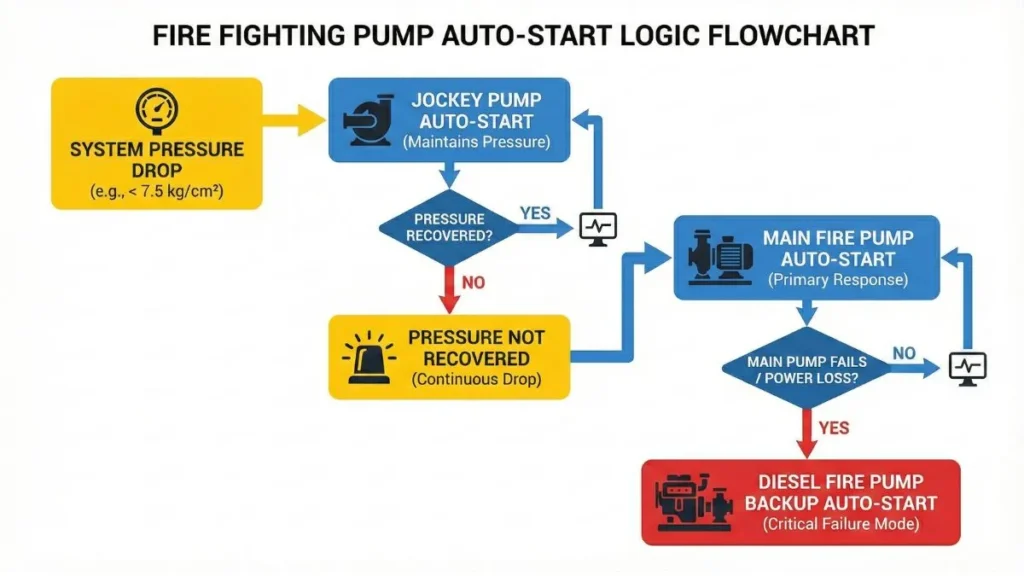
Fire emergency में system का auto-start sequence इस तरह work करता है:
- pressure fall → Jockey Pump auto-start
- pressure recover न हो → Main Electric Pump auto-start
- power failure होने पर → Diesel Pump auto-start
अगर jockey pump step-1 सही perform न करे, तो system यह पहचान नहीं पाएगा कि pressure fall leakage से हुआ है या actual fire demand से।
NFPA standards में jockey pump को fire pump controller logic का critical automation component बताया गया है:
NFPA – Fire Protection Standards (Official Source)
Industry Case Examples
Industrial audits में jockey pump failure से कई major issues सामने आए हैं, जैसे:
- Auto-start failure → main pump बार-बार run होने लगा
- leakage undetected → hydrant pressure mock drill में fail
- controller fault → sprinkler zone में unstable pressure
- diesel pump unnecessary start → battery drain व overheating risk
ऐसी failures सीधे fire safety audit score को प्रभावित करती हैं।
Fire system components और water distribution behaviour समझने के लिए यह guide पढ़ें:
Fire Hydrant Valve – Types, Working & Installation Details
Jockey Pump Working Principle
The Jockey Pump is a small, fast-start pump that maintains system pressure in the fire-water network. इसका काम minor pressure drops को compensate करके main fire pump को बार-बार start होने से रोकना है।
Pressure Drop → Auto Start → Pressure Recovery → Auto Stop
System pressure जब jockey pump के cut-in point से नीचे जाता है, तो pump तुरंत start होता है और pressure restore करके cut-out level पर बंद हो जाता है।
- Pressure Drop: leakage / valve seepage / thermal effect के कारण होता है
- Auto Start: pressure switch jockey pump को activate करता है
- Pressure Recovery: system को designed pressure तक वापस लाता है
- Auto Stop: target pressure पहुँचते ही pump रुक जाता है
Jockey pump pressure stability का असर firefighting response पर भी पड़ता है — extinguisher types और उनका इस्तेमाल जानने के लिए देखें:
ABC Type Fire Extinguisher – Uses, Working & Safety Guide
Pressure Switch Working
Pressure switch jockey pump का सबसे important control device है। यह cut-in और cut-out pressure पर काम करता है और pump को smart automation देता है।
- Cut-in: pressure low होने पर pump ON
- Cut-out: target pressure पहुँचते ही pump OFF
- Dead-band: rapid cycling रोकने के लिए gap
- Calibration: सही सेटिंग leakage detection accuracy improve करती है
Fire network और suppression strategy को समझने के लिए extinguisher types पर यह व्यापक गाइड पढ़ें:
Fire Extinguisher Types & Uses – Complete Guide
Controller Logic
Jockey pump controller system automation, protection और fault supervision ensure करता है:
- Pressure-based automatic start/stop
- Dry-run, overload & low-voltage protection
- Cycle limit & runtime monitoring
- Main pump interaction logic
Controller alarms और frequent cycling अक्सर maintenance issue से जुड़े होते हैं — servicing और refill procedures के लिए देखें:
Fire Extinguisher Refill – Service, Cost & Process
Common Issues & Quick Troubleshooting
Jockey pump failures अक्सर system leakage या wrong pressure settings को indicate करते हैं:
- Frequent short cycling → leakage / wrong switch setting
- Continuous running → valve stuck / low pressure recovery
- Fails to start → switch fault / controller fault
- Pump runs but pressure not building → suction blockage / air in line
Jockey pump settings और fire pump automation rules अंतरराष्ट्रीय standards में documented हैं:
NFPA – Codes & Fire Protection Standards (Official Source)
Jockey Pump Pressure Setting (kg/cm²) – Correct Method
Jockey Pump का सबसे महत्वपूर्ण कार्य है system का operating pressure maintain करना। गलत pressure setting होने पर Main Fire Pump बार-बार चल सकता है या emergency में hydrant / sprinkler को पर्याप्त pressure नहीं मिल पाता।
Standard Pressure Ranges
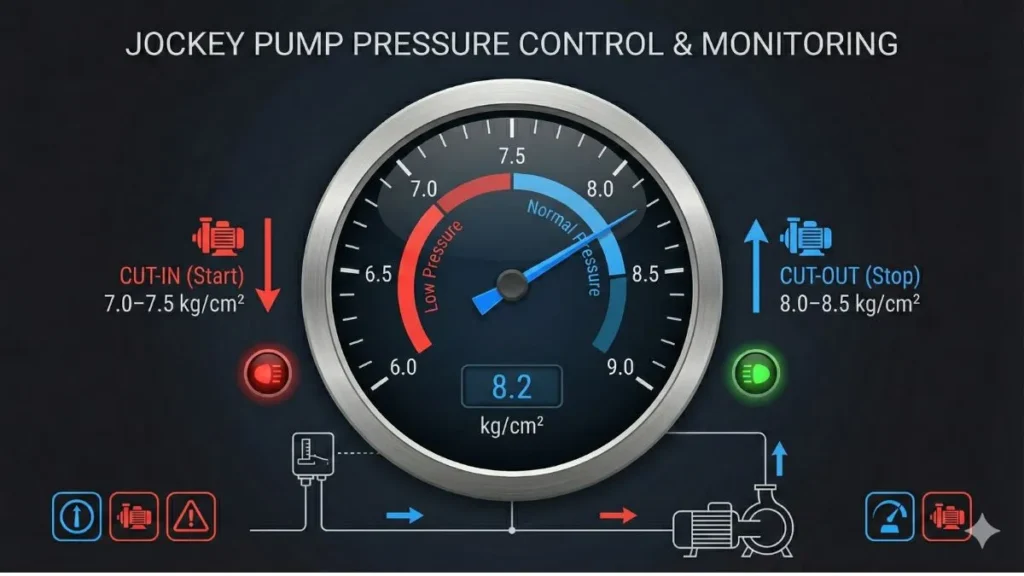
सामान्यतः Jockey Pump का pressure setting मुख्य fire pump से 1–1.5 kg/cm² अधिक रखा जाता है। Typical values:
- Cut-in (Auto Start): 7.0–7.5 kg/cm²
- Cut-out (Auto Stop): 8.0–8.5 kg/cm²
Pressure norms BIS के NBC Part-4 में दिए गए हैं:
BIS – National Building Code (Fire & Life Safety)
High-rise, Industrial & Commercial Pressure Difference
Different buildings के लिए pressure setting अलग होती है:
- High-Rise Buildings: 8–10 kg/cm²
- Commercial Buildings: 6.5–8 kg/cm²
- Industrial Premises: 8–12 kg/cm²
Sprinkler system में pressure stability कैसे काम करती है—यहाँ विस्तार में पढ़ें:
Fire Sprinkler System – Working, Components & Installation Guide
Incorrect Pressure Setting Symptoms
अगर pressure setting सही नहीं है, तो system में ये issues दिखाई देते हैं:
- Jockey Pump का बार-बार चालू-बंद होना
- Main Fire Pump का unnecessary running
- Hydrant / sprinkler line में unstable pressure
- Leakage detection false signals
Jockey Pump Components Overview
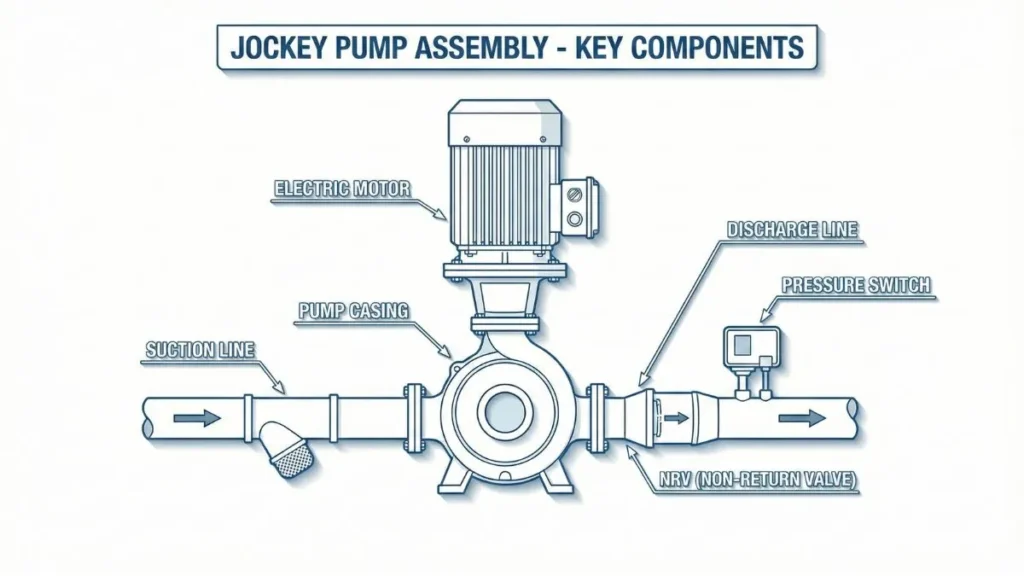
Fire Fighting System में Jockey Pump छोटे आकार का होता है, लेकिन इसके components system pressure को maintain करने और network को ready-to-run रखने में महत्वपूर्ण भूमिका निभाते हैं। यह section jockey pump के मुख्य parts और उनकी working responsibility को detail में समझाता है।
Motor
Jockey Pump में सामान्यतः small horsepower electric motor लगता है, जो low-flow operation के लिए designed होता है। यह motor continuous cycling के लिए बनाया जाता है ताकि pressure drop होते ही तुरंत pump run कर सके।
Pressure Switch
Pressure switch jockey pump का सबसे critical component है, जो cut-in (ON) और cut-out (OFF) pressure values पर operate करता है। यही छोटी pressure fluctuations detect करके pump को automatic start–stop कराता है।
- Cut-in → pressure low होने पर pump ON
- Cut-out → pressure restore होने पर pump OFF
Controller & Relays
Jockey Pump का control panel automatic operation को safe तरीके से manage करता है। Controller के अंदर relays और automation logic होते हैं जो:
- pump start/stop signals handle करते हैं
- overload & dry-run protection देते हैं
- fault supervision & indicators provide करते हैं
Controller यह ensure करता है कि pressure maintenance हमेशा consistent रहे और मुख्य fire pump के साथ कोई conflict न हो।
NRV, Bypass & Header
Jockey Pump piping में कुछ essential mechanical fittings शामिल होती हैं:
- NRV (Non-return valve): backflow रोकने के लिए
- Bypass Line: abnormal pressure condition में safety discharge के लिए
- Header Connection: system pressure equalize करने का common point
सही valve arrangement pump cycling stability को directly प्रभावित करता है।
Suction & Discharge
Pump के suction और discharge ports वह pathway हैं जो tank से पानी खींचकर network में deliver करने का काम करते हैं। इनकी proper sizing और air-tight installation जरूरी होती है, ताकि pressure drop या air-ingress जैसी problems न हों।
Jockey Pump components और installation norms की detailed मानक जानकारी यहां उपलब्ध है:
NFPA – Fire Pump Installation & Component Standards
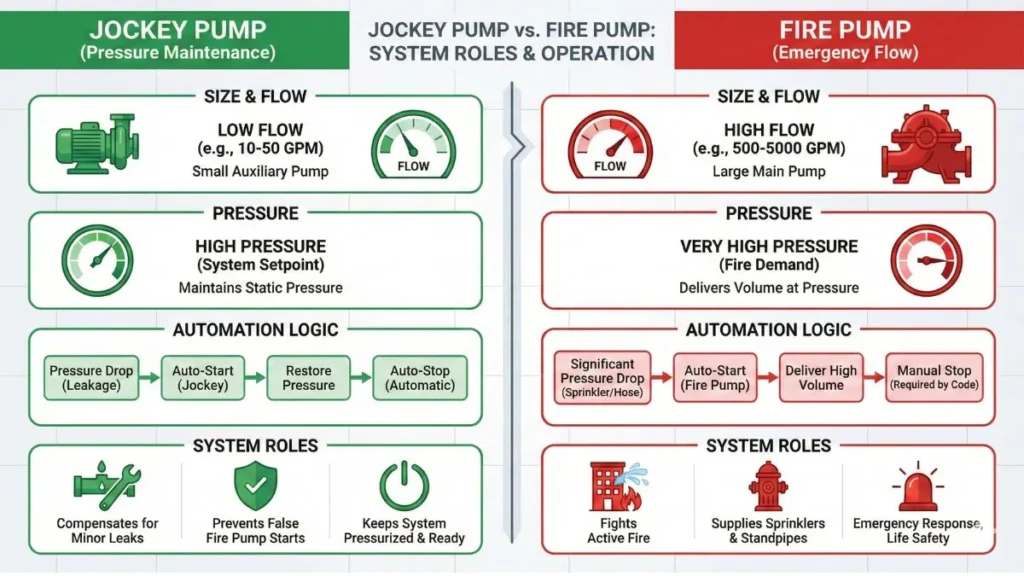
Jockey Pump vs Fire Pump – Key Differences
Fire safety system में दोनों pumps की भूमिका बिल्कुल अलग होती है। Standby pressure बनाए रखने का काम छोटा auxiliary unit करता है, जबकि मुख्य fire pump आग की स्थिति में high-flow water supply देने के लिए operate होता है। यह comparison दोनों के function और behavior को स्पष्ट समझने में मदद करता है।
Working Difference
Standby unit system में छोटे pressure variations को संभालता है, जबकि main fire pump emergency में required water flow deliver करता है।
- Standby unit → pressure correction
- Main Fire Pump → fire suppression flow
Pressure & Flow Difference
Standby pump कम flow और moderate pressure पर चलता है, जबकि मुख्य fire pump significantly higher pressure और पानी का बड़ा volume produce करता है।
- Standby pump → low flow
- Main pump → high flow
Auto Start Logic Difference
Automation logic भी दोनों units के लिए अलग होता है:
- छोटा pressure drop → standby pump auto-start
- ज्यादा pressure drop → main electric pump start
- Power failure → diesel-driven fire pump start
Cost & Maintenance Difference
छोटे size और light-duty operation की वजह से standby unit की maintenance cost काफी कम होती है, जबकि बड़े engine/motor वाले primary fire pump की maintenance comparatively higher होती है।
- Standby unit → low running cost
- Main fire pump → higher mechanical + electrical maintenance
Comparison Table – Jockey Pump vs Fire Pump
| Parameter | Jockey Pump (हिंदी में) | Fire Pump (हिंदी में) |
|---|---|---|
| Purpose | System में standby pressure बनाए रखना और छोटी leakages को compensate करना | आग लगने पर hydrant व sprinkler को high-flow supply देना |
| Flow Output | बहुत कम flow — केवल pressure stabilize करने हेतु | बहुत अधिक flow — fire demand पूरी करने के लिए |
| Auto Start Condition | हल्का pressure drop होते ही start | ज्यादा pressure drop होने पर fire demand समझकर start |
| System Role | Pipeline को हमेशा ready-pressure पर बनाए रखना | Actual fire emergency में bulk water supply सुनिश्चित करना |
| Motor/Engine Size | छोटा motor (कम HP) | बड़ा motor या diesel engine (high HP) |
| Maintenance Cost | कम maintenance और कम खर्च | ज्यादा maintenance और cost ऊँची |
| Operation Frequency | बार-बार operate होता है (pressure stabilize करने हेतु) | कभी-कभार चलता है (fire, mock drill या monthly testing) |
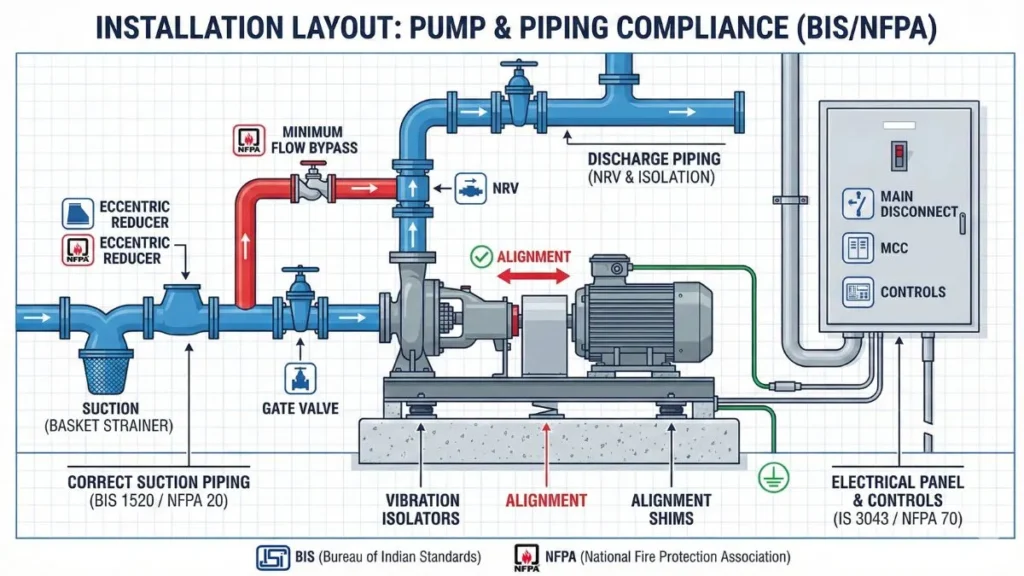
Jockey Pump Installation Requirements (IS / NFPA Based)
Jockey Pump installation fire pump system की reliability और automatic pressure control सही रखने के लिए बेहद महत्वपूर्ण है। नीचे IS Codes (IS 15301, NBC Part-4) और NFPA-20 की installation guidelines के आधार पर simplified requirements दी गई हैं।
Suction Conditions
Jockey Pump का suction arrangement smooth water flow और cavitation-free working सुनिश्चित करने के लिए specific rules follow करता है:
- Same suction source required — main fire pump & jockey pump का suction tank common होना चाहिए
- Suction line में कोई obstruction, strainer clogging या air leak नहीं होना चाहिए
- Pipe size minimum **50 mm** (NFPA recommended) या system design अनुसार
- Suction pipe हमेशा **flooded condition** में होना चाहिए (no negative suction)
Jockey Pump का consistent pressure sprinkler activation reliability को directly impact करता है — sprinkler working यहाँ detail में समझें:
Fire Sprinkler System – Working, Components & Installation Guide
NRV & Bypass Arrangement
Correct check-valve (NRV) arrangement jockey pump को back-pressure और reverse flow से protect करता है।
- Discharge line पर **NRV + isolation valve** mandatory होता है
- Bypass line system pressure stabilization के लिए use किया जाता है
- NRV orientation हमेशा flow direction के अनुसार होना चाहिए
- Hydrant/sprinkler header से connection केवल dedicated line से होना चाहिए
NFPA 20 स्पष्ट कहता है कि jockey discharge को main fire pump discharge header से ऊपर connect किया जाना चाहिए ताकि false backflow avoid हो।
Electrical Requirements
Jockey Pump electrically एक **independent starter panel** से operate होना चाहिए। Key requirements:
- Dedicated MCB/MCCB + overload protection
- Correct earthing as per IS 3043
- Auto-start pressure switch wiring properly shielded हो
- Dry-run protection NFPA में optional लेकिन India में advisable है
- Panel पर indicators — ON, Auto, Fault, Low Pressure
Detailed installation and performance requirements यहाँ पढ़े:
NFPA-20 – Fire Pump Installation Standard
BIS – IS 15301: Fire Pump Performance Requirements
IS Code References
भारत में jockey pump installation इन Indian standards के अनुसार किया जाता है:
- IS 15301: Fire Pump Installation & Performance
- NBC Part 4: Fire & Life Safety Guidelines
- IS 15579: Hydrant system design requirements
- IS 7092: Electrical safety for motor installations
इन सभी standards का common objective — stable pressure maintenance + reliable fire pump auto-start sequence.
Jockey Pump Testing Procedure (Step-by-Step)
Jockey Pump testing fire system की pressure reliability verify करने के लिए आवश्यक है। Testing यह confirm करती है कि pump सही time पर start होता है, pressure recover करता है और system को standby-ready रखता है।
Pressure Drop Simulation
Testing की शुरुआत system pressure को manually simulate करके की जाती है। यह जांचने के लिए कि jockey pump cut-in pressure पर सही तरह से activate होता है।
- Discharge header पर एक hydrant valve हल्का खोलकर pressure कम करें
- Pressure gauge observe करें — drop धीरे-धीरे होना चाहिए
- Pressure जब set cut-in level पर पहुंचे → pump auto-start होना चाहिए
Auto-Start Timing
Auto-start timing fire pump automation का सबसे critical part है। Jockey Pump को pressure drop detect करते ही **2–5 सेकंड के अंदर** start होना चाहिए।
- Stopwatch से pump start होने का exact delay measure करें
- Delay ज्यादा हो तो pressure switch calibration check करें
- Controller wiring looseness भी delay का common cause है
Pressure Recovery Validation
Auto-start के बाद pump को system pressure **cut-out pressure** तक smoothly recover करना चाहिए। यह confirm करता है कि suction, discharge और pump RPM सही हैं।
- Pressure recovery graph smooth होना चाहिए (no fluctuation)
- Cut-out level पर पहुँचते ही pump auto-stop हो जाना चाहिए
- Recovery बहुत slow होने पर suction blockage या motor weakness possible है
Common Mistakes During Testing
Testing के दौरान कुछ common errors pump की performance को गलत दिखा देते हैं। इनसे बचना जरूरी है:
- Hydrant valve को extra open कर देना → sudden pressure drop
- Pressure switch dead-band गलत set करना → pump बार-बार ON/OFF
- Suction air leak detect न करना → slow recovery / false alarm
- Controller की wiring properly tighten न होना
- Pressure gauge calibration outdated होना
Troubleshooting – Common Jockey Pump Problems
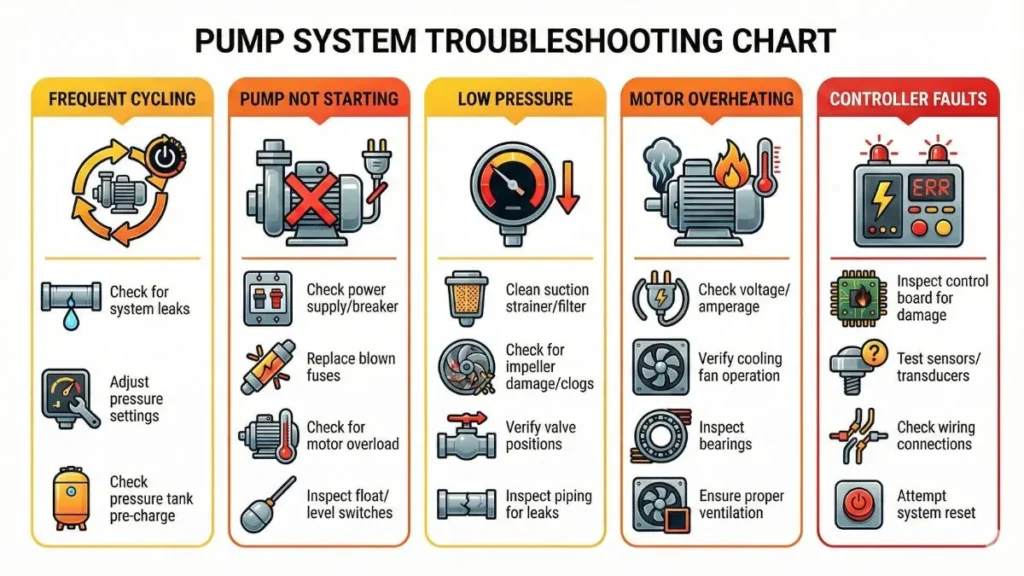
Jockey Pump fire fighting system में pressure stability बनाये रखने का सबसे महत्वपूर्ण हिस्सा है। गलत pressure setting, leakage या controller fault के कारण jockey pump कई बार गलत तरीके से operate होने लगता है। यह section सबसे common problems और उनके practical solutions को आसान भाषा में समझाता है।
1) Jockey Pump बार-बार चालू होना (Frequent Short Cycling)
अगर pump बिना जरूरत बार-बार चालू और बंद हो रहा है, तो यह system में pressure drop या leakage का संकेत है।
- Pipeline में minor leakage मौजूद है
- Pressure switch गलत calibrated है
- NRV ठीक से seal नहीं कर रहा
- Sprinkler drop/small valve seepage
Solution:
- Pressure switch cut-in / cut-out values को reset करें
- NRV leakage test करें
- Pipeline leakage smoke/pressure test करें
Hydrant network में pressure loss कैसे होता है—यहाँ detail में जानें:
Fire Hydrant Valve – Types, Working & Installation Guide
2) Pump start नहीं हो रहा
यदि pressure drop होने पर भी Jockey Pump auto-start नहीं कर रहा, तो कारण electrical या controller fault हो सकता है।
- Pressure switch respond नहीं कर रहा
- Relay / contactor burnt या jam
- Control fuse blown
- Motor winding fault
Solution:
- Pressure switch continuity test
- Control fuse replacement
- Contactor polishing / replacement
- Motor insulation test (meggering)
Sprinkler network में pressure sensing कैसे काम करता है—diagram सहित समझें:
Fire Sprinkler System – Working, Sensors & Installation
3) Pressure drop issue
अगर system pressure बार-बार गिर रहा है, तो इसका मतलब है कि jockey pump pressure maintain नहीं कर पा रहा।
- Pipeline leakage
- NRV reverse seepage
- Suction line blockage
- Air trapped in line
Solution:
- Hydrant network leakage test
- NRV servicing / replacement
- Air venting
- Suction strainer cleaning
4) Motor overheating
Motor गर्म होना maintenance के लिए खतरे की घंटी है। इसका सीधा कारण है overload या continuous running।
- Frequent start-stop cycles
- Overload setting गलत
- Bearings jam
- Internal winding heat buildup
Solution:
- Overload relay setting adjust करें
- Bearing lubrication
- Continuous running का root-cause fix करें
5) Battery / Controller Logic Issues
Controller वह device है जो jockey pump को intelligent automation देता है। Controller fault होने पर पूरा system unstable हो जाता है।
- Low battery backup
- Auto-manual toggle fault
- Dry-run protection activate होना
- Relay chatter / loose wiring
Solution:
- Battery charging test
- Wiring tightening
- Relay replacement
- Controller calibration
Jockey Pump controller logic और troubleshooting norms NFPA में documented हैं:
NFPA – Fire Protection Codes & Standards (Official Source)
Quick Inspection Checklist
- Pressure switch cut-in / cut-out values verify करें
- NRV leakage test करें
- Pipeline pressure hold test
- Contactor & relay health check
- Motor ampere reading note करें
Maintenance Checklist for Jockey Pump (Weekly / Monthly / Annual)
Jockey Pump का सही maintenance fire fighting system की reliability सुनिश्चित करता है। यह pump system pressure को स्थिर रखने और leakage detect करने की वजह से regular maintenance schedule का सबसे महत्वपूर्ण हिस्सा माना जाता है।
Hydrant network में pressure behaviour कैसे काम करता है—यहाँ diagram सहित समझें:
Fire Hydrant Valve – Types, Working & Installation Guide
Weekly Maintenance Checklist
हर सप्ताह यह basic checks करने चाहिए:
- Jockey Pump का **auto-start और auto-stop** check करें
- Pressure gauge reading verify करें
- Cut-in / Cut-out pressure values observe करें
- Motor से unusual sound या vibration check करें
- Controller panel normal status में होना चाहिए
Monthly Maintenance Checklist
हर महीने थोड़ा detailed inspection किया जाता है:
- Pressure switch calibration check करें
- NRV (Non-return valve) leakage test
- Suction line blockage / air-entry test
- Motor ampere reading record करें
- Control wiring tightening और relay condition check करें
Annual Maintenance Checklist
साल में एक बार यह performance-based tests करना आवश्यक है:
- Complete inspection of pressure switch calibration
- NRV replacement / servicing
- Suction strainer cleaning
- Motor insulation test (megger test)
- Jockey pump performance test (pressure recovery speed)
- Piping leakage pressure-hold test (full line test)
AMC Documentation (Record Keeping)
Annual Maintenance Contract (AMC) में jockey pump से जुड़े सभी records maintain करना Fire Audit और Fire NOC compliance के लिए बेहद आवश्यक है।
- Weekly test logbook entries
- Monthly inspection sheets
- Annual performance test reports
- Pressure switch calibration certificates
- NRV servicing / replacement records
- Motor health & megger test report
Maintenance Summary Table (Weekly / Monthly / Annual)
| Maintenance Type | Checklist (हिंदी में) |
|---|---|
| Weekly |
• Auto-start / auto-stop test • Pressure reading verify • Pump noise & vibration check • Controller panel status check |
| Monthly |
• Pressure switch calibration • NRV leakage test • Suction line blockage check • Motor ampere reading log • Relay & wiring inspection |
| Annual |
• Megger test (motor insulation) • Jockey pump performance test • Suction strainer cleaning • Calibration certificate update • Pipeline pressure-hold test |
| AMC Documentation |
• Logbook entries • Monthly checklists • Annual test certificates • NRV & switch servicing records |
Real-Life Failure Case Studies (India)
भारत में fire safety audits के दौरान Jockey pump failures कई बार major safety gaps के रूप में सामने आए हैं। नीचे तीन ऐसे practical case studies दिए गए हैं जो Fire NOC, hydrant performance और system readiness पर बड़ा प्रभाव डालते हैं।
Hydrant line पर pressure drop क्यों आता है और उसका impact क्या होता है — यह detail यहाँ समझें:
Fire Hydrant Valve – Types, Working & Installation Guide
Case Study 1 – Jockey Pump Not Working → Main Pump Delayed
Delhi-NCR की एक high-rise commercial building में audit के दौरान पाया गया कि Jockey Pump बिल्कुल भी start नहीं हो रहा था। Pressure drop होते ही पहले step में jockey pump को system stabilize करना चाहिए था, लेकिन ऐसा न होने से:
- Main Fire Pump का auto-start delay हो गया
- Hydrant outlet पर प्रारंभिक pressure काफी low मिला
- Mock drill में first-attack team को पानी तेजी से नहीं मिला
Case Study 2 – Leakage Undetected → False Activation
Pune की एक factory premises में pipeline में micro-leakage थी जिसे staff notice नहीं कर पाया। लेकिन jockey pump का frequent short-cycling इस leakage का संकेत था। Maintenance की कमी के कारण:
- Jockey Pump हर 3–5 मिनट में start हो रहा था
- Controller ने इसे fire-demand समझकर main pump को activate कर दिया
- Tank water level drop हुआ और system ने false alarm generate किया
Case Study 3 – Fire NOC Renewal Failure Case
Mumbai MIDC क्षेत्र में annual Fire NOC renewal के दौरान inspection में पता चला कि:
- Jockey Pump का pressure switch uncalibrated था
- Cut-in / Cut-out values डिजाइन standard से अलग पाए गए
- Weekly logbook में test records missing थे
Fire Officer ने इसे “Non-Compliance with Fire Pump Testing Requirements” माना और NOC renewal रोक दिया गया।
Compliance Requirements in India (BIS / IS / Fire NOC)
भारत में fire fighting system, विशेषकर jockey pump के लिए compliance BIS/IS codes, state fire guidelines और Fire NOC documentation पर आधारित होता है। Audit, insurance survey और Fire NOC renewal के समय इन सभी requirements की गहराई से जांच होती है।
अगर आप समझना चाहते हैं कि audit में pump readings, pressure stability और documentation कैसे verify होते हैं — यह guide पढ़ें:
Fire Safety Audit – Checklist, Process & Compliance Requirements
IS 15301 Relevance
IS 15301 में fire pumps (jockey, main & diesel) की testing, performance verification और controller logic से जुड़ी detailed requirements दी गई हैं। यह standard fire system की reliability सुनिश्चित करने का मूल आधार है।
- pump performance test parameters
- pressure acceptance values
- controller operation & automation norms
- inspection & maintenance frequency
IS 15301 और fire pump related norms BIS portal पर उपलब्ध हैं:
BIS – Indian Standards (Official Portal)
State Fire Guidelines
हर राज्य के fire department ने अपने guidelines जारी किए हैं (Maharashtra, Gujarat, Karnataka, Delhi आदि), जिनमें आमतौर पर शामिल है:
- weekly / monthly pump testing rules
- hydrant line pressure verification norms
- sprinkler pressure stability parameters
- logbook & AMC documentation check
कई राज्यों में mock drill readings भी mandatory होती हैं। अगर jockey pump बार-बार cycle करता है, तो इसे system instability remark दिया जाता है।
Fire NOC Documentation
Fire NOC renewal के समय अधिकारी jockey pump performance, pressure stability और control panel records को verify करते हैं। आमतौर पर यह दस्तावेज़ मांगे जाते हैं:
- Weekly / Monthly Test Logbook
- Annual Pressure & Flow Test Report
- Jockey Pump Cut-in / Cut-out Readings
- Pump Room AMC Certificate & Service Records
- Layout & Compliance Checklist
यदि required test missing हों या jockey pump बार-बार चालू-बंद हो रहा हो, तो Fire NOC “with observation” या “rejection” तक हो सकता है।
Frequently Asked Questions
Jockey Pump का मुख्य उद्देश्य क्या होता है?
Jockey Pump fire network में लगातार stable pressure बनाए रखता है ताकि main fire pump बार-बार start न हो और emergency में तुरंत operate कर सके।
Jockey Pump कितने pressure पर चालू और बंद होता है?
Typical settings:
Cut-in: 7.0–7.5 kg/cm²
Cut-out: 8.0–8.5 kg/cm²
ये building type और design pressure पर depend करता है।
क्या jockey pump के failure से main fire pump भी प्रभावित होता है?
हाँ। अगर jockey pump काम न करे तो system pressure गिरता रहता है, जिससे main fire pump बार-बार run हो सकता है या emergency में delay हो सकता है।
Jockey Pump बार-बार चालू-बंद क्यों होता है?
इसके कारण हो सकते हैं
:– pipeline leakage
– wrong pressure switch setting
– NRV leakage
– air trap या suction issue
Fire emergency में jockey pump क्या करता है?
Emergency में पहला response jockey pump देता है। अगर pressure recover नहीं होता तो system main fire pump को auto-start signal देता है।
Jockey Pump और Main Fire Pump में क्या अंतर है?
Jockey Pump सिर्फ pressure maintain करता है, जबकि main fire pump actual आग लगने पर high flow और high pressure देता है।
क्या jockey pump का size तय करने के लिए कोई IS/NFPA guideline है?
हाँ, NBC Part-4, IS 15301 और NFPA 20 jockey pump sizing, pressure setting और installation norms देते हैं।
कितने समय में jockey pump testing करनी चाहिए?
Recommended:
– Weekly: auto-start test
– Monthly: pressure recovery test
– Yearly: full system audit + calibration
Jockey Pump काम न करे तो fire NOC पर क्या असर होता है?
Fire NOC inspection में jockey pump readiness critical parameter है। Failure मिलने पर NOC renewal रोक दिया जाता है।
क्या jockey pump को diesel pump की तरह backup power चाहिए?
नहीं। यह electric-operated होता है और बहुत low HP पर चलता है। Backup need सिर्फ main fire pump को होती है।
Conclusion – Quick Takeaway
Jockey Pump fire fighting system का एक छोटा लेकिन crucial हिस्सा है। इसका काम network में constant pressure बनाए रखना और leakage जैसी छोटी समस्याओं को तुरंत पहचानकर system को हमेशा emergency-ready रखना है।
Weekly, monthly और annual testing से उसकी performance stable रहती है — खासकर pressure settings, controller logic और NRV / suction arrangement की सही functioning पूरी building की safety reliability को बढ़ाती है।
Practical advice: अगर jockey pump बार-बार चालू हो रहा है, pressure recover नहीं कर पा रहा, या main pump unnecessary चल रहा है — तो यह system imbalance का संकेत है और immediate inspection की आवश्यकता होती है।
Tip: अगली mock drill से पहले jockey pump की auto-start, pressure recovery और leakage detection जरूर verify करें।

1 thought on “7 Proven Jockey Pump Facts You Must Know (Hindi Guide)”