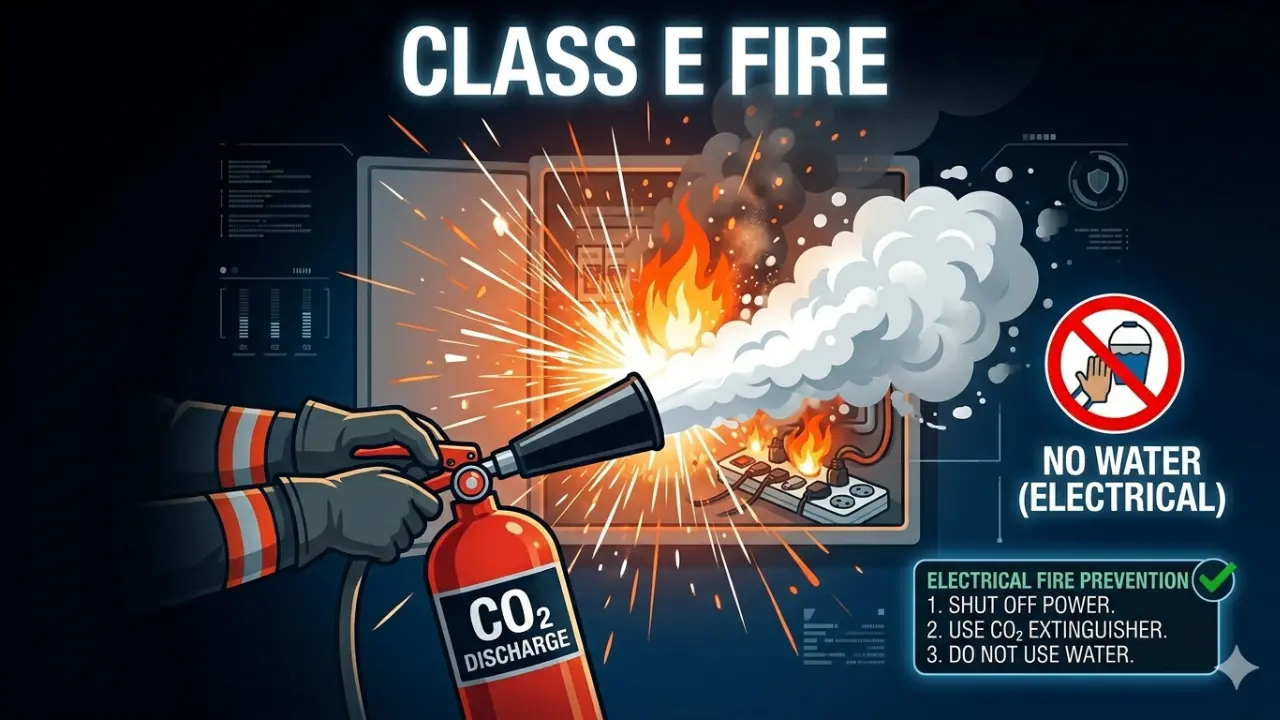
⚡ Class E Fire क्या है? (Quick Answer)
Class E Fire वह आग होती है जो Live Electrical Equipment जैसे Electrical Panel, Switchboard, MCC, Transformer, Server Rack, Wiring या अन्य Energized Electrical Systems में लगती है। हालांकि BIS IS 2190:2024 में Class E को अलग Fire Class के रूप में सूचीबद्ध नहीं किया गया है, फिर भी Electrical Fire की पहचान और सही Fire Extinguisher का चयन Fire Safety के लिए बेहद महत्वपूर्ण है। ऐसी स्थिति में बिजली की सप्लाई बंद करना और उपयुक्त CO₂ या Clean Agent Fire Extinguisher का उपयोग सबसे सुरक्षित माना जाता है।
| ⚡ Class E Fire – Quick Facts | |
|---|---|
| Fire Type | Live Electrical Equipment Fire |
| BIS Standard | IS 2190:2024 & IS 15683:2018 |
| Recommended Extinguisher | CO₂ or Clean Agent Fire Extinguisher |
| Avoid Using | Water & Foam on Live Electrical Equipment |
| Applicable Location | Electrical Panel, MCC, Transformer, Server Room, Control Room |
| Last Updated | July 2026 |
यह गाइड July 2026 में नवीनतम BIS IS 2190:2024 Fire Safety Guidelines के अनुसार अपडेट की गई है। इसमें Electrical Fire (Class E), उपयुक्त Fire Extinguisher, व्यावहारिक Fire Safety Tips और वर्तमान Industry Best Practices को शामिल किया गया है ताकि पाठकों को सटीक एवं अद्यतन जानकारी मिल सके।
Introduction: Why Understanding Class E Fire Is Important?
Class E Fire के बारे में आज भी सबसे अधिक भ्रम देखने को मिलता है। कई लोग इसे एक अलग Fire Class मानते हैं, जबकि नवीनतम BIS IS 2190:2024 के अनुसार Fire Classification में Class E को अलग श्रेणी के रूप में शामिल नहीं किया गया है। भारतीय Fire Safety Standards के बारे में आधिकारिक जानकारी के लिए Bureau of Indian Standards (BIS) देख सकते हैं। फिर भी Live Electrical Equipment में लगने वाली आग की पहचान करना और उसके लिए सही Fire Extinguisher चुनना Fire Safety का एक महत्वपूर्ण हिस्सा है।
घरों, कार्यालयों, Server Rooms, MCC Panels, Electrical Control Rooms, Transformer Areas और Industrial Plants में Electrical Faults, Short Circuits तथा Overloaded Circuits के कारण आग लगने की घटनाएँ अक्सर सामने आती हैं। ऐसी स्थिति में यदि गलत Fire Extinguisher का उपयोग किया जाए, तो Electric Shock, Equipment Damage और Fire Spread का खतरा कई गुना बढ़ सकता है।
हमारे Fire Safety अनुभव में अधिकांश Electrical Fire Incidents में शुरुआती कुछ मिनट सबसे महत्वपूर्ण होते हैं। यदि बिजली की सप्लाई तुरंत बंद कर दी जाए और सही प्रकार का CO₂ Fire Extinguisher या अन्य उपयुक्त Fire Extinguisher इस्तेमाल किया जाए, तो बड़े नुकसान से बचा जा सकता है। इसलिए प्रत्येक Fire Safety Professional, Facility Manager और सामान्य नागरिक के लिए Class E Fire की सही समझ होना आवश्यक है।
इस गाइड में आप जानेंगे कि Class E Fire वास्तव में क्या है, BIS IS 2190:2024 इसके बारे में क्या कहता है, कौन-सा Fire Extinguisher सबसे सुरक्षित है, किन सामान्य गलतियों से बचना चाहिए और Electrical Fire से जुड़े महत्वपूर्ण Fire Safety Practices क्या हैं।
🔥 BIS Fire Classes Overview (IS 2190:2024)
| Class | Fuel Type | Example | Extinguisher |
|---|---|---|---|
| A | Solid Materials | लकड़ी, कागज | Water, Foam, ABC |
| B | Flammable Liquid | पेट्रोल, तेल | Foam, CO₂, ABC |
| C | Flammable Gas | LPG, CNG | DCP (Dry Powder) |
| D | Metals | Magnesium | Special Powder |
| E* | Electrical Equipment | Panel, Wiring | CO₂, Clean Agent |
| F | Cooking Oil | Kitchen Oil | Wet Chemical |
Class E Fire — Official BIS Term है या Industry Term?
यह प्रश्न सबसे अधिक पूछा जाता है। BIS IS 2190:2024 तथा IS 15683:2018 के अनुसार Fire Classification में केवल Class A, B, C, D और F शामिल हैं। “Class E” को BIS ने अलग Fire Class के रूप में परिभाषित नहीं किया है।
फिर “Class E Fire” शब्द इतना प्रचलित क्यों है?
भारत में Fire Safety Industry, Training Institutes तथा कई पुराने Technical Documents में Class E Fire शब्द का उपयोग Live Electrical Equipment Fire को आसानी से पहचानने के लिए किया जाता है। इसी कारण यह शब्द आज भी व्यापक रूप से प्रचलित है, भले ही यह वर्तमान BIS Fire Classification का आधिकारिक हिस्सा न हो।
Electricity को Fire Class क्यों नहीं माना जाता?
Electricity स्वयं Fuel नहीं होती, बल्कि आग शुरू करने का एक Ignition Source होती है। वास्तविक आग Electrical Equipment के अंदर मौजूद Insulation, Plastic, Rubber, Cable Covering, Oil या अन्य ज्वलनशील पदार्थों में लगती है। इसलिए Fire Classification Fuel के प्रकार के आधार पर किया जाता है, न कि Electricity के आधार पर।
- ✔ BIS IS 2190:2024 में केवल Class A, B, C, D और F Fire Classes शामिल हैं।
- ✔ “Class E” आज भी Electrical Fire को समझाने के लिए Industry Convention के रूप में व्यापक रूप से उपयोग किया जाता है।
- ✔ Electrical Equipment Live होने पर सबसे पहले Power Supply बंद करना प्राथमिक सुरक्षा कदम है।
- ✔ सही Fire Extinguisher का चयन Electrical Equipment की स्थिति और Fire Risk Assessment के अनुसार किया जाना चाहिए।
हमारे Fire Safety अनुभव में अधिकांश लोग आज भी Electrical Fire को “Class E Fire” नाम से ही जानते हैं। इसलिए इस गाइड में भी यही शब्द उपयोग किया गया है, ताकि पाठकों को विषय आसानी से समझ आए। जहाँ आवश्यक है, वहाँ नवीनतम BIS IS 2190:2024 के अनुसार आधिकारिक Fire Classification भी स्पष्ट रूप से बताया गया है।
Fire Classes According to BIS IS 2190:2024
BIS IS 2190:2024 के अनुसार आग का वर्गीकरण (Fire Classification) जलने वाले पदार्थ (Fuel) के आधार पर किया जाता है। वर्तमान भारतीय मानकों में Class A, B, C, D और F Fire Classes शामिल हैं। Class E को अलग Fire Class के रूप में परिभाषित नहीं किया गया है, क्योंकि Electricity स्वयं Fuel नहीं बल्कि Ignition Source होती है।
BIS Fire Classification Table
| Fire Class | Fuel Type | Common Examples | Recommended Fire Extinguisher |
|---|---|---|---|
| Class A | Solid Combustible Materials | Wood, Paper, Cloth, Rubber | Water, Foam, ABC Dry Powder |
| Class B | Flammable Liquids | Petrol, Diesel, Paint, Solvents | Foam, CO₂, ABC Dry Powder |
| Class C | Flammable Gases | LPG, CNG, Propane, Butane | Dry Chemical Powder (DCP) |
| Class D | Combustible Metals | Magnesium, Sodium, Aluminium Powder | Special Class D Powder |
| Class E* | Live Electrical Equipment | Electrical Panels, MCC, Switchboards, Server Racks | CO₂ or Clean Agent Fire Extinguisher |
| Class F | Cooking Oils & Fats | Deep Fryers, Commercial Kitchen Oil | Wet Chemical Fire Extinguisher |
हमारे Fire Safety अनुभव में अधिकांश लोग Electrical Fire को आज भी Class E Fire कहते हैं। व्यवहारिक रूप से यह शब्द समझने में आसान है, लेकिन नवीनतम BIS IS 2190:2024 में इसे आधिकारिक Fire Class के रूप में शामिल नहीं किया गया है। Fire Extinguisher का चयन हमेशा वास्तविक Fire Risk और Equipment की स्थिति के अनुसार करना चाहिए।
*Class E केवल Industry Convention के रूप में उपयोग किया जाने वाला शब्द है। यदि Electrical Equipment अभी भी Live है, तो सबसे पहले Power Supply बंद करें और उसके बाद ही उपयुक्त CO₂ या Clean Agent Fire Extinguisher का उपयोग करें। Water या Foam Fire Extinguisher का उपयोग Live Electrical Equipment पर कभी नहीं करना चाहिए।
Which Fire Extinguisher Should Be Used for Class E Fire?
Class E Fire या Live Electrical Equipment Fire के लिए सही Fire Extinguisher का चयन सबसे महत्वपूर्ण सुरक्षा निर्णयों में से एक है। यदि Electrical Equipment अभी भी Energized (Live) है, तो ऐसा Fire Extinguisher चुनना चाहिए जो बिजली का संचालन (Electrical Conductivity) न करे और आग को सुरक्षित रूप से नियंत्रित कर सके।
Recommended Fire Extinguishers for Electrical Fire
| Fire Extinguisher | Suitable for Live Electrical Fire | Recommendation |
|---|---|---|
| CO₂ Fire Extinguisher | ✅ Yes | सबसे अधिक अनुशंसित। कोई Residue नहीं छोड़ता और Electrical Panels, Server Rooms तथा Control Rooms के लिए उपयुक्त है। |
| Clean Agent Fire Extinguisher | ✅ Yes | Electronic Equipment एवं Data Centres के लिए उत्कृष्ट विकल्प। Sensitive Equipment को नुकसान नहीं पहुँचाता। |
| ABC Dry Powder Fire Extinguisher | ✅ Yes | Electrical Fire पर उपयोग किया जा सकता है, लेकिन Powder Residue छोड़ता है जिससे Electronic Equipment प्रभावित हो सकते हैं। |
| Water Fire Extinguisher | ❌ No | Live Electrical Equipment पर कभी उपयोग न करें। Electric Shock का गंभीर खतरा रहता है। |
| Foam Fire Extinguisher | ❌ No | Live Electrical Fire के लिए उपयुक्त नहीं है। पहले Power Supply बंद होना आवश्यक है। |
Fire Safety Recommendation
यदि Electrical Equipment अभी भी Live है, तो सबसे पहले सुरक्षित तरीके से Power Supply Isolate करें। उसके बाद CO₂ Fire Extinguisher या Clean Agent Fire Extinguisher का उपयोग करें। सामान्य Industrial और Commercial Buildings में CO₂ Fire Extinguisher सबसे अधिक उपयोग किया जाता है क्योंकि यह आग बुझाने के बाद कोई अवशेष (Residue) नहीं छोड़ता।
यदि आप CO₂ Fire Extinguisher के कार्य सिद्धांत, उपयोग और सीमाओं के बारे में विस्तार से जानना चाहते हैं, तो हमारा CO₂ Fire Extinguisher Guide भी पढ़ सकते हैं।
हमारे Fire Safety अनुभव में Electrical Panels, MCC Rooms, Transformer Areas और Server Rooms में CO₂ Fire Extinguisher सबसे अधिक प्रभावी पाया गया है क्योंकि यह Electrical Equipment को अतिरिक्त नुकसान पहुँचाए बिना आग को नियंत्रित करने में सहायता करता है। हालांकि, Fire Extinguisher का चयन हमेशा Fire Risk Assessment और लागू BIS Standards के अनुसार ही किया जाना चाहिए।
यदि Electrical Equipment से चिंगारियाँ निकल रही हों, धुआँ तेजी से बढ़ रहा हो या High Voltage System शामिल हो, तो स्वयं आग बुझाने का प्रयास न करें। तुरंत क्षेत्र खाली करें, Power Supply बंद करवाएँ और Fire Emergency Number (101/112) पर सूचना दें। केवल प्रशिक्षित व्यक्ति ही High Voltage Electrical Fire में हस्तक्षेप करें।
Common Mistakes While Handling a Class E Fire
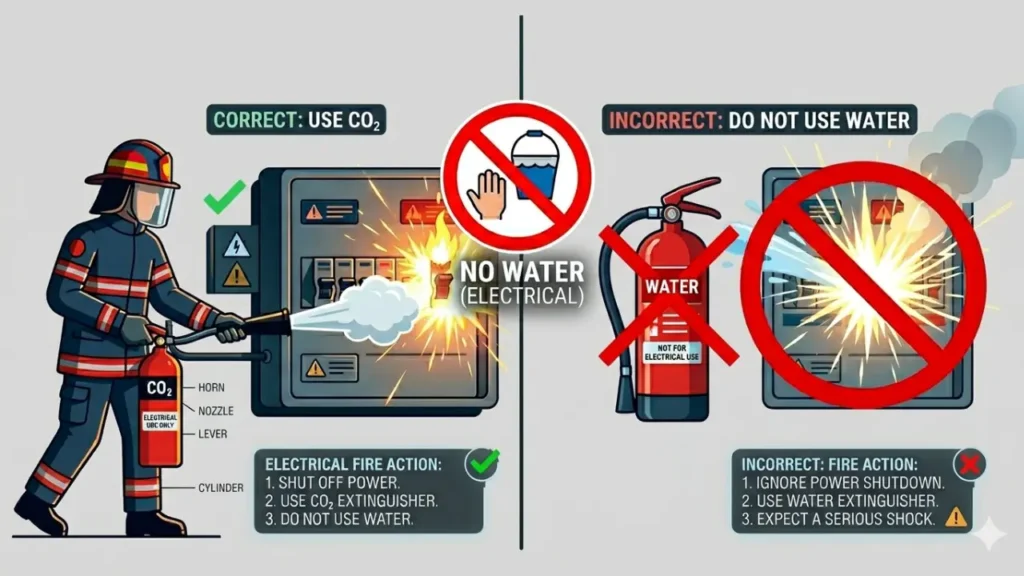
Class E Fire (Electrical Fire) के दौरान घबराहट या गलत निर्णय गंभीर दुर्घटना का कारण बन सकते हैं। हमारे Fire Safety अनुभव में अधिकांश Electrical Fire Incidents में आग से अधिक नुकसान गलत Firefighting Method अपनाने से होता है। नीचे दी गई गलतियों से हमेशा बचना चाहिए।
इन सामान्य गलतियों से बचें
- Live Electrical Equipment पर Water Fire Extinguisher का उपयोग करना: पानी बिजली का अच्छा चालक है और इससे Electric Shock का गंभीर खतरा हो सकता है।
- Power Supply बंद किए बिना Firefighting शुरू करना: यदि सुरक्षित रूप से संभव हो, तो सबसे पहले Electrical Supply को Isolate करें और उसके बाद ही Fire Extinguisher का उपयोग करें।
- गलत Fire Extinguisher चुनना: Live Electrical Fire के लिए CO₂ या उपयुक्त Clean Agent Fire Extinguisher का उपयोग करें।
- बहुत पास जाकर आग बुझाने की कोशिश करना: सुरक्षित दूरी बनाए रखें और Fire Extinguisher निर्माता द्वारा सुझाई गई Discharge Distance का पालन करें।
- धुआँ अधिक होने पर भी अंदर रुकना: Electrical Fire का धुआँ विषैला हो सकता है। यदि Visibility कम हो जाए, तो तुरंत सुरक्षित स्थान पर जाएँ।
- Electrical Panel या Equipment को हाथ से छूना: Fire के दौरान Metal Parts Live हो सकते हैं। बिना पुष्टि किए किसी भी Equipment को न छुएँ।
- छोटी आग को नज़रअंदाज़ करना: Electrical Fault से शुरू हुई छोटी आग कुछ ही मिनटों में बड़े Fire Incident में बदल सकती है।
- Fire Brigade को देर से सूचना देना: यदि आग तेजी से फैल रही हो, तो स्वयं बुझाने की कोशिश में समय न गँवाएँ। तुरंत 101 या 112 पर कॉल करें।
यदि आप Electrical Fire के लिए उपयुक्त Fire Extinguisher के बारे में विस्तार से जानना चाहते हैं, तो हमारा CO₂ Fire Extinguisher Guide और Fire Extinguisher Types and Uses Guide भी पढ़ सकते हैं।
हमारे Fire Safety अनुभव में Electrical Panel, MCC Room और Server Room में लगने वाली अधिकांश आग शुरुआती अवस्था में नियंत्रित की जा सकती है, यदि सही Fire Extinguisher उपलब्ध हो और कर्मचारियों को उसका प्रशिक्षण दिया गया हो। नियमित Inspection और Preventive Maintenance भी Electrical Fire की संभावना को काफी कम कर देते हैं.
यदि High Voltage Equipment, Transformer, Battery Energy Storage System (BESS) या EV Battery में आग लगी हो, तो स्वयं Firefighting करने का प्रयास न करें। क्षेत्र को तुरंत खाली करें, Power Supply अलग करवाएँ और प्रशिक्षित Fire Response Team या Fire Brigade की सहायता लें।
Emergency Response: What to Do During a Class E Fire?
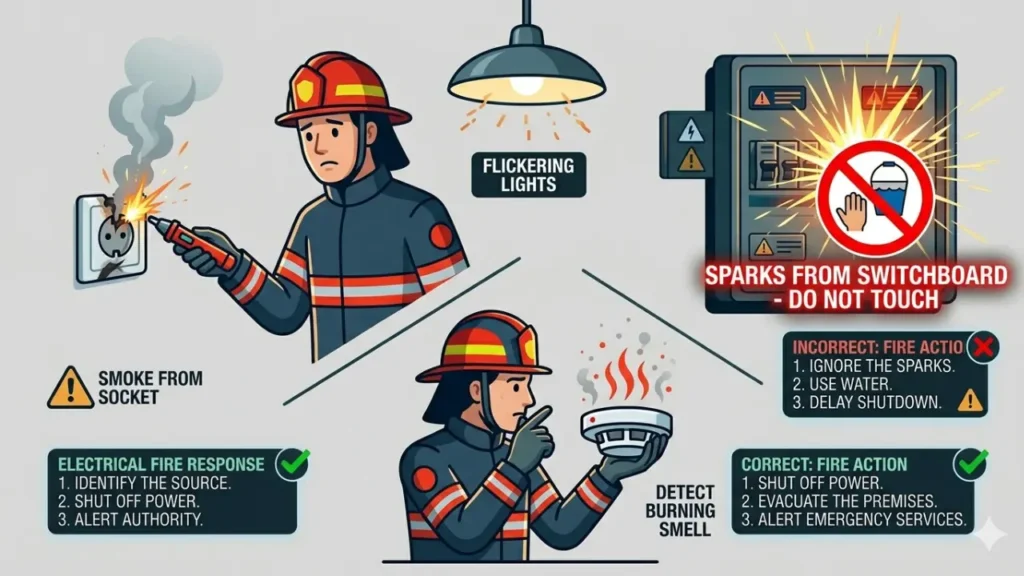
यदि Class E Fire (Live Electrical Equipment Fire) लग जाए, तो घबराने के बजाय सही क्रम में कार्रवाई करना सबसे महत्वपूर्ण होता है। शुरुआती कुछ मिनटों में लिया गया सही निर्णय Electric Shock, Fire Spread और Equipment Damage जैसी गंभीर घटनाओं को रोक सकता है।
- शांत रहें और स्थिति का आकलन करें: घबराकर दौड़ने या गलत Fire Extinguisher का उपयोग करने से दुर्घटना और बढ़ सकती है।
- यदि सुरक्षित हो तो Power Supply बंद करें: Main Switch, MCB या Isolator की सहायता से Electrical Supply को Disconnect करें।
- यदि बिजली बंद नहीं की जा सकती, तो Live Equipment से सुरक्षित दूरी बनाए रखें और Water या Foam Fire Extinguisher का उपयोग बिल्कुल न करें।
- CO₂ या Clean Agent Fire Extinguisher का उपयोग करें: यदि आग शुरुआती अवस्था (Incipient Stage) में है और ऐसा करना सुरक्षित है।
- PASS Method अपनाएँ: Safety Pin निकालें (Pull), आग के आधार पर Aim करें, Handle दबाएँ (Squeeze) और Side-to-Side Sweep करें।
- 30–60 सेकंड में आग नियंत्रित न हो, तो तुरंत सभी लोगों को सुरक्षित स्थान पर ले जाएँ और Fire Area खाली कर दें।
- तुरंत Fire Emergency Number (101/112) पर कॉल करें और Fire Brigade को सही Location तथा Fire Type की जानकारी दें।
- आग बुझने के बाद भी Power Supply चालू न करें। किसी Qualified Electrician या अधिकृत Maintenance Team से पूरा निरीक्षण करवाने के बाद ही सिस्टम को दोबारा चालू करें।
यदि आपको CO₂ Fire Extinguisher के सही उपयोग के बारे में विस्तार से जानना है, तो हमारा CO₂ Fire Extinguisher Guide भी पढ़ सकते हैं।
भारत में आपदा एवं आपातकालीन तैयारी से संबंधित आधिकारिक दिशा-निर्देशों के लिए National Disaster Management Authority (NDMA) की वेबसाइट देख सकते हैं।
हमारे Fire Safety अनुभव में अधिकांश Electrical Fire Incidents में शुरुआती 1–2 मिनट सबसे महत्वपूर्ण होते हैं। यदि Power Supply समय पर Isolate कर दी जाए और सही Fire Extinguisher का उपयोग किया जाए, तो बड़े नुकसान और उत्पादन रुकने (Downtime) से बचा जा सकता है।
यदि Electrical Fire Transformer, High Voltage Equipment, Battery Energy Storage System (BESS), EV Battery या बड़े Electrical Panel तक फैल चुकी हो, तो स्वयं Firefighting करने का प्रयास न करें। तुरंत क्षेत्र खाली करें, सुरक्षित दूरी बनाए रखें और Fire Brigade तथा अधिकृत Electrical Team की सहायता लें।
How to Prevent Class E Fire? (Electrical Fire Prevention Tips)
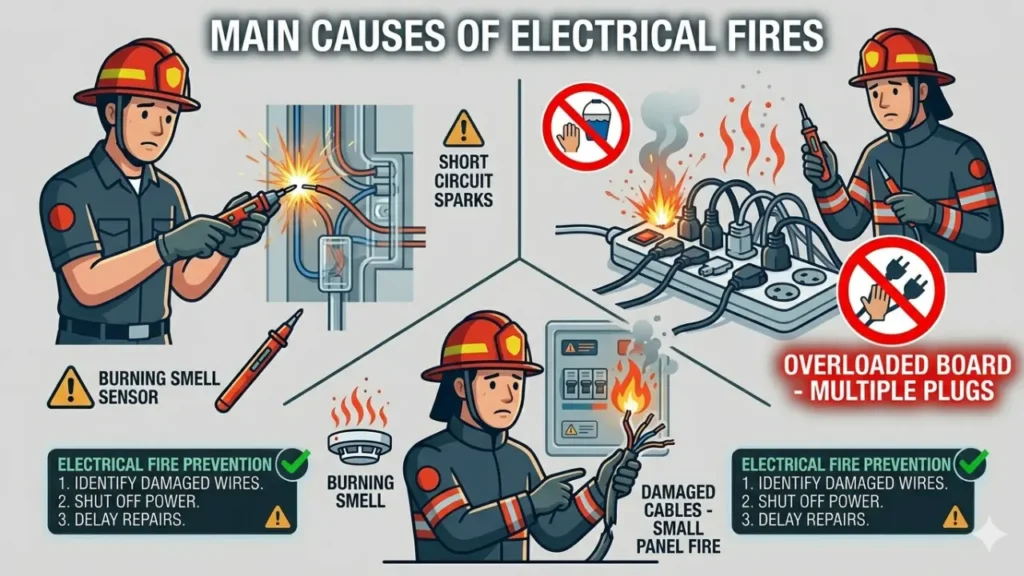
Class E Fire (Electrical Fire) की अधिकांश घटनाओं को उचित Electrical Maintenance, नियमित Inspection और सुरक्षित कार्यप्रणालियों (Safe Work Practices) द्वारा रोका जा सकता है। हमारे Fire Safety अनुभव में Electrical Fires अक्सर छोटी लापरवाहियों जैसे Overloading, Loose Connections या खराब Wiring से शुरू होती हैं। नीचे दिए गए Practical Tips घर, कार्यालय और औद्योगिक प्रतिष्ठानों में Electrical Fire Risk को कम करने में मदद करेंगे।
🏠 Residential Electrical Fire Safety Tips
- केवल BIS/ISI Marked Electrical Appliances, Wires और Extension Boards का उपयोग करें।
- Extension Board या Multi Plug Socket में Overloading न करें।
- MCB, RCCB/ELCB तथा Distribution Board की समय-समय पर जाँच करवाएँ।
- Damaged Wires, Loose Switches और Sparking Outlets को तुरंत बदलें।
- High Power Appliances (Heater, Iron, AC आदि) के लिए अलग उचित Circuit का उपयोग करें।
- बच्चों की पहुँच से Electrical Equipment और खुले Wires को दूर रखें।
🏭 Industrial Electrical Fire Safety Tips
- Electrical Panels, MCCs और Transformers की नियमित Preventive Maintenance करें।
- Thermographic Inspection द्वारा Hotspots और Overheating Components की पहचान करें।
- Proper Earthing एवं Bonding System बनाए रखें।
- Electrical Load Balancing सुनिश्चित करें ताकि किसी Circuit पर अत्यधिक Load न आए।
- नियमित Fire Safety Audit और Electrical Safety Inspection करवाएँ।
- Electrical Panels के पास उपयुक्त CO₂ Fire Extinguisher उपलब्ध रखें।
- कर्मचारियों को Electrical Fire Response एवं PASS Method का नियमित प्रशिक्षण दें।
यदि आप Electrical Fire के लिए उपयुक्त Fire Extinguisher के बारे में अधिक जानकारी चाहते हैं, तो हमारा CO₂ Fire Extinguisher Guide और Fire Extinguisher Types and Uses Guide भी पढ़ सकते हैं।
Electrical Installation, Earthing, Electrical Safety Standards तथा Power System Safety से संबंधित आधिकारिक दिशा-निर्देशों के लिए Central Electricity Authority (CEA) की आधिकारिक वेबसाइट देख सकते हैं।
हमारे Fire Safety अनुभव में अधिकांश Class E Fire घटनाओं की शुरुआत Loose Connections, Overloaded Circuits, Poor Maintenance और Overheated Electrical Panels से होती है। नियमित Inspection, Thermographic Scanning, Electrical Testing तथा समय पर Preventive Maintenance अपनाकर ऐसी अधिकांश घटनाओं को प्रभावी रूप से रोका जा सकता है।
यदि किसी Electrical Equipment से बार-बार Burning Smell, Sparking, Overheating या Smoke दिखाई दे, तो उसे तुरंत बंद करें और Qualified Electrician से जाँच करवाएँ। ऐसी चेतावनियों को नज़रअंदाज़ करना भविष्य में गंभीर Class E Fire का कारण बन सकता है।
Frequently Asked Questions (FAQs)
1. Class E Fire क्या है?
Class E Fire वह आग है जो Live Electrical Equipment जैसे Electrical Panel, Switchboard, MCC, Server Room या Wiring में लगती है। हालांकि BIS IS 2190:2024 में Class E को अलग Fire Class के रूप में परिभाषित नहीं किया गया है, लेकिन Electrical Fire को समझाने के लिए यह शब्द आज भी व्यापक रूप से उपयोग किया जाता है।
2. क्या BIS IS 2190:2024 में Class E Fire शामिल है?
नहीं। BIS IS 2190:2024 के अनुसार Fire Classes केवल A, B, C, D और F हैं। Class E आधिकारिक Fire Class नहीं है, बल्कि Electrical Fire के लिए प्रचलित Industry Term है।
3. Class E Fire के लिए कौन-सा Fire Extinguisher सबसे अच्छा है?
यदि Electrical Equipment Live है, तो CO₂ Fire Extinguisher या उपयुक्त Clean Agent Fire Extinguisher सबसे सुरक्षित विकल्प माना जाता है।
4. क्या Electrical Fire पर पानी डालना सुरक्षित है?
नहीं। Live Electrical Equipment पर Water Fire Extinguisher या पानी का उपयोग करने से Electric Shock का गंभीर खतरा हो सकता है।
5. क्या ABC Fire Extinguisher का उपयोग Electrical Fire पर किया जा सकता है?
हाँ। ABC Dry Powder Fire Extinguisher Electrical Fire पर उपयोग किया जा सकता है, लेकिन यह Powder Residue छोड़ता है, जिससे संवेदनशील Electronic Equipment प्रभावित हो सकते हैं।
6. Electrical Fire लगने पर सबसे पहला कदम क्या होना चाहिए?
यदि सुरक्षित हो, तो सबसे पहले Main Switch या MCB से Power Supply बंद करें। इसके बाद ही उपयुक्त Fire Extinguisher का उपयोग करें।
7. क्या Class E Fire घरों में भी हो सकती है?
हाँ। Faulty Wiring, Overloaded Extension Boards, Damaged Appliances, Loose Connections और Short Circuit के कारण घरों में भी Electrical Fire लग सकती है।
8. Industrial Electrical Fire से कैसे बचा जा सकता है?
Regular Preventive Maintenance, Thermographic Inspection, Proper Earthing, Fire Safety Audit और Electrical Load Management अपनाकर अधिकांश Electrical Fire Incidents को रोका जा सकता है।
9. क्या Power Supply बंद होने के बाद Fire Class बदल जाती है?
Power Supply बंद होने के बाद Fire Risk का आकलन जलने वाले पदार्थ (Fuel) के आधार पर किया जाता है। ऐसी स्थिति में उपयुक्त Fire Extinguisher का चयन Fire Risk Assessment के अनुसार किया जाना चाहिए।
10. Class E Fire लगने पर Fire Brigade को कब बुलाना चाहिए?
यदि आग तेजी से फैल रही हो, High Voltage Equipment, Transformer, Battery System या बड़े Electrical Panel तक पहुँच गई हो, तो तुरंत 101 या 112 पर कॉल करें और स्वयं आग बुझाने का प्रयास न करें।
Conclusion: Understanding Class E Fire Can Save Lives
Class E Fire आज भी Electrical Fire के लिए व्यापक रूप से उपयोग किया जाने वाला शब्द है, लेकिन BIS IS 2190:2024 के अनुसार इसे आधिकारिक Fire Class के रूप में परिभाषित नहीं किया गया है। फिर भी Live Electrical Equipment में लगने वाली आग की पहचान करना, सही Fire Extinguisher का चयन करना और सुरक्षित Emergency Response अपनाना प्रत्येक व्यक्ति के लिए अत्यंत महत्वपूर्ण है।
हमारे Fire Safety अनुभव में अधिकांश Electrical Fire Incidents को शुरुआती चरण में ही नियंत्रित किया जा सकता है, यदि नियमित Electrical Maintenance किया जाए, Overloaded Circuits से बचा जाए, Power Supply समय पर Isolate की जाए और CO₂ या अन्य उपयुक्त Fire Extinguisher का सही तरीके से उपयोग किया जाए। सही जानकारी और नियमित प्रशिक्षण किसी भी Fire Safety Programme की सबसे मजबूत नींव होते हैं।
यदि आपके घर, कार्यालय, Server Room, Electrical Panel या Industrial Facility में Electrical Equipment मौजूद हैं, तो नियमित Electrical Inspection करवाएँ, कर्मचारियों को Fire Safety Training दें और उपयुक्त CO₂ Fire Extinguisher हमेशा आसानी से उपलब्ध रखें। छोटी-सी सावधानी भविष्य में बड़ी दुर्घटना को रोक सकती है।
• CO₂ Fire Extinguisher Guide
• Fire Extinguisher Types and Uses
• ABC Type Fire Extinguisher Guide
• IS 2190:2024 Complete Guide