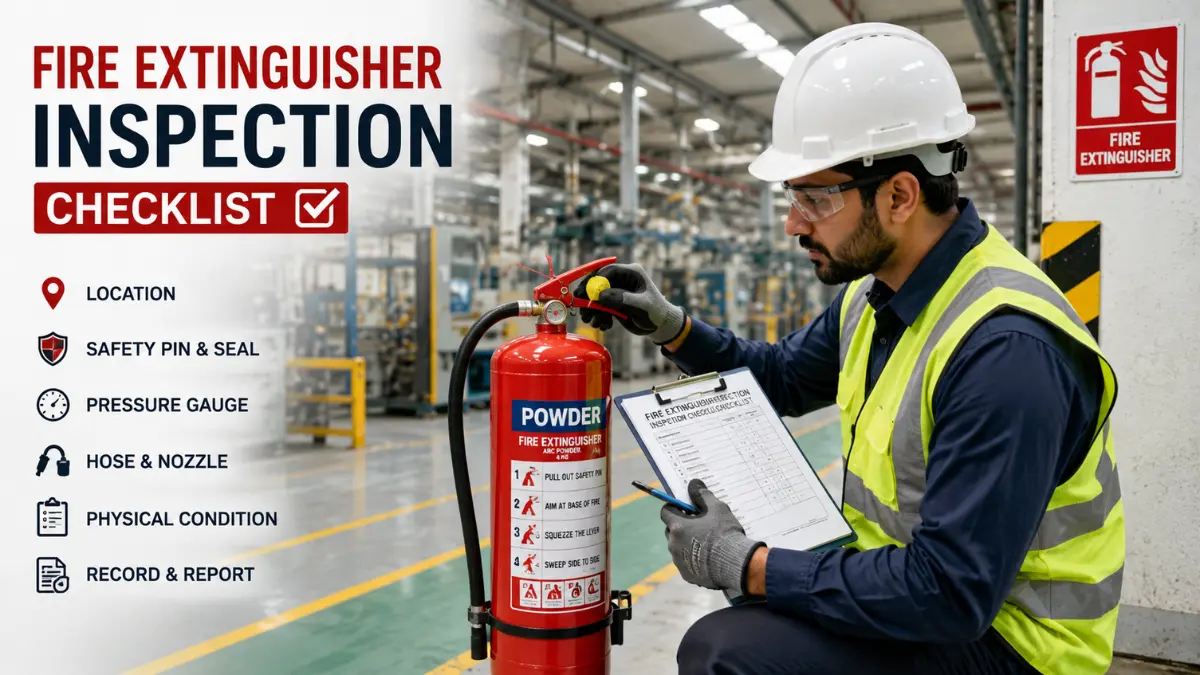
Fire Extinguisher Inspection Checklist का उपयोग यह verify करने के लिए किया जाता है कि किसी building, workplace, factory, office, school, hospital या अन्य premises में installed fire extinguishers सही location पर हैं, आसानी से accessible हैं और inspection के समय किसी स्पष्ट defect या abnormal condition से प्रभावित नहीं हैं।
भारत में portable और mobile fire extinguishers की selection, installation, maintenance और testing के लिए IS 2190:2024 एक महत्वपूर्ण reference standard है। इस guide में आप Fire Extinguisher Inspection Checklist, inspection points, periodic inspection और maintenance के बीच अंतर, inspection records तथा IS 2190:2024 Annex H Fire Extinguisher Register का practical format समझेंगे।
यदि आप Fire Safety Officer, Safety Officer, Facility Manager, Fire Technician या building management team का हिस्सा हैं, तो यह checklist inspection के दौरान आवश्यक points को systematically check और record करने में मदद कर सकती है।
Quick Answer: Fire Extinguisher Inspection में क्या Check करें?
Fire extinguisher inspection में मुख्य रूप से उसकीlocation, visibility, accessibility, operating instructions, safety pin, tamper seal, pressure/charge condition, physical condition, corrosion, leakage, hose/nozzleऔरmaintenance informationcheck की जाती है।Inspection के दौरान मिलने वालीdeficienciesको record करके आवश्यकcorrective actionलिया जाना चाहिए।
Fire Extinguisher Inspection – Practical Video Guide
नीचे दिया गया video fire extinguisher की basic visual inspection को practical तरीके से समझाता है, जिसमें pressure/gauge, safety pin, seal, body condition और accessibility जैसे महत्वपूर्ण points शामिल हैं।
Note
यह video practical visual inspection को समझने के लिए reference के रूप में दिया गया है। किसी specific inspection frequency, placement requirement या maintenance procedure के लिए अपने applicable BIS requirements, manufacturer instructions और local statutory requirements को प्राथमिकता दें।
Fire Extinguisher Inspection क्या है?
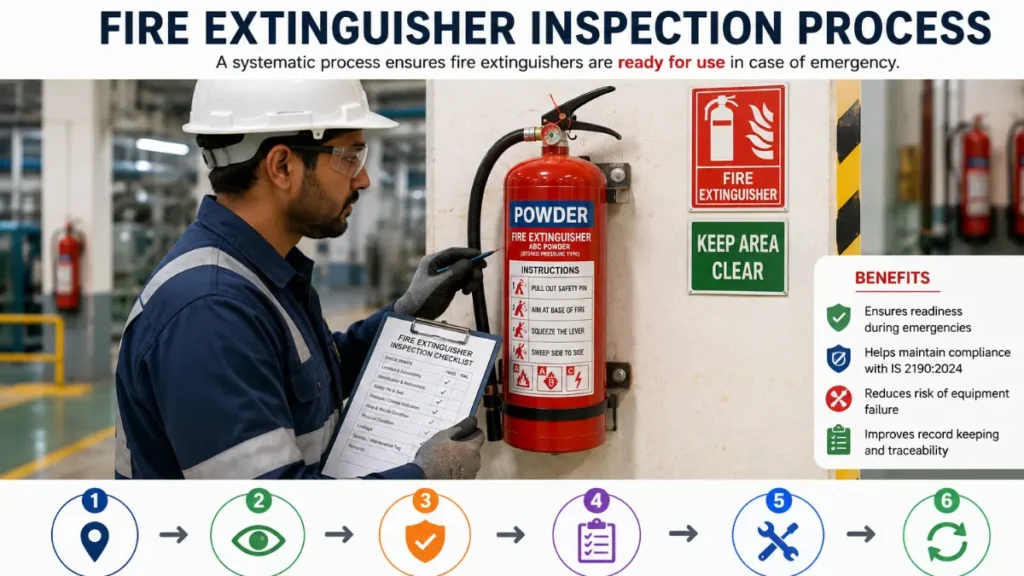
Fire Extinguisher Inspection एक व्यवस्थित प्रक्रिया है, जिसमें यह जांचा जाता है कि किसी premises में installed fire extinguisher अपनी निर्धारित location पर उपलब्ध है, आसानी से दिखाई देता है, accessible है और उपयोग के लिए किसी स्पष्ट defect या abnormal condition से प्रभावित नहीं है।
IS 2190:2024 के अनुसार fire extinguishers को service में initially place किए जाने के समय check किया जाना चाहिए और इसके बाद लगभग 90-day intervals पर periodic checking की जानी चाहिए। परिस्थितियों के अनुसार इससे अधिक frequent checking की आवश्यकता भी हो सकती है।
📌 Inspection का मुख्य उद्देश्य
Inspection का मुख्य उद्देश्य यह verify करना है कि extinguisher की location, accessibility, visibility, operating instructions और महत्वपूर्ण safety components सही condition में हैं तथा extinguisher की readiness को प्रभावित करने वाली कोई स्पष्ट कमी मौजूद नहीं है।
Inspection के दौरान यदि कोई deficiency दिखाई देती है, तो उसे record करके आवश्यक corrective action लिया जाना चाहिए। इसलिए inspection केवल extinguisher को देखकर उसकी condition बताने तक सीमित नहीं है, बल्कि inspection findings को उचित records में दर्ज करना भी इसका महत्वपूर्ण हिस्सा है।
Important: Periodic inspection को detailed maintenance या hydrostatic pressure testing के समान नहीं समझना चाहिए। इन activities का purpose और scope अलग है, जिन्हें आगे के sections में अलग-अलग समझाया गया है।
Inspection और Maintenance में क्या Difference है?
Fire Extinguisher Inspection और Fire Extinguisher Maintenance एक ही प्रक्रिया नहीं हैं। Inspection का मुख्य उद्देश्य extinguisher की सामान्य condition और readiness को check करना है, जबकि maintenance में extinguisher की serviceability बनाए रखने के लिए आवश्यक विस्तृत maintenance work किया जाता है।
| Inspection | Maintenance |
|---|---|
| Extinguisher की condition और readiness की periodic checking। | Extinguisher को serviceable condition में बनाए रखने के लिए आवश्यक maintenance work। |
| Location, accessibility, visibility और operating instructions जैसे points check किए जाते हैं। | Maintenance requirement के अनुसार extinguisher की detailed servicing और आवश्यक corrective work किया जाता है। |
| Inspection में दिखाई देने वाली deficiencies को identify और record किया जाता है। | Identified defects या maintenance requirements को applicable procedure के अनुसार address किया जाता है। |
| Periodic inspection records maintain किए जाते हैं। | Maintenance और servicing का record भी maintain किया जाता है। |
📌 आसान उदाहरण
यदि inspection के दौरान किसी extinguisher का tamper seal टूटा हुआ, body damaged या hose/nozzle में defect दिखाई देता है, तो इसे केवल checklist में mark करके छोड़ना पर्याप्त नहीं है। आवश्यकता के अनुसार आगे की maintenance या corrective action कराना होगा।
IS 2190:2024 inspection और maintenance को अलग-अलग activities के रूप में address करता है। Standard के अनुसार maintenance का कार्य manufacturer, authorized agent या qualified fire professionals द्वारा किया जाना चाहिए।
Important: Routine inspection को extinguisher की detailed maintenance या servicing का replacement नहीं समझना चाहिए। Inspection में deficiency मिलने पर applicable maintenance procedure के अनुसार आगे की कार्रवाई आवश्यक हो सकती है।
Fire extinguisher की नियमित maintenance requirements, servicing और maintenance schedule को विस्तार से समझने के लिए हमारा Fire Extinguisher Maintenance Schedule guide भी पढ़ें। यह article inspection और maintenance के बीच अंतर को समझने के बाद आगे की maintenance requirements को समझने में मदद करेगा।
Fire Extinguisher Inspection कितनी बार करनी चाहिए?
Fire extinguisher inspection की frequency को केवल सामान्य “monthly inspection” rule के आधार पर तय नहीं करना चाहिए। भारत में applicable requirements के लिए IS 2190:2024 के inspection और maintenance provisions को ध्यान में रखना चाहिए।
IS 2190:2024 के अनुसार fire extinguishers को service में initially place किए जाने के समय check किया जाना चाहिए और इसके बाद लगभग 90-day intervals पर check किया जाना चाहिए। यदि परिस्थितियाँ अधिक frequent checking की मांग करती हैं, तो inspection अधिक बार भी की जा सकती है। 1
📌 Periodic Inspection Interval
Initial Check
→ Extinguisher को service में initially place करते समय
Periodic Check
→ लगभग 90 days के interval पर
Additional Check
→ जब site conditions के कारण अधिक frequent inspection आवश्यक हो
Annual Maintenance Inspection से अलग क्यों है?
Periodic inspection और annual maintenance को एक ही activity नहीं समझना चाहिए। IS 2190:2024 के अनुसार applicable extinguishers की maintenance सामान्यतः once a year, but not less than six months apart की जानी चाहिए। Maintenance hydrostatic testing के समय या inspection द्वारा specifically indicated होने पर भी आवश्यक हो सकती है। 2
Important: इसलिए 90-day periodic inspection को annual maintenance का replacement नहीं माना जाना चाहिए। Inspection readiness और visible condition की checking है, जबकि maintenance एक अलग और अधिक विस्तृत service activity है।
Fire extinguisher की detailed servicing और maintenance requirements के लिए हमारा Fire Extinguisher Maintenance Schedule guide भी देखें। इससे periodic inspection और scheduled maintenance के बीच का अंतर अधिक स्पष्ट होगा।
Fire Extinguisher Inspection Checklist – What to Check
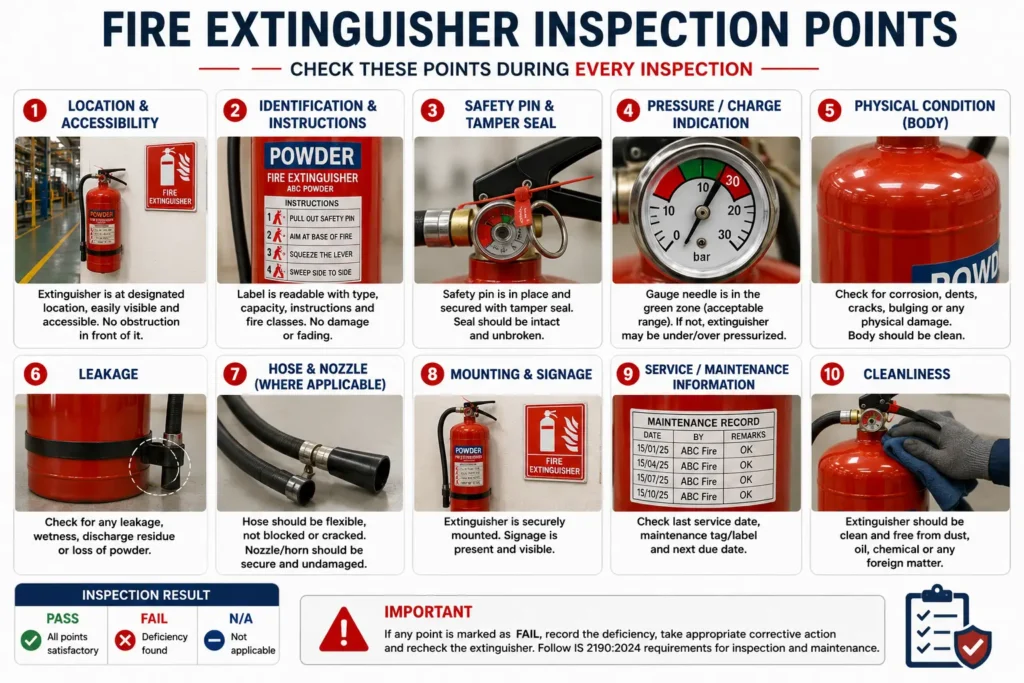
Fire extinguisher inspection के दौरान केवल pressure gauge देखना पर्याप्त नहीं है। एक proper inspection में extinguisher की location, visibility, accessibility, operating instructions, safety components और physical condition को systematically check किया जाना चाहिए।
नीचे दिए गए inspection points को आपकी Fire Extinguisher Inspection Checklist में record किया जा सकता है। यदि किसी point पर deficiency मिले, तो उसे remarks में दर्ज करके आवश्यक corrective action की प्रक्रिया शुरू करनी चाहिए।
1. Location सही है या नहीं?
सबसे पहले verify करें कि fire extinguisher अपनी designated location पर मौजूद है। उसे ऐसी जगह रखा या लगाया जाना चाहिए जहाँ आवश्यकता पड़ने पर occupants उसे आसानी से locate कर सकें।
2. Visibility और Accessibility Check करें
जांच करें कि extinguisher स्पष्ट रूप से visible और readily accessible है। उसके सामने सामान, equipment, furniture या कोई अन्य obstruction नहीं होना चाहिए जो emergency में access को कठिन बना सके।
3. Operating Instructions पढ़ने योग्य हैं या नहीं?
Extinguisher पर दिए गए operating instructions और identification markings को check करें। Label इतना damaged, faded या illegible नहीं होना चाहिए कि extinguisher की पहचान या उसके operation से संबंधित आवश्यक information समझना मुश्किल हो जाए।
4. Safety Pin और Tamper Seal Check करें
Safety pin और tamper seal की condition check करें। Pin या seal में abnormality, damage या tampering के संकेत दिखाई दें तो उसे inspection record में note करें और आगे की appropriate action निर्धारित करें।
5. Pressure / Charge Condition Check करें
जहाँ applicable हो, extinguisher की pressure indication या charge condition check करें। किसी abnormal pressure indication या charge-related concern को ignore नहीं करना चाहिए।
6. Extinguisher की Fullness / Charge Check करें
Extinguisher की fullness या charge condition को applicable inspection method के अनुसार verify करें। अलग-अलग extinguisher types में charge condition verify करने का तरीका अलग हो सकता है, इसलिए manufacturer और applicable standard requirements को ध्यान में रखना चाहिए।
7. Body पर Damage या Corrosion Check करें
Extinguisher cylinder/body को visually inspect करें और dents, corrosion, physical damage या अन्य abnormal conditions के संकेत देखें। ऐसी condition दिखाई देने पर उसे checklist के remarks में clearly record करें।
8. Leakage Check करें
Extinguisher में किसी भी leakage या discharge के संकेत को check करें। Leakage दिखाई देने पर extinguisher को सामान्य condition मानकर service में नहीं छोड़ना चाहिए; appropriate corrective action की आवश्यकता हो सकती है।
9. Hose, Nozzle या Horn Check करें
जहाँ applicable हो, hose, nozzle या horn की condition check करें। विशेष रूप से damage, blockage या clogging जैसी conditions पर ध्यान दें, क्योंकि discharge path में समस्या extinguisher की effective operation को प्रभावित कर सकती है।
10. Maintenance और Service Information Check करें
Extinguisher के उपलब्ध maintenance, inspection और service records को check करें। इससे यह verify करने में मदद मिलती है कि previous inspection या maintenance information properly recorded है या नहीं।
📋 Quick Inspection Checklist
- Location – Designated location पर है
- Visibility & Accessibility – दिखाई देता है और आसानी से accessible है
- Instructions – Operating instructions readable हैं
- Safety Pin & Tamper Seal – सही condition में हैं
- Pressure / Charge – Applicable condition satisfactory है
- Body Condition – Damage, corrosion या leakage नहीं है
- Hose / Nozzle / Horn – Damage या blockage नहीं है
- Records – Inspection और maintenance information available है
इन सभी points को inspection के दौरान systematically record करना बेहतर है। यदि किसी extinguisher में ऐसी deficiency मिलती है जो उसकी serviceability या readiness को प्रभावित कर सकती है, तो उसे केवल checklist में “Fail” mark करके छोड़ने के बजाय corrective action और आगे की maintenance requirement को भी record करना चाहिए।
Printable Fire Extinguisher Inspection Checklist
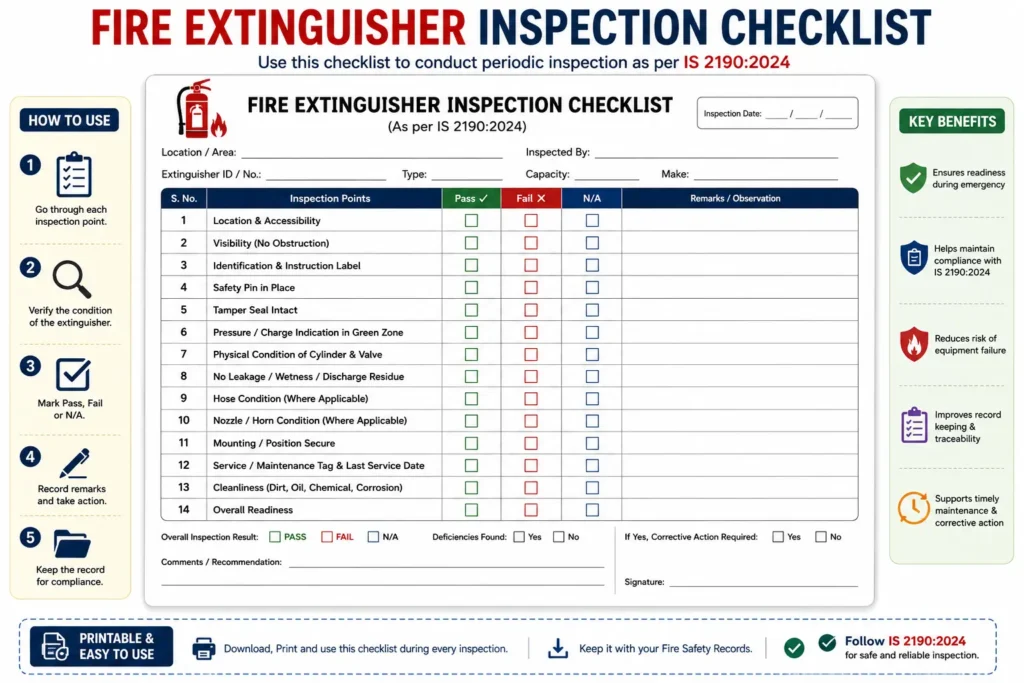
यह Fire Extinguisher Inspection Checklist आपको fire extinguisher की condition को systematically check करने और inspection findings को record करने में मदद करती है। इसे office, factory, warehouse, school, hospital, commercial building और अन्य premises में periodic inspection के दौरान उपयोग किया जा सकता है।
नीचे दिया गया printable fire extinguisher inspection checklist location, accessibility, operating instructions, safety components, physical condition और maintenance-related information जैसे महत्वपूर्ण inspection points को cover करता है।
📋 Checklist कैसे इस्तेमाल करें?
प्रत्येक fire extinguisher को उसकी identification और location के साथ check करें। प्रत्येक inspection point के सामने Pass, Fail या N/A mark करें और आवश्यकता होने पर Remarks / Corrective Action में observation दर्ज करें।
| Sl. No. | Inspection Point | Pass | Fail | N/A | Remarks / Corrective Action |
|---|---|---|---|---|---|
| 1 | Designated location पर extinguisher उपलब्ध है | ☐ | ☐ | ☐ | |
| 2 | Extinguisher visible और आसानी से accessible है | ☐ | ☐ | ☐ | |
| 3 | Operating instructions और identification markings readable हैं | ☐ | ☐ | ☐ | |
| 4 | Safety pin सही condition में है | ☐ | ☐ | ☐ | |
| 5 | Tamper seal intact है | ☐ | ☐ | ☐ | |
| 6 | Pressure indication / charge condition satisfactory है, जहाँ applicable हो | ☐ | ☐ | ☐ | |
| 7 | Extinguisher body में dent, corrosion या physical damage नहीं है | ☐ | ☐ | ☐ | |
| 8 | Leakage या discharge के abnormal signs नहीं हैं | ☐ | ☐ | ☐ | |
| 9 | Hose, nozzle या horn में damage / blockage नहीं है, जहाँ applicable हो | ☐ | ☐ | ☐ | |
| 10 | Maintenance / service information उपलब्ध और review की गई | ☐ | ☐ | ☐ |
Inspection Record
| Building / Premises | Inspection Date | ||
| Department / Area | Inspector | ||
| Extinguisher ID / Serial No. | Location |
Important:यह Fire Extinguisher Inspection Checklist एक practical inspection aid है। यदि inspection में कोई defect या deficiency दिखाई देती है, तो उसे केवल checklist में mark करके छोड़ने के बजाय applicable maintenance या corrective action की आवश्यकता का assessment किया जाना चाहिए।
इस Fire Extinguisher Inspection Checklist को print करके individual extinguishers या inspection rounds के दौरान इस्तेमाल किया जा सकता है। Inspection के दौरान यदि कोई deficiency मिले, तो उसे Remarks / Corrective Action में दर्ज करें और आवश्यकता के अनुसार आगे की कार्रवाई करें।
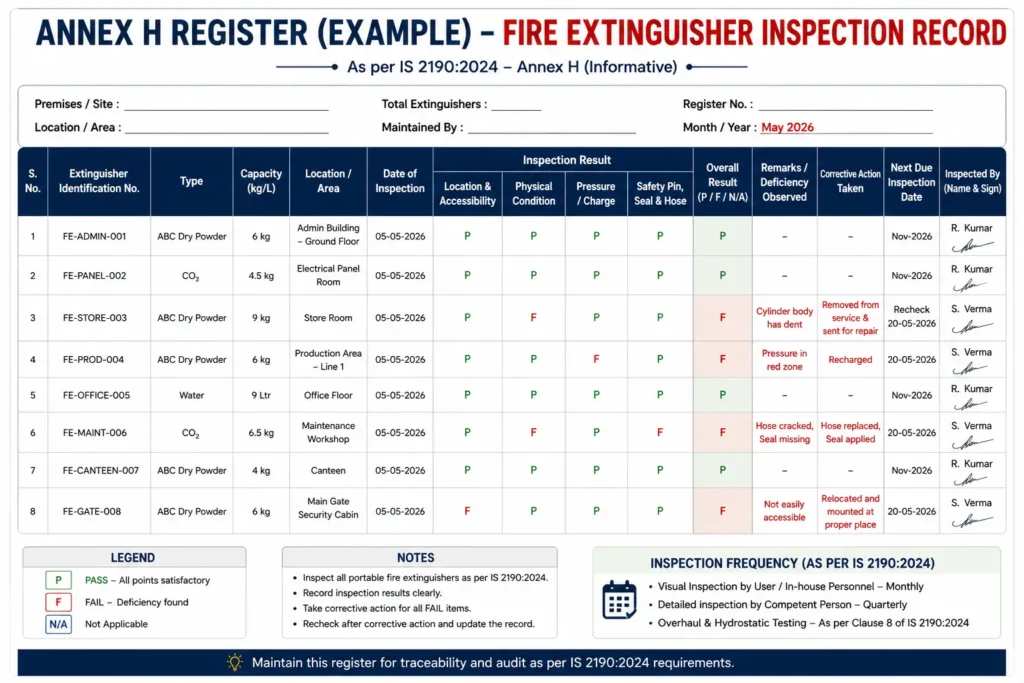
IS 2190:2024 Annex H Fire Extinguisher Register
IS 2190:2024 Annex H में fire extinguishers के लिए एक register format दिया गया है, जिसका उपयोग installed extinguishers की inspection, maintenance और operational history को record करने के लिए किया जाता है।
इस register में प्रत्येक extinguisher की identification details के साथ periodic inspection, annual inspection, pressure testing, discharge और refilling से संबंधित information दर्ज की जा सकती है। इससे किसी extinguisher की inspection history और service status को आसानी से track किया जा सकता है।
Official Reference: IS 2190:2024 का official standard document BIS की वेबसाइट पर देखें । इस standard में portable और mobile fire extinguishers की selection, installation, maintenance और testing से संबंधित requirements दी गई हैं।
📋 Annex H Register में कौन-कौनसी जानकारी होती है?
Register में मुख्य रूप से Sl. No., Type, Capacity, Year of Manufacture, Make और Location जैसी identification details तथा Quarterly Inspection Dates, Annual Inspection Dates, Pressure Tested On, Date of Discharge, Refilled On, Due for Refilling और Remarks जैसी inspection और service-related information record की जाती है।
Annex H Register के मुख्य Fields
| Sl. No. | Register Field | क्या Record किया जाता है? |
|---|---|---|
| 1 | Type | Fire extinguisher का type |
| 2 | Capacity | Extinguisher की capacity |
| 3 | Year of Manufacture | Manufacturing year |
| 4 | Make | Manufacturer / Make |
| 5 | Location | Extinguisher की installed location |
| 6 | Quarterly Inspection Dates | Periodic inspection की dates |
| 7 | Annual Inspection Dates | Annual inspection की dates |
| 8 | Pressure Tested On | Pressure testing की date |
| 9 | Date of Discharge | Extinguisher discharge / operation की date |
| 10 | Refilled On | Refilling की date |
| 11 | Due for Refilling | Applicable refilling due information |
| 12 | Remarks | Inspection, maintenance और अन्य relevant observations |
⚠️ Important: One Extinguisher – One Full Page
Annex H में प्रत्येक extinguisher के लिए एक full page allot करने का उल्लेख है। Permanent particulars जैसे Sl. No., Type, Capacity, Year of Manufacture, Make और Location को register के top portion में transfer किया जा सकता है।
Remarks Column में क्या Record करें?
Remarks column का उपयोग inspection या maintenance के दौरान सामने आने वाली relevant information को record करने के लिए किया जा सकता है। इसमें operation, annual maintenance, rejection या disposal से संबंधित information तथा applicable cases में safety valves और pressure gauges की calibration details भी record की जा सकती हैं।
Record Keeping Tip: हर extinguisher की पहचान के लिए उसकी location, type, capacity और identification details consistent तरीके से record करें। इससे subsequent inspection में previous records को trace करना आसान होता है।
यदि आप अपनी site के लिए इस format को practical register के रूप में तैयार कर रहे हैं, तो प्रत्येक extinguisher के लिए अलग record page रखना और inspection तथा service history को उसी record से जोड़कर रखना बेहतर है।
Fire Extinguisher Inspection कैसे करें? (Step-by-Step Procedure)
Fire Extinguisher Inspection करते समय केवल extinguisher की physical condition देखना पर्याप्त नहीं है। Inspection को एक systematic process के रूप में करना चाहिए, जिसमें identification, location, accessibility, operating condition, physical condition और inspection records को क्रमवार verify किया जाता है।
🔎 Step-by-Step Inspection Flow
Identify → Locate → Access → Examine → Check → Record → Corrective Action
Step 1: Extinguisher की Identification करें
सबसे पहले extinguisher की type, capacity, make और identification details को verify करें। यदि premises में कई extinguishers installed हैं, तो प्रत्येक unit को उसके specific location या identification number के साथ record करना बेहतर है।
Step 2: Location और Accessibility Check करें
जांच करें कि extinguisher अपनी designated location पर मौजूद है और emergency में आसानी से accessible है। उसके सामने कोई सामान, equipment या अन्य obstruction नहीं होना चाहिए जो तत्काल access को प्रभावित करे।
Step 3: Visibility और Identification Markings देखें
Extinguisher स्पष्ट रूप से दिखाई दे रहा है या नहीं, यह check करें। उसके label, operating instructions और identification markings readable होने चाहिए ताकि emergency में extinguisher की पहचान और operation से संबंधित information समझी जा सके।
Step 4: Safety Components Check करें
जहाँ applicable हो, safety pin, tamper seal, pressure indication और अन्य relevant components की condition check करें। किसी component में abnormality दिखाई देने पर उसे inspection record में दर्ज करें।
Step 5: Physical Condition Check करें
Extinguisher की body को visually examine करें। Corrosion, dents, leakage, physical damage या अन्य abnormal condition के संकेत मिलने पर उन्हें clearly record करें।
Step 6: Hose, Nozzle या Horn Check करें
जहाँ applicable हो, hose, nozzle या horn की condition check करें। Damage, blockage या clogging जैसी condition दिखाई देने पर उसे inspection findings में दर्ज करें।
Step 7: Inspection Findings Record करें
Inspection पूरा होने के बाद findings को inspection checklist या applicable register में record करें। प्रत्येक deficiency के लिए clear remarks लिखना future inspection और corrective action tracking में उपयोगी होता है।
Step 8: Deficiency मिलने पर Corrective Action लें
यदि inspection में कोई ऐसी deficiency मिलती है जो extinguisher की readiness या serviceability को प्रभावित कर सकती है, तो उसे केवल Fail mark करके छोड़ना नहीं चाहिए। आवश्यक corrective action, maintenance या further assessment की आवश्यकता निर्धारित की जानी चाहिए।
⚠️ Safety Note
Inspection के दौरान extinguisher को स्वयं खोलकर, pressure release करके या किसी component की repair करने का प्रयास नहीं करना चाहिए। ऐसी maintenance या servicing केवल applicable procedure और qualified personnel की requirements के अनुसार की जानी चाहिए।
इस तरह एक proper Fire Extinguisher Inspection सिर्फ visual checking नहीं रहती, बल्कि inspection → documentation → deficiency identification → corrective action का complete process बन जाती है।
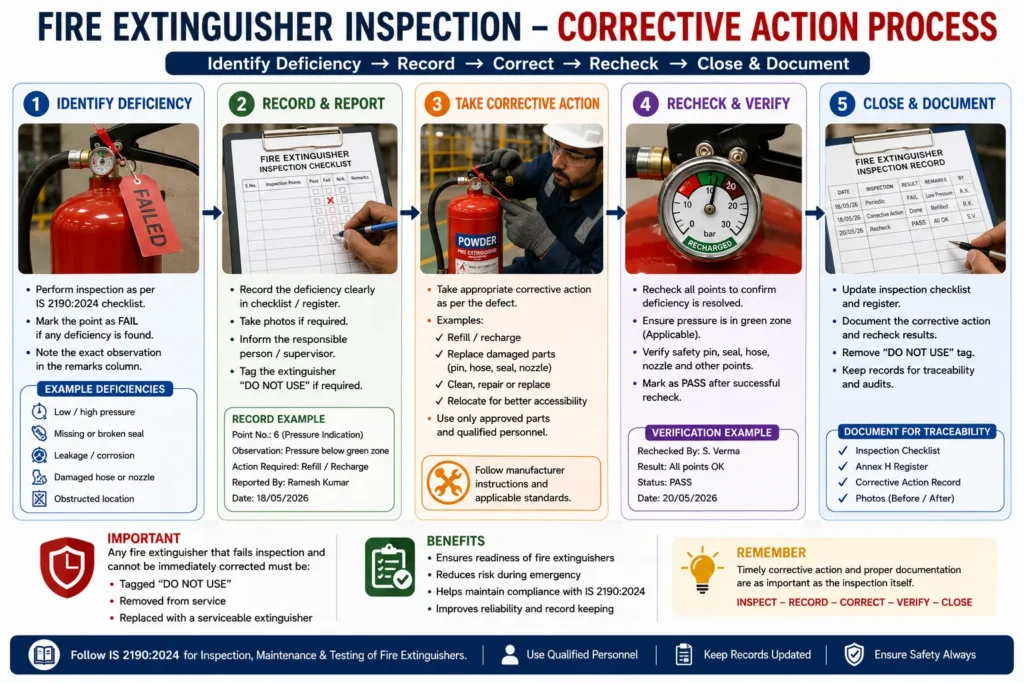
Fire Extinguisher Inspection में Deficiencies मिलने पर क्या करें?
Fire Extinguisher Inspection के दौरान यदि किसी extinguisher में defect या deficiency दिखाई देती है, तो उसे केवल Fail mark करके छोड़ना पर्याप्त नहीं है। Deficiency को clearly identify करके उसका corrective action और आगे की आवश्यक maintenance या assessment तय किया जाना चाहिए।
Fire Extinguisher Inspection Checklist में मिली deficiency को स्पष्ट remarks के साथ record करने से यह पता लगाना आसान होता है कि कौन-सा extinguisher किस समस्या के कारण corrective action के लिए भेजा गया है और बाद में उसकी स्थिति क्या रही।
🔎 Deficiency मिलने पर Basic Action Flow
Identify → Record → Assess → Correct → Recheck
1. Deficiency को Clearly Identify करें
Inspection के दौरान मिलने वाली समस्या को सामान्य शब्दों में लिखने के बजाय specific observation record करें। उदाहरण के लिए corrosion, leakage, damaged hose, obstructed access, missing safety seal या unreadable instructions जैसी condition को clearly mention किया जा सकता है।
2. Inspection Record में Entry करें
Deficiency को Fire Extinguisher Inspection Checklist या applicable inspection register में record करें। यदि multiple extinguishers inspected किए जा रहे हैं, तो extinguisher identification, location और inspection date भी properly record करना चाहिए।
3. Deficiency की Severity Assess करें
हर observation का effect समान नहीं होता। कुछ deficiencies तुरंत corrective action मांग सकती हैं, जबकि कुछ conditions के लिए further assessment या maintenance की आवश्यकता हो सकती है। इसलिए extinguisher की condition को देखकर appropriate action तय किया जाना चाहिए।
4. आवश्यक Corrective Action लें
यदि deficiency extinguisher की serviceability या readiness को प्रभावित कर सकती है, तो आवश्यक corrective action लिया जाना चाहिए। इसमें applicable situation के अनुसार maintenance, servicing, repair, replacement या further professional assessment शामिल हो सकता है।
5. Corrective Action के बाद Recheck करें
Corrective action पूरा होने के बाद extinguisher की स्थिति को फिर से verify करें और संबंधित record को update करें। इससे inspection history और corrective action status दोनों traceable रहते हैं।
Common Inspection Deficiencies और Possible Action
| Observation | Record / Action |
|---|---|
| Extinguisher access obstructed | Obstruction हटाकर accessibility को restore करें। |
| Operating instructions unreadable | Condition record करें और applicable corrective action determine करें। |
| Safety seal / component abnormality | Observation record करें और further assessment / maintenance की आवश्यकता निर्धारित करें। |
| Corrosion या physical damage | Condition को clearly document करें और qualified assessment / applicable maintenance action लें। |
| Leakage या discharge-related concern | Extinguisher को सामान्य condition मानकर ignore न करें; appropriate action determine करें। |
⚠️ Safety Warning
Fire extinguisher में दिखाई देने वाली गंभीर deficiency को केवल checklist में note करके वापस उसी location पर रखना उचित नहीं हो सकता। Maintenance, servicing या repair की आवश्यकता होने पर applicable procedure और qualified personnel की requirements को follow करें।
एक अच्छी Fire Extinguisher Inspection process का उद्देश्य केवल defects ढूँढना नहीं, बल्कि defects को identify, document, correct और verify करना भी है। इसी कारण inspection records को नियमित रूप से maintain करना महत्वपूर्ण है।
Fire Extinguisher Inspection Records कैसे Maintain करें?
Fire Extinguisher Inspection के बाद inspection findings को properly record करना उतना ही महत्वपूर्ण है जितना extinguisher की physical condition check करना। Proper records से यह पता लगाया जा सकता है कि किसी extinguisher की inspection कब हुई, क्या condition मिली और क्या corrective action लिया गया।
एक अच्छी Fire Extinguisher Inspection record system में प्रत्येक extinguisher की पहचान, location, inspection date, observations और corrective action को consistent तरीके से दर्ज किया जाना चाहिए। इससे subsequent inspections के दौरान previous findings को आसानी से compare किया जा सकता है।
📋 Record में कौन-कौनसी जानकारी रखें?
Extinguisher identification, location, inspection date, inspection findings, corrective action और applicable होने पर maintenance / service status को record करें।
Fire Extinguisher Inspection Record में क्या लिखें?
| Record Field | क्या दर्ज करें? |
|---|---|
| Extinguisher ID | Extinguisher की identification / serial details |
| Location | Extinguisher की actual installed location |
| Inspection Date | जिस date को inspection किया गया |
| Inspector | Inspection करने वाले व्यक्ति की पहचान / नाम |
| Condition / Findings | Inspection में मिली condition या deficiency |
| Corrective Action | Deficiency के बाद की गई या आवश्यक कार्रवाई |
| Status | Pass / Fail / N/A या applicable status |
Good Inspection Entry का Example
Example:ABC Block – Ground Floor – Extinguisher ID FE-014 – Inspection Date: 15/08/2026 – Location accessible – Operating instructions readable – Safety pin and seal satisfactory – No visible corrosion or leakage – Status: Pass.
Poor Entry:“Extinguisher checked – OK.”
ऐसी generic entry future inspection में यह पता लगाने में मदद नहीं करती कि वास्तव में कौन-कौनसे inspection points check किए गए थे।
Corrective Action को Track करें
यदि inspection में deficiency मिलती है, तो केवल observation record करना पर्याप्त नहीं है। जहाँ applicable हो, corrective action की date, responsible person / agency और completion status को भी track करना उपयोगी है।
Corrective action complete होने के बाद संबंधित extinguisher को recheck करें और record को update करें। इससे inspection history में deficiency और उसके resolution के बीच clear connection बना रहता है।
📌 Record Keeping Tip
Inspection records में एक ही extinguisher के लिए identification और location details consistent रखें। इससे अलग-अलग inspection dates की entries को compare करना और pending corrective actions को identify करना आसान होता है।
इस प्रकार proper Fire Extinguisher Inspection record सिर्फ compliance documentation नहीं है, बल्कि extinguisher की condition, inspection history और corrective actions को trace करने का practical tool भी है।
Fire Extinguisher Inspection Frequency: कितनी बार Inspection करें?
Fire Extinguisher Inspection की frequency को सही समझना जरूरी है। सही inspection schedule से यह verify किया जा सकता है कि fire extinguisher अपनी designated location पर उपलब्ध है और उसकी visible condition satisfactory है। IS 2190:2024 के अनुसार extinguishers को initially service में रखने के समय check किया जाना चाहिए और इसके बाद लगभग 90-day intervals पर periodic checking की जानी चाहिए।
📌 Quick Answer: Fire Extinguisher Inspection कितनी बार?
Fire Extinguisher Inspection लगभग हर 90 दिन के interval पर की जानी चाहिए। IS 2190:2024 में approximately 90-day intervals पर checking का provision दिया गया है। कुछ circumstances में अधिक frequent Fire Extinguisher Inspection की आवश्यकता हो सकती है।
Initial Fire Extinguisher Inspection कब करें?
जब कोई fire extinguisher पहली बार service में रखा जाता है, तब उसकी initial Fire Extinguisher Inspection की जानी चाहिए। इस check में installation, location और extinguisher की initial condition से संबंधित applicable requirements को verify किया जाता है।
Initial inspection के बाद periodic Fire Extinguisher Inspection schedule follow किया जाता है ताकि extinguisher की condition को नियमित रूप से monitor किया जा सके।
90-Day Fire Extinguisher Inspection क्या है?
IS 2190:2024 में extinguishers को लगभग 90-day intervals पर check करने का provision दिया गया है। इस periodic Fire Extinguisher Inspection का उद्देश्य extinguisher की visible condition और readiness को नियमित रूप से verify करना है।
इस Fire Extinguisher Inspection के दौरान यह देखा जा सकता है कि extinguisher अपनी designated location पर है, unobstructed और visible है, operating instructions readable हैं तथा safety seal, physical condition, leakage, nozzle और applicable pressure indication जैसी conditions satisfactory हैं।
Fire Extinguisher Inspection Schedule at a Glance
| Activity | Frequency / Trigger | Purpose |
|---|---|---|
| Initial Fire Extinguisher Inspection | Initially placed in service | Initial condition और applicable requirements verify करना |
| Periodic Fire Extinguisher Inspection | Approximately 90-day intervals | Condition और readiness check करना |
| More Frequent Inspection | जब circumstances require करें | विशेष परिस्थितियों में additional checking |
| Maintenance | Applicable maintenance requirements के अनुसार | Servicing और maintenance requirements पूरा करना |
क्या Fire Extinguisher Inspection हर महीने करनी चाहिए?
IS 2190:2024 के periodic checking provision के संदर्भ में approximately 90-day interval दिया गया है। इसलिए केवल पुराने generic “monthly fire extinguisher inspection” statements को current BIS requirement मानना उचित नहीं है।
हालाँकि, यदि किसी premises की परिस्थितियाँ additional checking की आवश्यकता पैदा करती हैं, तो Fire Extinguisher Inspection को अधिक frequently किया जा सकता है। Actual inspection frequency को applicable standard और site conditions के अनुसार निर्धारित करें।
⚠️ Important: 90 Days को कैसे समझें?
Standard में wording “approximately 90 day intervals” है। इसलिए इसे हर situation में calendar के exact 90वें दिन की rigid requirement के रूप में interpret नहीं करना चाहिए। Circumstances के अनुसार अधिक frequent Fire Extinguisher Inspection की आवश्यकता हो सकती है।
BIS Reference: IS 2190:2024 में fire extinguisher inspection requirements दी गई हैं। Official standard को BIS की वेबसाइट पर देखें ।
इसलिए practical Fire Extinguisher Inspection Schedule बनाते समय initial inspection, approximately 90-day periodic inspection और circumstances के अनुसार additional inspection को अलग-अलग समझना चाहिए। हर Fire Extinguisher Inspection के findings को applicable records में दर्ज करना भी महत्वपूर्ण है।
Fire Extinguisher Inspection vs Maintenance vs Hydrostatic Testing
Fire Extinguisher Inspection, maintenance और hydrostatic testing तीनों अलग-अलग activities हैं। इनका purpose और frequency एक जैसा नहीं होता। इसलिए inspection checklist में मिलने वाली deficiency को maintenance या pressure testing के साथ automatically equate नहीं करना चाहिए।
सही distinction समझने से यह तय करना आसान होता है कि किसी extinguisher को केवल periodic inspection की आवश्यकता है, कब maintenance / servicing करनी है और कब applicable requirements के अनुसार hydrostatic pressure testing की आवश्यकता हो सकती है।
📌 Quick Difference
Inspection = condition और readiness की checking
Maintenance = servicing / corrective work
Hydrostatic Testing = pressure integrity की testing
1. Fire Extinguisher Inspection क्या है?
Fire Extinguisher Inspection एक periodic checking activity है जिसमें extinguisher की condition और readiness को verify किया जाता है। इसमें location, accessibility, visibility, operating instructions, safety components, physical condition और applicable condition indicators जैसे points check किए जा सकते हैं।
Inspection का मुख्य उद्देश्य यह identify करना है कि extinguisher में कोई ऐसी visible deficiency तो नहीं है जो उसकी availability या expected operation को प्रभावित कर सकती है।
2. Fire Extinguisher Maintenance क्या है?
Maintenance inspection से अलग activity है। जब inspection या अन्य service requirements के दौरान maintenance की आवश्यकता identify होती है, तब applicable servicing procedure के अनुसार extinguisher को maintain किया जाता है।
Maintenance में extinguisher की condition के अनुसार servicing, repair, replacement of applicable components, recharge या अन्य आवश्यक service activities शामिल हो सकती हैं। Specific maintenance work extinguisher type और applicable requirements पर निर्भर करता है।
3. Hydrostatic Testing क्या है?
Hydrostatic testing एक pressure integrity test है। इसका उद्देश्य extinguisher या applicable pressure vessel की pressure withstand करने की क्षमता को निर्धारित applicable procedure के अनुसार verify करना है।
इसलिए hydrostatic testing को सामान्य Fire Extinguisher Inspection का substitute नहीं माना जाना चाहिए। दोनों का purpose अलग है।
Inspection, Maintenance और Hydrostatic Testing में अंतर
| Activity | मुख्य उद्देश्य | क्या देखा / किया जाता है? |
|---|---|---|
| Inspection | Extinguisher की condition और readiness verify करना | Location, accessibility, visible condition, instructions, safety components और applicable indicators |
| Maintenance | Extinguisher को required serviceable condition में maintain करना | Applicable servicing, repair, recharge या component-related work |
| Hydrostatic Testing | Pressure integrity verify करना | Applicable procedure के अनुसार pressure test |
⚠️ Important
एक extinguisher का periodic Fire Extinguisher Inspection satisfactory होना यह साबित नहीं करता कि वह हर दूसरी maintenance या pressure-testing requirement से automatically exempt है। प्रत्येक activity को उसके applicable requirement और extinguisher type के अनुसार evaluate करें।
Inspection में Defect मिले तो क्या होगा?
यदि Fire Extinguisher Inspection के दौरान कोई deficiency मिलती है, तो पहले उसे inspection record में document करें। इसके बाद deficiency की nature के अनुसार maintenance, servicing, replacement या further assessment की आवश्यकता determine की जा सकती है।
हर deficiency का मतलब hydrostatic testing नहीं होता। इसी तरह hydrostatic testing पूरा होना भी routine inspection और maintenance requirements को replace नहीं करता।
💡 Simple Example
मान लीजिए periodic Fire Extinguisher Inspection के दौरान extinguisher की hose damaged मिलती है। यह observation inspection record में दर्ज होगी और उसके बाद applicable maintenance requirement determine की जाएगी। इसे automatically hydrostatic test failure नहीं माना जाएगा।
इस distinction को समझना fire safety management के लिए महत्वपूर्ण है। Inspection, maintenance और hydrostatic testing एक-दूसरे से जुड़े हुए हैं, लेकिन इनके objectives अलग हैं और इन्हें एक ही activity नहीं माना जाना चाहिए।
Fire Extinguisher Inspection अधिक बार कब करनी चाहिए?
सामान्य periodic Fire Extinguisher Inspection के अलावा कुछ परिस्थितियों में extinguisher की condition को अधिक frequently check करना आवश्यक हो सकता है। IS 2190:2024 में भी circumstances के अनुसार more frequent intervals पर checking किए जाने की आवश्यकता को recognize किया गया है।
इसका उद्देश्य यह सुनिश्चित करना है कि ऐसे locations जहाँ extinguisher को सामान्य परिस्थितियों की तुलना में अधिक exposure या risk हो सकता है, वहाँ Fire Extinguisher Inspection को केवल routine schedule तक सीमित न रखा जाए।
📌 Quick Answer
यदि site conditions के कारण extinguisher की condition जल्दी प्रभावित होने की संभावना हो, तो Fire Extinguisher Inspection को अधिक frequently किया जा सकता है। Frequency को applicable standard, risk assessment और site conditions के आधार पर निर्धारित करें।
1. High-Risk या विशेष Industrial Areas
ऐसे industrial या high-risk areas जहाँ fire hazards अधिक हो सकते हैं, वहाँ routine Fire Extinguisher Inspection के अलावा additional checking की आवश्यकता site risk assessment के आधार पर निर्धारित की जा सकती है।
2. Dust, Dirt या Contamination वाले Areas
ऐसे locations जहाँ extinguisher पर dust, dirt या अन्य contamination जमा होने की संभावना अधिक हो, वहाँ condition को अधिक frequently observe करना उपयोगी हो सकता है। ऐसी circumstances में Fire Extinguisher Inspection का interval site conditions के अनुसार adjust किया जा सकता है।
3. Corrosive या Adverse Environment
जहाँ extinguisher adverse environmental conditions या corrosion के संभावित exposure में हो, वहाँ उसकी physical condition पर विशेष ध्यान देना चाहिए। Inspection के दौरान corrosion, damage और leakage जैसे signs को carefully observe करें।
4. Construction या Maintenance Work के दौरान
Building में construction, renovation या major maintenance work चल रहा हो तो extinguisher की location, accessibility और visibility temporarily प्रभावित हो सकती है। ऐसे समय additional Fire Extinguisher Inspection करना practical safety measure हो सकता है।
5. Extinguisher का इस्तेमाल होने के बाद
यदि किसी extinguisher का actual fire incident, training या किसी अन्य कारण से operation / discharge हुआ है, तो उसे सामान्य periodic Fire Extinguisher Inspection schedule के भरोसे नहीं छोड़ना चाहिए। उसकी condition और आगे की service requirement को applicable procedure के अनुसार assess किया जाना चाहिए।
Site Condition और Inspection Approach
| Site Condition | Inspection Consideration |
|---|---|
| Normal Environment | Applicable periodic inspection schedule follow करें। |
| High Fire Risk Area | Risk assessment के आधार पर additional checking consider करें। |
| Dust / Contamination | Physical condition और accessibility पर अधिक ध्यान दें। |
| Corrosive / Adverse Environment | Corrosion, damage और leakage के signs carefully check करें। |
| Construction / Renovation | Location और access में बदलाव को verify करें। |
⚠️ Important
More frequent Fire Extinguisher Inspection का मतलब यह नहीं है कि सभी premises के लिए एक नया fixed interval automatically लागू हो जाता है। Actual frequency को applicable requirements और specific site conditions के आधार पर determine करना चाहिए।
इसलिए Fire Extinguisher Inspection Schedule बनाते समय केवल calendar-based frequency पर निर्भर न रहें। Site environment, fire risk, accessibility, physical condition और previous inspection findings को भी ध्यान में रखें।
Fire Extinguisher Inspection कौन कर सकता है?
Fire Extinguisher Inspection करने वाले व्यक्ति को inspection के applicable requirements, extinguisher की basic construction और inspection points की पर्याप्त समझ होनी चाहिए। Inspection का उद्देश्य केवल extinguisher को देखकर “OK” लिखना नहीं है, बल्कि उसकी condition, accessibility, readiness और visible deficiencies को systematically identify करना है।
किसी organisation को अपने Fire Extinguisher Inspection process के लिए ऐसा responsible person या competent arrangement निर्धारित करना चाहिए जो applicable fire safety requirements के अनुसार inspection और record keeping कर सके।
📌 Quick Answer
Routine Fire Extinguisher Inspection ऐसे trained / competent person द्वारा की जानी चाहिए जिसे applicable inspection requirements और extinguisher की condition को identify करने की जानकारी हो। यदि inspection में servicing, repair, recharge या अन्य specialised work की आवश्यकता मिले, तो उसे appropriate qualified service arrangement के अनुसार कराया जाना चाहिए।
Routine Inspection के लिए Responsible Person
Organisation को routine Fire Extinguisher Inspection के लिए responsible person निर्धारित करना चाहिए। यह व्यक्ति inspection checklist के अनुसार प्रत्येक extinguisher की location, accessibility, visibility, instructions, safety components और physical condition को check करके findings record कर सकता है।
Inspector को यह भी समझना चाहिए कि कोई observation केवल routine deficiency है या आगे maintenance / servicing / professional assessment की आवश्यकता हो सकती है।
Inspection और Servicing में Competency अलग हो सकती है
एक important distinction यह है कि routine Fire Extinguisher Inspection और extinguisher की servicing या maintenance एक ही activity नहीं हैं।
Routine inspection में visible condition और readiness check की जाती है। लेकिन यदि extinguisher को खोलना, service करना, recharge करना, repair करना या अन्य specialised maintenance work करना आवश्यक हो, तो उस work के लिए applicable requirements के अनुसार qualified / authorised service arrangement का उपयोग किया जाना चाहिए।
Inspection और Maintenance की Responsibility
| Activity | मुख्य Requirement | Typical Responsibility |
|---|---|---|
| Routine Inspection | Condition, accessibility और visible deficiencies की checking | Designated trained / competent inspection person |
| Maintenance / Servicing | Applicable servicing और maintenance work | Appropriate qualified / authorised service arrangement |
| Hydrostatic Testing | Applicable pressure-integrity testing requirements | Appropriately qualified / authorised testing arrangement |
Inspector को किन Points की जानकारी होनी चाहिए?
- Extinguisher identification और location की checking
- Accessibility और visibility का assessment
- Operating instructions और identification markings की condition
- Safety pin, tamper seal और applicable indicators की checking
- Corrosion, leakage और physical damage की पहचान
- Deficiency recording और corrective action tracking की प्रक्रिया
⚠️ Safety Note
Routine Fire Extinguisher Inspection के दौरान extinguisher को खोलकर internal servicing, pressure release, recharge या repair करने का प्रयास नहीं करना चाहिए। ऐसी specialised work के लिए applicable procedures और appropriate qualified service arrangement follow करें।
💡 Simple Example
मान लीजिए factory में designated safety personnel routine Fire Extinguisher Inspection करता है और उसे एक extinguisher में leakage दिखाई देती है। Inspector को leakage को record करना चाहिए और आगे की servicing / assessment के लिए appropriate action initiate करना चाहिए, न कि स्वयं extinguisher को खोलकर repair करना चाहिए।
इसलिए effective Fire Extinguisher Inspection के लिए केवल checklist होना पर्याप्त नहीं है। Organisation को responsible person, inspection procedure, documentation और deficiency मिलने पर corrective-action process भी clearly define करना चाहिए।
Fire Extinguisher Inspection में कौन-कौन से Points Check करें?
एक systematic Fire Extinguisher Inspection में केवल extinguisher की body देखना पर्याप्त नहीं है। Inspection के दौरान उसकी location, accessibility, identification, operating instructions, safety components, physical condition और applicable service information को क्रमवार check करना चाहिए।
नीचे दिए गए inspection points को आपकी Fire Extinguisher Inspection Checklist में practical reference के रूप में इस्तेमाल किया जा सकता है। यदि किसी point पर deficiency मिलती है, तो उसे inspection record में clearly document करें।
📋 Quick Inspection Points
Location → Accessibility → Identification → Instructions → Safety Components → Pressure / Charge → Physical Condition → Hose / Nozzle → Leakage → Service Information
1. Location और Accessibility
Fire Extinguisher Inspection की शुरुआत यह verify करने से करें कि extinguisher अपनी designated location पर मौजूद है। उसके सामने या आसपास ऐसा obstruction नहीं होना चाहिए जिससे emergency में extinguisher तक पहुंचने में परेशानी हो।
Inspection के दौरान यह भी देखें कि extinguisher emergency situation में आसानी से visible और accessible है।
2. Identification और Operating Instructions
Fire Extinguisher Inspection के दौरान extinguisher का label और operating instructions readable होने चाहिए। Identification markings ऐसी condition में होनी चाहिए कि extinguisher की type और operation से संबंधित आवश्यक information समझी जा सके।
3. Safety Pin और Tamper Seal
जहाँ applicable हो, safety pin और tamper seal की condition check करें। यदि seal missing, broken या otherwise abnormal दिखाई देती है, तो observation को Fire Extinguisher Inspection record में दर्ज करें और आगे की आवश्यक assessment determine करें।
4. Pressure या Charge Condition
जहाँ extinguisher में pressure indication उपलब्ध हो, वहाँ applicable indicator की condition को check करें। Indicator abnormal दिखाई देने पर उसे ignore न करें और inspection findings में record करें।
Note: हर fire extinguisher में pressure gauge होना जरूरी नहीं है। इसलिए gauge-related check को केवल जहाँ applicable हो वहीं apply करें।
5. Extinguisher Body की Physical Condition
Extinguisher की body को visually examine करें। Corrosion, dents, cracks, deformation या अन्य physical damage के visible signs को check करें।
यदि body की condition questionable दिखाई देती है, तो केवल checklist में “Fail” लिखने के बजाय appropriate corrective action या professional assessment की आवश्यकता determine करें।
6. Leakage या Discharge के Signs
Fire Extinguisher Inspection के दौरान leakage या discharge के abnormal signs पर ध्यान दें। Extinguisher के आसपास या उसके components पर दिखाई देने वाली unusual condition को inspection record में document करें।
7. Hose, Nozzle या Horn
जहाँ applicable हो, hose, nozzle या horn की condition check करें। Damage, blockage या अन्य visible abnormality मिलने पर उसे inspection findings में record करें।
8. Maintenance और Service Information
Fire Extinguisher Inspection के दौरान available maintenance या service information को भी review करें। इससे previous servicing, applicable testing और future service requirements से संबंधित information को trace करने में मदद मिल सकती है।
Fire Extinguisher Inspection Points – Quick Reference
| No. | Inspection Point | क्या Verify करें? |
|---|---|---|
| 1 | Location | Designated location पर उपलब्ध है या नहीं |
| 2 | Accessibility | Access unobstructed है या नहीं |
| 3 | Instructions | Operating instructions readable हैं या नहीं |
| 4 | Safety Components | Safety pin / tamper seal की applicable condition |
| 5 | Pressure / Charge | Applicable pressure / charge indication |
| 6 | Physical Condition | Corrosion, damage, dents आदि |
| 7 | Hose / Nozzle / Horn | Applicable components में damage या blockage |
| 8 | Leakage / Discharge | Abnormal leakage या discharge signs |
| 9 | Service Information | Available maintenance / service information |
💡 Practical Tip
हर Fire Extinguisher Inspection के दौरान केवल “Pass” या “Fail” mark करने के बजाय महत्वपूर्ण observations को remarks में लिखें। इससे future inspection में previous condition और corrective action को आसानी से compare किया जा सकता है।
एक systematic Fire Extinguisher Inspection में ऊपर दिए गए points को applicable extinguisher type और site conditions के अनुसार check करना चाहिए। किसी भी deficiency को document करके उसके लिए appropriate corrective action determine करना जरूरी है।
Fire Extinguisher Inspection में Pass, Fail और N/A कैसे Mark करें?
Fire Extinguisher Inspection checklist में प्रत्येक applicable inspection point के सामने सही status mark करना चाहिए। सामान्यतः Pass, Fail और N/A (Not Applicable) का उपयोग inspection findings को स्पष्ट रूप से record करने के लिए किया जा सकता है।
सिर्फ checkbox tick करना पर्याप्त नहीं है। यदि कोई point Fail होता है, तो Remarks / Corrective Action column में deficiency और आवश्यक action को clearly record करें।
📋 Quick Answer
Pass = Inspection point satisfactory है।
Fail = Deficiency या unsatisfactory condition मिली है।
N/A = वह inspection point उस particular extinguisher पर applicable नहीं है।
Pass कब Mark करें?
जब किसी inspection point की condition satisfactory हो और कोई relevant deficiency दिखाई न दे, तब Pass mark किया जा सकता है।
उदाहरण के लिए, यदि Fire Extinguisher Inspection के दौरान extinguisher अपनी designated location पर है, access unobstructed है और applicable inspection point satisfactory है, तो संबंधित checkbox में Pass mark किया जा सकता है।
Fail कब Mark करें?
यदि inspection point में ऐसी deficiency मिलती है जो applicable requirement या extinguisher की expected condition को पूरा नहीं करती, तो Fail mark करें।
Fail entry के साथ Remarks / Corrective Action में actual observation लिखना चाहिए। उदाहरण:
Fail:
Extinguisher के सामने material रखा हुआ है और access partially obstructed है।
Corrective Action:
Obstruction हटाकर access restore करने की आवश्यकता है।
N/A कब Mark करें?
N/A का अर्थ है Not Applicable। इसका उपयोग केवल तब करें जब संबंधित inspection point उस particular extinguisher या configuration पर लागू ही नहीं होता।
N/A को किसी deficiency को छिपाने के लिए इस्तेमाल नहीं करना चाहिए। यदि कोई inspection point applicable है लेकिन condition satisfactory नहीं है, तो उसे Fail के रूप में record करना चाहिए।
Pass vs Fail vs N/A
| Status | Meaning | क्या करें? |
|---|---|---|
| PASS | Inspection point satisfactory है | Pass mark करें |
| FAIL | Deficiency / unsatisfactory condition मिली | Observation और corrective action record करें |
| N/A | Point applicable नहीं है | N/A mark करें |
Checklist में Remarks क्यों जरूरी हैं?
Fire Extinguisher Inspection का record केवल Pass / Fail statistics तक सीमित नहीं होना चाहिए। Remarks से inspector यह बता सकता है कि deficiency कहाँ मिली, क्या observation था और आगे किस corrective action की आवश्यकता है।
उदाहरण के लिए केवल “Fail” लिखने के बजाय “Hose damaged – maintenance assessment required” जैसी specific observation future follow-up के लिए अधिक उपयोगी होती है।
💡 Practical Tip
एक inspection round पूरा होने के बाद सभी Fail entries को अलग से review करें ताकि कोई pending corrective action छूट न जाए। Corrective action complete होने पर applicable records को update करें।
इस प्रकार Fire Extinguisher Inspection Checklist में Pass, Fail और N/A को consistently mark करने से inspection findings अधिक clear, traceable और actionable बनती हैं।
Fire Extinguisher Inspection के बाद Corrective Action कैसे Track करें?
Fire Extinguisher Inspection में किसी deficiency को identify करना process का केवल पहला step है। यदि checklist में कोई point Fail होता है, तो उस observation को record करके आवश्यक corrective action को track करना चाहिए।
एक effective Fire Extinguisher Inspection system में deficiency के साथ उसका responsible person, required action, target date, completion status और recheck भी record किया जा सकता है। इससे pending defects को follow-up करना आसान होता है।
📌 Quick Answer: Corrective Action Flow
Identify → Record → Assign → Correct → Recheck → Close
Step 1: Deficiency को Record करें
Fire Extinguisher Inspection के दौरान मिली deficiency को checklist या applicable inspection record में clearly लिखें। केवल “Failed” लिखने के बजाय actual observation दर्ज करना बेहतर है।
Example:
“Extinguisher access obstructed by stored material.”
यह entry “Fail” की तुलना में corrective action के लिए अधिक स्पष्ट information देती है।
Step 2: Required Action तय करें
Observation की nature के आधार पर required action determine करें। कुछ deficiencies site पर तुरंत correct की जा सकती हैं, जबकि कुछ मामलों में maintenance, servicing, repair, replacement या further assessment की आवश्यकता हो सकती है।
किसी deficiency के लिए action तय करते समय केवल checklist status पर निर्भर न रहें। Applicable requirements और extinguisher की actual condition को ध्यान में रखें।
Step 3: Responsible Person या Agency Assign करें
हर pending corrective action के लिए responsible person, department या applicable service agency identify करना useful है। इससे यह स्पष्ट रहता है कि deficiency के resolution की responsibility किसके पास है।
Step 4: Completion Status Update करें
Corrective action complete होने के बाद record में completion date और status update करें। यदि action अभी pending है, तो उसे Open / Pending status में रखना चाहिए ताकि अगली review में वह दिखाई दे।
Corrective Action Tracking Format
| Extinguisher ID | Deficiency | Required Action | Status | Recheck / Closure |
|---|---|---|---|---|
| FE-014 | Access obstructed | Obstruction remove करें | Open / Closed | Recheck date |
| FE-021 | Hose damaged | Applicable maintenance assessment | Pending | To be verified |
Step 5: Corrective Action के बाद Recheck करें
Corrective action complete होने के बाद संबंधित extinguisher की condition को फिर से verify करें। यदि deficiency पूरी तरह resolve हो गई है, तो closure status record किया जा सकता है।
Recheck का record रखने से यह establish करने में मदद मिलती है कि inspection में मिली deficiency को केवल report नहीं किया गया, बल्कि उसके resolution को भी verify किया गया।
⚠️ Pending Deficiencies को Ignore न करें
यदि Fire Extinguisher Inspection में कोई deficiency मिली है और corrective action अभी pending है, तो उसे अगले inspection तक बिना review के छोड़ना उचित नहीं है। Pending actions के लिए responsible person और follow-up mechanism रखें।
💡 Practical Tip
यदि site पर बड़ी संख्या में extinguishers हैं, तो एक separate Corrective Action Register रखना useful हो सकता है। इससे multiple inspection rounds की pending deficiencies को एक जगह track किया जा सकता है।
एक complete Fire Extinguisher Inspection program में checklist के साथ corrective action tracking भी शामिल होना चाहिए। इससे inspection findings → corrective action → recheck → closure का पूरा trail maintain किया जा सकता है।
Fire Extinguisher Inspection Checklist को कैसे Use करें?
Fire Extinguisher Inspection Checklist का सही उपयोग inspection process को consistent और traceable बनाने में मदद करता है। Checklist को केवल checkbox भरने के लिए नहीं, बल्कि प्रत्येक extinguisher की condition, location, accessibility और inspection findings को systematically record करने के लिए इस्तेमाल करना चाहिए।
एक inspection round शुरू करने से पहले सभी required records और extinguisher identification details तैयार रखें। प्रत्येक extinguisher को individually check करें और findings को उसी समय record करें ताकि कोई observation miss न हो।
📋 Quick Answer: Checklist Use करने का तरीका
Identify → Inspect → Mark → Record → Correct → Recheck
Step 1: Inspection Area और Extinguishers की List तैयार करें
सबसे पहले जिस building, department या area का Fire Extinguisher Inspection करना है, उसकी list तैयार करें। प्रत्येक extinguisher की location और identification details available रखें।
Step 2: प्रत्येक Extinguisher को Individually Check करें
एक समय में एक extinguisher की complete Fire Extinguisher Inspection करें। Location, accessibility, operating instructions, safety components, physical condition और applicable hose/nozzle या pressure indication को checklist के अनुसार verify करें।
Step 3: Pass, Fail या N/A Mark करें
प्रत्येक applicable inspection point के सामने Pass, Fail या N/A mark करें। N/A केवल उन्हीं points के लिए इस्तेमाल करें जो particular extinguisher पर applicable नहीं हैं।
Step 4: Remarks में Actual Observation लिखें
यदि कोई deficiency मिलती है, तो केवल Fail mark न करें। Remarks column में actual observation लिखें। उदाहरण के लिए “access obstructed”, “hose damaged” या “operating instruction unreadable” जैसी specific information future follow-up में अधिक useful होती है।
⚠️ Important
Checklist में Fail mark होना अपने आप में repair या replacement का specific आदेश नहीं है। Deficiency की nature के अनुसार applicable corrective action, maintenance या further assessment की आवश्यकता determine करें।
Step 5: Inspection Record Complete करें
Inspection date, building / premises, department / area, inspector और extinguisher identification जैसी details complete करें। इससे बाद में यह पता लगाना आसान होता है कि particular Fire Extinguisher Inspection कब और किस location पर की गई थी।
Step 6: सभी Fail Entries की Review करें
Inspection round पूरा होने के बाद सभी Fail entries को एक बार review करें। यह सुनिश्चित करें कि कोई deficiency बिना action के pending न रह जाए।
Step 7: Corrective Action और Closure Update करें
जहाँ corrective action आवश्यक हो, उसे responsible person या appropriate service arrangement के साथ follow-up करें। Action complete होने के बाद applicable record में completion और recheck information update करें।
Fire Extinguisher Inspection Checklist Workflow
| Step | Activity | Record |
|---|---|---|
| 1 | Identify extinguisher | ID / Location |
| 2 | Inspection points check करें | Pass / Fail / N/A |
| 3 | Deficiency identify करें | Remarks |
| 4 | Corrective action initiate करें | Action / Responsible Person |
| 5 | Recheck करें | Completion / Closure |
💡 Practical Tip
Large premises में inspection route को area-wise divide करना useful हो सकता है। इससे प्रत्येक extinguisher को systematically cover करना और missed locations को identify करना आसान होता है।
सही तरीके से इस्तेमाल की गई Fire Extinguisher Inspection Checklist inspection process को standardize करने, deficiencies को document करने और corrective actions को track करने में मदद करती है।
Fire Extinguisher Inspection Checklist में होने वाली Common Mistakes
एक अच्छी Fire Extinguisher Inspection के बावजूद गलत documentation, incomplete checking या deficiency पर follow-up न होने से inspection process की effectiveness कम हो सकती है। इसलिए checklist भरते समय केवल checkbox complete करना पर्याप्त नहीं है।
नीचे दी गई common mistakes को avoid करने से Fire Extinguisher Inspection Checklist का उपयोग अधिक consistent और traceable बनाया जा सकता है।
📌 Quick Answer
सबसे common mistakes हैं: सिर्फ “OK” लिखना, location/accessibility को ignore करना, सभी points को बिना check किए Pass करना, N/A का गलत उपयोग, deficiencies को record न करना और corrective action को close न करना।
1. केवल “OK” लिखकर Inspection Complete करना
“Extinguisher checked – OK” जैसी generic entry यह नहीं बताती कि वास्तव में कौन-कौनसे inspection points verify किए गए। बेहतर practice यह है कि Fire Extinguisher Inspection में applicable points को checklist के अनुसार individually verify किया जाए।
2. केवल Extinguisher की Body Check करना
कई बार inspection केवल cylinder body को देखकर पूरा कर दिया जाता है। लेकिन proper Fire Extinguisher Inspection में location, accessibility, operating instructions, safety components, applicable pressure indication, hose/nozzle और physical condition जैसे relevant points भी check किए जाने चाहिए।
3. Accessibility को Ignore करना
Extinguisher अपनी जगह पर मौजूद होना ही पर्याप्त नहीं है। यदि उसके सामने material, equipment या कोई अन्य obstruction है, तो emergency access प्रभावित हो सकता है। इसलिए location और accessibility को हर applicable inspection में verify करें।
4. सभी Points को बिना Check किए Pass करना
Checklist में सभी boxes पर automatically Pass mark करना inspection को meaningful नहीं बनाता। प्रत्येक point को actual condition के आधार पर evaluate करें।
5. N/A का गलत इस्तेमाल करना
N/A का उपयोग केवल तब करें जब inspection point particular extinguisher पर वास्तव में applicable नहीं है। किसी deficiency को avoid करने के लिए N/A mark करना सही inspection practice नहीं है।
6. Fail के साथ Remarks न लिखना
यदि Fire Extinguisher Inspection में कोई point Fail होता है, तो केवल “Fail” लिखना पर्याप्त नहीं है। Actual observation को Remarks / Corrective Action column में record करें।
7. Previous Inspection Record को Review न करना
Previous inspection records को review करने से recurring deficiencies और pending corrective actions identify करने में मदद मिल सकती है। इसलिए available inspection history को current inspection के दौरान उपयोगी reference के रूप में देखें।
8. Corrective Action को Pending छोड़ देना
Inspection में deficiency identify होने के बाद corrective action initiate करना जरूरी हो सकता है। केवल checklist में defect record करके उसे अगली inspection तक छोड़ देना effective inspection management नहीं है।
जहाँ applicable हो, responsible person, action status और completion / recheck information को भी record करें।
Common Mistakes – Quick Reference
| Mistake | Better Practice |
|---|---|
| सिर्फ “OK” लिखना | Applicable inspection points individually check करें। |
| केवल body check करना | Location, access, instructions और applicable components भी check करें। |
| Accessibility ignore करना | Emergency access unobstructed है या नहीं verify करें। |
| Automatically Pass करना | Actual condition के आधार पर status mark करें। |
| N/A का गलत उपयोग | केवल genuinely non-applicable points पर N/A mark करें। |
| Fail लेकिन Remarks खाली | Actual deficiency और required action record करें। |
| Corrective Action follow-up न करना | Action, responsible person और closure status track करें। |
⚠️ Safety Note
Checklist का उद्देश्य condition को systematically record करना है। यदि inspection में कोई significant defect दिखाई देता है, तो extinguisher को स्वयं खोलकर या repair करके समस्या दूर करने का प्रयास न करें। Applicable maintenance या qualified service arrangement की आवश्यकता determine करें।
इन common mistakes को avoid करने से Fire Extinguisher Inspection अधिक reliable और traceable बन सकती है। सबसे महत्वपूर्ण बात यह है कि checklist को केवल paperwork न मानकर actual fire safety condition की systematic verification के लिए इस्तेमाल किया जाए।
Annex H: Fire Extinguisher Inspection Register कैसे Maintain करें?
एक systematic Fire Extinguisher Inspection program में केवल checklist भरना ही पर्याप्त नहीं है। Installed extinguishers की inspection, maintenance और operational history को भी properly record करना चाहिए। IS 2190:2024 के Annex H में Fire Extinguisher Register का format दिया गया है।
Annex H के अनुसार register में extinguisher की identification details के साथ quarterly inspection dates, annual inspection dates, pressure testing, discharge, refilling और remarks जैसी information maintain की जाती है। 1
📌 Quick Answer: Annex H क्या है?
Annex H IS 2190:2024 में दिया गया Register of Fire Extinguisher format है। इसमें प्रत्येक extinguisher की identification, periodic inspection, annual inspection, pressure testing, discharge, refilling और अन्य relevant remarks को record करने की व्यवस्था है। 2
Annex H Register में कौन-कौन से Details होते हैं?
IS 2190:2024 के Annex H format में Fire Extinguisher Register के लिए कई important fields दिए गए हैं। इन fields से प्रत्येक extinguisher की identification और service history को trace किया जा सकता है। 3
| No. | Register Field | Purpose |
|---|---|---|
| 1 | Sl. No. | Extinguisher की register identification |
| 2 | Type | Extinguisher type record करने के लिए |
| 3 | Capacity | Extinguisher capacity |
| 4 | Year of Manufacture | Manufacturing year की identification |
| 5 | Make | Manufacturer / make record |
| 6 | Location | Extinguisher की installed location |
| 7 | Quarterly Inspection Dates | Periodic inspection history |
| 8 | Annual Inspection Dates | Annual inspection record |
| 9 | Pressure Tested On | Pressure testing history |
| 10 | Date of Discharge | Discharge / operation history |
| 11 | Refilled On | Refilling date |
| 12 | Due for Refilling | Applicable refilling due information |
| 13 | Remarks | Observations और other relevant information |
हर Extinguisher के लिए अलग Record क्यों रखें?
IS 2190:2024 के Annex H में प्रत्येक extinguisher को one full page allot करने का provision दिया गया है। Permanent details जैसे Sl. No., type, capacity, year of manufacture, make और location को register के top portion में maintain किया जा सकता है। 4
इस approach से किसी particular extinguisher की inspection history और operational history को एक ही record में trace करना आसान होता है।
Remarks Column में क्या Record करें?
Annex H के notes के अनुसार remarks column में relevant observations के साथ operation date, rejection/disposal details और high-capacity extinguishers के मामले में applicable safety valves तथा pressure gauges की calibration date जैसी information record की जा सकती है। 5
⚠️ Important: Register और Checklist एक ही चीज नहीं हैं
Fire Extinguisher Inspection Checklist एक inspection round में individual inspection points को systematically check करने के लिए उपयोगी है, जबकि Annex H Register extinguisher की broader inspection, maintenance और operational history maintain करने के लिए है।
Annex H Register को Digital Format में भी Maintain कर सकते हैं?
Organisation practical record-keeping के लिए digital system या spreadsheet का उपयोग कर सकती है, लेकिन record में applicable information को accurately maintain करना महत्वपूर्ण है। Digital format बनाते समय Annex H में दिए गए relevant fields को reference के रूप में रखा जा सकता है।
📥 Practical Resource
यदि आपको field-level inspection के लिए ready-to-use format चाहिए, तो ऊपर दिया गया Printable Fire Extinguisher Inspection Checklist inspection round के दौरान इस्तेमाल किया जा सकता है। इसके findings को applicable Fire Extinguisher Register में maintain करें।
Official Reference: IS 2190:2024 का Annex H – Register of Fire Extinguisher BIS document में inspection, maintenance और operational history के record format को specify करता है। [BIS – IS 2190:2024 Official Document](https://reference-url-citation.invalid/6)
इसलिए एक मजबूत Fire Extinguisher Inspection system में checklist और register दोनों की भूमिका अलग-अलग रखें। Checklist से inspection findings capture करें और Annex H-based record से extinguisher की long-term history को traceable रखें।
Fire Extinguisher Inspection Records कैसे Maintain करें?
एक effective Fire Extinguisher Inspection program में inspection के बाद तैयार किए गए records को व्यवस्थित तरीके से maintain करना भी महत्वपूर्ण है। Record से यह पता लगाया जा सकता है कि किसी extinguisher की inspection कब हुई, क्या observations मिले और deficiency मिलने पर क्या corrective action लिया गया।
Inspection records को इस तरह maintain करें कि किसी particular extinguisher की identification, location, inspection history, maintenance history और applicable testing information को बाद में आसानी से trace किया जा सके।
📋 Record में क्या-क्या रखें?
Extinguisher ID → Location → Inspection Date → Findings → Corrective Action → Maintenance / Service Information → Recheck / Closure
1. Extinguisher की Identification Record करें
हर extinguisher को एक identifiable record से link करना useful है। इसमें applicable identification details जैसे serial number, asset number या organisation द्वारा assigned extinguisher ID शामिल किया जा सकता है।
2. Location और Inspection Date लिखें
Record में extinguisher की current location और Fire Extinguisher Inspection की date दर्ज करें। यदि extinguisher को एक location से दूसरी location पर shift किया गया है, तो organisation की record system में applicable location information update करें।
3. Inspection Findings Document करें
यदि inspection में कोई deficiency मिली है, तो actual observation को record करें। केवल “Fail” या “OK” जैसी generic entries के बजाय specific observation future follow-up के लिए अधिक useful होती है।
4. Corrective Action का Status रखें
Inspection में deficiency मिलने पर corrective action की requirement को record करें। जहाँ applicable हो, responsible person, action date और completion status भी maintain करें।
5. Recheck और Closure Information Update करें
Corrective action complete होने के बाद applicable recheck या closure information record करें। इससे inspection finding और उसके resolution के बीच एक traceable link बना रहता है।
Recommended Inspection Record Format
| Field | Example / Purpose |
|---|---|
| Extinguisher ID | FE-001 / Asset ID / Serial No. |
| Location | Building / Floor / Department / Area |
| Inspection Date | Date of inspection |
| Inspector | Name / Identification |
| Status | Pass / Fail / N/A |
| Findings / Remarks | Specific observation |
| Corrective Action | Required action / responsible person |
| Closure / Recheck | Completion and verification details |
⚠️ Important: Record Retention
Inspection records को कितने समय तक retain करना है, इसके लिए एक universal fixed period assume न करें। Organisation को applicable BIS requirements, Fire Authority requirements, statutory requirements, site procedures और applicable management-system requirements के अनुसार retention period निर्धारित करना चाहिए।
Paper या Digital Record — कौन सा बेहतर है?
Small premises में paper-based inspection records practical हो सकते हैं, जबकि large industrial facilities में spreadsheet, asset-management system या digital inspection application से multiple extinguishers की history track करना आसान हो सकता है।
Format कोई भी हो, लेकिन record में required information accurate, traceable और retrievable होनी चाहिए।
💡 Practical Tip
Large facilities में extinguisher ID को physical location और inspection record से link करने पर inspection history trace करना आसान हो जाता है। इससे repeated deficiencies और overdue actions की पहचान भी बेहतर तरीके से की जा सकती है।
इसलिए Fire Extinguisher Inspection का अंतिम output केवल completed checklist नहीं होना चाहिए। एक अच्छी record-management system में inspection findings, corrective actions और applicable service history को भी व्यवस्थित तरीके से maintain किया जाना चाहिए।
Fire Extinguisher Inspection में Defective Extinguisher मिले तो क्या करें?
Fire Extinguisher Inspection के दौरान यदि किसी extinguisher में defect या deficiency दिखाई देती है, तो उसे केवल checklist में Fail mark करके छोड़ना पर्याप्त नहीं है। Deficiency को document करके उसकी severity और nature के अनुसार appropriate corrective action determine करना चाहिए।
कुछ deficiencies site पर तुरंत correct की जा सकती हैं, जबकि कुछ conditions में extinguisher को maintenance, servicing, repair, replacement या further professional assessment की आवश्यकता हो सकती है।
📌 Quick Action Flow
Identify Defect → Record → Assess → Correct / Service → Recheck → Close
1. Defect को Clearly Identify करें
सबसे पहले defect की exact nature identify करें। उदाहरण के लिए obstructed access, damaged hose, leakage, corrosion, damaged safety components या unreadable instructions जैसी observations को specific wording में record करें।
2. Deficiency को Inspection Record में दर्ज करें
Inspection record में extinguisher ID, location, inspection date और observed deficiency दर्ज करें। इससे बाद में corrective action को उसी extinguisher से trace करना आसान रहेगा।
3. क्या Defect Site पर Correct हो सकता है?
हर inspection finding के लिए एक जैसा action जरूरी नहीं होता। यदि समस्या external obstruction जैसी site-related deficiency है, तो applicable site procedure के अनुसार उसे correct किया जा सकता है।
लेकिन यदि समस्या extinguisher के internal condition, pressure system, agent, valve या अन्य specialised component से संबंधित है, तो appropriate maintenance या qualified service arrangement की आवश्यकता हो सकती है।
4. Defective Extinguisher को स्वयं Repair न करें
⚠️ Critical Safety Warning
Fire Extinguisher Inspection के दौरान defect मिलने पर extinguisher को खोलकर, pressure release करके, agent निकालकर या स्वयं repair करने का प्रयास न करें। Servicing और maintenance को applicable requirements तथा appropriate qualified service arrangement के अनुसार handle करें।
5. Replacement या Temporary Arrangement पर विचार करें
यदि कोई extinguisher service के लिए unavailable हो जाता है, तो affected location की fire protection coverage को ध्यान में रखना चाहिए। Applicable site fire safety procedure के अनुसार suitable replacement या temporary arrangement की आवश्यकता determine करें।
6. Service के बाद Recheck करें
Maintenance या corrective action complete होने के बाद applicable requirements के अनुसार extinguisher की condition और record को verify करें। Closure information को inspection record में update करें।
Defect मिलने पर Recommended Action
| Observation | Record | Next Action |
|---|---|---|
| Access obstructed | Fail + Remarks | Obstruction remove करें और applicable recheck करें |
| Operating instructions unreadable | Observation record करें | Applicable corrective action determine करें |
| Hose / nozzle damaged | Fail + Specific Remarks | Appropriate maintenance assessment |
| Leakage observed | Fail + Location / Observation | Appropriate service / assessment |
| Corrosion / physical damage | Detailed observation | Further assessment / maintenance as applicable |
💡 Practical Tip
Large facilities में defective extinguishers के लिए एक “Open – Under Service – Returned – Closed” tracking status रखना useful हो सकता है। इससे कोई extinguisher inspection के बाद अनजाने में service से बाहर पड़ा नहीं रह जाता।
इस प्रकार Fire Extinguisher Inspection का उद्देश्य केवल defects identify करना नहीं है। एक complete process में deficiency की documentation, corrective action, service follow-up और closure verification भी शामिल होने चाहिए।
Fire Extinguisher Inspection Checklist – Printable Summary
ऊपर बताए गए सभी inspection points को एक practical Fire Extinguisher Inspection Checklist में combine किया जा सकता है। यह summary inspection round के दौरान quick reference के रूप में उपयोग की जा सकती है, जबकि detailed findings और corrective actions को applicable inspection records में maintain किया जाना चाहिए।
प्रत्येक extinguisher को individually identify करके applicable points check करें और Pass, Fail या N/A status mark करें। Fail मिलने पर specific observation और required corrective action record करें।
📋 Quick Checklist
Location → Accessibility → Identification → Instructions → Safety Components → Pressure / Charge → Physical Condition → Leakage → Hose / Nozzle → Service Information → Corrective Action
| No. | Inspection Point | Pass | Fail | N/A | Remarks / Action |
|---|---|---|---|---|---|
| 1 | Designated location पर extinguisher उपलब्ध है | ☐ | ☐ | ☐ | |
| 2 | Extinguisher visible और accessible है | ☐ | ☐ | ☐ | |
| 3 | Operating instructions और identification markings readable हैं | ☐ | ☐ | ☐ | |
| 4 | Safety pin और applicable tamper seal satisfactory हैं | ☐ | ☐ | ☐ | |
| 5 | Applicable pressure / charge indication satisfactory है | ☐ | ☐ | ☐ | |
| 6 | Body में visible corrosion, dent या physical damage नहीं है | ☐ | ☐ | ☐ | |
| 7 | Leakage या abnormal discharge के visible signs नहीं हैं | ☐ | ☐ | ☐ | |
| 8 | Hose, nozzle या horn satisfactory हैं, जहाँ applicable हो | ☐ | ☐ | ☐ | |
| 9 | Maintenance / service information available है | ☐ | ☐ | ☐ | |
| 10 | Previous deficiency / corrective action status reviewed | ☐ | ☐ | ☐ |
Inspection Details
| Building / Premises | Inspection Date | ||
| Department / Area | Inspector | ||
| Extinguisher ID / Serial No. | Location | ||
| Overall Status | ☐ Pass ☐ Fail | Follow-up Required | ☐ Yes ☐ No |
⚠️ Important
यह printable checklist एक practical inspection aid है। यह applicable statutory requirements, BIS requirements, manufacturer instructions या organisation की fire safety procedures का replacement नहीं है। जहाँ deficiency मिले, वहाँ appropriate corrective action या qualified service assessment की आवश्यकता determine करें।
📥 Printable Checklist का उपयोग
इस Fire Extinguisher Inspection Checklist को print करके inspection round के दौरान use करें। Completed checklist में मिली deficiencies को applicable corrective-action record और extinguisher register से link करना बेहतर रहेगा।
एक अच्छी Fire Extinguisher Inspection का उद्देश्य केवल checklist complete करना नहीं है। Inspection से मिली information को record, corrective action और follow-up process से जोड़ने पर fire extinguisher management अधिक systematic और traceable बनता है।
Frequently Asked Questions (FAQs) About Fire Extinguisher Inspection
यहाँ Fire Extinguisher Inspection से जुड़े common questions के practical और concise answers दिए गए हैं। Frequency, checklist, records, maintenance और inspection findings को अलग-अलग समझना जरूरी है।
1. Fire Extinguisher Inspection कितनी बार करनी चाहिए?
IS 2190:2024 के अनुसार extinguishers को initially service में रखने के समय check किया जाना चाहिए और इसके बाद लगभग 90-day intervals पर periodic checking की जानी चाहिए। Site circumstances के अनुसार अधिक frequent checking की आवश्यकता हो सकती है।
2. क्या Fire Extinguisher Inspection हर महीने करनी जरूरी है?
IS 2190:2024 में periodic checking के लिए approximately 90-day intervals का reference दिया गया है। इसलिए पुराने generic monthly-inspection statements को current BIS periodic-checking requirement के रूप में automatically apply नहीं करना चाहिए। Specific site requirements अधिक frequent checking मांग सकती हैं।
3. Fire Extinguisher Inspection Checklist में क्या-क्या check करें?
Checklist में applicable points के अनुसार location, accessibility, visibility, identification markings, operating instructions, safety pin, tamper seal, pressure or charge indication, physical condition, leakage, hose/nozzle और service information जैसे points check किए जा सकते हैं।
4. Fire Extinguisher Inspection और Maintenance में क्या अंतर है?
Inspection का उद्देश्य extinguisher की condition और readiness को check करना है, जबकि maintenance में applicable servicing, repair, recharge या अन्य required service activities शामिल हो सकती हैं। दोनों को एक ही activity नहीं माना जाना चाहिए।
5. Fire Extinguisher Inspection में Fail मिले तो क्या करें?
Fail मिलने पर actual deficiency को inspection record में document करें और उसकी nature के अनुसार appropriate corrective action determine करें। आवश्यकता होने पर maintenance, servicing, replacement या further assessment कराया जा सकता है। Defective extinguisher को स्वयं खोलकर repair नहीं करना चाहिए।
6. Fire Extinguisher Inspection में N/A का क्या मतलब है?
N/A का अर्थ Not Applicable है। इसे केवल तब mark करना चाहिए जब particular inspection point उस extinguisher या configuration पर वास्तव में लागू नहीं होता। किसी applicable deficiency को छिपाने के लिए N/A का उपयोग नहीं करना चाहिए।
7. क्या Fire Extinguisher Inspection के लिए checklist जरूरी है?
एक structured checklist inspection points को consistently verify और findings को document करने में मदद करती है। Checklist का exact format organisation की requirements और applicable standards/procedures के अनुसार बनाया जाना चाहिए।
8. Fire Extinguisher Inspection Records में क्या रखना चाहिए?
Records में applicable extinguisher identification, location, inspection date, inspector, findings, corrective action और recheck/closure information रखी जा सकती है। IS 2190:2024 के Annex H में Fire Extinguisher Register के लिए relevant record fields दिए गए हैं।
9. Annex H Fire Extinguisher Register क्या है?
IS 2190:2024 का Annex H Fire Extinguisher Register से संबंधित format देता है। इसमें extinguisher की identification details के साथ periodic inspection, annual inspection, pressure testing, discharge, refilling और remarks जैसी information record करने की व्यवस्था है।
10. क्या Inspection और Hydrostatic Testing एक ही चीज हैं?
नहीं। Routine Fire Extinguisher Inspection condition और readiness की checking है, जबकि hydrostatic testing pressure integrity से संबंधित अलग activity है। Hydrostatic testing को routine inspection का substitute नहीं माना जाना चाहिए।
11. क्या Digital Fire Extinguisher Inspection Record रखा जा सकता है?
Organisation practical record management के लिए spreadsheet या digital inspection system का उपयोग कर सकती है। महत्वपूर्ण बात यह है कि applicable information accurate, traceable और आसानी से retrievable हो तथा applicable statutory, BIS और site requirements पूरी हों।
12. क्या यह Fire Extinguisher Inspection Checklist सभी प्रकार के extinguishers के लिए है?
यह checklist एक general practical inspection aid के रूप में तैयार की गई है। सभी inspection points हर extinguisher type पर समान रूप से लागू नहीं होते। Type-specific requirements, manufacturer instructions और applicable standards को ध्यान में रखते हुए relevant points apply करें।
⚠️ Safety Disclaimer
यह article और checklist एक practical informational aid है। यह applicable BIS standards, statutory requirements, Fire Authority requirements या manufacturer instructions का replacement नहीं है। Safety-critical maintenance, servicing और testing के लिए applicable requirements और appropriate qualified service arrangements follow करें।
Conclusion: Fire Extinguisher Inspection Checklist
Fire Extinguisher Inspection सिर्फ extinguisher को देखकर “OK” mark करने की प्रक्रिया नहीं है। एक effective inspection में extinguisher की location, accessibility, visibility, operating instructions, safety components, applicable pressure or charge indication, physical condition, leakage और applicable hose/nozzle condition जैसे points को systematically verify करना चाहिए।
IS 2190:2024 के context में periodic checking और maintenance activities को अलग-अलग समझना भी महत्वपूर्ण है। लगभग 90-day checking interval को routine periodic checking के संदर्भ में समझना चाहिए, जबकि maintenance, hydrostatic testing और refilling को उनकी respective requirements के अनुसार अलग activities के रूप में manage किया जाना चाहिए।
इस article में दिया गया Printable Fire Extinguisher Inspection Checklist field inspection के दौरान individual inspection points को record करने के लिए practical aid के रूप में इस्तेमाल किया जा सकता है। यदि कोई deficiency मिलती है, तो उसे केवल Fail mark करके छोड़ने के बजाय appropriate corrective action, follow-up और recheck को भी document करना चाहिए।
इसके साथ IS 2190:2024 Annex H Fire Extinguisher Register का उपयोग extinguisher की inspection, maintenance और applicable service history को traceable रखने में मदद करता है। Checklist और register की roles अलग हैं—checklist inspection findings capture करती है, जबकि register longer-term equipment history maintain करने में उपयोगी है।
🔑 Key Takeaways
- Fire Extinguisher Inspection को systematic checklist के साथ करें।
- Location और accessibility को केवल extinguisher की presence देखकर ignore न करें।
- Applicable inspection points को Pass, Fail या N/A के आधार पर accurately record करें।
- Fail मिलने पर specific observation और required corrective action document करें।
- Inspection, maintenance और hydrostatic testing को अलग activities के रूप में समझें।
- Applicable inspection और service history को organised records में maintain करें।
- IS 2190:2024 के applicable provisions और manufacturer instructions को हमेशा consider करें।
📋 Ready for Inspection?
अपने अगले inspection round में ऊपर दिया गया Printable Fire Extinguisher Inspection Checklist use करें। प्रत्येक extinguisher की findings को record करें और identified deficiencies के लिए applicable corrective action का follow-up करें।
सही checklist, accurate documentation और timely corrective action के combination से fire extinguisher management को अधिक systematic, traceable और safety-focused बनाया जा सकता है।
Related Articles
Fire extinguisher inspection, maintenance, testing और BIS requirements को अधिक विस्तार से समझने के लिए ExtinguisherHub पर उपलब्ध इन related guides को देखें।
- Fire Extinguisher Maintenance Schedule in India
- IS 2190:2024 – Fire Extinguishers Installation, Inspection & Maintenance
- Fire Extinguisher Hydrostatic Testing
- Fire Extinguisher Refilling – Process, Schedule & Cost
- ABC Fire Extinguisher – Uses, Applications & Limitations
- CO₂ Fire Extinguisher – Uses & Applications
💡 Recommended Reading Order
यदि आप fire extinguisher management को systematically समझना चाहते हैं, तो पहले IS 2190:2024 requirements समझें, फिर inspection → maintenance → hydrostatic testing → refilling के individual processes को पढ़ें।
Article Information
इस guide को Fire Extinguisher Inspection, inspection checklist, corrective action और fire extinguisher record management को practical तरीके से समझने के लिए तैयार किया गया है।
| Article Topic | Fire Extinguisher Inspection Checklist |
| Primary Focus | Fire Extinguisher Inspection |
| Target Audience | Fire Safety Professionals, Safety Officers, Facility Managers, Industries, Offices और Premises Owners |
| Geographic Focus | India |
| Primary Standard Reference | IS 2190:2024 |
| Checklist Type | Printable Practical Inspection Aid |
| Content Type | Technical Guide / How-To / Checklist |
| Last Reviewed | 2026 |
🔎 Editorial & Safety Note
यह article safety-critical विषय से संबंधित है। Standard requirements, statutory requirements और manufacturer-specific instructions में अंतर हो सकता है। इसलिए किसी particular installation या extinguisher के लिए applicable requirements को independently verify करना आवश्यक है।
⚠️ Important Disclaimer
इस article में दी गई checklist को practical inspection aid के रूप में उपयोग करें। इसे applicable BIS standards, Fire Authority requirements, statutory requirements, manufacturer instructions या qualified fire-safety professional की assessment का substitute न मानें।
ExtinguisherHub Editorial Team fire safety, fire extinguishers, BIS standards और practical fire protection information से संबंधित educational resources प्रकाशित करती है।

4 thoughts on “Fire Extinguisher Inspection Checklist (Printable) – IS 2190:2024”