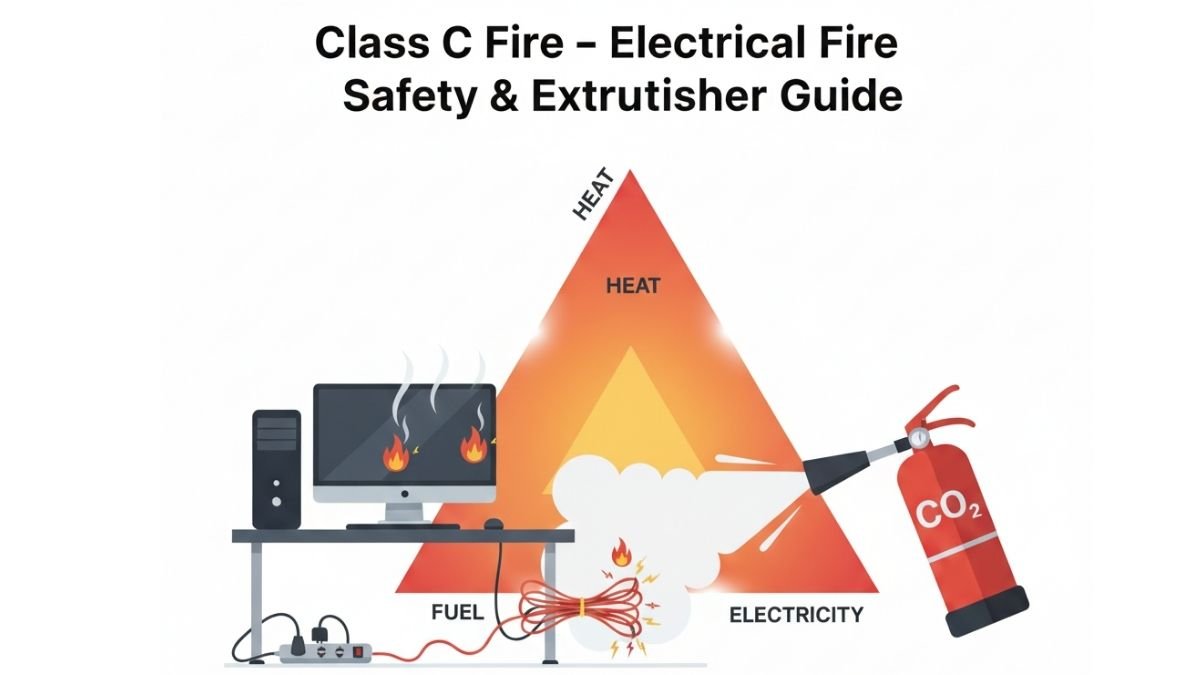
Class C Fire ऐसी आग होती है जो विद्युत उपकरणों, तारों, स्विचबोर्ड, जनरेटर या पैनल बोर्ड में लगती है। इस प्रकार की आग में electric current मौजूद रहता है, जिससे झटका (electric shock) या विस्फोट का खतरा बढ़ जाता है। यही वजह है कि इसे सबसे खतरनाक श्रेणी की आगों में गिना जाता है।
इस गाइड में आप जानेंगे Class C Fire के 5 प्रमुख तथ्य — कौन से उपकरणों से यह आग लगती है, सही Fire Extinguisher Types and Uses क्या हैं, CO₂ Extinguisher और ABC Dry Powder में क्या अंतर है, और कौन से Electrical Fire Safety Tips आपको अपनाने चाहिए।
यदि आप घर, दफ्तर या फैक्ट्री में बिजली से जुड़े उपकरणों का उपयोग करते हैं, तो यह लेख आपके लिए बेहद उपयोगी साबित होगा। इसमें आप सीखेंगे कि बिजली से लगी आग (Electrical Fire) को कैसे पहचाना जाए और सुरक्षित रूप से बुझाया जाए।
What is Class C Fire?
Class C Fire ऐसी आग होती है जो electrical sources — जैसे wiring, switchboards, transformers, power panels और electronic devices — में लगती है। यह आग short-circuit, loose connection या overloading के कारण उत्पन्न होती है, जहाँ electric current की उपस्थिति इसे अत्यधिक खतरनाक बना देती है।
इस प्रकार की आग को बुझाने के लिए पानी या फोम का उपयोग नहीं किया जा सकता क्योंकि वे बिजली के संवाहक (conductors) हैं और electric shock का खतरा बढ़ाते हैं। इसलिए Class C Fires के लिए सबसे सुरक्षित extinguishers हैं — CO₂ Fire Extinguisher और ABC Dry Powder Extinguisher। ये non-conductive agents बिजली के प्रवाह को बाधित किए बिना आग को बुझाते हैं।
| Parameter | Details |
|---|---|
| 🔥 Fire Class | Class C (Electrical Fire) |
| ⚡ Common Sources | Switchboards, Cables, Generators, Electrical Panels |
| 🧯 Suitable Extinguishers | CO₂ Fire Extinguisher, ABC Dry Powder Extinguisher |
| ⚠️ Avoid Using | Water or Foam Extinguishers (Risk of Electric Shock) |
| 🎯 Fire Symbol | Letter “C” inside Blue Circle (as per BIS / NFPA) |
BIS Standards (IS 15683 / IS 2190) के अनुसार, Class C Fires में केवल non-conductive extinguishing agents का उपयोग किया जाना चाहिए ताकि बिजली का प्रवाह बाधित न हो और आग सुरक्षित रूप से बुझाई जा सके।
Class C Fire Examples and Common Causes
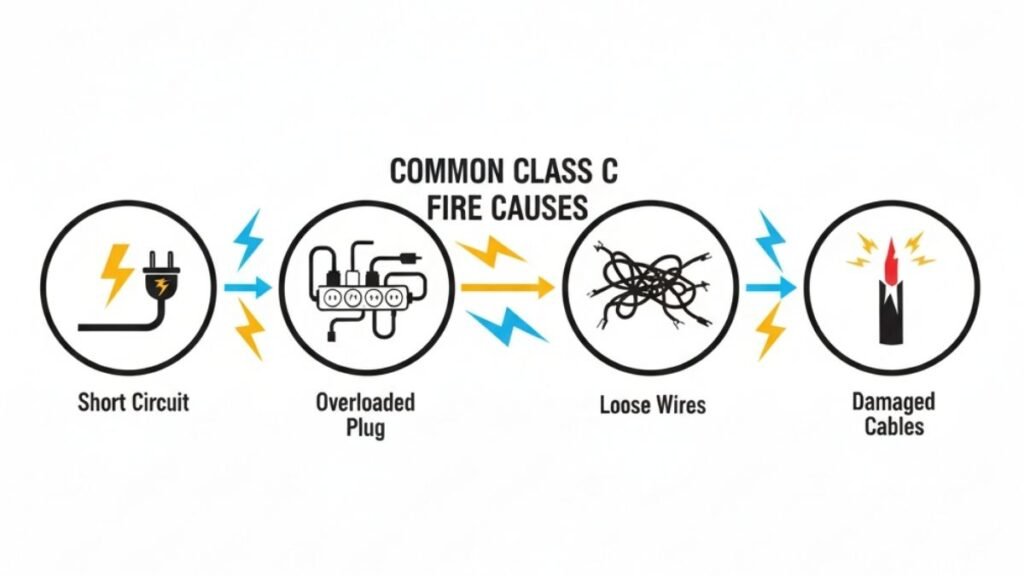
Class C Fire उन आगों को कहा जाता है जो बिजली से चलने वाले उपकरणों (electrical or electronic devices) के कारण लगती हैं। ये आग आमतौर पर तब शुरू होती है जब short-circuit, loose wiring, overload या faulty insulation से spark उत्पन्न होता है। इसकी विशेषता यह है कि जब तक बिजली का प्रवाह चालू रहता है, तब तक आग तेजी से फैलती रहती है।
Class C Fire अक्सर ऑफिस, फैक्ट्री, सर्वर रूम, या घरों में लगती है जहाँ एक साथ कई electrical devices उपयोग किए जाते हैं। नीचे दी गई तालिका में कुछ सामान्य Class C Fire Examples and Causes दिए गए हैं —
| Example | Source of Fire | Possible Cause |
|---|---|---|
| Electrical Panel / Distribution Board | High-voltage wiring, circuit breakers | Overheating or loose terminal connections |
| Computer Servers / Office PCs | CPU, SMPS or adapter | Dust accumulation or power surge |
| Air Conditioner / Refrigerator | Compressor motor or capacitor | Short-circuit due to insulation damage |
| Electric Heaters / Irons | Heating element and cord | Overload or faulty plug connection |
| Transformers / Generators | Oil-cooled electrical systems | Spark ignition or insulation failure |
| Charging Devices / Mobile Chargers | Adapter, socket or wiring | Overheating or cheap low-quality chargers |
इन आगों की सबसे बड़ी समस्या यह होती है कि इनका source तुरंत दिखाई नहीं देता। जैसे ही wiring या socket में fire starts internally, smoke और heat पूरे कमरे में फैल जाती है। इसलिए electrical safety checks हर workplace में नियमित रूप से होने चाहिए।
अब जब आपको Class C Fire के प्रमुख examples और कारणों का पता चल गया है, तो अगले सेक्शन में हम जानेंगे कि इन आगों को बुझाने के लिए कौन-से best fire extinguishers इस्तेमाल किए जाने चाहिए।
How to Identify Class C Fire – Colour Code and Safety Symbols
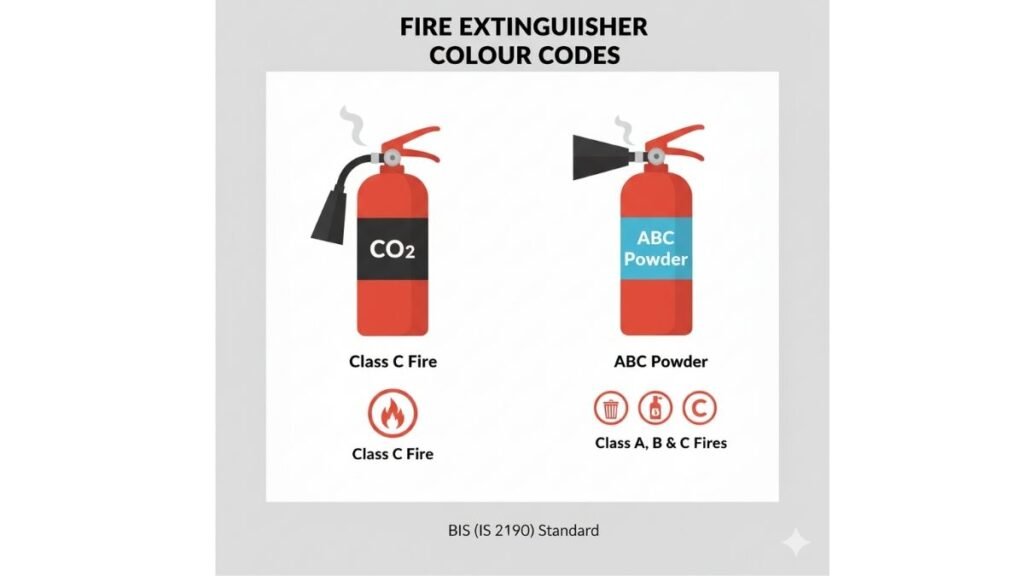
Class C Fire की पहचान करना आसान है अगर आप उसके colour code, fire symbol और label marking को जानते हैं। भारत में Bureau of Indian Standards (BIS – IS 15683 / IS 2190) ने प्रत्येक fire extinguisher के लिए एक विशेष identification colour band निर्धारित किया है। Class C आग के लिए यह Blue Colour Band होता है।
इस band के साथ extinguisher के body पर “C” symbol वाला blue circle भी बना होता है, जो बताता है कि यह Electrical Fires बुझाने के लिए उपयुक्त है। नीचे दी गई टेबल में Fire Extinguisher Colour Codes और उनके संबंधित उपयोग (applications) का सुंदर चार्ट दिया गया है —
| Colour Band | Extinguisher Type | Suitable Fire Class | Fire Symbol | Use For |
|---|---|---|---|---|
| 🔵 Blue Band | Dry Powder (ABC / DCP) | Class A, B, C | Letter “C” inside Blue Circle | Electrical Fire, short-circuit, wiring |
| ⚫ Black Band | Carbon Dioxide (CO₂) | Class B & C | Letter “C” inside Blue Circle + “B” in Red Square | Switchboards, servers, transformers |
| 🟢 Green Band | Clean Agent (HFC-236fa) | Class A, B, C | Letter “C” inside Green Circle | Data centers, control rooms, electronics |
Fire class symbol आमतौर पर extinguisher के front label या training chart पर होता है। Class C के लिए यह एक Blue Circle होता है, जिसके अंदर सफेद रंग में “C” लिखा होता है। यह दर्शाता है कि extinguisher बिजली से लगी आग (Electrical Fire) पर उपयोग किया जा सकता है।
अगर किसी extinguisher पर colour band या fire symbol मिट गया है, तो उसे तुरंत service या replacement के लिए भेजना चाहिए। BIS के नियमों के अनुसार, हर extinguisher पर label, pressure gauge और safety pin साफ दिखाई देना अनिवार्य है।
Difference Between Class C and Other Fire Classes
नीचे की तालिका Class C (electrical) आग को Class A, B, D और F जैसी अन्य प्रमुख fire classes से तुलना कर के दिखाती है। इससे आपको तुरंत समझ आएगा कि हर class किस प्रकार के materials और hazards से जुड़ी है और कौन-सा extinguisher किस स्थिति में उपयुक्त है।
| Fire Class | Common Materials / Examples | Characteristic | Suitable Extinguisher | Colour Code / Symbol |
|---|---|---|---|---|
| Class A | Wood, Paper, Cloth, Cardboard, Furniture | Ordinary combustible solids; leave embers | Water, Foam, ABC Powder | Red body; “A” in green triangle |
| Class B | Petrol, Diesel, Oil, Paint, Grease (flammable liquids) | Liquid fuels; rapid spread via vapours | Foam (AFFF), CO₂, ABC Powder | Cream/Yellow band (foam) or black (CO₂); “B” in red square |
| Class C | Wiring, Switchboards, Generators, Motors, Appliances | Electrical source present; risk of electric shock | CO₂, ABC Dry Powder, Clean Agent (non-conductive) | Blue band (ABC), black (CO₂) + “C” in blue circle |
| Class D | Combustible metals — Magnesium, Sodium, Aluminium | Very high-temperature metal fires; special agents needed | Dry powder agents specific for metal (Class D powder) | Often labelled “D”; specialist signage |
| Class F (K) | Cooking oils & fats (deep fat fryers, commercial kitchens) | High-temperature oil fires; re-ignition risk | Wet Chemical extinguishers (potassium acetate) | Often shown as “F” or “K”; kitchen safety signage |
ध्यान दें कि Class C Fire में मुख्य चुनौती electric current है — इसलिए हमेशा non-conductive agents का ही प्रयोग करें। अगर आग में mixed materials हों (उदा. electric device के साथ कपड़ा या plastic), तो ABC Dry Powder बहुउद्देशीय विकल्प हो सकता है।
Best Fire Extinguishers for Class C Fire
Class C Fire के लिए केवल वही extinguishers सुरक्षित माने जाते हैं जो non-conductive extinguishing agents का उपयोग करते हैं। इसका उद्देश्य यह सुनिश्चित करना है कि बिजली के प्रवाह (electric current) से उपयोगकर्ता को झटका (electric shock) न लगे और आग को प्रभावी रूप से बुझाया जा सके।
भारत में BIS Standard IS 15683 के अनुसार, Class C Fire के लिए दो प्रमुख extinguishers सबसे उपयुक्त हैं — CO₂ Fire Extinguisher और ABC Dry Powder Extinguisher। नीचे दी गई तुलना तालिका आपको यह समझने में मदद करेगी कि किस स्थिति में कौन-सा extinguisher बेहतर रहेगा।
| Extinguisher Type | Main Agent | Works Best For | Advantages |
|---|---|---|---|
| ⚫ CO₂ Fire Extinguisher | Carbon Dioxide (CO₂ Gas) | Electrical panels, servers, computers, switchboards | Non-conductive, leaves no residue, ideal for electronics |
| 🔵 ABC Dry Powder Extinguisher | Mono Ammonium Phosphate | Electrical fires + mixed Class A/B materials | Multi-purpose use; interrupts chemical reaction of fire |
| 🟢 Clean Agent Extinguisher | HFC-236fa (Halocarbon Gas) | Server rooms, data centers, control panels | Zero residue, safe for sensitive equipment |
CO₂ Fire Extinguisher Class C Fire के लिए सबसे standard विकल्प है क्योंकि यह oxygen को हटाकर combustion process को रोक देता है और किसी भी प्रकार का अवशेष (residue) नहीं छोड़ता। वहीं ABC Dry Powder extinguisher तब उपयोगी होता है जब electrical आग अन्य materials (जैसे कागज़ या कपड़ा) के साथ मिश्रित हो।
Clean Agent Extinguisher आधुनिक विकल्प है जो Halocarbon-based gas से भरा होता है और high-value electronics (जैसे servers या control panels) के लिए सुरक्षित रहता है। यह ozone-friendly और residue-free solution प्रदान करता है।
How to Control and Prevent Class C Fire – Electrical Safety Tips
Class C (electrical) fires को control और prevent करने के लिए दो बात सबसे ज़रूरी हैं — सही तकनीक और नियमित मेंटेनेंस। नीचे practical कदम दिए गए हैं जिन्हें घर, ऑफिस और इंडस्ट्री में तुरंत लागू किया जा सकता है।
Preventive Measures
- Use certified equipment: केवल BIS-certified केबल, sockets और switches का उपयोग करें।
- Avoid overloaded circuits: एक socket पर कई high-power devices न चलाएँ; distribution properly करें।
- High-quality chargers & adapters: सस्ते chargers overheating और short-circuit का कारण बनते हैं—OEM या certified products ही लें।
- Proper storage: electrical panels और generators के आसपास combustible material न रखें।
Electrical Maintenance
- Periodic inspection: पुराने wiring, loose terminals और damaged insulation की regular जांच करें।
- Earthing & grounding: सुनिश्चित करें कि सभी panels और equipment का proper earthing हो।
- Circuit breakers & RCDs: Residual Current Devices और MCB/ELCB सही तरीके से काम कर रहे हैं या नहीं, test करें।
- Dust & ventilation: server rooms और distribution rooms को clean और well-ventilated रखें ताकि heat build-up न हो।
Emergency Response
- Cut power first: संभव हो तो main power supply बंद करें — इससे electric shock का risk कम होता है।
- Use non-conductive extinguishers: CO₂ या Clean Agent का ही उपयोग करें; ABC Powder तब उपयोगी जब materials mixed हों।
- Evacuate & call help: अगर आग control से बाहर हो तो तुरंत evacuation और local fire services को call करें।
- Do not touch: बिजली वाले उपकरणों से बिना insulation या PPE के संपर्क न करें।
Do’s & Don’ts
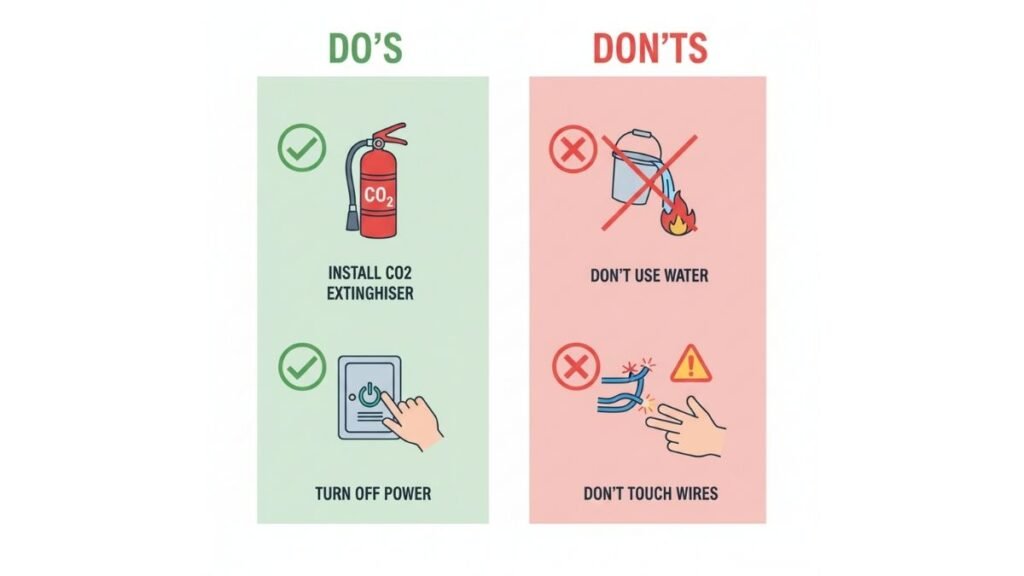
| Do’s ✅ | Don’ts ❌ |
|---|---|
| Install CO₂ / Clean Agent extinguishers near electrical panels | Never use water on electrical fires |
| Switch off main power if safe to do so | Don’t attempt repairs while equipment is live |
| Schedule annual electrical audits by certified electrician | Avoid using damaged cords, plugs or uncertified adapters |
| Train staff on PASS method and emergency drills | Don’t ignore unusual smells, sparks or frequent tripping |
Conclusion – Final Thoughts on Class C Fire
Class C Fire विद्युत उपकरणों, वायरिंग और लाइव सर्किट्स से जुड़ी आग होती है, जो गलत प्रकार के extinguisher या देर से प्रतिक्रिया के कारण तेजी से फैल सकती है। इसीलिए electrical fire safety में सबसे ज़रूरी है — सही extinguisher (जैसे CO₂ या Clean Agent) का चयन और समय पर power source को isolate करना।
BIS (IS 15683) और NFPA guidelines के अनुसार, हर workplace में Class C risk area के पास एक CO₂ Extinguisher और एक ABC Dry Powder Extinguisher अवश्य होना चाहिए। यह combination आग के फैलाव को रोकने के साथ साथ secondary damage को भी कम करता है।
याद रखें — prevention हमेशा reaction से बेहतर है। यदि आप समय-समय पर electrical wiring, circuit load और safety training पर ध्यान देते हैं, तो Class C Fire जैसी आपदाओं से बचाव पूरी तरह संभव है। अधिक जानकारी और colour code details के लिए पढ़ें 👉 Fire Extinguisher Colour Codes Guide.
Frequently Asked Questions
Class C Fire क्या होती है?
Class C Fire वो आग होती है जो बिजली से चलने वाले उपकरणों, तारों या live circuits में लगती है।
Class C Fire का मुख्य कारण क्या होता है?
इसके प्रमुख कारण faulty wiring, loose connections, overloaded sockets और short circuit हैं।
Class C Fire पर कौन सा extinguisher इस्तेमाल किया जाता है?
CO₂ Fire Extinguisher सबसे उपयुक्त है क्योंकि यह बिजली का संचालन नहीं करता और heat कम करता है।
क्या ABC Fire Extinguisher Class C Fire के लिए सही है?
हाँ, ABC Dry Powder Extinguisher का उपयोग किया जा सकता है, खासकर जब आग electrical और solid materials दोनों में हो।
Class C Fire के लिए कौन सा colour code होता है?
CO₂ Extinguisher का Black Colour Band और ABC Extinguisher का Blue Band Class C आग के लिए उपयोग होता है।
Class C Fire को कैसे रोका जा सकता है?
सही wiring, circuit overload से बचाव, और CO₂ extinguishers की नियमित जांच Class C Fire रोकने में मदद करती है।
क्या Class C Fire पर पानी डालना सुरक्षित है?
नहीं ❌, पानी conductor होता है और electrocution का खतरा बढ़ाता है। केवल non-conductive extinguishers का प्रयोग करें।
कौन-कौन से उपकरण Class C Fire के अंतर्गत आते हैं?
Computers, electrical panels, transformers, AC units, microwave ovens, servers आदि Class C risk category में आते हैं।
Class C और Class A Fire में क्या फर्क है?
Class A Fire ठोस वस्तुओं (लकड़ी, कपड़ा, कागज़) में लगती है, जबकि Class C Fire बिजली से जुड़ी वस्तुओं में लगती है।
Class C Fire से सुरक्षा के लिए क्या उपाय अपनाए जाएँ?
Proper grounding, MCB और RCD installation, quality cables का उपयोग और staff training सबसे अच्छे सुरक्षा उपाय हैं।

4 thoughts on “Class C Fire in Hindi – 5 Facts Extinguishers & Safety Guide”