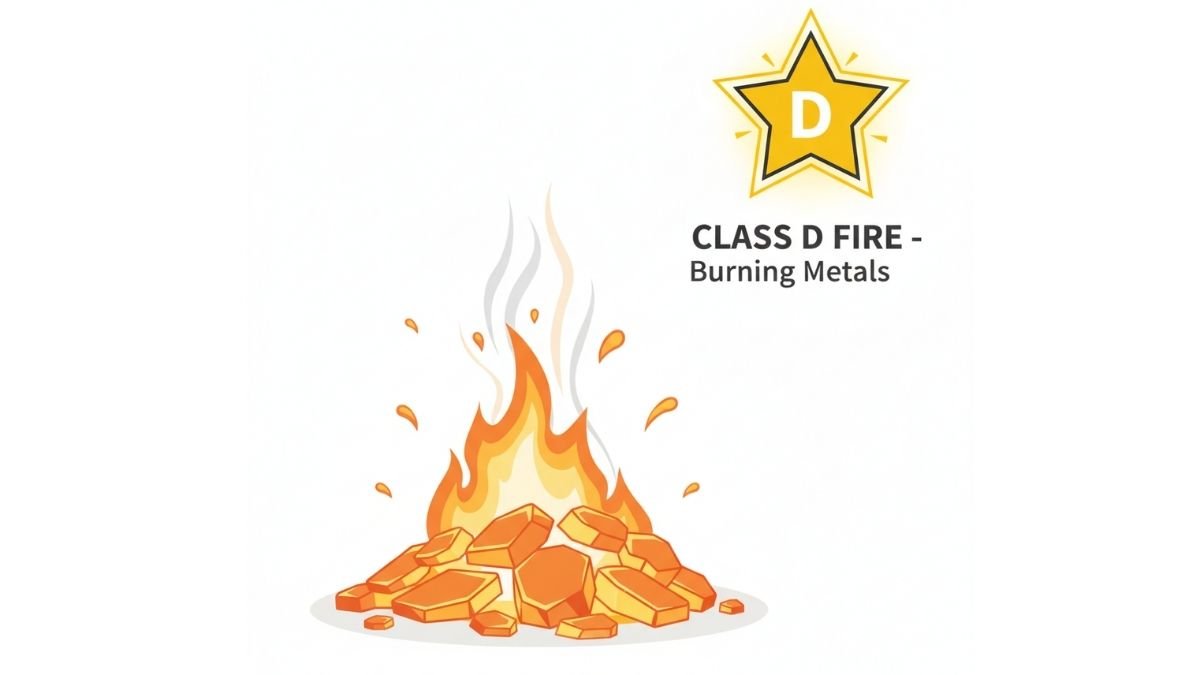
Class D Fire वह आग है जो ज्वलनशील धातुओं (metal fires) — जैसे magnesium, sodium, potassium, titanium — में लगती है। यह आग अत्यधिक तापमान और तेज़ रासायनिक प्रतिक्रिया के कारण खतरनाक होती है। इस लेख में हम जानेंगे कि ऐसी आग कैसे शुरू होती है, किन परिस्थितियों में फैलती है और कौन-से extinguishers इसे सुरक्षित रूप से नियंत्रित कर सकते हैं।
यदि आप सामान्य आग के प्रकारों के बारे में जानना चाहते हैं, तो Fire Extinguisher Types and Uses गाइड ज़रूर पढ़ें। वहीं, Class D आग के लिए केवल विशेष प्रकार के ABC Dry Powder या metal-specific extinguishers ही उपयोगी होते हैं। अन्य extinguishers जैसे CO₂ यहाँ अप्रभावी या खतरनाक साबित हो सकते हैं।
उद्योगों और लैब्स में Class D आग को नियंत्रित करने के लिए NFPA (National Fire Protection Association) तथा OSHA Fire Safety Guidelines द्वारा बनाए गए सुरक्षा मानक लागू होते हैं। वहीं भारत में Bureau of Indian Standards (BIS) ने IS 15683 मानक के तहत metal fires के लिए विशेष नियम निर्धारित किए हैं।
चलिए अब आगे बढ़ते हैं और जानते हैं Class D Fire के 5 महत्वपूर्ण तथ्य, उपयोग किए जाने वाले extinguishers, और ज़रूरी safety tips जो किसी भी workshop या industry में आपकी सुरक्षा सुनिश्चित करेंगे।
What is Class D Fire?
Class D Fire ऐसी आग होती है जो धातु (Metal) से संबंधित होती है — विशेष रूप से combustible metals जैसे Magnesium, Sodium, Potassium, Titanium, Zirconium और Lithium में। ये आग अत्यधिक तापमान (2000°C या उससे अधिक) पर जलती है और सामान्य पानी या CO₂ extinguisher से नहीं बुझाई जा सकती।
इस प्रकार की आग आमतौर पर metal industries, laboratories, battery manufacturing units या chemical workshops में लगती है, जहाँ धातु का बुरादा (metal dust) या powder मौजूद होता है। केवल एक छोटी सी spark, friction या static discharge भी इसे भड़काने के लिए काफी होती है।
Key Characteristics of Class D Fire
- 🔥 यह आग combustible metals या fine metal dust से शुरू होती है।
- 🔥 यह self-sustaining होती है, यानी oxygen न होने पर भी जलती रहती है।
- 🔥 Flame का तापमान बहुत अधिक होता है (bright white या bluish glow)।
- 🚫 Water या CO₂ का प्रयोग करने से explosion हो सकता है।
- ✅ केवल Dry Powder (Metal Fire Extinguishers) से ही इसे नियंत्रित किया जा सकता है।
Common Metals Causing Class D Fires
| Metal | Used In | Fire Behaviour | Suitable Extinguisher |
|---|---|---|---|
| Magnesium | Aircraft parts, automobile tools | White flame, reacts dangerously with water | Dry Powder (Sodium Chloride / Graphite) |
| Titanium | Aerospace & surgical equipment | Produces bright sparks, burns continuously | Class D Metal Extinguisher |
| Sodium / Potassium | Chemical labs, battery plants | Explodes on contact with moisture | Dry Sand or Metal-X Powder |
| Lithium | EV batteries, electronic devices | Releases toxic fumes, intense blue flame | Lith-X or Copper Powder Extinguisher |
भारत में, Bureau of Indian Standards (BIS) के अनुसार, Class D fires को नियंत्रित करने के लिए केवल Metal Fire Extinguishers का उपयोग किया जाना चाहिए, जो IS 15683:2018 के अंतर्गत प्रमाणित (certified) हों। वहीं अमेरिका में NFPA 10 Standard के तहत इसे “Metal Fire” के रूप में classify किया गया है।
Quick English Summary: Class D fires involve combustible metals like magnesium, titanium, and lithium. Only dry powder extinguishers such as Metal-X or Lith-X are effective. Never use water or CO₂, as they can cause violent reactions.
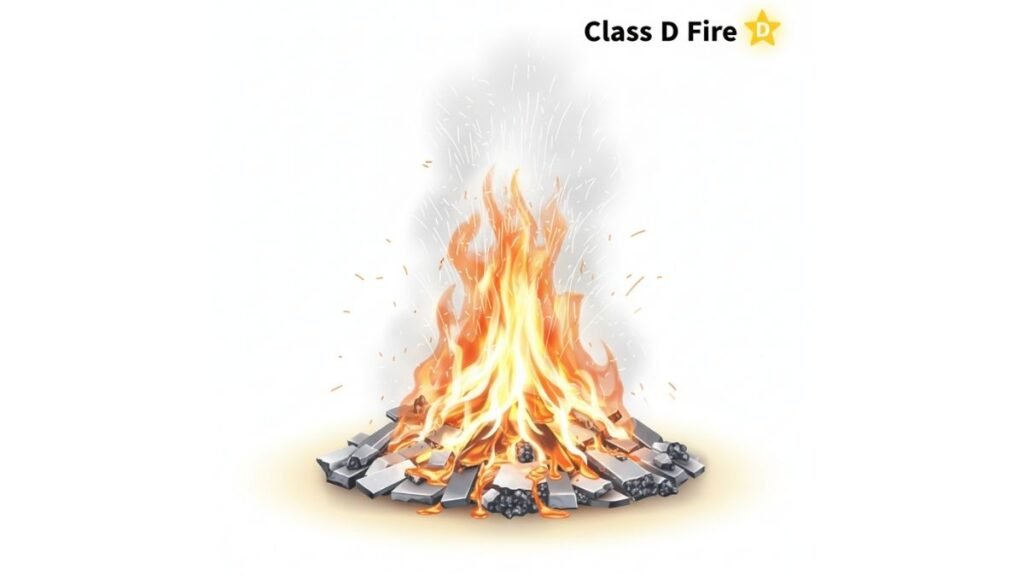
Quick English Summary
Class D fires involve combustible metals like magnesium, titanium, sodium, and lithium. These fires burn at extremely high temperatures (over 2000°C) and cannot be extinguished with water or CO₂. Only Dry Powder Fire Extinguishers such as Metal-X, Lith-X, or Copper Powder are effective. Class D fires are covered under BIS IS 15683 and NFPA 10 standards.
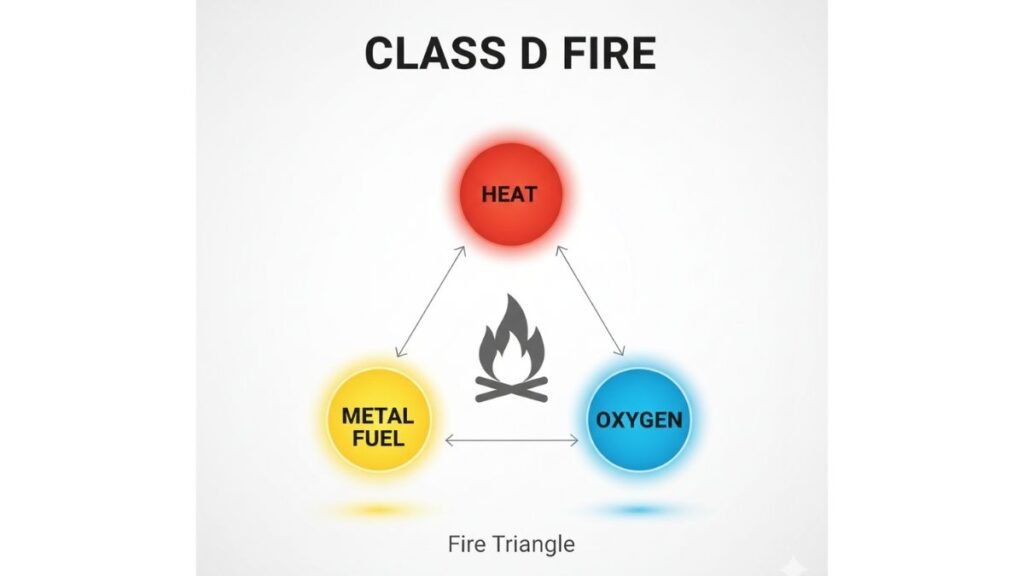
Class D Fire Examples and Common Causes
Class D Fire मुख्य रूप से उन स्थानों पर लगती है जहाँ ज्वलनशील धातुएँ (Combustible Metals) जैसे Magnesium, Titanium, Sodium, Potassium, Zirconium, और Lithium उपयोग में आती हैं। ये आग प्रायः धातु उद्योगों, प्रयोगशालाओं, battery manufacturing units और aircraft maintenance क्षेत्रों में देखी जाती है। इन धातुओं की खासियत होती है कि ये उच्च तापमान पर आसानी से जल उठती हैं और ऑक्सीजन के बिना भी जलती रह सकती हैं।
Common Examples of Class D Fires
| Example | Location | Cause of Fire | Prevention Tip |
|---|---|---|---|
| Magnesium Dust Explosion | Automotive workshop | Grinding or cutting sparks ignite metal dust | Use dust extraction and proper ventilation system |
| Lithium Battery Fire | Battery production or recycling plant | Overheating or short circuit in battery cells | Use temperature-controlled storage; avoid overcharging |
| Titanium Scrap Ignition | Aerospace or metal fabrication facility | Friction, impact, or welding sparks | Isolate reactive metals; keep extinguishers ready |
| Sodium Fire in Lab | Chemical laboratory | Moisture or water contact with sodium metal | Store under mineral oil or inert gas environment |
ये सभी Class D Fire examples एक समान pattern दिखाते हैं — जहां धातु की चिंगारी (spark), घर्षण (friction) या उच्च तापमान के कारण combustion शुरू होता है। Class C Fire के विपरीत, इन आगों में बिजली या वायरिंग नहीं बल्कि धातु स्वयं fuel की तरह कार्य करती है।
Quick English Summary
Class D fire examples include incidents in metal workshops, labs, and battery plants — caused by sparks igniting magnesium, titanium, lithium, or sodium dust. These fires react violently with water and spread quickly due to high heat. Always store reactive metals safely and use Class D Dry Powder Extinguishers (Metal-X, Lith-X, Copper Powder) for effective suppression and workplace protection.
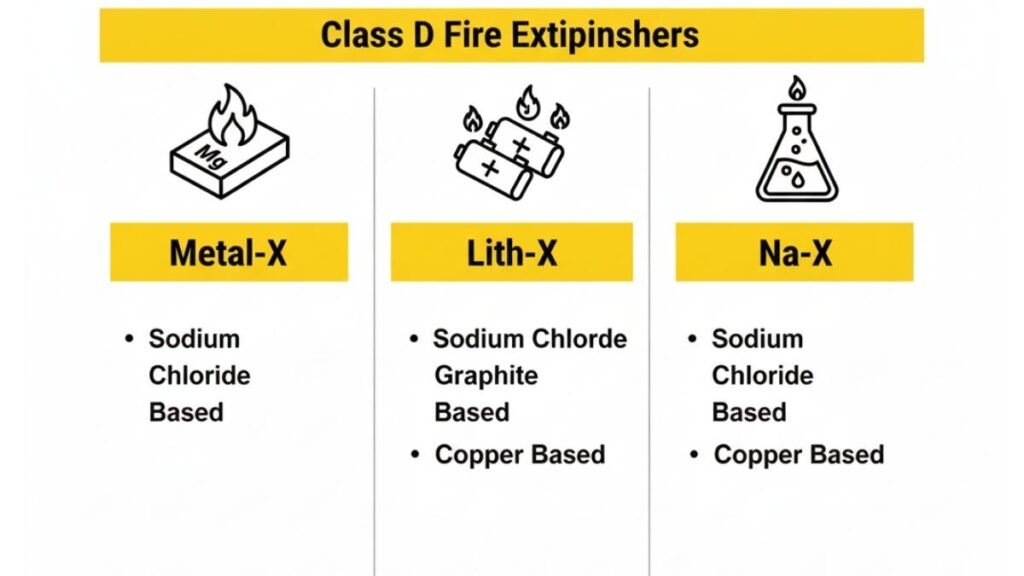
Best Fire Extinguishers for Class D Fire – Types and Applications
Class D Fire के लिए केवल Dry Powder Fire Extinguishers ही प्रभावी होते हैं। ये विशेष रूप से combustible metals जैसे Magnesium, Sodium, Titanium और Lithium के लिए डिज़ाइन किए जाते हैं। पानी या CO₂ का उपयोग इस आग पर बेहद खतरनाक होता है, क्योंकि यह explosion या metal splatter का कारण बन सकता है।
भारत में ऐसे extinguishers को BIS IS 15683 और अंतरराष्ट्रीय स्तर पर NFPA 10 Standard के अंतर्गत classify किया गया है। आप इनके बारे में विस्तार से Fire Extinguisher Types and Uses गाइड में भी पढ़ सकते हैं।
| Extinguisher Type | Main Agent | Suitable For | Special Features |
|---|---|---|---|
| Metal-X | Sodium Chloride (NaCl) Based Powder | Magnesium, Sodium, Potassium | Forms crust over burning metal; cuts off oxygen |
| Lith-X | Graphite-Based Dry Powder | Lithium, Lithium-ion Batteries | Non-reactive and conductive-safe; ideal for battery labs |
| Copper Powder Type | Finely divided Copper Powder | Reactive Metals like Lithium and Sodium | Absorbs heat rapidly; minimizes re-ignition |
| Special Alloy Powders | Customized Metal-specific Agent | Industrial Metal Furnaces | Tailored formulation for unique fire risks |
ऐसे extinguishers का उपयोग मुख्यतः heavy industries, machine shops, battery manufacturing plants और aerospace applications में किया जाता है जहाँ metal dust या molten fragments से आग लगने की संभावना रहती है। Class D Fire को बुझाने के बाद residue को ठंडा होने तक disturb न करें — क्योंकि अंदरूनी धातु फिर से ignite हो सकती है।
Quick English Summary
Class D fire extinguishers are designed for metal fires involving magnesium, titanium, lithium, and sodium. These fires react dangerously with water and CO₂, so only Dry Powder Agents like Metal-X, Lith-X, and Copper Powder should be used. Each forms a protective crust over the burning metal, cutting off oxygen and heat. BIS IS 15683 and NFPA 10 standards classify these under special-purpose extinguishers, identified by the Yellow Colour Band. Always ensure trained personnel handle these devices.
How to Identify Class D Fire – Colour Code and Safety Symbols
Class D Fire की पहचान उसके विशेष colour code और safety symbol से की जा सकती है। यह आग उन जगहों पर लगती है जहाँ combustible metals जैसे Magnesium, Titanium, Lithium, Potassium या Zirconium मौजूद होते हैं। इन आगों के लिए Class D Fire Extinguishers पर विशेष Yellow Colour Band दिया जाता है जो दर्शाता है कि यह केवल धातु (metal) आग के लिए उपयुक्त है।
इस आग की सबसे बड़ी पहचान होती है — सफेद चमक के साथ धातु का पिघलना और अत्यधिक तापमान पर जलना। अगर ऐसे क्षेत्र में पानी या CO₂ का उपयोग किया जाए तो धमाका (explosion) या metal splatter हो सकता है। इसलिए यह जानना जरूरी है कि किस रंग के extinguisher और किस symbol से आप metal fire को पहचान सकते हैं।
Colour Code for Class D Fire
| Fire Class | Colour Band | Extinguisher Type | Fire Symbol | Usage Area |
|---|---|---|---|---|
| Class D | 🟡 Yellow Band | Dry Powder (Metal-X, Lith-X, Copper Powder) | “D” inside a Yellow Star Shape | Metal industries, battery plants, workshops |
Safety Symbol Meaning
Class D fire का symbol आमतौर पर yellow star होता है जिसके अंदर काले रंग में “D” लिखा होता है। यह संकेत देता है कि extinguisher या fire zone विशेष रूप से धातु आधारित आग (metal fire) के लिए निर्धारित है। भारत में यह symbol BIS IS 15683 के अंतर्गत और अंतरराष्ट्रीय स्तर पर NFPA 10 के तहत प्रमाणित है।
Class D fires को बुझाने के बाद area को ठंडा होने दें और कभी भी ashes या residues को disturb न करें। यह re-ignition का कारण बन सकता है। इसके लिए proper fire safety training और Fire Extinguisher Types and Uses की समझ बेहद आवश्यक है।
Quick English Summary
Class D fire identification is done using the yellow colour band and a D symbol inside a yellow star. It involves burning of metals like magnesium, lithium, and titanium. Only Dry Powder Extinguishers such as Metal-X or Lith-X are effective. Avoid using water or CO₂ as they can cause violent reactions or explosions. Always check BIS (IS 15683) or NFPA 10 certification before use.
Difference Between Class D and Other Fire Classes
Class D Fire धातु (metal) आधारित आग होती है, जबकि अन्य fire classes — जैसे Class A Fire (wood & paper), Class B Fire (liquid & gas), और Class C (electrical fires) — अलग प्रकार के स्रोतों से लगती हैं। सही अंतर समझना बहुत जरूरी है क्योंकि हर आग के लिए अलग fire extinguisher type और safety protocol की आवश्यकता होती है।
Comparison Chart – Class D vs Other Fire Classes
| Parameter | Class A Fire | Class B Fire | Class C Fire | Class D Fire |
|---|---|---|---|---|
| Fuel Type | Solid (Wood, Paper, Cloth) | Liquid & Gas (Oil, Petrol) | Electrical Equipment | Combustible Metals (Magnesium, Lithium) |
| Nature of Fire | Slow-burning | Explosive / Rapid Spread | Sparking or Electric Arc | Intense Heat, Metal Sparks |
| Colour Code | 🔴 Red Band | 🟡 Cream Band | ⚫ Black Band | 🟡 Yellow Band |
| Extinguisher Type | Water / Foam | Foam / CO₂ | CO₂ / Dry Powder | Dry Powder (Metal-X, Lith-X) |
| Primary Symbol | 🅰️ Green Triangle | 🅱️ Red Square | 🅲️ Blue Circle | 🅳️ Yellow Star |
| Safety Standard | BIS IS 15683 | NFPA 10 | IS 2190 / NFPA 70 | NFPA 484 – Combustible Metals |
| Safe Agent | Water | Foam | CO₂ | Dry Metal Powder |
जैसा कि आप देख सकते हैं, Class D Fire अन्य सभी fire classes से काफी अलग होती है। इसमें heat level अत्यधिक होता है और गलत extinguisher (जैसे पानी या CO₂) का उपयोग बड़ा विस्फोट (metal reaction) कर सकता है। इसलिए NFPA 484 और BIS IS 15683 दोनों में Class D को “special hazard fire” के रूप में वर्गीकृत किया गया है।
Quick English Summary
Class D fires differ from A, B, and C classes as they involve combustible metals like magnesium and lithium. These fires require Dry Powder Extinguishers only, identified by a yellow colour band. Water or CO₂ can cause explosions, making NFPA 484 and BIS IS 15683 essential standards for safety. Always conduct proper training and choose the correct extinguisher type.
Best Fire Extinguishers for Class D Fire – Types and Applications
Class D Fire Extinguishers खास तौर पर धातु आधारित आग (metal fires) को नियंत्रित करने के लिए बनाए जाते हैं। ये Dry Powder Extinguishers category में आते हैं और उच्च तापमान वाली आग को ठंडा कर oxygen supply को काटने का काम करते हैं। इनका मुख्य उपयोग उद्योगों, लैब्स, और बैटरी निर्माण इकाइयों में होता है। सही extinguisher का चयन जानना बहुत जरूरी है क्योंकि गलत एजेंट प्रयोग से आग और बढ़ सकती है या विस्फोट हो सकता है।
Types of Class D Fire Extinguishers
| Extinguisher Type | Main Agent | Suitable For | Advantages |
|---|---|---|---|
| Metal-X Dry Powder Extinguisher | Sodium Chloride (NaCl) | Magnesium, Sodium, Aluminium | Forms crust to cut off oxygen; prevents re-ignition |
| Lith-X Powder Extinguisher | Copper-Based Powder | Lithium & Lithium-Ion Batteries | Safe for reactive lithium fires; effective for battery plants |
| Na-X Extinguisher | Graphite Powder | Potassium, Titanium, Zirconium | High heat absorption and chemical stability |
| Specialized Dry Powder Systems | Customized Mix (Metal-Safe) | Industrial and Military Facilities | Fixed installation for large-scale metal fire safety |
इन extinguishers को NFPA 484 और BIS IS 15683 के अंतर्गत certified होना चाहिए। इन्हें कभी भी Class A, B, या C fires पर उपयोग नहीं किया जाना चाहिए क्योंकि इनका chemical reaction अन्य आगों के साथ खतरनाक परिणाम दे सकता है। इन extinguishers के उपयोग की पूरी गाइड आप Fire Extinguisher Types and Uses पोस्ट में विस्तार से पढ़ सकते हैं।
Applications and Industries
- 🔹 Metal fabrication industries (magnesium & aluminium plants)
- 🔹 Battery manufacturing units (lithium-ion production lines)
- 🔹 Aerospace & defense labs handling reactive metals
- 🔹 Welding and machining workshops
- 🔹 Power storage & renewable energy sectors
Quick English Summary
Class D Fire Extinguishers use Dry Powder agents like Metal-X, Lith-X, or Na-X to control combustible metal fires involving magnesium, lithium, or titanium. They work by smothering the fire and cutting off oxygen. Only BIS IS 15683 or NFPA 484-certified extinguishers should be used. Avoid applying water or CO₂ — they can cause violent reactions or explosions.
Conclusion – Final Thoughts on Class D Fire
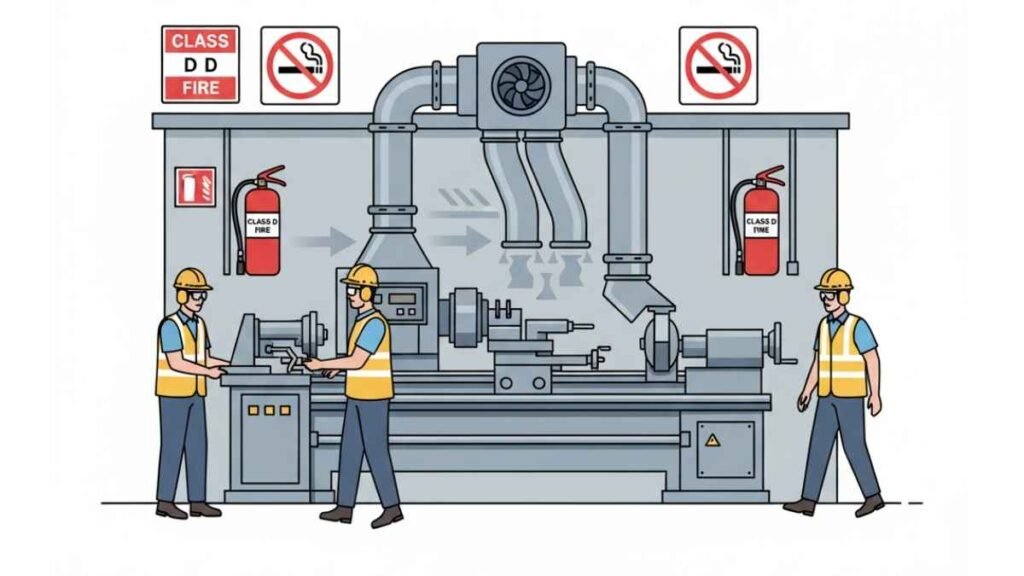
Class D Fire सबसे खतरनाक प्रकार की आगों में से एक होती है क्योंकि इसमें ज्वलनशील धातुएँ (Combustible Metals) शामिल होती हैं — जैसे Magnesium, Titanium, Lithium, और Sodium। इन धातुओं की आग बहुत तीव्र तापमान पर जलती है, और पारंपरिक Water या CO₂ Extinguisher से इसे बुझाना खतरनाक साबित हो सकता है।
इसलिए ऐसे स्थानों पर जहाँ metal fabrication, welding, machining, या chemical research होता है, वहाँ हमेशा Class D Fire Extinguisher (Dry Powder Type) उपलब्ध होना चाहिए। यह extinguisher धातु के तापमान को कम करता है और ऑक्सीजन की आपूर्ति रोककर आग को नियंत्रित करता है।
इस पोस्ट में बताए गए fire safety tips, preventive measures, और maintenance checklist का पालन करके आप अपने workplace या laboratory को सुरक्षित रख सकते हैं। साथ ही, अपनी टीम को समय-समय पर Fire Extinguisher Types and Uses की पूरी जानकारी देना भी ज़रूरी है।
याद रखें — Prevention is the Best Protection. धातु की आग से बचाव के लिए जागरूकता, सही उपकरण, और नियमित निरीक्षण ही आपकी सबसे मजबूत सुरक्षा ढाल हैं। 🔥
👉 अधिक जानकारी के लिए देखें: Class C Fire Safety Guide और Fire Extinguisher Colour Codes.
Frequently Asked Questions
What is Class D Fire?
Class D Fire वह आग होती है जो ज्वलनशील धातुओं जैसे Magnesium, Titanium, Lithium या Sodium से लगती है। इसे “Metal Fire” भी कहा जाता है।
Which materials cause Class D Fire?
यह आग ऐसे धातुओं में लगती है जो ऑक्सीजन के संपर्क में आकर तीव्रता से जलती हैं, जैसे Magnesium, Potassium, Aluminum powder आदि।
Which extinguisher is used for Class D Fire?
Class D Fire को बुझाने के लिए केवल Dry Powder Type Fire Extinguisher का उपयोग किया जाता है, जो धातु की गर्मी को कम करके ऑक्सीजन की आपूर्ति रोकता है।
Can we use Water or CO₂ Extinguisher on Class D Fire?
नहीं, Class D Fire पर पानी या CO₂ Extinguisher का उपयोग खतरनाक होता है क्योंकि यह धातु के साथ प्रतिक्रिया कर सकता है और विस्फोट कर सकता है।
What colour code represents Class D Fire Extinguisher?
Class D Fire Extinguisher का रंग कोड Yellow Band होता है। यह पहचान बताता है कि यह केवल Metal Fire के लिए उपयुक्त है।
Where are Class D Fires most likely to occur?
यह आग metal workshops, manufacturing plants, aircraft industries, chemical labs, और battery factories में अधिक होती है।
How can we prevent Class D Fire in industries?
नियमित सफाई, metal dust को हटाना, proper ventilation, और Dry Powder Extinguisher को standby रखना जरूरी है। साथ ही spark control systems लगाना भी उपयोगी है।
What should you do first during a Class D Fire?
तुरंत क्षेत्र खाली करें, बिजली का स्रोत बंद करें, और trained personnel को Class D Extinguisher का प्रयोग करने दें। कभी भी पानी का प्रयोग न करें।
Is Class D Fire dangerous?
हाँ, यह अत्यंत खतरनाक होती है क्योंकि इसमें धातु पिघलकर तेज़ गर्मी और विस्फोट उत्पन्न कर सकती है। यह contact burns और toxic fumes का कारण बनती है।
What standards apply to Class D Fire Extinguishers in India?
भारत में Class D Fire Extinguishers को BIS IS 15683 और IS 2190 standards के अनुसार certify किया जाता है।अंतरराष्ट्रीय स्तर पर NFPA 10 मानक लागू होता है।

2 thoughts on “Class D Fire – 5 Key Facts & Safety Tips (in Hindi)”