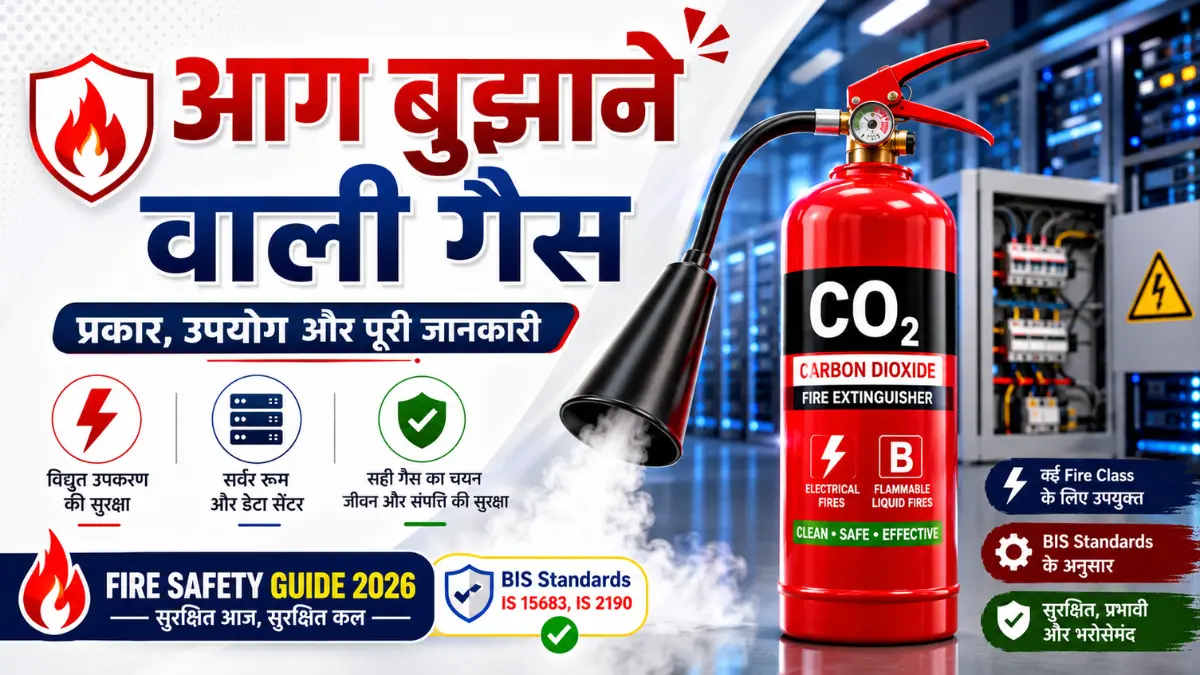
आग बुझाने वाली गैस (Fire Extinguishing Gas) या Fire Suppression Agent वह माध्यम है जो आग को ऑक्सीजन कम करके, गर्मी घटाकर या रासायनिक श्रृंखला (Chemical Chain Reaction) रोककर नियंत्रित करता है। सही एजेंट का चयन हमेशा आग के प्रकार (Fire Class) पर निर्भर करता है।
- ⚡ Electrical Fire: CO₂ (Carbon Dioxide) या Clean Agent
- 🖥️ Server Room / Data Center: FM-200, Novec 1230 या Inert Gas System
- 🍳 Kitchen Oil Fire (Class F): Wet Chemical Fire Extinguisher
- 🛢️ Flammable Liquid Fire: CO₂, Foam या Dry Chemical Powder (स्थिति के अनुसार)
महत्वपूर्ण: BIS IS 15683 तथा IS 2190 के अनुसार Fire Extinguisher या Fire Suppression Agent का चयन हमेशा Fire Class, Hazard Assessment और Protected Area के आधार पर किया जाना चाहिए।
👨🚒 Expert Insight (विशेषज्ञ की सलाह)
Fire Safety Expert Tip: किसी भी Fire Extinguishing Gas या Fire Suppression System का चयन केवल एजेंट के नाम के आधार पर नहीं करना चाहिए। सही विकल्प का निर्धारण Fire Class, Hazard Assessment, Protected Area, Electrical Equipment, Room Volume तथा लागू BIS Standards (IS 15683 एवं IS 2190) के अनुसार किया जाता है।
उदाहरण के लिए, CO₂ Fire Extinguisher विद्युत उपकरणों और ज्वलनशील तरल (Class B) आग के लिए प्रभावी हो सकता है, जबकि Server Room, Data Center और अन्य संवेदनशील इलेक्ट्रॉनिक क्षेत्रों में Clean Agent (FM-200, Novec 1230) या Inert Gas Systems अधिक उपयुक्त माने जाते हैं। प्रत्येक Fire Hazard के लिए एक ही Agent उपयुक्त नहीं होता।
🤔 क्या आप सोच रहे हैं कि अलग-अलग आग में कौन-से
fire extinguishing agents
या aag bujhane wali gas
का उपयोग किया जाता है?
Fire Safety में यह सबसे महत्वपूर्ण सवालों में से एक है क्योंकि
गलत Agent या Extinguisher का चयन
आग को बुझाने की बजाय
और अधिक खतरनाक
बना सकता है।
इसी वजह से यह Complete Guide आपको विभिन्न Fire Extinguishing Gases, Clean Agents और Fire Suppression Technologies के उपयोग, फायदे और सीमाओं (Limitations) के बारे में सरल भाषा में जानकारी देती है।
आज Industrial, Commercial और Residential Buildings में CO₂, FM-200, Novec 1230, Inert Gas Systems और Clean Agents का व्यापक रूप से उपयोग किया जाता है।
ये Agents विभिन्न प्रकार की आग (Class A, B, C, D और F) को नियंत्रित करने के लिए डिजाइन किए जाते हैं और प्रत्येक Agent का उपयोग उसके Fire Risk के अनुसार किया जाता है।
🔗 अगर आपने Fire Classes के बारे में नहीं पढ़ा है, तो पहले यह Guide देखें: आग कितने प्रकार की होती है?
🏭 Server Rooms, Electrical Panels, Laboratories और Commercial Kitchens जैसी जगहों पर पानी आधारित Fire Fighting Methods हमेशा उपयुक्त नहीं होते।
ऐसी परिस्थितियों में Gas-Based Fire Suppression Systems और Clean Agent Fire Extinguishers अधिक प्रभावी और सुरक्षित विकल्प माने जाते हैं।
Aag Bujhane Wali Gas Kya Hoti Hai?
Aag bujhane wali gas या Fire Extinguishing Agent एक ऐसा माध्यम होता है जो आग को बिना पानी फेंके नियंत्रित या बुझाने के लिए उपयोग किया जाता है। यह heat को कम कर सकता है, oxygen की उपलब्धता घटा सकता है या combustion chain reaction को रोक सकता है, जिससे आग तेजी से नियंत्रित हो जाती है। ऐसे Fire Extinguishing Agents विशेष रूप से energized electrical equipment, data centers, server rooms, laboratories और industrial facilities में उपयोग किए जाते हैं, जहाँ पानी या foam का उपयोग उपकरणों को नुकसान पहुँचा सकता है।
अगर आपने पहले Fire Classes के बारे में पढ़ा है, तो यह समझना आसान होगा कि किस प्रकार की आग में कौन-सा Fire Extinguishing Agent सबसे प्रभावी होता है। आग कितने प्रकार की होती है? (BIS Fire Classes Guide)
What is a Fire Extinguishing Gas?
Fire Extinguishing Gas वह गैस होती है जो आग के तीन प्रमुख तत्वों — Heat, Fuel और Oxygen — को प्रभावित करके आग को नियंत्रित करती है। कुछ Agents Oxygen Concentration कम करते हैं, जबकि कुछ Heat Absorption या Chemical Chain Reaction Interruption के माध्यम से कार्य करते हैं।
सबसे सामान्य Fire Extinguishing Agents में CO₂ (Carbon Dioxide), FM-200, Novec 1230, Inert Gas Systems (IG-100, IG-55) और ABC Dry Chemical Powder शामिल हैं। इनका उपयोग विभिन्न Fire Risks और Hazard Areas के अनुसार किया जाता है।
इन Agents का मुख्य लाभ यह है कि वे संवेदनशील उपकरणों को न्यूनतम नुकसान पहुँचाते हैं। इसी कारण इनका उपयोग IT Server Rooms, Electrical Panels, Bank Vaults, MRI Rooms, Telecommunication Facilities और Chemical Laboratories में व्यापक रूप से किया जाता है। भारत में Fire Safety Equipment और Fire Protection Systems से संबंधित विभिन्न मानक Bureau of Indian Standards (BIS) द्वारा प्रकाशित किए जाते हैं।
Difference Between Water, Foam & Gas Extinguishing Methods
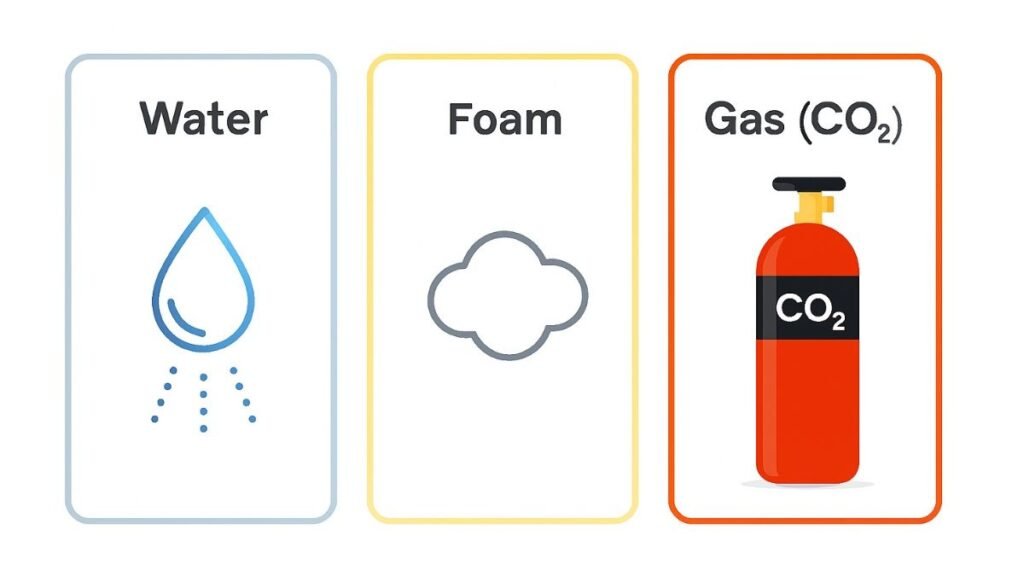
Fire Extinguishing Methods मुख्य रूप से तीन श्रेणियों में विभाजित किए जा सकते हैं — Water, Foam और Gas/Clean Agent Systems। हालाँकि इनका उद्देश्य आग बुझाना है, लेकिन इनकी कार्यप्रणाली और उपयोग क्षेत्र अलग-अलग होते हैं।
Aag Bujhane Wali Gas या Clean Agent Systems उन स्थानों के लिए विशेष रूप से उपयुक्त होते हैं जहाँ पानी आधारित Fire Fighting Methods उपकरणों या महत्वपूर्ण संपत्तियों को नुकसान पहुँचा सकते हैं। Server Rooms, Data Centers और Electrical Installations में Fire Extinguishing Agent का चयन हमेशा Risk Assessment और BIS Guidelines के अनुसार किया जाना चाहिए।
🔗 अधिक जानकारी के लिए पढ़ें: BIS Fire Classes Guide
Aag Bujhane Wali Gas Kaise Kaam Karti Hai?
सामान्य भाषा में कहें तो aag bujhane wali gas का काम आग के चारों elements (Heat, Fuel, Oxygen और Chain Reaction) में से किसी एक को तोड़ना होता है। यही concept आप Fire Tetrahedron में detail से पढ़ चुके हैं – गैस fire suppression system इन्हीं principles पर काम करते हैं।
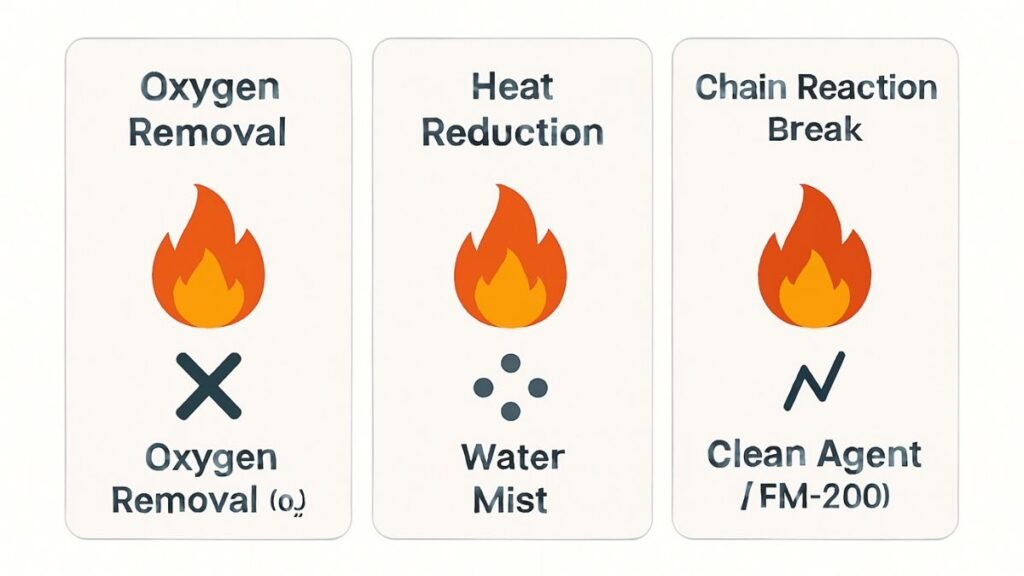
अलग–अलग प्रकार की aag bujhane wali gas cylinder (जैसे CO₂, Clean Agent, Inert Gas, Novec 1230) आग को तीन मुख्य तरीकों से control करती है: oxygen कम करके, heat घटाकर या chemical reaction तोड़कर। नीचे तीनों methods को simple Hindi में समझाया गया है।
Oxygen Removal Method
कई प्रकार की aag bujhane wali gas का primary काम होता है – oxygen displacement, यानी कमरे में मौजूद oxygen percentage को इतना कम कर देना कि flame खुद-ब-खुद बुझ जाए। CO₂ Gas, Inert Gas (IG-55, IG-541) ज्यादातर इसी तरीके से आग बुझाती हैं।
- Gas release होने पर room में CO₂ या inert gas भर जाती है।
- Oxygen level लगभग 21% से घटकर safe suppression level (~12–15%) तक आ जाता है।
- Oxygen कम होने से combustion process sustain नहीं हो पाता और flame extinguish हो जाती है।
यही reason है कि Class E (Electrical) Fire में CO₂ gas का इस्तेमाल बहुत common है – यहाँ पानी या foam की बजाय gas-based system ज्यादा सुरक्षित रहता है।
Heat Reduction Method
कुछ aag bujhane wali gas ऐसी होती हैं जो flame से heat खींचकर temperature को इतनी तेजी से कम कर देती हैं कि combustion रुक जाता है। इसे cooling effect भी कहा जाता है। Water mist systems और कुछ special clean agent gases इस तरीके से काम करती हैं।
- Gas छोटे–छोटे droplets या particles के रूप में discharge होती है।
- ये particles flame से heat absorb करके temperature नीचे लाते हैं।
- जब fuel का surface temperature ignition point से नीचे चला जाता है, तो आग अपने आप रुक जाती है।
Heat reduction वाला principle आपने Fire Extinguisher Types and Uses वाली post में भी देखा होगा, जहाँ water और foam cooling द्वारा काम करते हैं। Gas-based systems वही काम high-tech तरीके से करते हैं।
Chemical Reaction Breaking Method
Modern aag bujhane wali gas जैसे Clean Agent (FM-200 / HFC-227ea) और Novec 1230 सिर्फ oxygen या heat पर नहीं, बल्कि आग की chemical chain reaction पर attack करती हैं। यह method सबसे advanced है और sensitive जगहों जैसे server room, data center में use होता है।
- Gas molecules flame zone में जाकर free radicals को neutral करते हैं।
- Combustion chain reaction break हो जाती है – यानी आग अपने आप आगे नहीं बढ़ पाती।
- Flame जल्दी बुझ जाती है और equipment पर लगभग कोई residue नहीं बचता।
यही reason है कि clean agent type aag bujhane wali gas cylinder को “electronics-safe” कहा जाता है – यह Class E Fire और critical IT equipment दोनों के लिए बेहतर option है।
हर aag bujhane wali gas का काम थोड़ा अलग होता है – कोई oxygen कम करती है, कोई heat घटाती है और कोई chemical reaction तोड़ती है। सही गैस चुनने से पहले हमेशा fire class, room size, electrical load और local fire safety norms (BIS, NBC) को ध्यान में रखना ज़रूरी है।
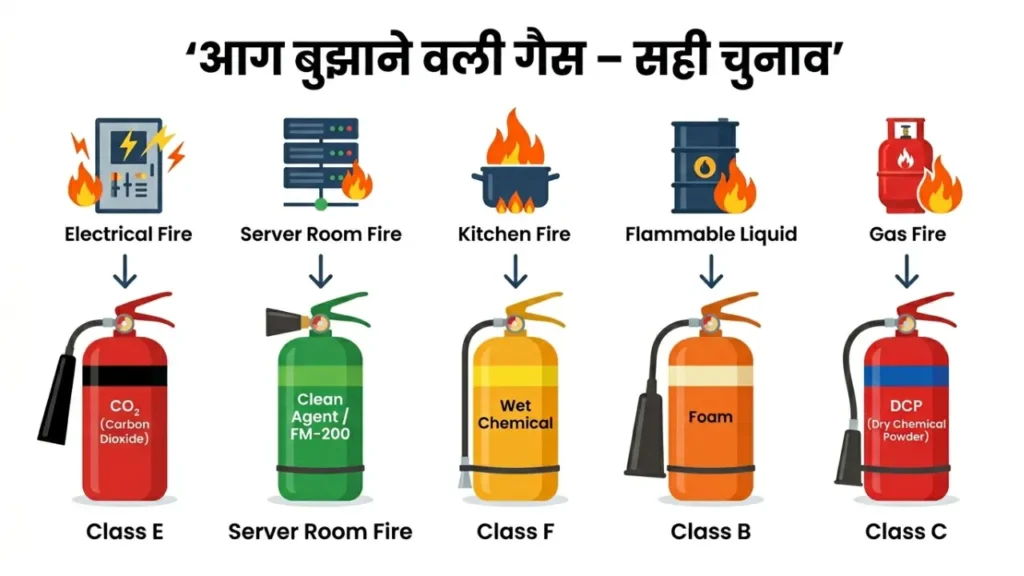
🔥 Fire Extinguishing Gas Selection Matrix (Quick Decision Guide)
यदि आपको यह समझना है कि किस प्रकार की आग में कौन-सा Fire Extinguishing Gas या Fire Suppression Agent अधिक उपयुक्त हो सकता है, तो नीचे दी गई Selection Matrix आपकी सहायता करेगी। अंतिम चयन हमेशा Fire Risk Assessment, लागू BIS Standards तथा निर्माता (Manufacturer) के निर्देशों के अनुसार किया जाना चाहिए।
| Fire Scenario | Recommended Agent | मुख्य कारण (Why?) |
|---|---|---|
| ⚡ Electrical Panel / MCC / Control Panel | CO₂ / Clean Agent | Non-conductive, सामान्यतः कोई Residue नहीं छोड़ते। |
| 🖥️ Server Room / Data Center | FM-200 / Novec 1230 / Inert Gas | Sensitive Electronic Equipment की सुरक्षा के लिए उपयुक्त। |
| 🍳 Kitchen Oil Fire (Class F) | Wet Chemical | Cooking Oil पर दोबारा आग लगने (Re-ignition) का जोखिम कम करता है। |
| 🛢️ Flammable Liquid Storage | Foam / DCP / CO₂ | Agent का चयन Fire Hazard और Site Conditions पर निर्भर करता है। |
| 🏭 Industrial Control Room | Clean Agent System | Equipment Damage कम रखने और तेज़ Suppression के लिए। |
| ⚙️ Transformer / Electrical Equipment | CO₂ / DCP | उपयुक्त Agent का चयन Site Risk Assessment और उपकरण की स्थिति पर निर्भर करता है। |
यह तालिका सामान्य मार्गदर्शन (General Guidance) के लिए है। किसी भी Fire Extinguishing Gas या Fire Suppression System का अंतिम चयन हमेशा Fire Risk Assessment, BIS Standards (IS 15683 एवं IS 2190), लागू नियमों तथा निर्माता के निर्देशों के अनुसार किया जाना चाहिए।
🔥 Real Fire Scenarios – वास्तविक परिस्थितियों में कौन-सी Fire Extinguishing Gas चुनें?
वास्तविक घटनाओं में हर आग के लिए एक ही Fire Extinguishing Agent उपयुक्त नहीं होता। आग का स्रोत, Fire Class, विद्युत उपकरणों की उपस्थिति तथा जोखिम के आधार पर सही Agent का चयन किया जाता है। नीचे कुछ सामान्य Fire Safety Scenarios दिए गए हैं।
⚡ 1. Electrical Panel या Control Panel में आग
यदि Electrical Panel, MCC Panel, UPS या Control Panel में आग लग जाए और उपकरण Energized हों, तो सामान्यतः CO₂ (Carbon Dioxide) या Clean Agent Fire Extinguisher अधिक उपयुक्त माना जाता है, क्योंकि ये सामान्य परिस्थितियों में कोई अवशेष (Residue) नहीं छोड़ते और संवेदनशील उपकरणों को कम नुकसान पहुँचाते हैं।
🖥️ 2. Server Room / Data Center में आग
Server Rooms, Data Centers, UPS Rooms तथा Control Rooms में पानी या Foam का उपयोग सामान्यतः उपयुक्त नहीं माना जाता। ऐसे स्थानों पर FM-200, Novec 1230 या Inert Gas Fire Suppression Systems का उपयोग किया जाता है ताकि संवेदनशील इलेक्ट्रॉनिक उपकरणों की सुरक्षा बनी रहे।
🍳 3. Kitchen Oil (Class F) Fire
Commercial Kitchen या Cooking Oil Fire में CO₂ हमेशा सबसे उपयुक्त विकल्प नहीं होता। ऐसे मामलों में Wet Chemical Fire Extinguisher का उपयोग किया जाता है, क्योंकि यह Cooking Oil की सतह पर Protective Layer बनाकर दोबारा आग लगने की संभावना कम करता है।
🛢️ 4. Flammable Liquid Storage Area
Diesel, Petrol, Solvent, Paint या अन्य Flammable Liquids वाले क्षेत्रों में Fire Risk अलग होता है। यहाँ आग के आकार, उपलब्ध Fire Protection System और Site Risk Assessment के अनुसार CO₂, Foam या Dry Chemical Powder (DCP) का चयन किया जाता है।
🏭 5. Industrial Plant और Special Hazard Areas
Power Plants, Chemical Industries, Oil & Gas Facilities तथा अन्य Special Hazard Areas में Fire Suppression System का चयन केवल Agent देखकर नहीं किया जाता। इसमें Fire Risk Assessment, Hazard Analysis, Protected Volume, Occupancy तथा लागू BIS Standards को ध्यान में रखा जाता है।
✅ Fire Extinguishing Gas चुनते समय किन बातों का ध्यान रखें?
सभी Fire Extinguishing Gas या Fire Suppression Agents हर प्रकार की आग के लिए उपयुक्त नहीं होते। सही Agent का चयन निम्नलिखित बातों के आधार पर किया जाना चाहिए:
- 🔥 आग का प्रकार (Fire Class – A, B, C, D, Electrical या F)
- ⚡ क्या वहाँ Electrical Equipment चालू स्थिति में है?
- 🏢 Protected Area का आकार (Room Volume)
- 👥 क्या उस स्थान पर लोग मौजूद रहते हैं (Occupied / Unoccupied Area)?
- 💻 क्या वहाँ Server, UPS, Control Panel या अन्य Sensitive Equipment हैं?
- 📋 BIS Standards (IS 15683, IS 2190) एवं Manufacturer Guidelines
- 🔧 भविष्य में Maintenance और Refilling की उपलब्धता
ध्यान दें: केवल Agent का नाम देखकर Fire Extinguisher या Fire Suppression System नहीं चुनना चाहिए। हमेशा Fire Risk Assessment और संबंधित Standards के अनुसार चयन करना चाहिए।
❌ Common Myths vs ✅ Facts – आग बुझाने वाली गैस से जुड़े आम भ्रम
Fire Extinguishing Gas और Fire Extinguishers को लेकर कई गलत धारणाएँ प्रचलित हैं। नीचे दिए गए Myths vs Facts आपको सही निर्णय लेने में मदद करेंगे।
| ❌ Myth (भ्रम) | ✅ Fact (सत्य) |
|---|---|
| सभी Fire Extinguishers में CO₂ गैस होती है। | नहीं। Fire Extinguishers में Water, Foam, Dry Chemical Powder (DCP), Wet Chemical, CO₂ और Clean Agent जैसे अलग-अलग Extinguishing Agents उपयोग किए जाते हैं। |
| CO₂ हर प्रकार की आग बुझा सकती है। | नहीं। CO₂ मुख्य रूप से Electrical Equipment और कुछ Flammable Liquid Fires के लिए उपयुक्त होती है। हर Fire Class के लिए इसका उपयोग सही नहीं होता। |
| Electrical Fire पर किसी भी Fire Extinguisher का उपयोग किया जा सकता है। | गलत। Energized Electrical Equipment पर उपयुक्त Non-Conductive Agent का चयन करना चाहिए। Fire Class और जोखिम का मूल्यांकन आवश्यक है। |
| Kitchen Oil Fire पर CO₂ हमेशा सबसे अच्छा विकल्प है। | नहीं। Cooking Oil एवं Fat Fires (Class F) के लिए Wet Chemical Fire Extinguisher विशेष रूप से डिज़ाइन किया गया है। |
| एक ही Fire Extinguisher पूरे भवन के लिए पर्याप्त होता है। | गलत। Fire Extinguisher का प्रकार, क्षमता और संख्या Fire Risk Assessment, Occupancy तथा लागू BIS Standards के अनुसार निर्धारित की जाती है। |
| Fire Extinguisher खरीद लेने के बाद Maintenance की आवश्यकता नहीं होती। | गलत। नियमित निरीक्षण, Maintenance और समय-समय पर Servicing आवश्यक है ताकि आपातकाल में Fire Extinguisher सही ढंग से कार्य कर सके। |
किसी भी Fire Extinguishing Gas या Fire Extinguisher का चयन केवल नाम देखकर नहीं करना चाहिए। हमेशा Fire Class, Hazard Assessment, BIS Standards (IS 15683 एवं IS 2190) तथा निर्माता के निर्देशों के अनुसार उपयुक्त Agent का चयन करें।
Aag Bujhane Wale Agents Ke 7 Pramukh Prakar
Fire Safety में विभिन्न प्रकार के Fire Extinguishing Agents उपयोग किए जाते हैं। इनका चयन Fire Class, Hazard Area और Equipment Sensitivity के आधार पर किया जाता है। नीचे बताए गए Agents Industrial Fire Safety, Fire Fighting Training और Competitive Exams के लिए महत्वपूर्ण हैं।
1. CO₂ (Carbon Dioxide)
CO₂ आग के आसपास ऑक्सीजन की सांद्रता कम करके Fire Suppression में मदद करती है। इसका उपयोग मुख्यतः Flammable Liquid Hazards तथा Energized Electrical Equipment के पास किया जाता है।
- Residue-free
- Electrical Equipment के लिए उपयुक्त
- Quick Fire Knockdown
2. FM-200 (HFC-227ea)
FM-200 एक Clean Agent Fire Suppression System है जो Heat Absorption और Chemical Reaction Interruption द्वारा आग नियंत्रित करता है।
- Server Rooms
- Data Centers
- Control Rooms
3. Novec 1230 Clean Agent
Novec 1230 एक Clean Agent Fluid है जो संवेदनशील उपकरणों वाले क्षेत्रों में उपयोग किया जाता है। यह Environment Friendly Fire Suppression Solution माना जाता है।
- Low Environmental Impact
- Fast Discharge
- No Residue
4. ABC Dry Chemical Powder
ABC Dry Chemical Powder एक बहुउद्देशीय Fire Extinguishing Agent है जो Class A, B और C Fires के लिए उपयोग किया जाता है।
- Multipurpose
- Fast Flame Knockdown
- Industrial & Commercial Use
5. Inert Gas Systems (IG-55, IG-100, IG-541)
Inert Gas Systems ऑक्सीजन स्तर को नियंत्रित करके आग को दबाते हैं। इनका उपयोग बड़े Data Centers और Critical Facilities में किया जाता है।
- Residue-free
- Long-term Protection
- High Value Assets Protection
6. Halon (Historical Reference)
Halon Fire Suppression Agent का उपयोग पहले व्यापक रूप से किया जाता था, लेकिन Ozone Layer पर प्रभाव के कारण अधिकांश नए उपयोगों में प्रतिबंधित है।
- Exam Important Topic
- Historical Significance
- Modern Systems द्वारा Replace किया गया
7. Water Mist Fire Suppression System
Water Mist Technology अत्यंत सूक्ष्म जल कणों का उपयोग करके Cooling और Fire Suppression प्रदान करती है।
- Low Water Consumption
- Sensitive Areas में उपयोगी
- Modern Fire Protection Technology
किसी भी Fire Extinguishing Agent का चयन Fire Risk Assessment, BIS Guidelines और Hazard Classification के आधार पर किया जाना चाहिए।
🔗 अधिक जानकारी: Fire Tetrahedron Guide
Konsi Aag Me Konsi Gas Use Hoti Hai?
हर प्रकार की आग में एक जैसी aag bujhane wali gas या Fire Extinguishing Agent उपयोग नहीं होता। हर आग का कारण, तापमान और Hazard अलग होता है, इसलिए आग बुझाने के लिए CO₂, FM-200, Novec 1230, Inert Gas Systems और Dry Chemical Powder जैसे Fire Extinguishing Agents अलग-अलग परिस्थितियों में उपयोग किए जाते हैं। यह चयन बिल्कुल सही होना चाहिए, क्योंकि गलत Agent चुन लेने पर आग और बढ़ सकती है।
Electrical Equipment Fire Ke Liye Kaunsa Agent?
Energized Electrical Equipment, Electrical Panels, UPS Rooms और Control Systems में आग लगने की स्थिति में निम्न Agents सबसे उपयुक्त माने जाते हैं:
- CO₂ (Carbon Dioxide) – Electrical Equipment के लिए उपयुक्त
- FM-200 Clean Agent – Sensitive Electronics के लिए
- Novec 1230 – Mission Critical Facilities के लिए
यदि आप Fire Classes और उनके लिए उपयुक्त Fire Extinguishers के बारे में विस्तार से जानना चाहते हैं, तो यह गाइड देखें: BIS Fire Classes Guide
Server Room / Data Center Ke Liye Kaunsi Gas?
Server Room, Data Center और Control Room जैसे क्षेत्रों में पानी या Foam का उपयोग सामान्यतः नहीं किया जाता। यहाँ निम्न Fire Suppression Agents सबसे अधिक उपयोग किए जाते हैं:
- FM-200 Clean Agent – Fast Discharge और Residue-Free Protection
- Novec 1230 – Environment Friendly और Equipment Safe
- Inert Gas Systems (IG-55 / IG-541 / IG-100) – बड़े Critical Areas के लिए उपयुक्त
Kitchen Oil Fire (Class F) Ke Liye Kaunsa Agent?
Cooking Oil और Fat Fires (Class F) के लिए विशेष Fire Extinguishing Agents की आवश्यकता होती है। सामान्य CO₂ या Water आधारित Systems हमेशा उपयुक्त नहीं होते।
- Wet Chemical Fire Extinguisher – Cooking Oil & Fat Fires के लिए सबसे प्रभावी
- Wet Chemical Kitchen Suppression System – Commercial Kitchens के लिए आदर्श
Kitchen और Commercial Cooking Areas के लिए सही Fire Extinguisher चुनना बेहद महत्वपूर्ण है। अधिक जानकारी के लिए पढ़ें: Fire Extinguisher Types & Uses
Metal Fire (Class D) Me Konsa Agent Use Hota Hai?
Combustible Metals जैसे Magnesium, Sodium, Potassium और Aluminium Powder में लगने वाली आग विशेष प्रकार की होती है और इसके लिए केवल विशेष Class D Agents का उपयोग किया जाना चाहिए।
- Special Dry Powder for Metal Fires – Class D Fire के लिए Recommended Agent
- CO₂, Water और Foam – अधिकांश Metal Fires के लिए उपयुक्त नहीं
- सामान्य Clean Agents – Metal Fire Suppression के लिए प्रभावी नहीं माने जाते
Class D Fire के बारे में अधिक जानकारी यहाँ पढ़ें: Class D Fire – Metal Fire Guide
हर आग के लिए aag bujhane wali gas या Fire Extinguishing Agent चुनने का नियम अलग होता है। एक सही Agent आग को सेकंडों में नियंत्रित कर सकता है, जबकि गलत Agent Re-Ignition, Equipment Damage या Safety Risk पैदा कर सकता है। इसलिए हमेशा Fire Class, Risk Assessment और BIS Guidelines के अनुसार ही Agent का चयन करें।
Aag Bujhane Wali Gas Cylinder Details
किसी भी Aag Bujhane Wali Gas System को समझने के लिए उसका Cylinder Size, Pressure Rating, Refilling Requirements और BIS / IS Compliance जानना आवश्यक है। Fire Protection System की प्रभावशीलता काफी हद तक सही Cylinder Selection, Maintenance और Certification पर निर्भर करती है।
Gas Cylinder Size
अलग-अलग Fire Extinguishing Agents के लिए Cylinder Capacity भी अलग होती है। CO₂, Clean Agent, Novec 1230 और Inert Gas Systems को Hazard Area तथा Room Volume के अनुसार डिजाइन किया जाता है। Portable Fire Extinguishers की Capacity के बारे में अधिक जानकारी के लिए यह गाइड पढ़ें: ABC Type Fire Extinguisher Guide.
| Gas Cylinder Type | Typical Capacity | Typical Applications |
|---|---|---|
| CO₂ Cylinder | 2kg, 4.5kg, 6.5kg, 9kg | Electrical Panels, Server Racks, Control Equipment |
| FM-200 Clean Agent Cylinder | 10L–80L (Typical) | Server Rooms, UPS Rooms, Control Rooms |
| Novec 1230 Cylinder | 25L–80L (Typical) | Data Centers, Archives, Critical Facilities |
| Inert Gas Systems (IG-55 / IG-541) | Multiple Cylinders in Banks | Large Data Centers, Industrial Control Rooms |
Cylinder Pressure & Rating
Fire Suppression Cylinders विभिन्न Pressure Ratings में उपलब्ध होते हैं। प्रत्येक Cylinder की Working Pressure, Test Pressure और Manufacturing Details उसकी Nameplate पर अंकित होती हैं। Installation या Refilling से पहले इन Details को Verify करना आवश्यक है।
- Working Pressure और Test Pressure स्पष्ट रूप से अंकित होना चाहिए।
- Hydrostatic Test Date पढ़ने योग्य होनी चाहिए।
- Pressure Gauge (जहाँ लागू हो) सामान्य स्थिति में होना चाहिए।
- Valve, Hose और Safety Seal की नियमित जाँच आवश्यक है।
Refill Cost & Service Process
Refilling Cost उपयोग किए गए Fire Extinguishing Agent और Cylinder Capacity पर निर्भर करती है। सामान्यतः CO₂ Refilling की लागत कम होती है, जबकि FM-200, Novec 1230 और अन्य Clean Agents की Refilling अपेक्षाकृत अधिक महंगी होती है।
- हमेशा BIS / IS मानकों का पालन करने वाली Service Agency का चयन करें।
- Refilling के समय Weight Check और Leak Test अवश्य करवाएँ।
- Service Record और Refill Tag को अपडेट रखें।
- Hydrostatic Testing निर्धारित अंतराल पर करवाएँ।
BIS / IS Certification Requirements
भारत में Fire Extinguishers और Fire Safety Systems के लिए विभिन्न BIS Standards लागू होते हैं। Portable Fire Extinguishers के लिए IS 15683:2018 लागू है, जबकि Installation, Inspection, Maintenance और Refilling Guidelines के लिए IS 2190:2024 एक महत्वपूर्ण संदर्भ मानक है।
Fire Protection Infrastructure को बेहतर समझने के लिए यह गाइड भी उपयोगी है: Fire Hydrant System Guide.
किसी भी Fire Suppression System का चयन करते समय केवल कीमत पर ध्यान न दें। हमेशा Cylinder का BIS Mark, Manufacturing Details, Hydro Test Date, Pressure Rating और Service History अवश्य जाँचें। Uncertified या Expired Cylinders आपातकालीन स्थिति में गंभीर सुरक्षा जोखिम उत्पन्न कर सकते हैं।
Aag Bujhane Wali Gas Ka Price in India
भारत में aag bujhane wali gas की लागत गैस के प्रकार, cylinder size, system design, installation requirement और maintenance cost पर निर्भर करती है। नीचे दी गई तालिका केवल सामान्य बाजार दरों (Approximate Market Range) को दर्शाती है। वास्तविक कीमत स्थान, supplier और project requirement के अनुसार बदल सकती है।
| Fire Suppression Agent | Approximate Market Range | Typical Applications |
|---|---|---|
| CO₂ (Carbon Dioxide) | ₹150 – ₹250 प्रति kg | Electrical Equipment, Control Panels |
| FM-200 (HFC-227ea) | ₹2,500 – ₹3,800 प्रति kg | Server Rooms, Data Centers |
| Novec 1230 | ₹6,000 – ₹9,000 प्रति kg | Archives, Critical Facilities, Electronics |
| Inert Gas Systems (IG-55 / IG-541 / IG-100) | Project Specific | Large Industrial & Critical Infrastructure |
Fire Extinguisher Types और उनके उपयोग के बारे में अधिक जानकारी के लिए यह गाइड पढ़ें: Fire Extinguisher Types & Uses.
CO₂ सबसे किफायती Fire Suppression Agent माना जाता है, जबकि FM-200 और Novec 1230 जैसे Clean Agents की लागत अपेक्षाकृत अधिक होती है क्योंकि ये विशेष अनुप्रयोगों और संवेदनशील उपकरणों की सुरक्षा के लिए उपयोग किए जाते हैं।
CO₂ Gas Price
CO₂ Fire Suppression Agent का उपयोग Electrical Equipment और Flammable Liquid Hazards के लिए किया जाता है। यह बाजार में सबसे अधिक उपलब्ध और अपेक्षाकृत कम लागत वाला विकल्प है।
FM-200 Price
FM-200 एक Clean Agent Fire Suppression System है जो Data Centers, UPS Rooms और Mission-Critical Facilities में व्यापक रूप से उपयोग किया जाता है।
Novec 1230 Price
Novec 1230 एक उन्नत Clean Agent है जो Sensitive Electronics और High-Value Assets की सुरक्षा के लिए उपयोग किया जाता है। इसकी लागत सामान्यतः अन्य Fire Suppression Agents की तुलना में अधिक होती है।
Industrial System Cost Factors
किसी भी Industrial Fire Suppression System की कुल लागत निम्न कारकों पर निर्भर करती है:
- 🔥 Protected Area का Volume
- 🔥 Cylinder Bank Size
- 🔥 Pipe Network Design
- 🔥 Detection & Control System
- 🔥 Room Integrity Requirements
- 🔥 Imported Agent Availability
यहाँ दी गई कीमतें केवल अनुमानित बाजार दरें हैं और समय के साथ बदल सकती हैं। किसी भी Fire Suppression System को डिजाइन या खरीदने से पहले BIS Standards, Manufacturer Specifications और अधिकृत Supplier की सलाह अवश्य लें।
Reference: IS 2190:2024 Fire Safety Guide
Aag Bujhane Wali Gas Cylinder Ka Naam Kya Hai?
जब लोग “aag bujhane wali gas cylinder ka naam kya hai” सर्च करते हैं, तो वे आमतौर पर यह जानना चाहते हैं कि आग बुझाने वाले सिलेंडर में कौन-सी गैस या extinguishing agent भरा होता है। वास्तव में अलग-अलग fire hazards के लिए अलग-अलग प्रकार के gas-based fire extinguishers और suppression systems उपयोग किए जाते हैं।
भारत में इन उपकरणों का चयन सामान्यतः IS 2190:2024 और IS 15683 मानकों के अनुसार किया जाता है। Extinguisher की पहचान उसके label, agent type और Fire Extinguisher Colour Codes से की जा सकती है।
| Fire Extinguisher / System | Agent Type | Typical Application | Identification |
|---|---|---|---|
| CO₂ Fire Extinguisher | Carbon Dioxide (CO₂) | Electrical Equipment, Control Panels, Server Racks | Black Band, Discharge Horn |
| Clean Agent Fire Extinguisher | HFC-227ea / Similar Clean Agent | Data Centre, UPS Room, Control Room | Green Band / Clean Agent Marking |
| Novec 1230 System | FK-5-1-12 | Total Flooding Systems, Critical Assets | Fixed Cylinder Bank & Control Panel |
| ABC Dry Powder Fire Extinguisher | Mono Ammonium Phosphate (MAP) | Class A, B & C Fire Risks | Blue Band, Pressure Gauge |
| Inert Gas Suppression System | IG-55, IG-541, IG-100 | Large Enclosed Rooms & Special Hazards | System Identification Label |
Quick Comparison of Fire Suppression Agents
| Agent | Suitable Hazards | Residue | Main Advantage |
|---|---|---|---|
| CO₂ | Electrical Equipment & Flammable Liquids | No | Fast Knockdown, Residue-Free |
| Clean Agent | Sensitive Electronics | No | Equipment Safe |
| Novec 1230 | Critical Facilities | No | Low Environmental Impact |
| ABC Dry Powder | General Fire Risks | Yes | Multipurpose Protection |
| Inert Gas | Large Protected Areas | No | Total Flooding Protection |
अगर कोई पूछे “Aag Bujhane Wali Gas Cylinder Ka Naam Kya Hai?” तो सबसे सामान्य उत्तर CO₂ Fire Extinguisher होता है। हालांकि वास्तविकता में अलग-अलग fire hazards के लिए CO₂, Clean Agent, Novec 1230, Inert Gas System और ABC Dry Powder Fire Extinguisher जैसे विभिन्न विकल्प उपयोग किए जाते हैं।
Frequently Asked Question
Aag bujhane wali gas kya hoti hai?
Aag bujhane wali gas वह गैस होती है जो आग के oxygen level को कम करके, heat को घटाकर या chemical reaction रोककर आग बुझाती है।
CO₂ gas kis type ki aag par use hoti hai?
CO₂ गैस का उपयोग मुख्य रूप से Class E (Electrical Fire) और छोटे Class B (Flammable Liquid Fire) पर किया जाता है।
– Electrical Fire (Class E): सबसे सुरक्षित विकल्प, कोई residue नहीं छोड़ती।
– Class B Fire: छोटे liquid fires में काम करती है, लेकिन ⚠️ re‑ignition का खतरा रहता है, बड़े fires में Foam बेहतर है।
👉 संक्षेप में: CO₂ = Electrical + छोटे Liquid fires के लिए उपयुक्त।
FM-200 gas kis jagah par use hoti hai?
FM-200 का उपयोग server room, data center, control room और sensitive electronic क्षेत्रों में किया जाता है क्योंकि यह कोई damage नहीं करती।
Novec 1230 kya hota hai?
Novec 1230 एक advanced clean agent gas है जो आग बुझाती है और पर्यावरण को नुकसान नहीं पहुँचाती—zero ozone depletion material है।
Halon gas abhi bhi use hoti hai?
नहीं, Halon gas banned है (ओज़ोन layer को नुकसान पहुँचाने के कारण)। इसे केवल exam/ old system understanding के लिए पढ़ाया जाता है।
Aag bujhane wali gas cylinder ka naam kya hota hai?
Cylinder के नाम उसके agent पर आधारित होते हैं—जैसे CO₂ Cylinder, Clean Agent Cylinder, Novec 1230 Cylinder, Inert Gas Cylinder आदि।
Aag bujhane wali gas ka cylinder kaise refill hota hai?
Cylinder को authorized fire safety service center पर high-pressure gas filling मशीन से refill किया जाता है, फिर leak test और weight test किया जाता है।
Aag bujhane wali gas ghar me use kar sakte hain kya?
हाँ, CO₂ और Clean Agent छोटे rooms, kitchens और home electronics के लिए उपयोग होते हैं—पर cylinder छोटा और certified होना चाहिए।
Kya gas extinguisher use karna safe hota hai?
हाँ, लेकिन room ventilated हो और व्यक्ति को basic PASS method आता हो। Closed room में ज्यादा CO₂ भरना खतरनाक हो सकता है।
Conclusion – Kaunsi Aag Bujhane Wali Gas Sabse Behtar Hai?
अब आप समझ चुके हैं कि aag bujhane wali gas कोई एक गैस नहीं होती, बल्कि अलग-अलग fire hazards के लिए CO₂, Clean Agent, Novec 1230, Inert Gas Systems, Dry Chemical Powder और Water Mist जैसी विभिन्न fire suppression technologies उपयोग की जाती हैं। हर agent का अपना अलग उपयोग, लाभ और सीमाएँ होती हैं।
किसी भी aag bujhane wali gas का चयन हमेशा आग के प्रकार, सुरक्षित किए जाने वाले क्षेत्र और उपलब्ध fire protection system के आधार पर किया जाना चाहिए। उदाहरण के लिए Server Room और Data Centre में Clean Agent या Novec 1230 उपयुक्त हो सकते हैं, जबकि सामान्य औद्योगिक और व्यावसायिक क्षेत्रों में CO₂ Fire Extinguishers तथा ABC Dry Powder Fire Extinguishers व्यापक रूप से उपयोग किए जाते हैं।
Fire Extinguisher Installation, Inspection और Maintenance के लिए IS 2190:2024 Fire Safety Guide का पालन करना महत्वपूर्ण है ताकि emergency के समय उपकरण प्रभावी रूप से कार्य कर सके।
✔ हमेशा BIS / IS Certified Fire Extinguisher या Fire Suppression System चुनें।
✔ Refilling, Hydro Testing और Maintenance समय पर करवाएँ।
✔ Staff को Fire Classes और Extinguisher Selection की नियमित Training दें।
✔ सही Fire Class पहचानने के लिए यह गाइड पढ़ें: Aag Kitne Prakar Ki Hoti Hai?
Quick Summary: यदि कोई पूछे कि “Aag Bujhane Wali Gas Kaunsi Hoti Hai?”, तो उत्तर यह है कि अलग-अलग परिस्थितियों के लिए अलग-अलग Fire Suppression Agents उपयोग किए जाते हैं। CO₂, Clean Agent, Novec 1230 और Inert Gas Systems सबसे प्रमुख विकल्पों में शामिल हैं, लेकिन सही चयन हमेशा Fire Risk Assessment के आधार पर ही किया जाना चाहिए।

2 thoughts on “आग बुझाने वाली गैस का नाम क्या है? Fire Extinguisher Gas Types Explained (2026)”